



Flooring
Which Way to Lay Wood Flooring: A Direction Guide
08.17.2026
06.27.2026


In This Article
Cold tile on a winter morning is a small, daily misery, and a heated floor quietly erases it. The appeal goes past comfort, though. Radiant heating, also called underfloor or in-floor heating, warms a room more evenly than forced air, runs silently, and can trim utility bills over time. And it's catching on: the underfloor heating market is growing about 7% a year.
It's also one of the few upgrades that feels expensive but isn't. Devin Jones, a Utah Airbnb owner, added heated floors to her rental's bathroom. "They ended up costing less than the light fixtures. And they're the detail guests bring up most in my reviews, ahead of things that cost ten times as much."
The cost depends almost entirely on how much floor you're heating and what's going on top of it. The system alone runs $7 to $17 per square foot installed, climbing to $10 to $40 once you add new flooring. In practice, most homeowners spend $1,500 to $6,400 to warm a single room and $10,000 to $34,000 for a whole house, with the average project landing near $4,000.
Every price below is installed, covering both materials and labor. Expect them to climb with new flooring, a new boiler, or major electrical work, and to shift with your region and how booked up local contractors are.
|
Project |
Typical cost |
|
Per square foot (heating only) |
$7 to $17 |
|
Per square foot (with new flooring) |
$10 to $40 |
|
Single room (bathroom, bedroom, kitchen) |
$1,500 to $6,400 |
|
Whole house (1,500 to 2,000 sq ft) |
$10,000 to $34,000 |
|
Average project |
~$4,000 |
|
Cost to run (whole home) |
$65 to $250 per month |
|
System lifespan |
30 to 50 years (coils or tubing) |
The single biggest swing in price is whether you're laying new flooring at the same time. The heating system itself runs $7 to $17 per square foot installed. Once you add the floor covering on top, the all-in figure jumps to $10 to $40 per square foot, because materials like natural stone and tile are expensive to buy and labor-intensive to set.
Nationally, underfloor heating averages $9 to $13 per square foot to install on its own, before any flooring goes on top.
Smaller jobs cost more per square foot (there's a baseline of labor and materials no matter how small the room) but less in total. Here's what to expect by space, both with and without new flooring.
|
Room |
Approx. size |
Heating only |
With new flooring |
|
Bathroom |
40 sq ft |
$300 to $700 |
$600 to $1,600 |
|
Primary bathroom |
160 sq ft |
$1,100 to $2,700 |
$2,400 to $6,400 |
|
Kitchen |
160 sq ft |
$1,100 to $2,700 |
$2,100 to $4,300 |
|
Bedroom |
120 sq ft |
$850 to $2,000 |
$1,500 to $3,200 |
|
Living room |
320 sq ft |
$2,200 to $5,400 |
$4,100 to $8,600 |
|
Garage |
400 sq ft |
$2,800 to $6,800 |
$4,400 to $10,000 |
|
Basement |
1,000 sq ft |
$7,000 to $17,000 |
$11,000 to $25,000 |
There are five common ways to power radiant heat. Electric and hydronic are the two you'll choose between most often. The other three mostly show up in larger or greener whole-home builds. Whole-house figures below assume a 1,500 to 2,000 sq ft home.
|
System |
How it works |
Per sq ft |
Whole-house installed |
|
Electric |
Heating mats or cables under the floor |
$8 to $15 |
$12,000 to $30,000 |
|
Hydronic |
Hot water through tubing from a boiler |
$7 to $17 |
$13,700 to $43,000 |
|
Propane |
Hydronic powered by a propane boiler |
$7 to $17 |
$13,300 to $41,500 |
|
Solar |
Hydronic powered by a solar water heater |
$7 to $17 |
$13,500 to $43,000 |
|
Geothermal |
Hydronic powered by a ground-source heat pump |
$7 to $17 |
$25,500 to $69,000 |
Electric systems use thin heating mats or cables installed directly beneath the floor surface, wired to a dedicated thermostat. They're the simplest and cheapest to install, at $8 to $15 per square foot, which makes them a favorite for single, smaller rooms like bathrooms and kitchens, or as supplemental heat that takes the chill off.
The downside is higher operating cost, which is why heating a whole house with electric radiant is usually a mistake. Electric earns its place in single rooms you warm on a schedule, not across a whole house running around the clock. For anything house-sized, hydronic almost always wins.
Hydronic systems circulate warm water from a boiler through flexible tubing under the floor. They cost more upfront, at $7 to $17 per square foot, plus $3,200 to $9,000 for a boiler if you don't already have one. In return they cost much less to run and are better suited to large areas or a whole home. Because water holds heat well, the floor also stays warm for a while after the system cycles off, which evens out the temperature swings you get with forced air. For small one or two-room systems, a dedicated water heater ($600 to $3,100 installed) can stand in for a full boiler.
These are all variations on a hydronic system with a different heat source. Propane swaps in a propane boiler ($2,800 to $7,500). Solar uses a solar water heater ($3,000 to $9,000) and can cut running costs to near zero in sunny climates. Geothermal is the priciest to install because of the heat pump and ground loops ($15,000 to $35,000 for the pump alone), but it delivers the lowest long-term operating cost of any option.
Transparent Pricing You Can Trust

|
Flooring |
Cost per sq ft (heating + floor) |
Heat performance |
|
Tile or stone |
$15 to $40 |
Excellent conductor |
|
Concrete |
$11 to $25 |
Excellent, holds heat |
|
Hardwood |
$13 to $32 |
Good, needs temp limits |
|
Laminate |
$10 to $25 |
Good, needs temp limits |
|
Vinyl |
$10 to $27 |
Good |
|
Carpet |
Varies |
Works with thin carpet only |
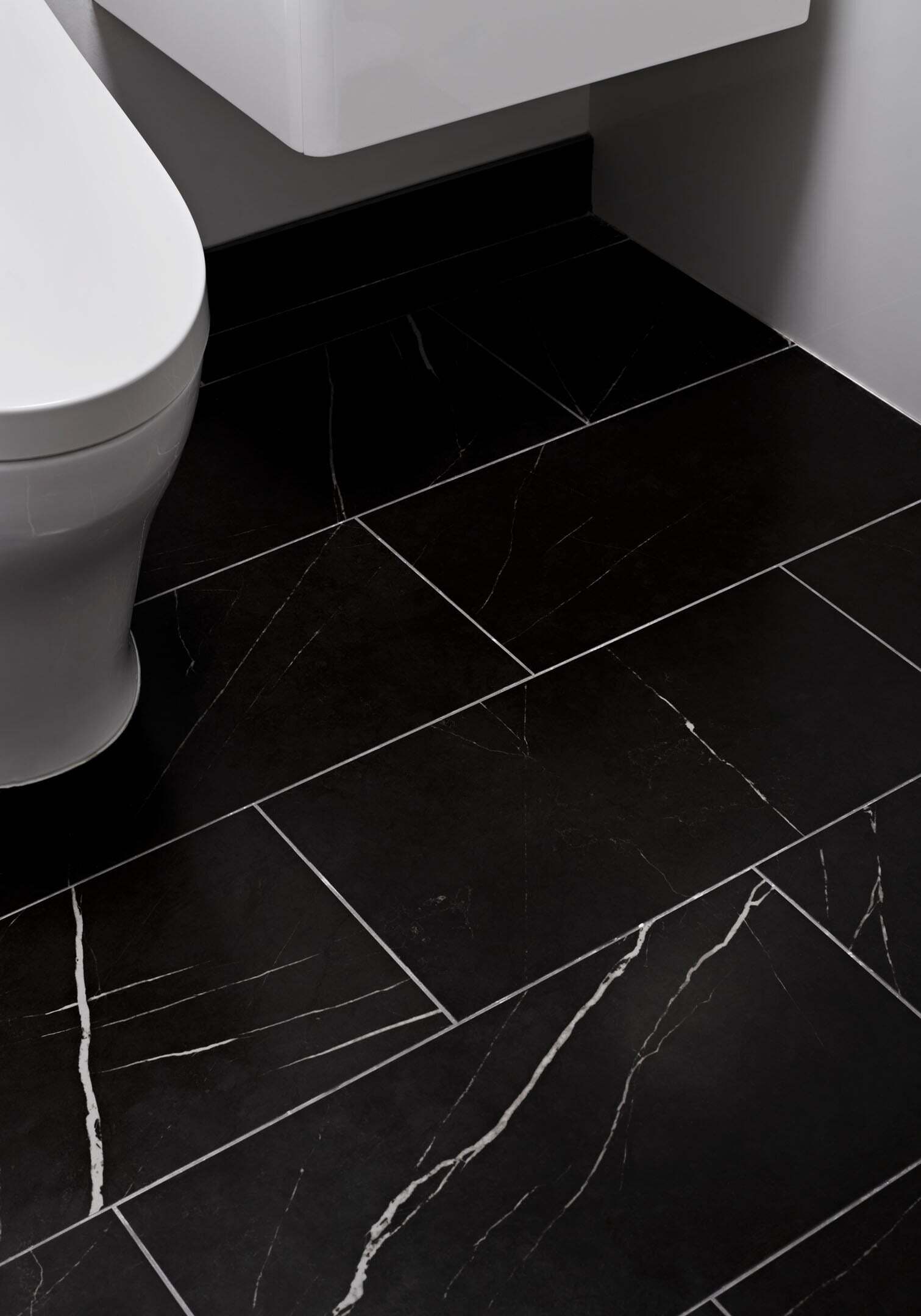
Tile and stone work best with radiant heat, which is why heated bathroom and kitchen floors are so common. Hardwood and laminate work well too, but the system has to stay below the manufacturer's maximum temperature to avoid warping or gapping.
Before you commit, run your existing or planned flooring through this checklist. Most materials work with a little care, but a few details decide whether the heat actually reaches the room and whether your floor holds up over time.
Worried a heated floor will wreck your energy bill? It's usually the cheapest part of the system to live with. For a 1,500 sq ft home running about four hours a day, expect:
|
System |
Cost to run |
|
Hydronic |
$65 to $165 per month |
|
Electric |
$90 to $250 per month |
Radiant skips the weak spot in forced air: the ducts. A typical home loses 20% to 30% of the air moving through its ductwork to leaks, holes, and bad connections, and radiant has none to lose. For a single heated bathroom on a timer, electric running costs are modest, often just $15 to $20 a month for a few hours of daily use. Your actual bill depends on local energy rates, climate, insulation quality, and how many hours you run the system.
Two identical-sized rooms can come in hundreds, or thousands, of dollars apart depending on these factors:
A tidy per-square-foot quote can still leave four figures off your real total. Plan for these line items too:
|
Add-on |
Typical cost |
|
Thermostat (per zone) |
$140 to $350 installed |
|
Boiler (hydronic) |
$3,200 to $9,000 |
|
Dedicated water heater (small systems) |
$600 to $3,100 |
|
Removing old flooring |
$1.50 to $10 per sq ft |
|
Subfloor insulation |
$1 to $5 per sq ft |
|
Permits and inspections |
$75 to $180 |
|
Boiler service (ongoing) |
$70 to $350 per visit |
Each room or zone needs its own thermostat, so a multi-room project means multiple thermostats. Permits are usually required and worth pulling, since unpermitted work can cause headaches when you sell.
The cheapest heated floor is the one you put in before there's a floor to tear up. In new construction the tubing or mats go in as part of the build, with no demolition and no awkward transitions where the new floor meets adjoining rooms. Retrofitting into a finished space means tearing out the existing floor, raising the floor height, and sometimes upgrading electrical or boiler capacity, which is why retrofits typically run 50% to 80% more than the same system in new construction.
If a full retrofit isn't in the budget, focus on one high-impact room (such as the ensuite bathroom) where the comfort payoff per dollar is highest.
Not much, which is one of the quiet advantages of radiant heat. The heating elements sit sealed under the floor with no moving parts, so once they're in they mostly look after themselves for decades.
The one rule for both: never drill, nail, or screw into a heated floor without knowing exactly where the cables or tubing run. A punctured line is the most common way these systems fail.
Be cautious with older articles on this topic, because the rules changed significantly. Radiant floor heating has never directly qualified for the main federal energy tax credits. And as of January 1, 2026, the two federal programs that could have helped indirectly are gone. Under the One, Big, Beautiful Bill Act (signed July 2025), the IRS confirmed that both the Energy Efficient Home Improvement Credit (Section 25C) and the Residential Clean Energy Credit (Section 25D) no longer apply to property placed in service after December 31, 2025.
In practice, that means:
Tax law is complex and changes often. Confirm the current rules and your eligibility with a licensed tax professional before counting on any incentive. This guide is general information, not tax advice.
The right pro depends on the system: a plumber for hydronic, an electrician for electric, and a specialized installer for geothermal or solar. Vetting one on your own means chasing references, comparing quotes that never quite line up, and hoping the lowest bid isn't quietly leaving things out.
Block takes that off your plate. Tell Block about your project once, and your area's best contractors compete for it with quotes built around your exact scope. Every scope is reviewed by Block experts and AI-enabled tools to spot gaps and red flags early, so a quote that skips the thermostat or the subfloor prep gets caught before you sign.
Payments are tied to approved milestones and released through a secure system as the work gets done, and every contractor in the network stands behind the job with a one-year workmanship warranty. You get peace of mind for the whole project, not just the easy parts.
Remodel with confidence through Block

Connect to vetted local contractors
We only work with top-tier, thoroughly vetted contractors

Get expert guidance
Our project planners offer expert advice, scope review, and ongoing support as needed
Enjoy peace of mind throughout your renovation
Secure payment system puts you in control and protects your remodel

Renovate confidently with Block
Easily compare quotes from top quality contractors, and get peace of mind with warranty & price protections.
Flooring
Which Way to Lay Wood Flooring: A Direction Guide
08.17.2026
Flooring
Cost to Regrout Tile Floor: Prices and What to Expect
08.11.2026
Flooring
Mixing Flooring Types in a Home: How to Do It Right
08.04.2026

Cost
20x20 Room Addition Cost: What to Budget in 2026
07.28.2026

Cost
2026 Bedroom Remodel Cost Guide: Average Price, Tips & ROI
07.22.2026