




Before and After
Kitchen Island Remodel: Before and After Inspo
06.26.2026
06.26.2026


In This Article
If you've pictured an island in your kitchen's open floor, you're weighing the change that does the most for how the room works and looks. A well-placed island adds prep space, a spot for stools, and storage you didn't have before. The wrong one crowds the walkways and makes a working kitchen feel tight. Getting it right comes down to measurements, the cooking you actually do, and a design that fits the cabinets already in the room. The kitchen island remodel before and after pairs below show how those decisions play out across kitchens of different sizes and styles.
A good island does four jobs at once: prep surface, a landing spot for groceries and dishes, casual seating, and storage underneath. In an open floor plan it also marks off the cooking zone, so the kitchen feels like its own space without a wall closing it off.
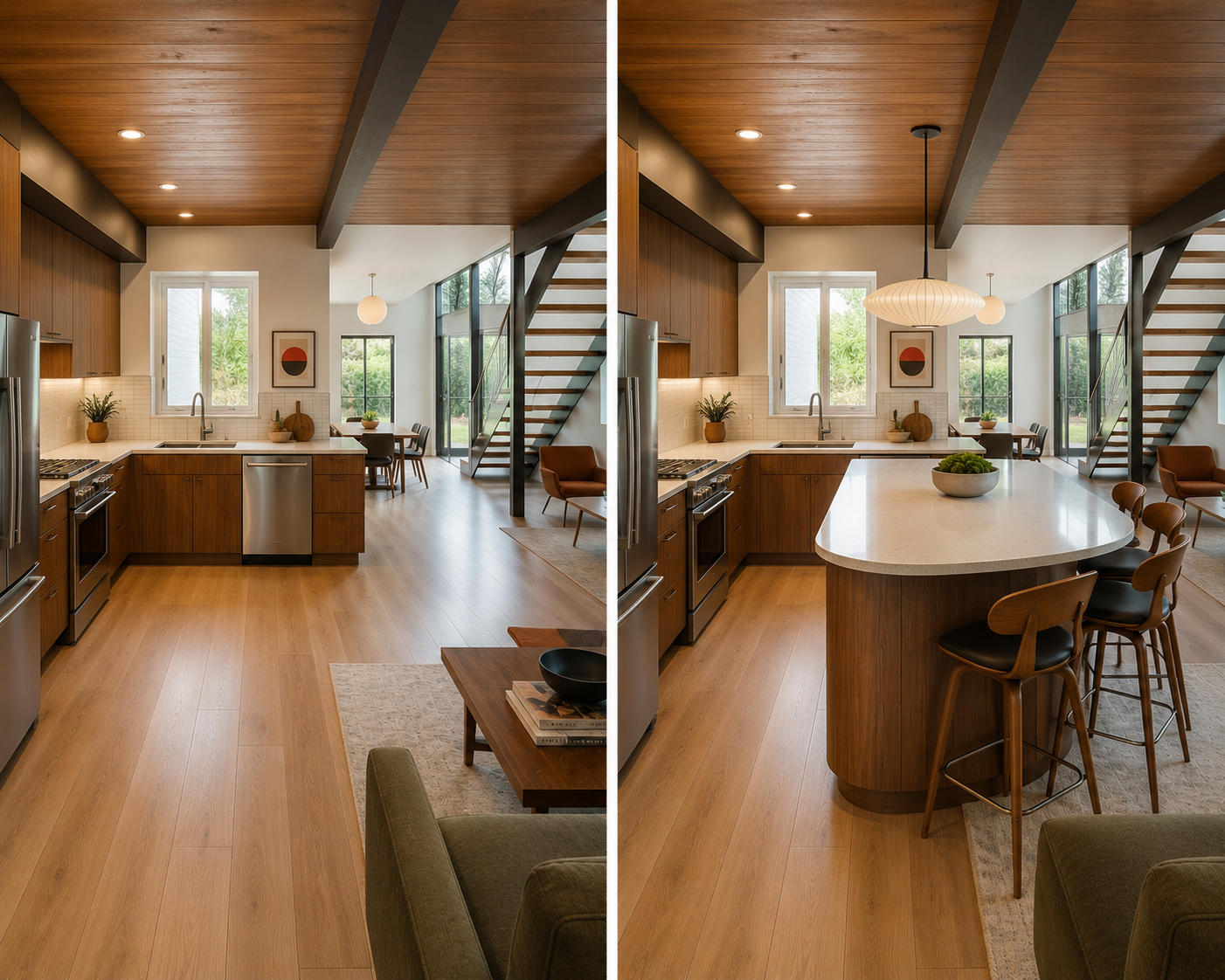
That range of jobs is why one room can hold very different islands. Take the first pair below. The original is a competent U-shape with a dead-empty center, the kind of gap people walk through and never use for anything. The remodel parks a curved-end island there, quartz top, three stools. The curve isn't styling: a square corner would have pinched the route to the living room, so rounding the end that sits in the path keeps it open.
Measurements set the size before any style does, and this is the place to be ruthless. The single most common island mistake, by a wide margin, is building one that's too big for the room. People fall for a slab, build the island to fit it, and discover the aisles only after they're living with 30-inch squeezes.
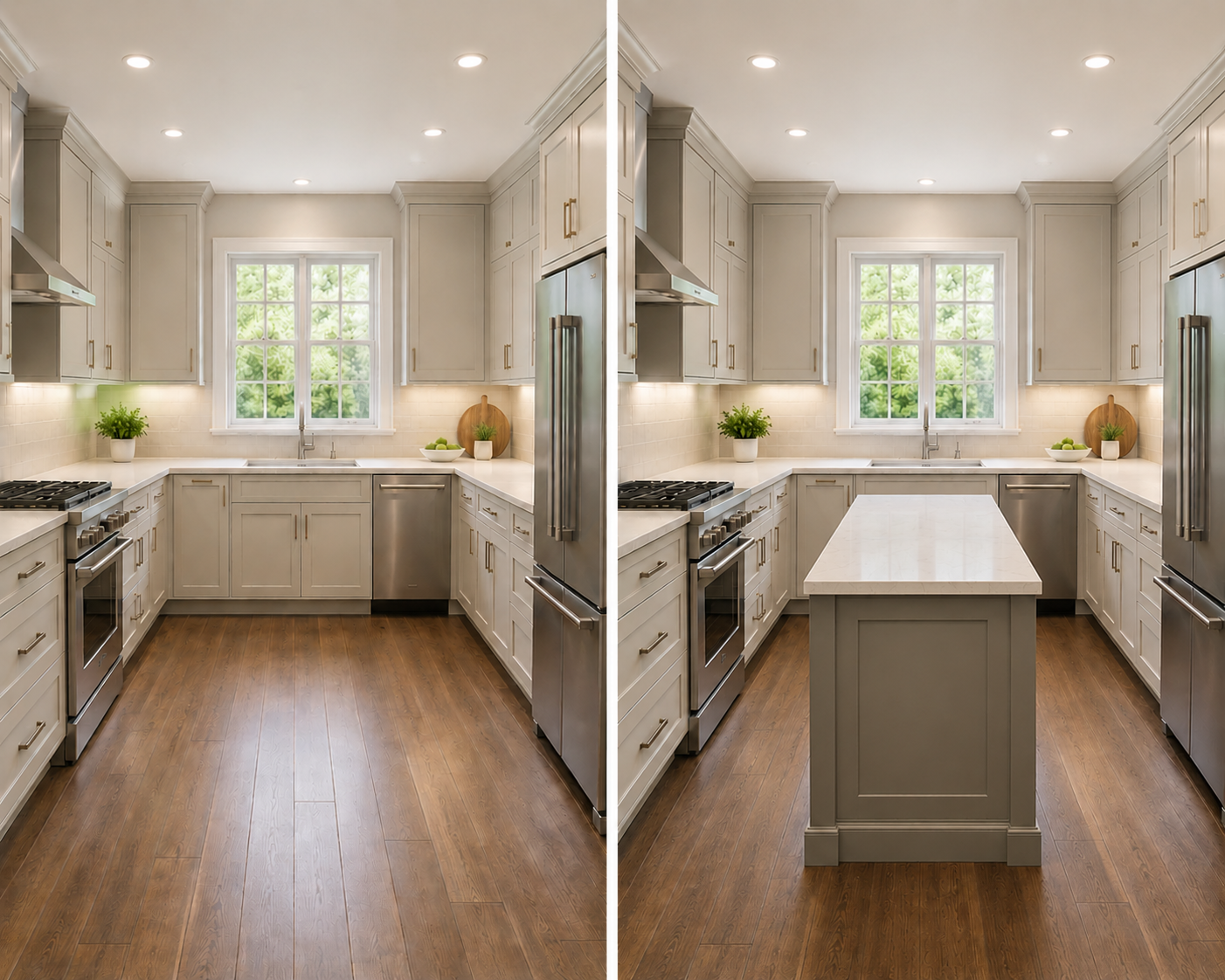
Run those numbers in your own kitchen before you shop. The greige below before-and-after image is the slim version of that math: a tidy U with an open middle, then a narrow rectangular island dropped in with walking room on all four sides. The aisles capped how wide it could get.
One more honest word on seating: planning for four stools is usually a fantasy. Most households seat two people at the island on a normal night and let the other two spots collect bags. Size the run for a dinner party that happens twice a year and you give up daily counter space to do it, when two well-placed stools cover real life better than a crowded row of four.
Start with the work you actually do at the counter, not the photo you saved. A baker wants uninterrupted surface and maybe a lower marble section for dough. Families who eat at the island care more about seating on one long side and drawers than about a sink that takes up the legroom.
Here's a strong opinion that will save some of you money: a second prep sink in the island is usually a waste. It eats into the storage and legroom that make an island worth having, and unless you run a true two-cook kitchen, the main sink is rarely more than a few steps away. Put that plumbing budget toward better cabinetry or a stone top you'll actually use every day.
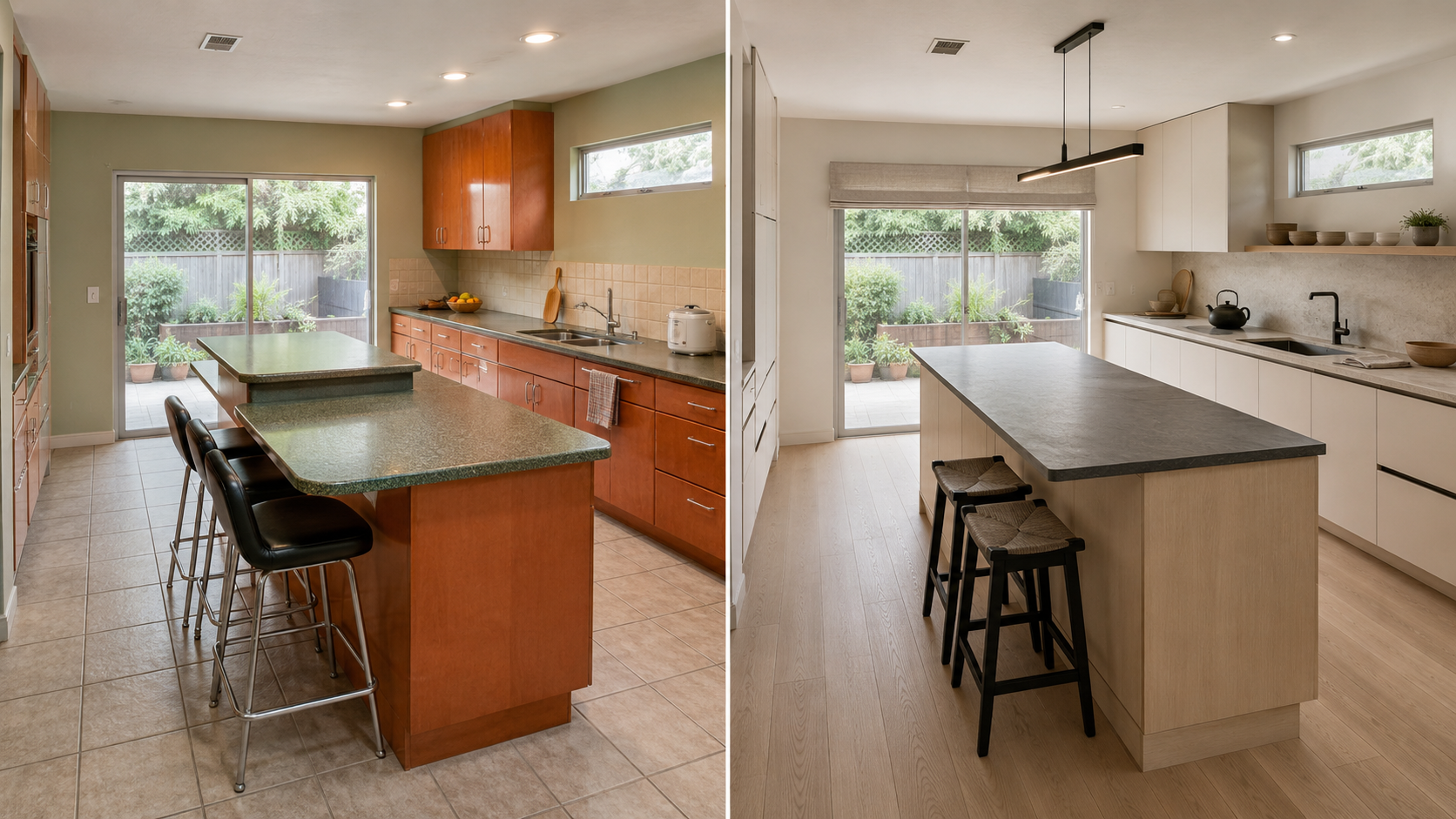
Function shows up in less obvious places than seating. The pair below swaps a two-tier island, the type with a raised bar hiding a prep counter behind it, for a single flat level. The flat version opens the sightline and gives you one full work surface instead of two stingy ones. Raised bars do hide cooktop mess, so they make sense in some layouts, but most kitchens look bigger without the step.
A kitchen island makeover before and after often changes nothing structural at all. Several of the pairs here keep the same footprint and only swap the finish, which is the cheapest way to refresh a kitchen that already works.
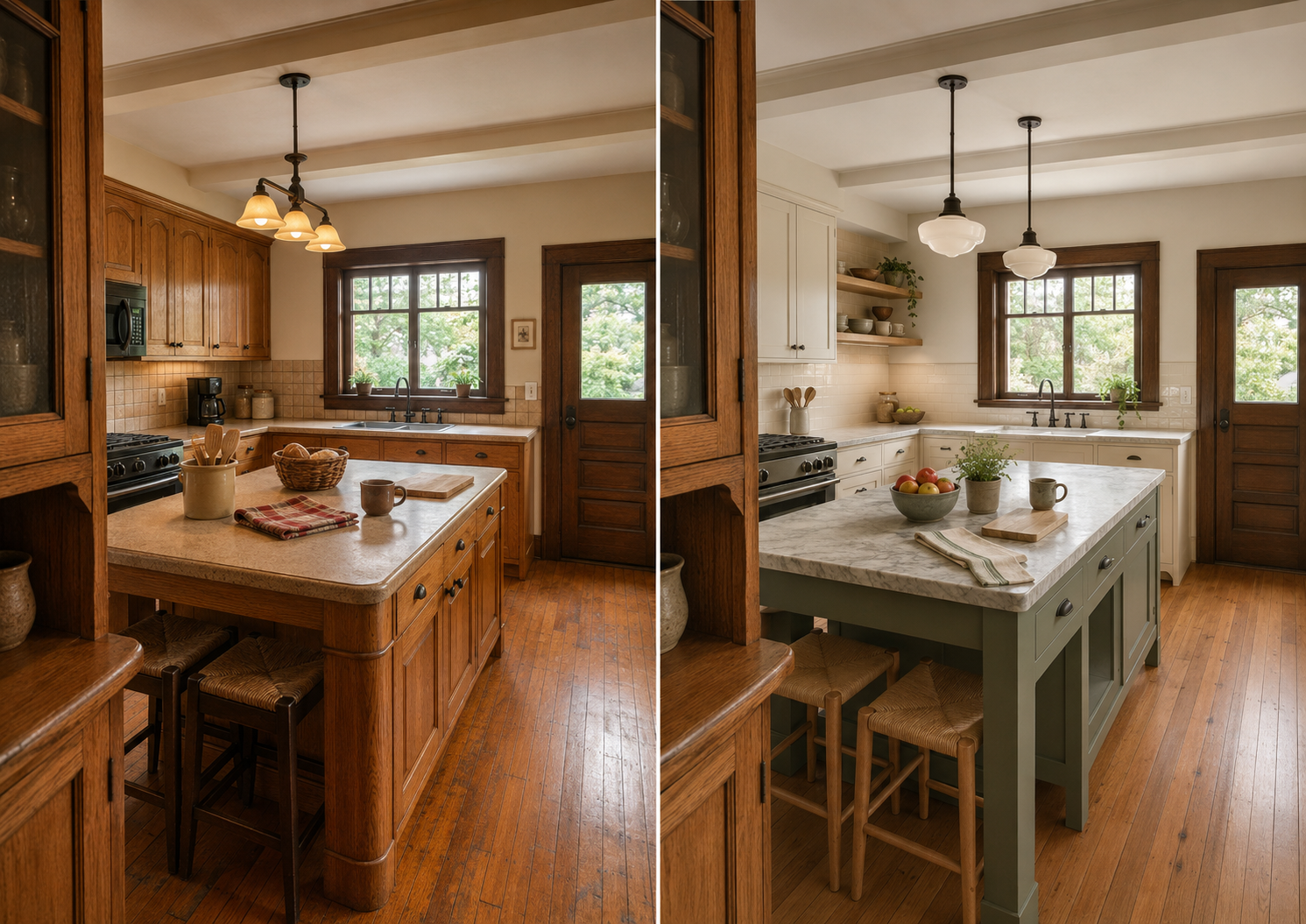
The first pair here is wall-to-wall honey oak, island included, the whole room one flat note of wood. The remodel lightens the perimeter cabinets, drops in a marble-look counter, and paints only the island a muted green, so it finally stands out instead of vanishing into the surrounding wood. No wall moved.
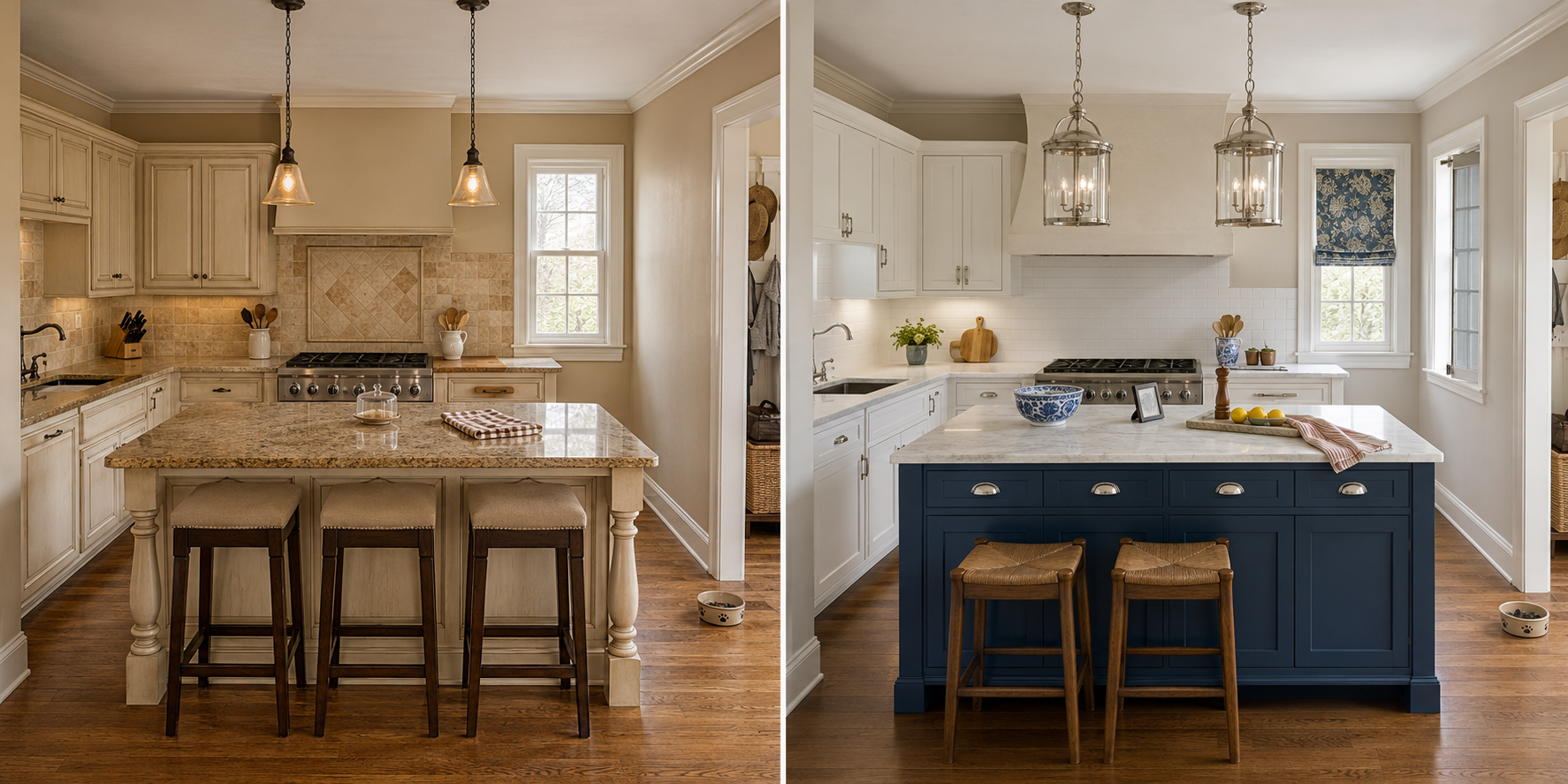
Swap green for navy and the next pair runs the same play: white perimeter cabinets, a marble counter, a deep navy base, and one fewer stool so the shorter island doesn't feel packed.
Color doesn't have to run cool. A cream island with a butcher-block top turns dusty pink under a marble slab, set on turned legs that look more like a freestanding table than a cabinet. That furniture treatment works well in older houses, where a boxy built-in island can feel dragged in from a different decade.
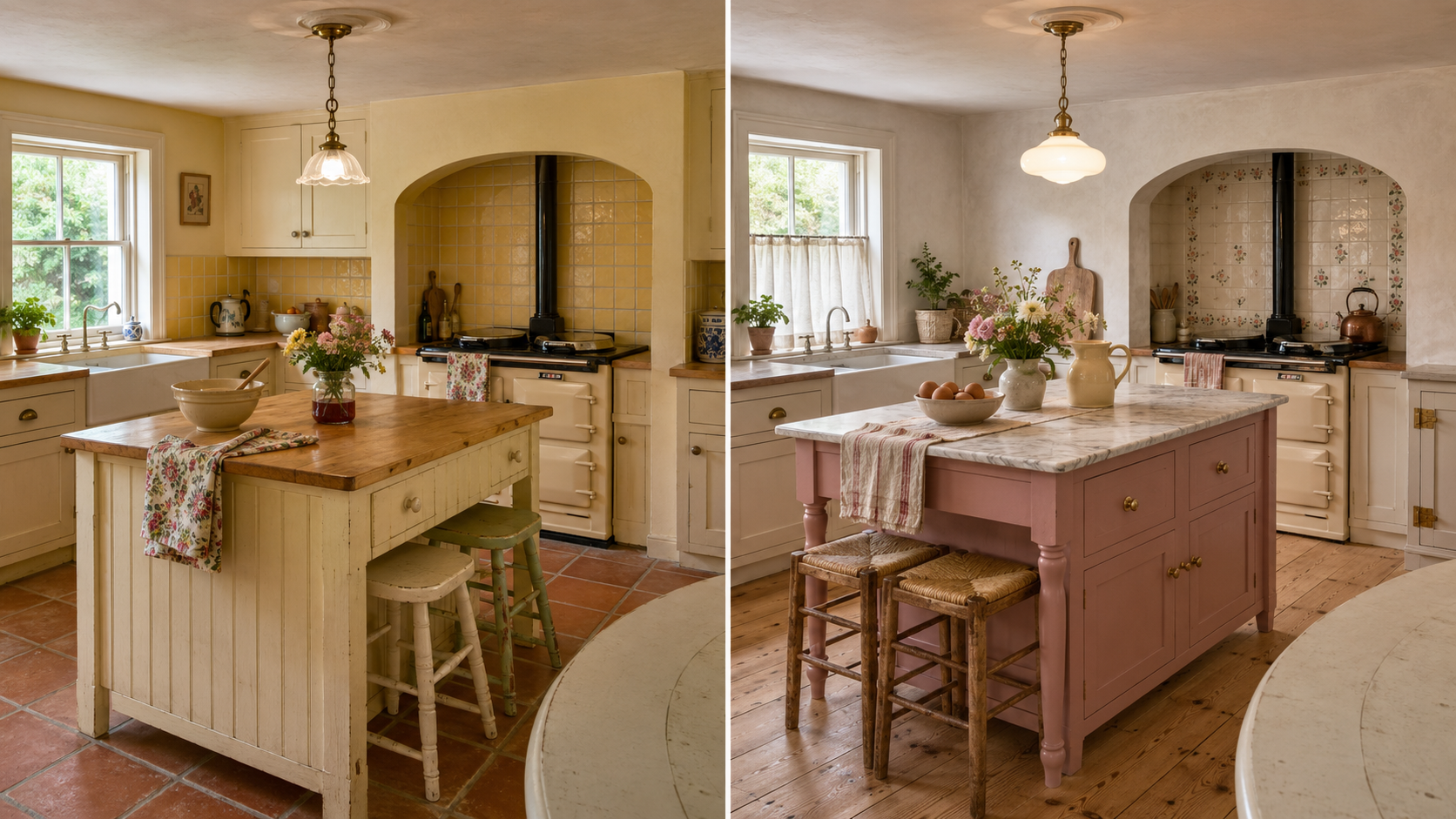
A contrast color on the island, against lighter perimeter cabinets, adds depth without a full gut. When you weigh it against a replacement, the decision usually comes down to two questions:
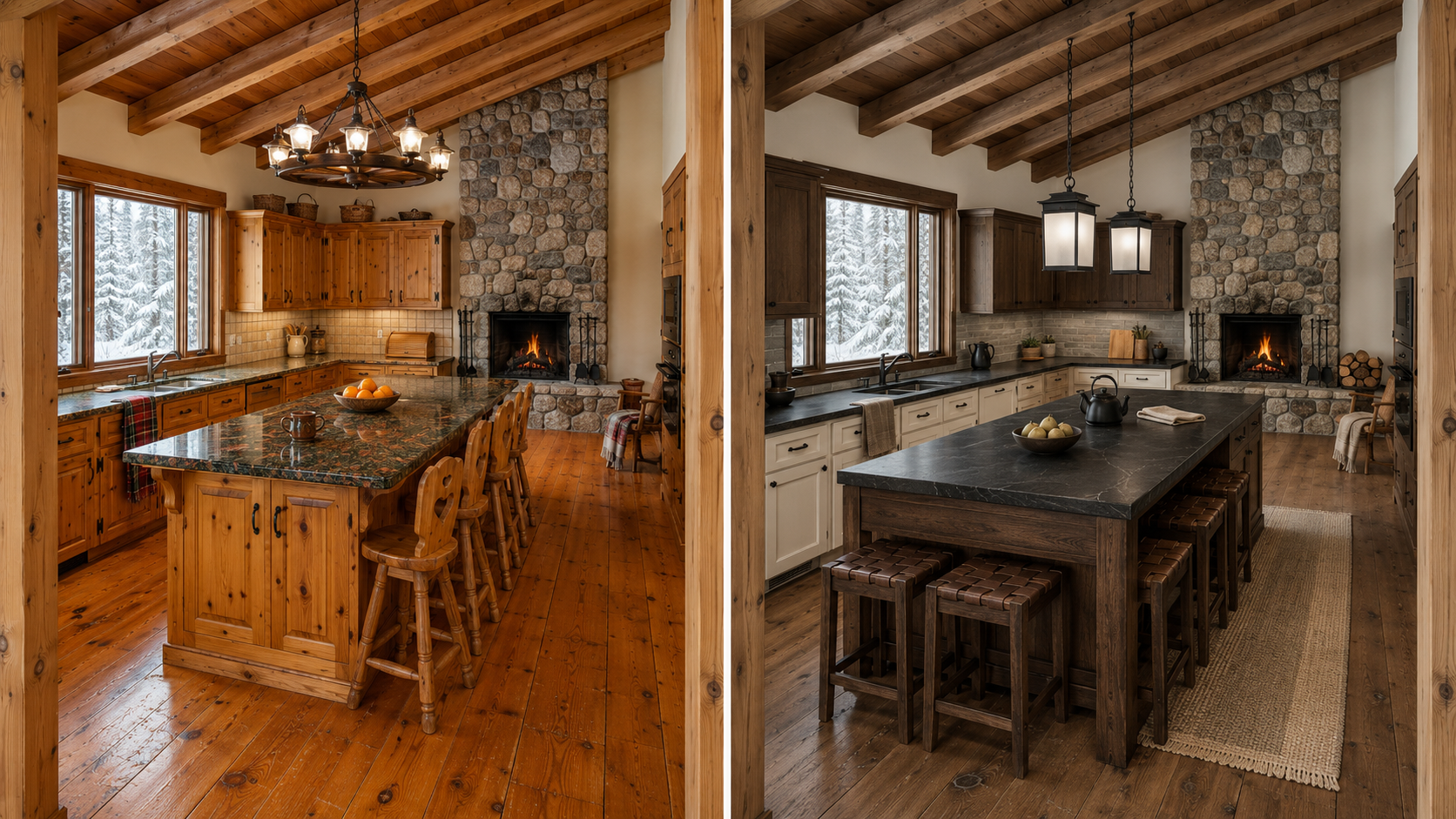
The countertop is the surface everyone sees, and it ages a kitchen faster than the cabinets do. The chalet pair makes the case: a loud multicolor granite gives way to a calm soapstone-look slab, and the eye lands on the stonework and the cabinetry instead of the counter.
Each material trades cost against upkeep:
For more helpful reading, look to our guide about mixing types of countertops in a kitchen along with our breakdown of countertop pricing.
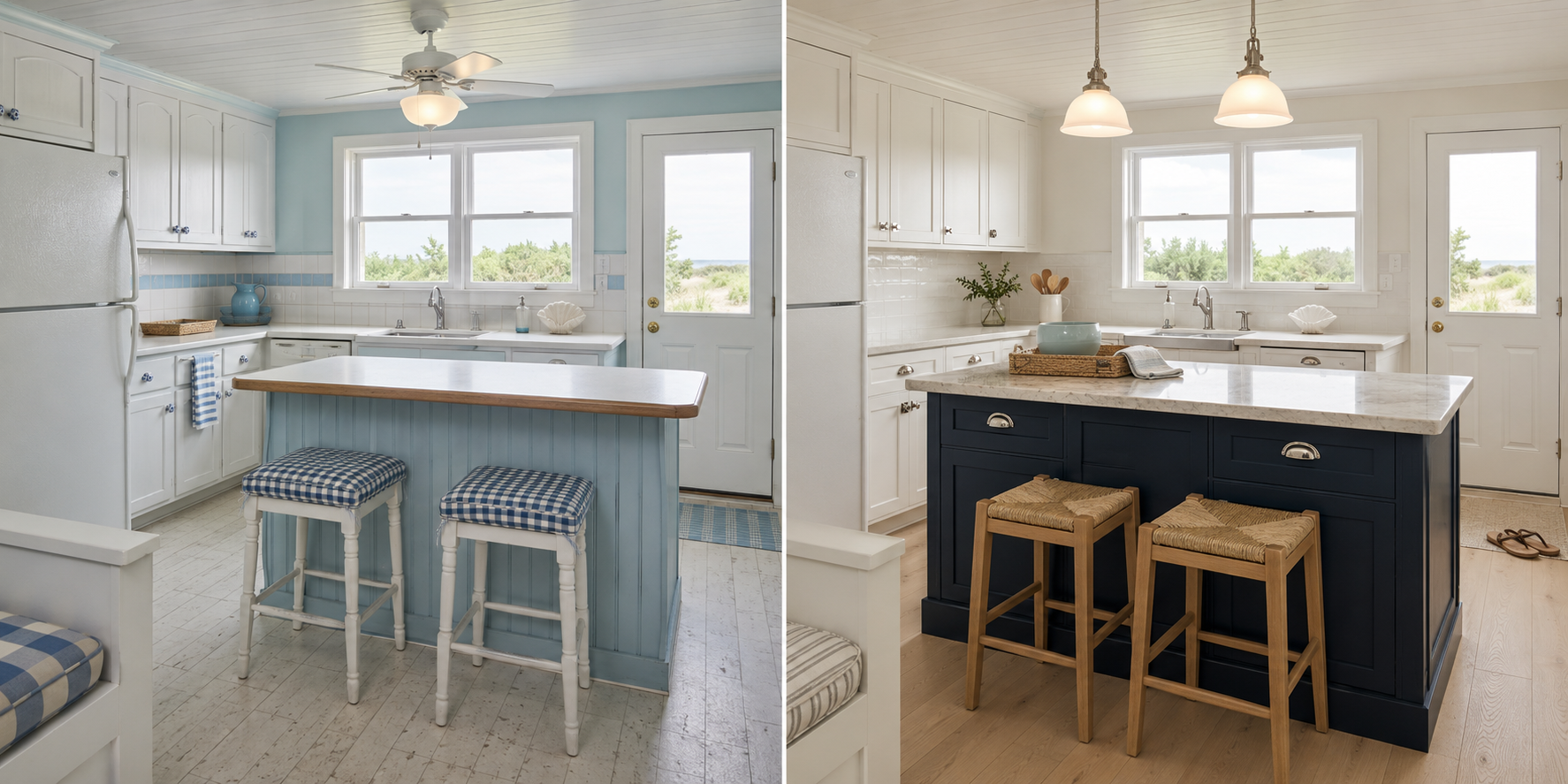
A small kitchen remodel with island, before and after, comes down to clearance. A compact room can still take an island as long as the aisles survive it. The coastal pair manages a decent-sized one in a tight footprint, trading a flimsy beadboard island and laminate top for a navy shaker base, a stone-look counter, and two rush stools tucked under one end.
If your aisles can't hold 36 inches once an island goes in, a few alternatives keep the prep surface without the squeeze:
Cost depends on whether you're refinishing an island, dropping in a stock unit, or building custom with a stone top and utilities. The ranges below are representative. Your number depends on materials, region, and whether the island carries a sink or cooktop.
|
Approach |
Representative cost |
Main cost drivers |
|
Repaint or reface an existing island |
$500 to $2,500 |
Paint, hardware, a new counter |
|
Stock or prefab island |
$3,000 to $5,000 |
Size, counter material, install |
|
Custom island, no utilities |
$5,000 to $10,000 |
Cabinetry, stone top, finish |
|
Custom island with sink or cooktop |
$9,000 to $20,000 and up |
Plumbing, gas or electrical, permits |
Set aside 10 to 20% of the budget as a contingency for what opens up once work starts, like an outdated circuit that can't carry a new outlet or a floor that needs leveling under the island. On a $10,000 island, that's $1,000 to $2,000 in reserve. Never settle for fewer than three quotes, and compare the scopes line by line, because the clearest picture of where the money goes matters more than the lowest bid.
An island project can be as small as a coat of paint or as involved as new plumbing and a stone slab, and the right contractor makes the difference between a clean install and a string of change orders. Block Renovation matches you with vetted local contractors who compete for your project, then reviews every scope to catch missing line items and red flags before work starts. After the deposit, payments are tied to approved milestones, so your contractor is paid as the job moves forward. Tell Block about your kitchen and get matched with contractors who have done islands like yours.

Renovate confidently with Block
Easily compare quotes from top quality contractors, and get peace of mind with warranty & price protections.
Before and After
Kitchen Island Remodel: Before and After Inspo
06.26.2026

Before and After
Modern Farmhouse Kitchen Renovations Before and After
06.16.2026
Before and After
Limewash Brick Before and After: Photos and What to Know
06.10.2026
Before and After
Budget Small Kitchen Remodel: Before and After Ideas
06.08.2026
Before and After
Mid-Century Modern Exterior Before and After Ideas
06.04.2026