




Ceiling
Ceiling Medallion Installation: Costs and Modern Ideas
09.04.2026
06.19.2026


In This Article
If your ceilings have a bumpy popcorn texture, your home was likely built or last finished between the 1960s and the mid-1980s, when the finish was standard for basements, bedrooms, and hallways. Removing it is one of the most common updates owners of these homes take on, and the difference is hard to miss once the texture is gone.
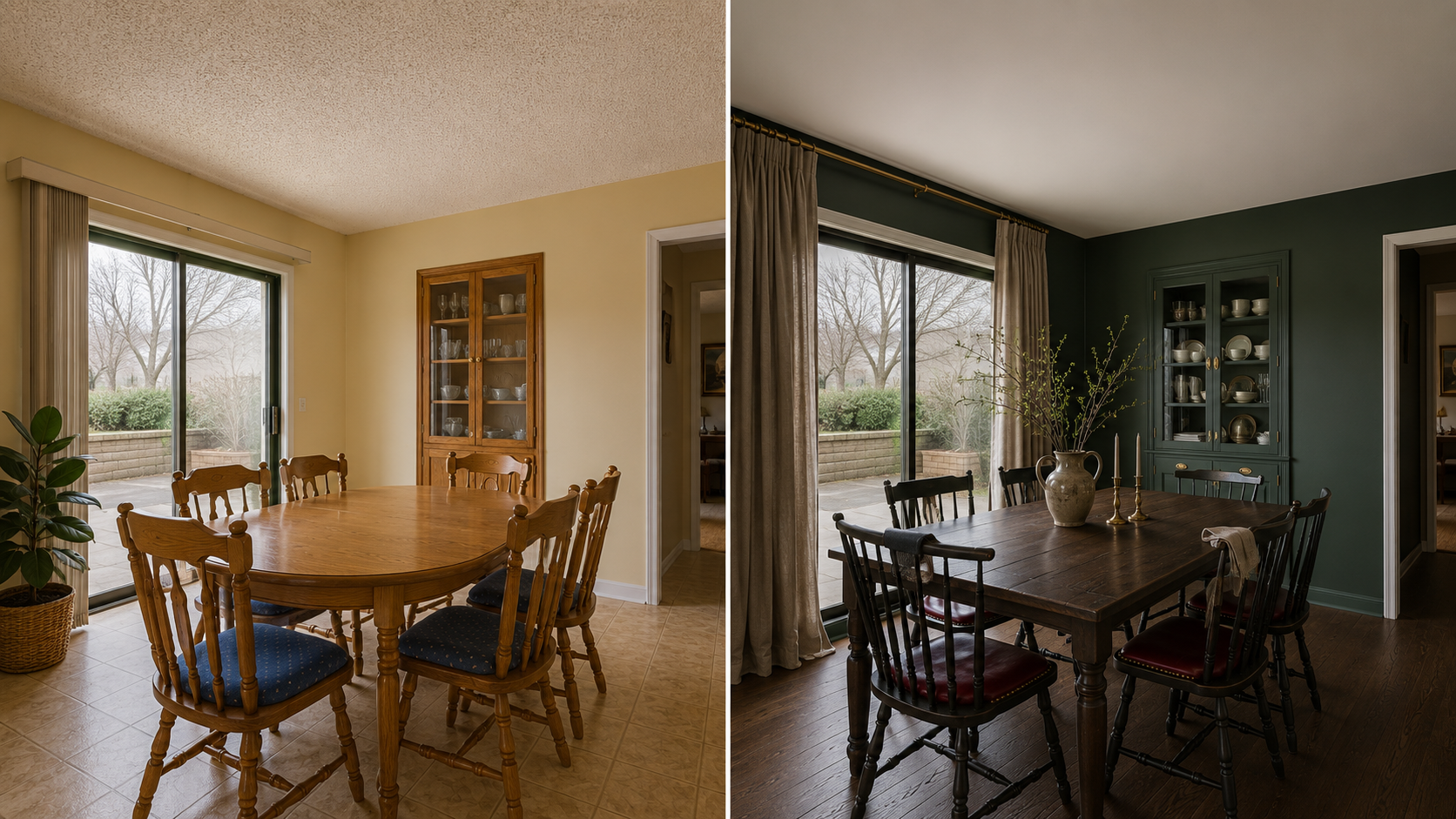
In the after photo, the smooth ceiling reflects light more evenly than the old texture did. The new paint and furniture drive most of the change, though a popcorn ceiling left in place would have undercut all of it.
There are a few, which is why not every ceiling needs to come down.
The case against keeping it is mostly about how the room looks and works. Popcorn texture dates a space to its build decade, collects dust and cobwebs in its ridges, and is close to impossible to patch invisibly after a leak or repair. It also casts small shadows that make a ceiling feel lower and a room feel dimmer.
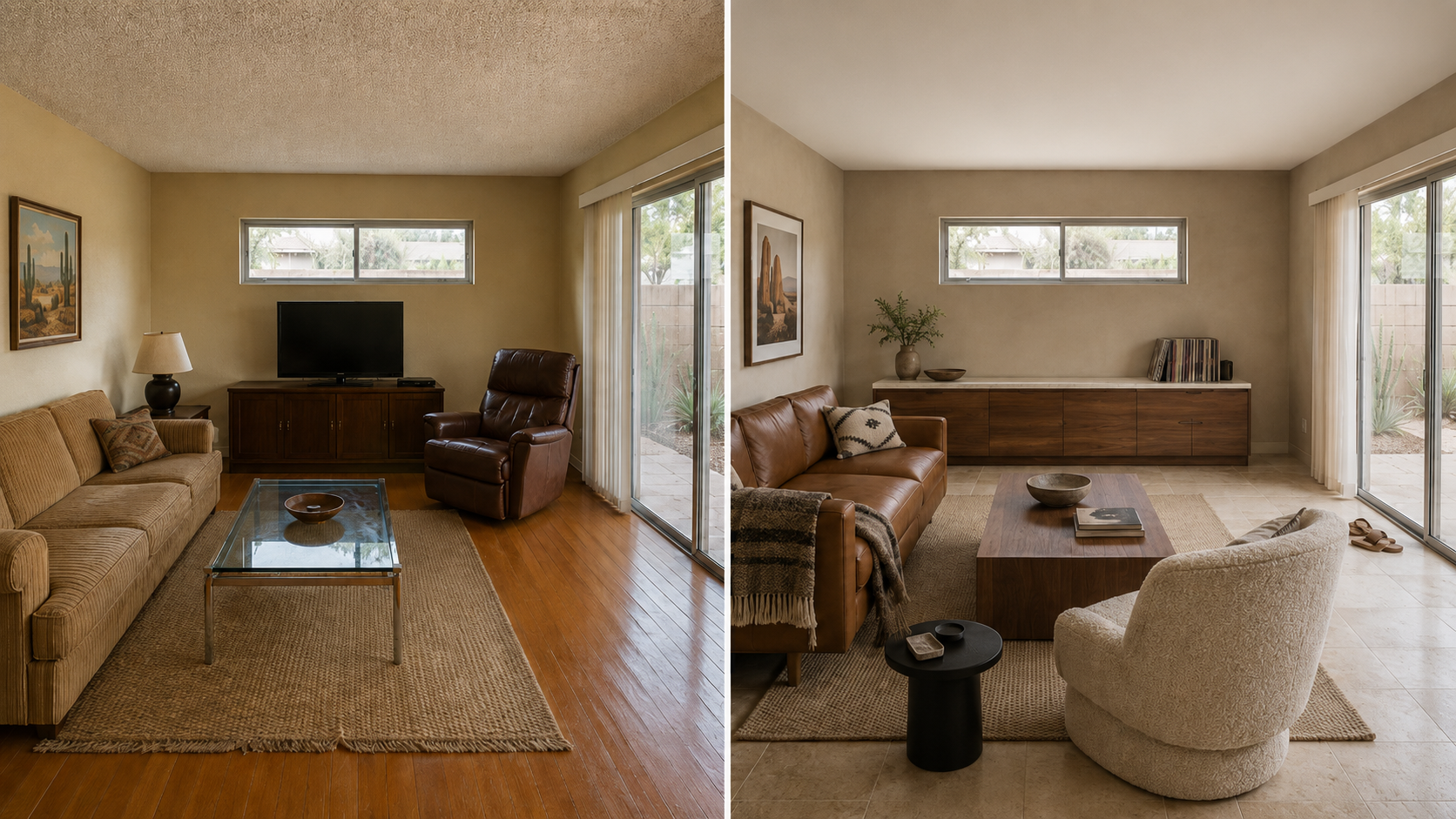
The den is the clearest example. New furniture and styling pulled it forward, but the popcorn texture alone was enough to date the room to 1964, whatever else sat under it.
Ceilings installed before the mid-1980s can contain asbestos, which was mixed into many popcorn products until it was phased out. Scraping an untested ceiling is the one step in this project that carries real health risk, because dry scraping releases fibers into the air.
Have the ceiling tested before any work starts. A lab analysis of a small sample usually runs $50 to $100, and you can collect the sample yourself or hire a tester. If the result is positive, you have two paths: licensed abatement (removal by a certified crew) or encapsulation (sealing it in place).
Scraping assumes the drywall or plaster underneath is sound. Plenty of ceilings are not, and you can usually spot the trouble from the ground. Catching it early keeps the quote accurate, because the repair gets built into the bid instead of turning up as a change order halfway through.
For a ceiling with no asbestos, removal is one of the cheaper updates per square foot, since the labor is straightforward and the materials are minimal. Costs climb when the ceiling needs skim coating to smooth it out, when ceilings are high or angled, or when a positive asbestos test brings in a licensed crew.
|
Project |
Typical cost |
Notes |
|
Single room, no asbestos |
$200 to $600 |
Scraping, skim coat, and primer |
|
Whole house, no asbestos |
$1,000 to $3,000 |
Scales with square footage and ceiling height |
|
Asbestos abatement |
Adds $3 to $10 per square foot |
Requires a licensed abatement crew |
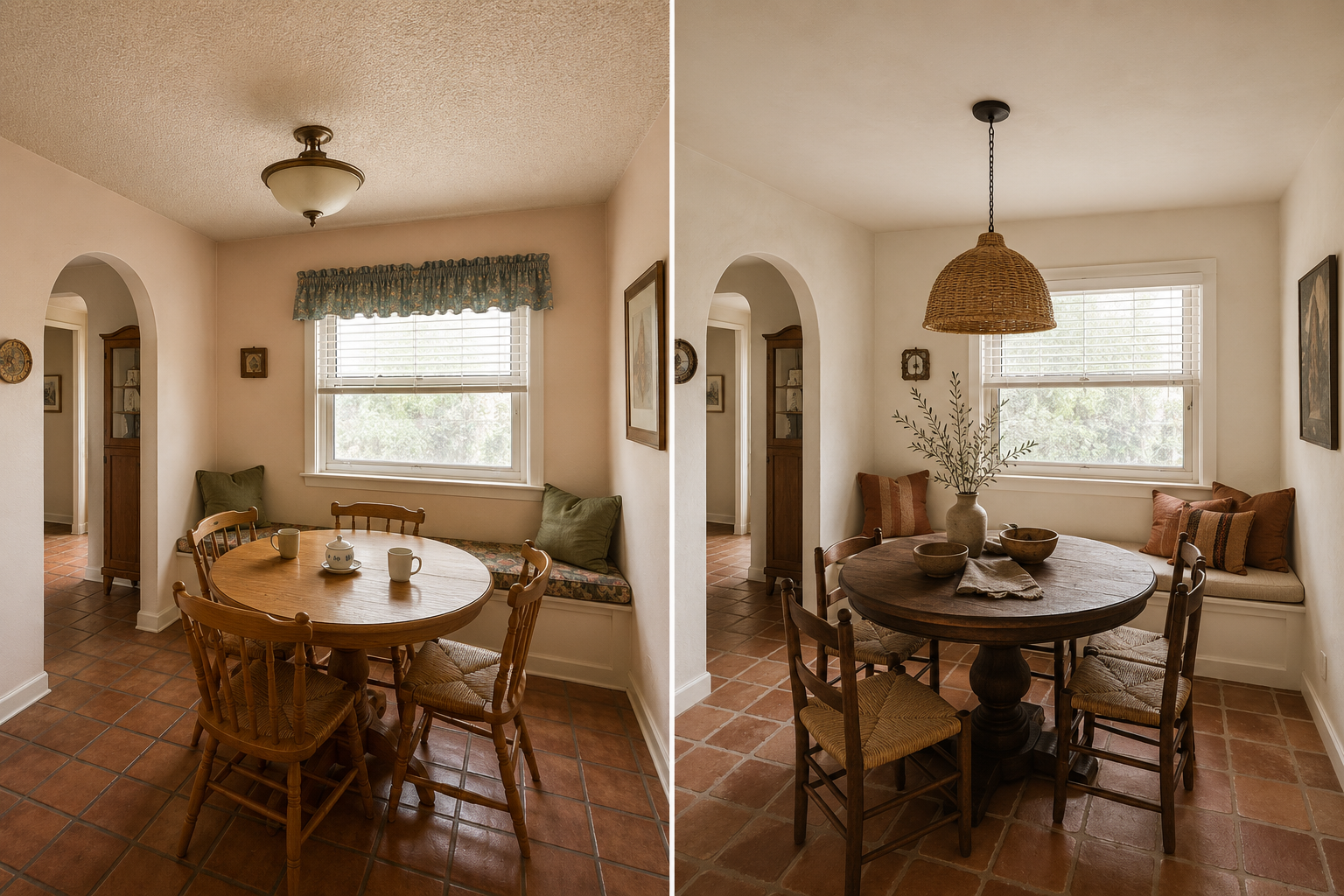
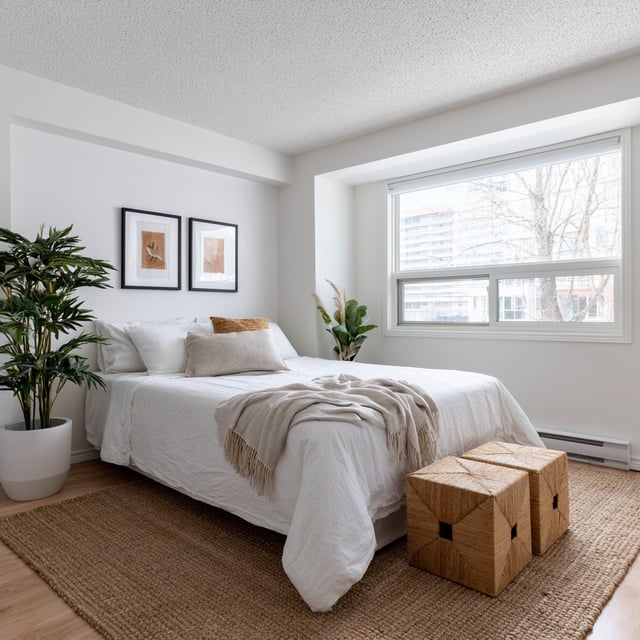
The before and after here looks like a bigger change than a room this size should deliver. A small space like this is inexpensive as a standalone job, but the per-square-foot rate runs higher than a large room, since setup, containment, and cleanup take about the same effort regardless of size. Bundling several rooms into one project usually brings the rate down.
Renovate with confidence every step of the way
Step 1: Personalize Your Renovation Plan
Step 2: Receive Quotes from Trusted Contractors
Step 3: Let Us Handle the Project Details

Scraping is the default, though it is not always the cheapest or cleanest route. Two other methods leave the texture in place.
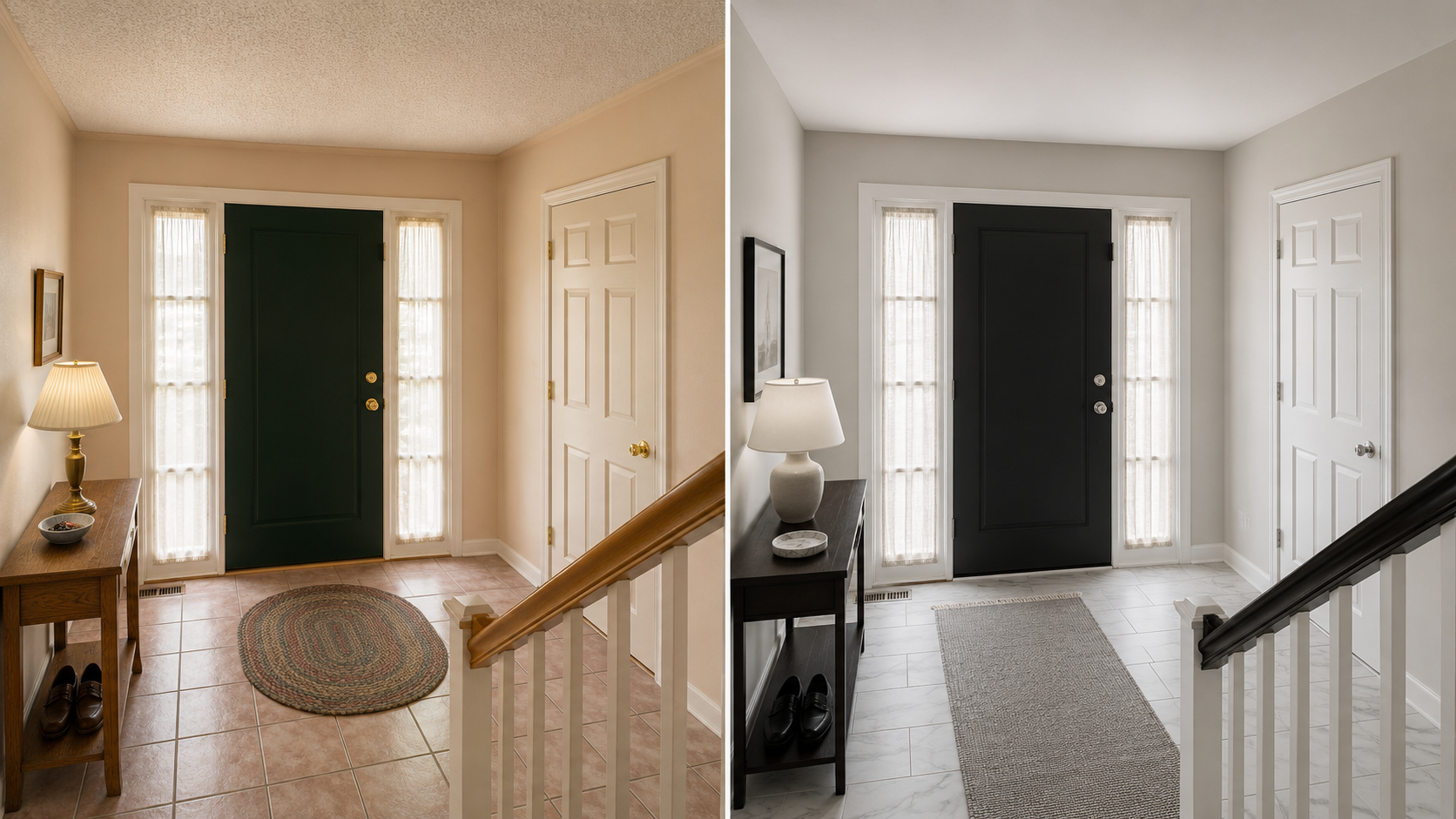
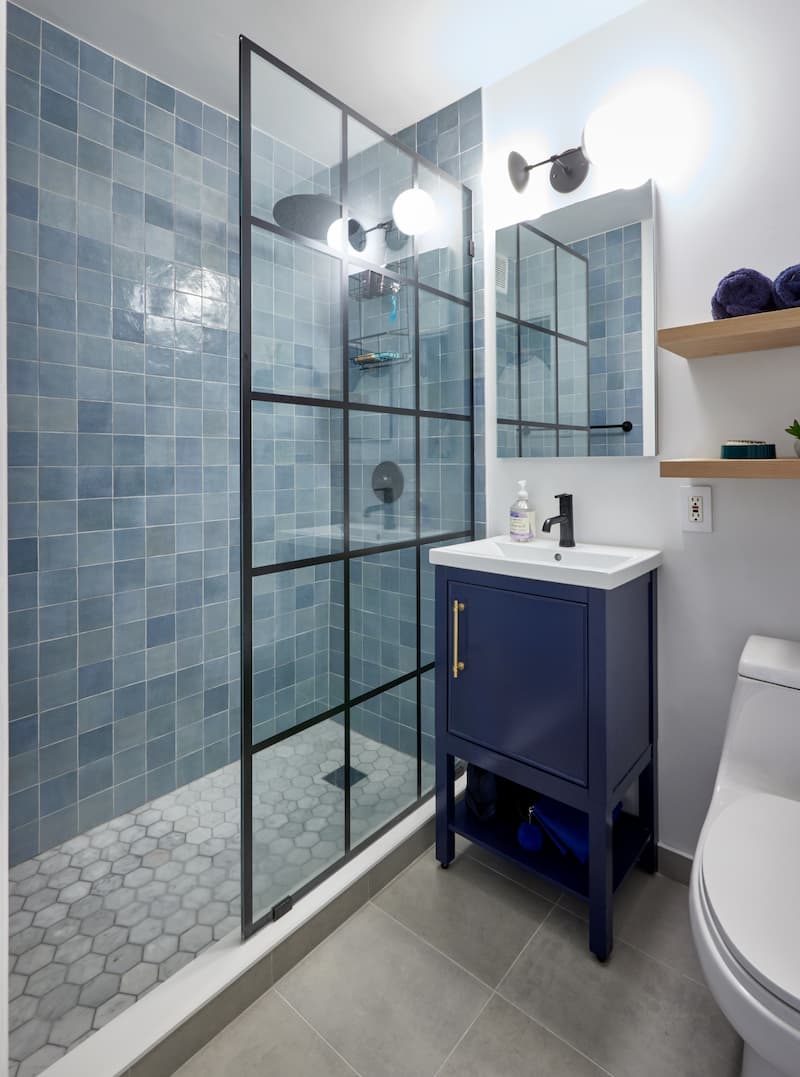
This is where covering sometimes wins out. Entries and stairwells like this one have tall or angled ceilings that are harder to scrape safely from a ladder, and the added access cost can make a skim coat or drywall overlay the more practical call.
The cheapest option is to leave the texture and repaint it, a common high-ROI strategy for rental units. A fresh coat covers yellowing, smoke stains, and general grime, and it can make a tired ceiling look clean again for the cost of paint and a roller. The texture stays, so this does nothing for the dated look or the dust-catching ridges.
Popcorn soaks up paint, so plan for more than a standard ceiling would need, and use a thick-nap roller or a sprayer to reach into the texture without crushing it. Painting also makes future removal harder, since sealed texture resists the water that makes scraping possible. If removal is likely within a few years, scraping first and painting the smooth ceiling is the cleaner sequence.
Removal is a dusty job, and the prep is most of the work. A crew will sheet the walls and floors in plastic, mask off doorways, and set up containment to keep dust out of the rest of the house. Furniture either moves out or gets covered and pushed to the center of the room.
A single room often takes one to two days, including the skim and prime. A whole house runs several days to a week, and longer if asbestos abatement is involved, since that requires its own sealed containment and air clearance. You can usually stay in the home for a room-by-room job, though the active work area stays off limits while a crew is in it.
Popcorn ceiling removal often happens alongside a larger refresh, the way it did in the rooms above, where new paint, flooring, and lighting went in at the same time. A vetted contractor can scope the ceiling work on its own or fold it into a bigger project, and coordinate asbestos testing and abatement if your ceiling needs it.
Tell Block your project details once, and your area's best contractors compete for the work with detailed scopes reviewed for missing line items and red flags before you commit.
Remodel with confidence through Block

Connect to vetted local contractors
We only work with top-tier, thoroughly vetted contractors

Get expert guidance
Our project planners offer expert advice, scope review, and ongoing support as needed

Enjoy peace of mind throughout your renovation
Secure payment system puts you in control and protects your remodel


Renovate confidently with Block
Easily compare quotes from top quality contractors, and get peace of mind with warranty & price protections.
Ceiling
Ceiling Medallion Installation: Costs and Modern Ideas
09.04.2026
Ceiling
Cathedral Ceiling Ideas - Trim, Molding, Beams & Lighting
08.28.2026

Ceiling
Concrete Ceiling Repair and Replacement
08.22.2026

Ceiling
Wallpaper on Ceiling: Ideas and Cost Ranges
08.01.2026

Ceiling
Drop Ceiling Makeover: Before and After Ideas
06.19.2026