



Design
Bathtub to Shower Conversion: Cost, Ideas, Examples & More
08.11.2026
06.23.2026


In This Article
If the curved walls and mushroom lamps of retro futurism appeal to you but you're worried the whole house will end up looking like a stage set, the difference comes down to how far you take it. The style is the way designers in the 1950s, 60s, and 70s pictured the future: curved forms, sculptural lighting, and chrome against warm wood. It's back partly because those curves and organic shapes already feel at home in a modern interior.
The challenge in a remodel is keeping the look livable. Go too far and a room starts to feel like a film set, the kind of space that photographs well but no buyer wants to live in. Good retro futurism interior design comes from committing to a few well-chosen elements rather than theming every surface, which keeps the space comfortable to live in and easy to sell later.
Retro futurism pulls from a specific window of design history, roughly the 1950s through the 1970s, when the Space Age and the jet age shaped how the future appeared in films, magazines, and product design. A few traits define it:
The brightest version of retro futurism interior design comes from the early Space Age. 60's retro futurism interior design leaned on white surfaces, molded plastic, chrome, and primary color pops. You can see that brighter, color-forward energy in this living room, where the curved sectional and saucer pendant set the mood.
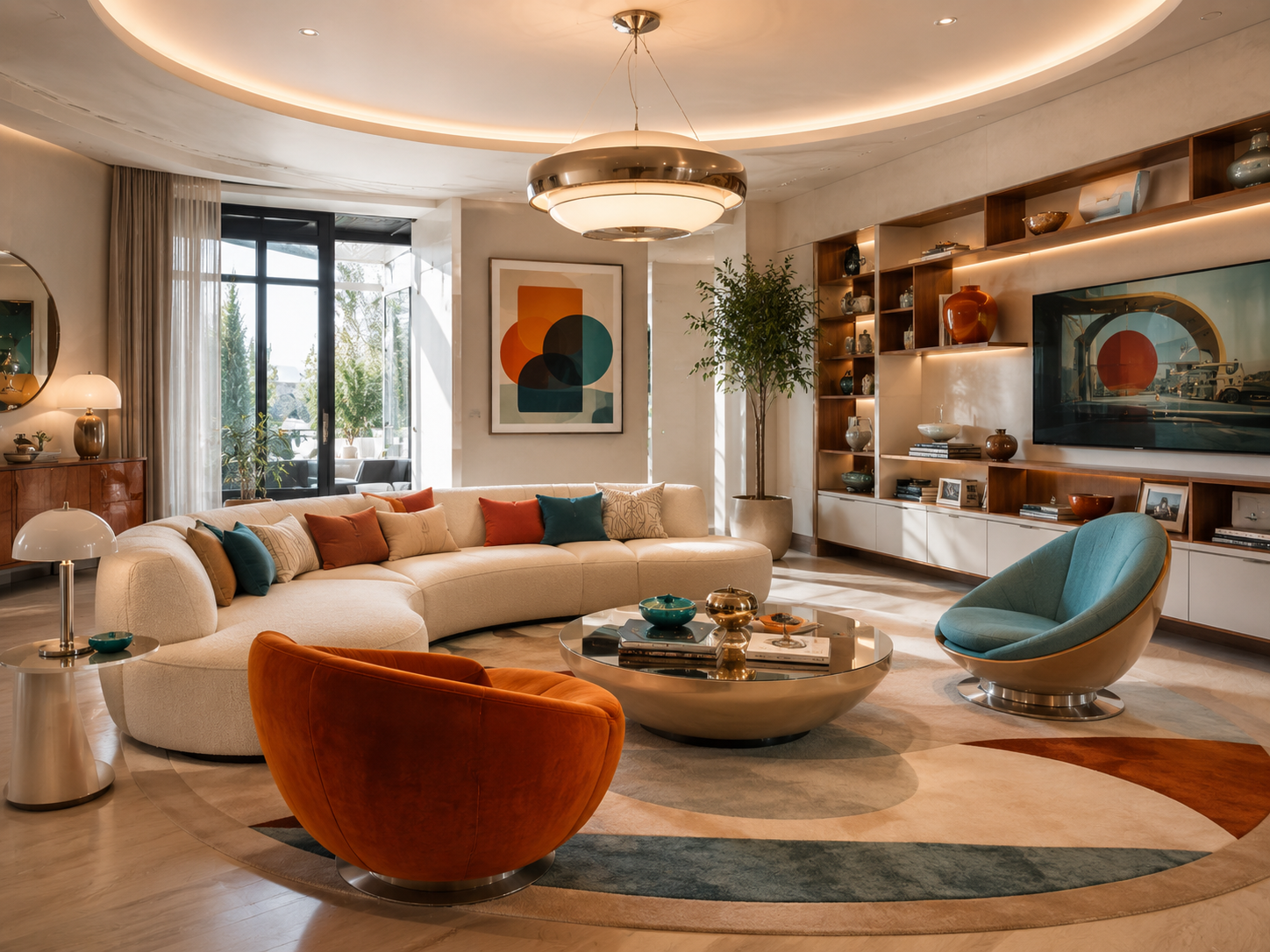
Most of what we call retro futurism today is the curved-shape trend that's already everywhere. Rounded sofas and arched doorways show up in current catalogs without any retro label attached. That overlap is why a committed retro-futurist room tends to hold its value instead of dating the way a fully themed room would.
Get the materials right and the era comes through before you've added a single accessory. These fit retro futurism with no styling effort required:
70s retro futurism interior design is built on soft terracotta and warm earth tones, which keep a scheme from feeling cold or clinical. The dining room here draws its warmth from plaster and pale wood.
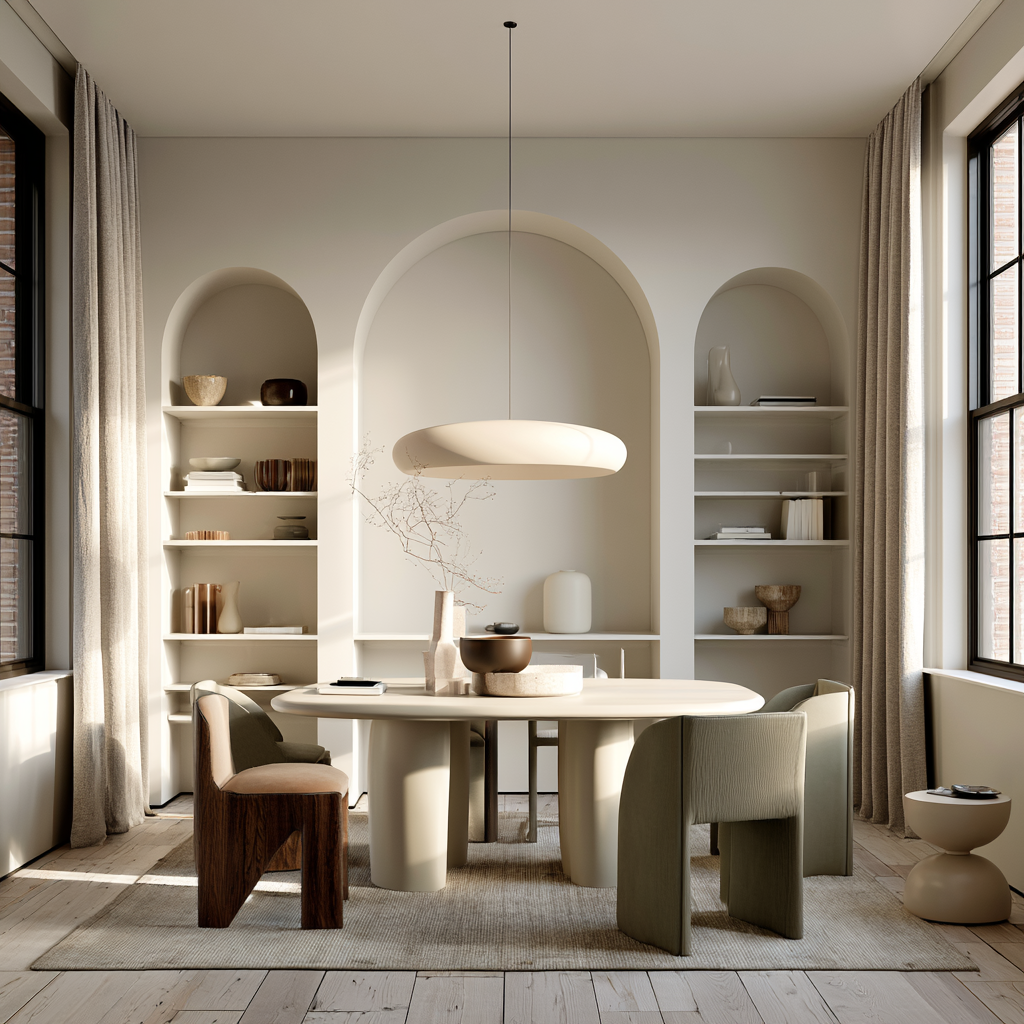
Restraint is the difference between a stylish room and an overdone one. Two or three committed moves per room are enough to register as the style. Theming every surface and every fixture is what pushes a space into film-set territory, and that's the version buyers walk away from.
The smartest moves are elements that feel retro-futurist while also working as good design on their own terms.
|
Element |
Why it feels retro-futurist |
Why it still resells |
|
Rounded kitchen island |
Its curved, sculptural form echoes Space Age design |
Curved islands are a current high-end kitchen feature |
|
Arched niches and doorways |
Soft arches recall mid-century futurist architecture |
Arches are one of the most requested current details |
|
Curved or organic sofa |
Blob silhouettes are core to the style |
Rounded seating is widely available and in demand |
|
Oval and racetrack mirrors |
Pill shapes signal the era at a glance |
Oval mirrors look modern in any bathroom |
|
Warm earth palette |
Terracotta and sage tie to the 70s side |
Earth tones are neutral enough for broad appeal |
|
Fluted wood paneling |
Reeded texture is period-correct |
Fluting appears across current cabinetry and walls |
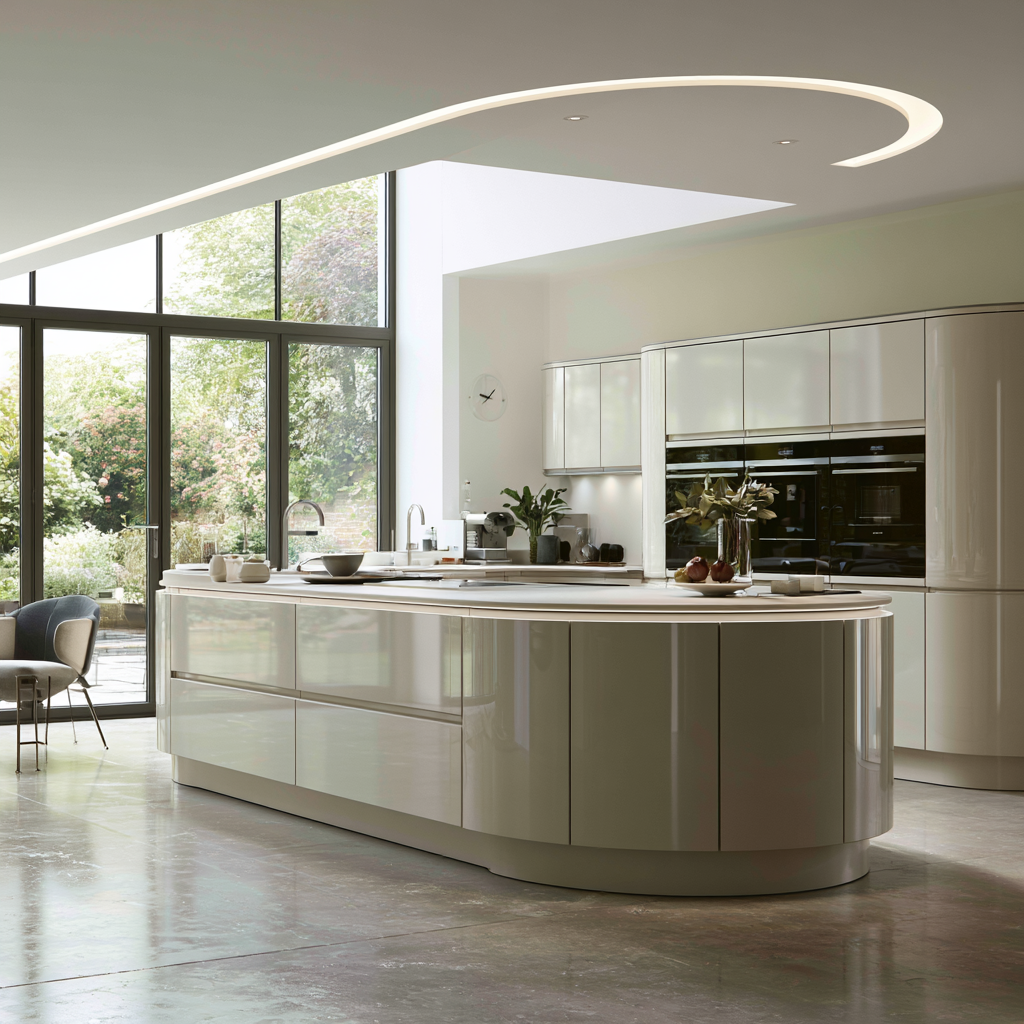
A curved kitchen island shows how this works, as it has a pure Space Age shape, but the walnut and stone adds retro, inviting vibes.
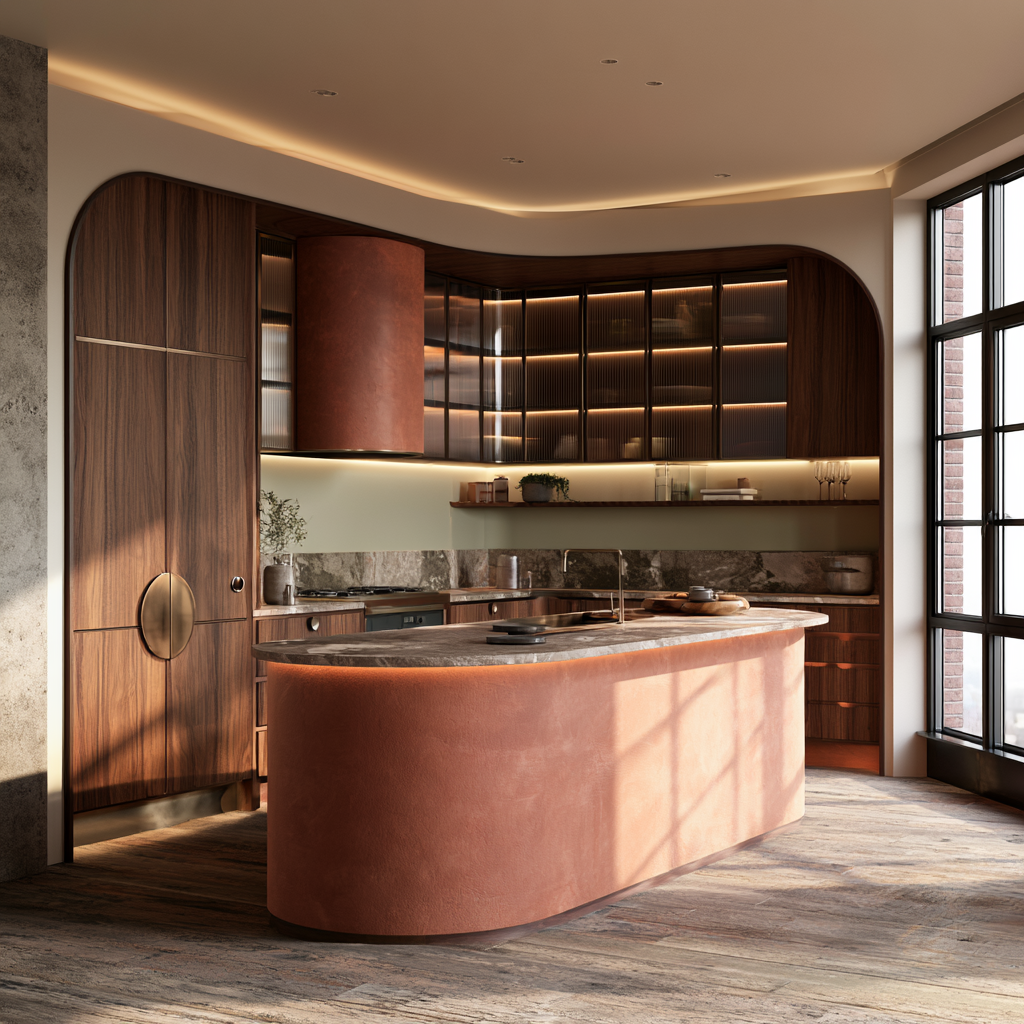
The same logic scales down to a bathroom. An oval mirror and a rounded vanity nod to the era in a small space, and neither one locks you into anything hard to undo.
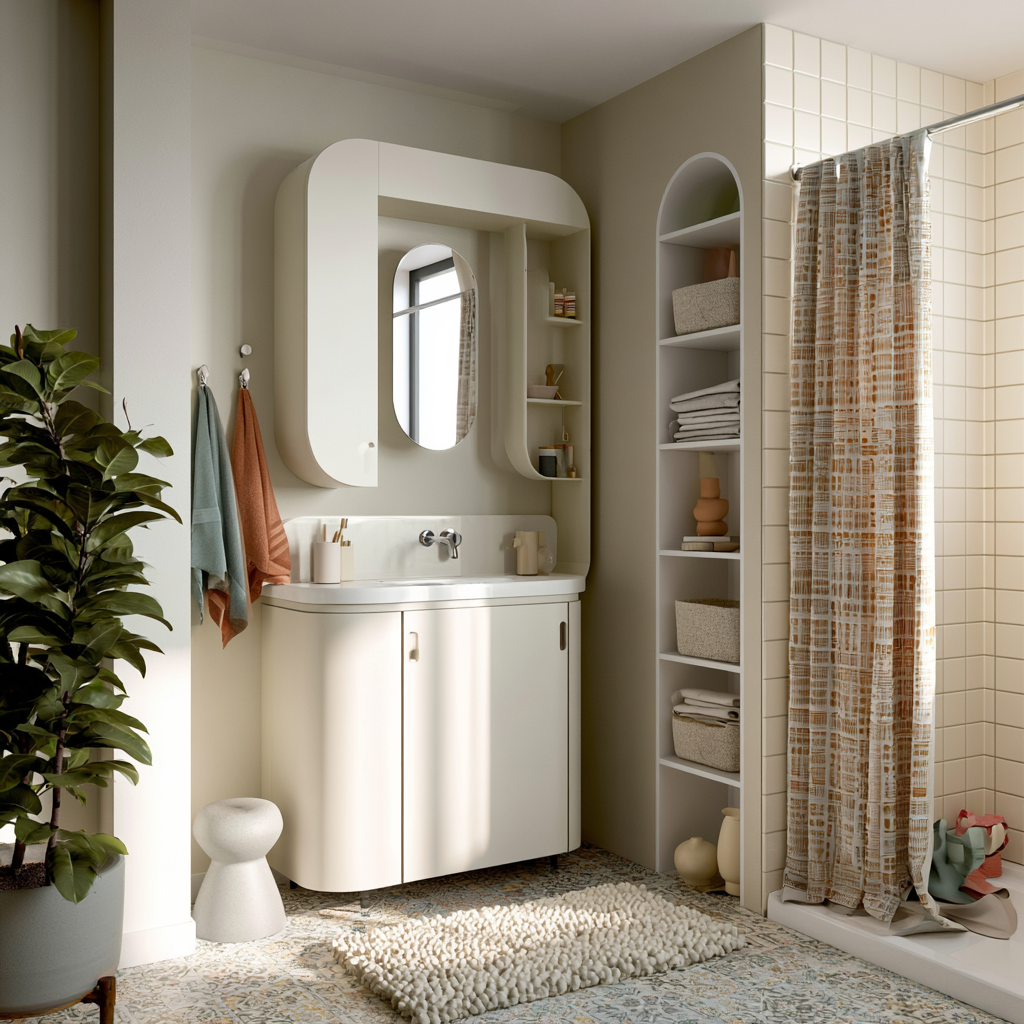
If you do one thing here, make it the lighting. Nothing signals retro futurism faster or for less money, and unlike millwork or tile, every piece is swappable the day you change your mind.
Because none of this touches the architecture of the room, lighting is the safest place to spend. When the budget's tight, you can buy the lighting and stop there and still get most of the effect for a fraction of the cost of a full remodel.
In this bedroom, the copper halo around the bed is doing almost everything. The walls stay a calm navy, so that single glowing line feels deliberate instead of loud.
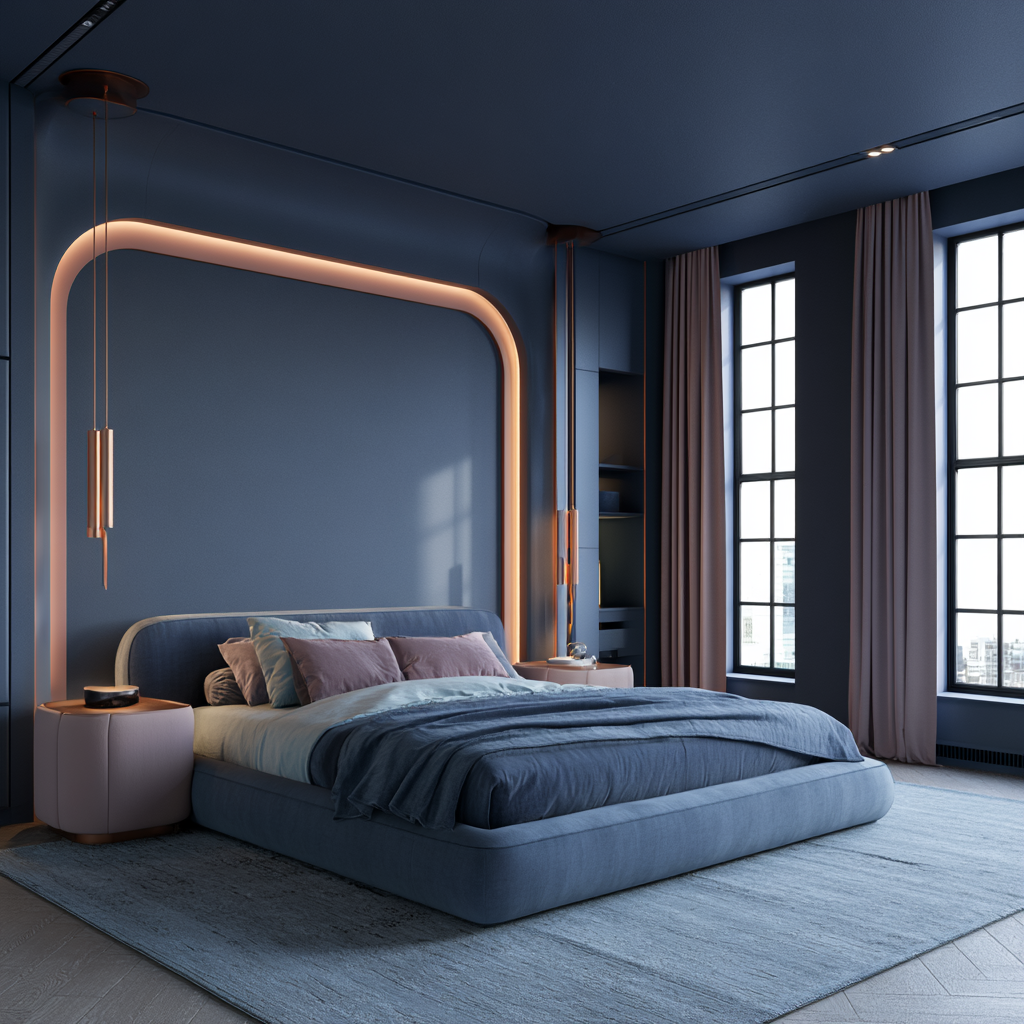
Ceiling lighting pulls the same trick. In this kitchen, the swooping cove is the one move that makes the space feel futurist, while the cabinetry itself stays restrained.
The Sputnik light fixture has its fair share of fans, but also detractors. When asked which light trend she thinks is overdone, Senior Designer Mary Ryan of MCR Designs pointed to the Sputnik look.
“It became really popular, so a lot of people installed them, but that style has to be scaled correctly and used in the right space. The mistake I see most is size. Installed too large or too small, it ends up overwhelming or underwhelming the room, and it becomes a negative focus in the space.”
Some homeowners want more than swappable pieces, and permanent architecture can support this style. Curved millwork, arched niches, and fluted walls hold their value because the same shapes already turn up across new construction and remodels.
One permanent move is worth avoiding: don't build the conversation pit. It's the signature retro-futurist move, and it returns almost nothing when you sell. A sunken seating area is expensive to build and hard to undo, and most buyers treat it as a red flag for safety and resale. You can get the same low, gathered feeling from a curved sectional that sits a few inches lower than a standard sofa, with none of the structural commitment.
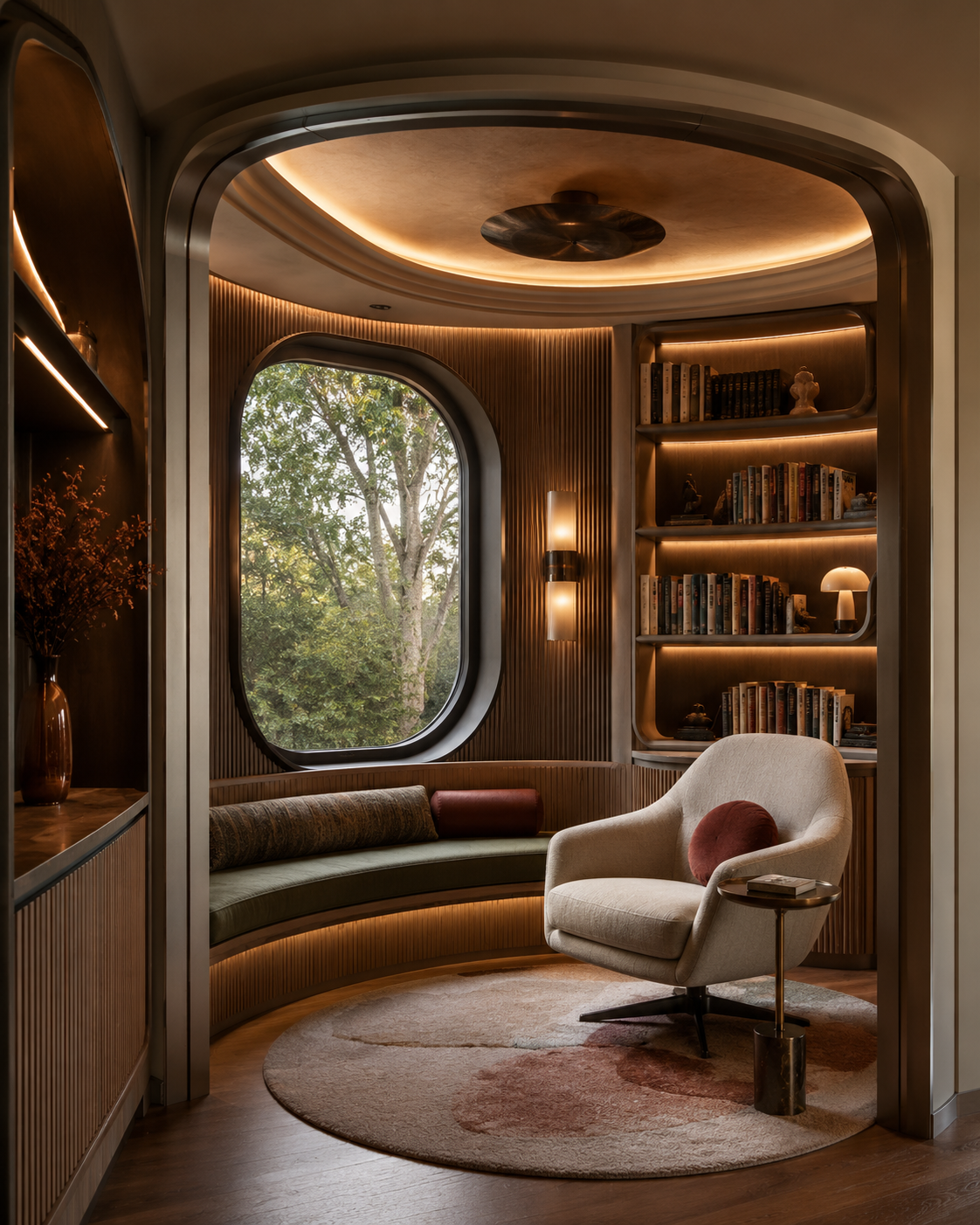
When you do commit to architecture, choose forms that would look good even without the retro context. The retro-futuristic reading nook in the picture is a strong example. Its curved fluted walls and porthole window come across as a designed nook rather than a film set, because the shapes themselves are current.
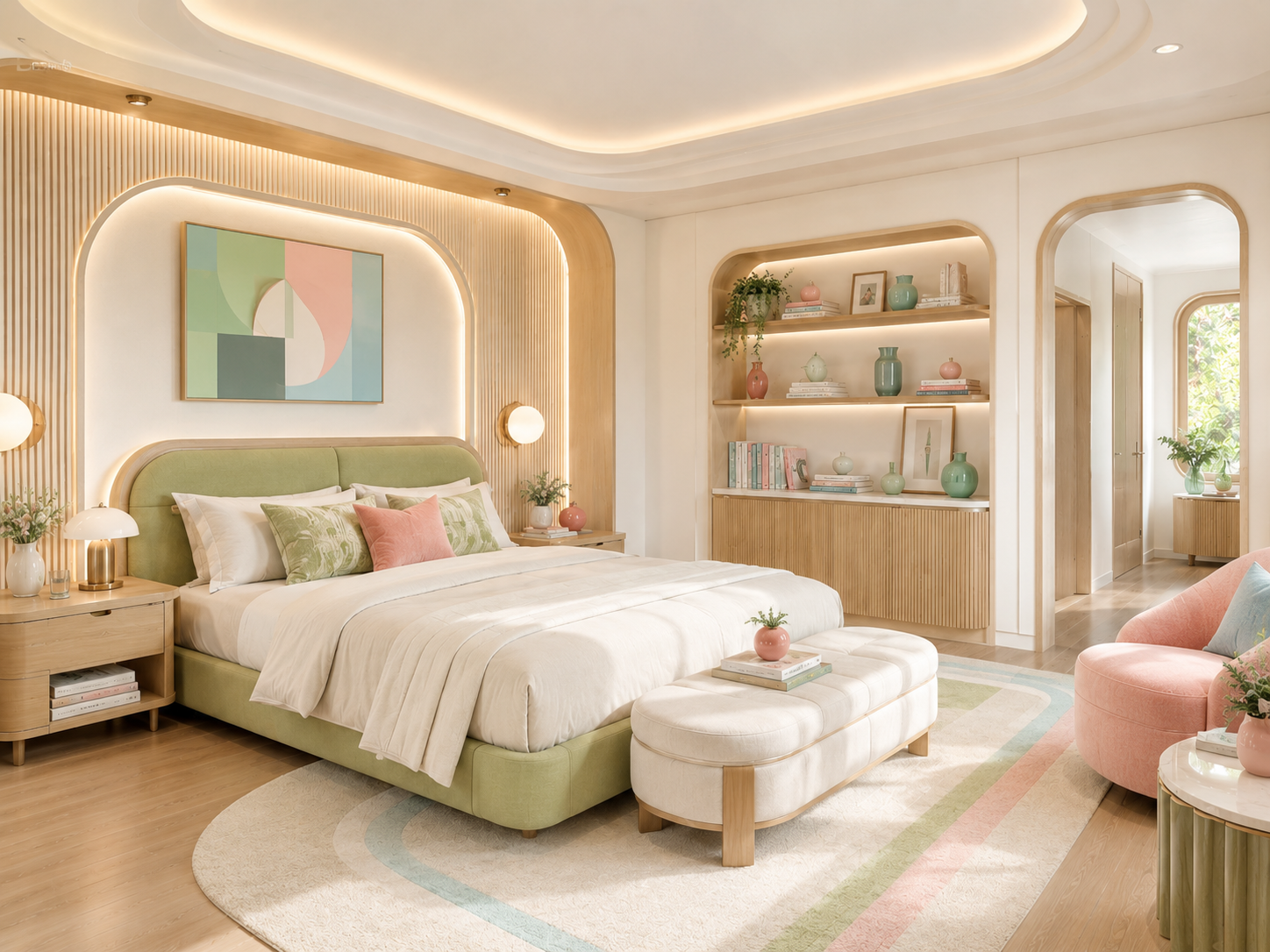
The same idea applies to a bedroom’s interior design. The retro-futuristic fluted, backlit headboard wall and arched shelving here are fully built in, yet the curves stay soft enough that the room never tips into theme.
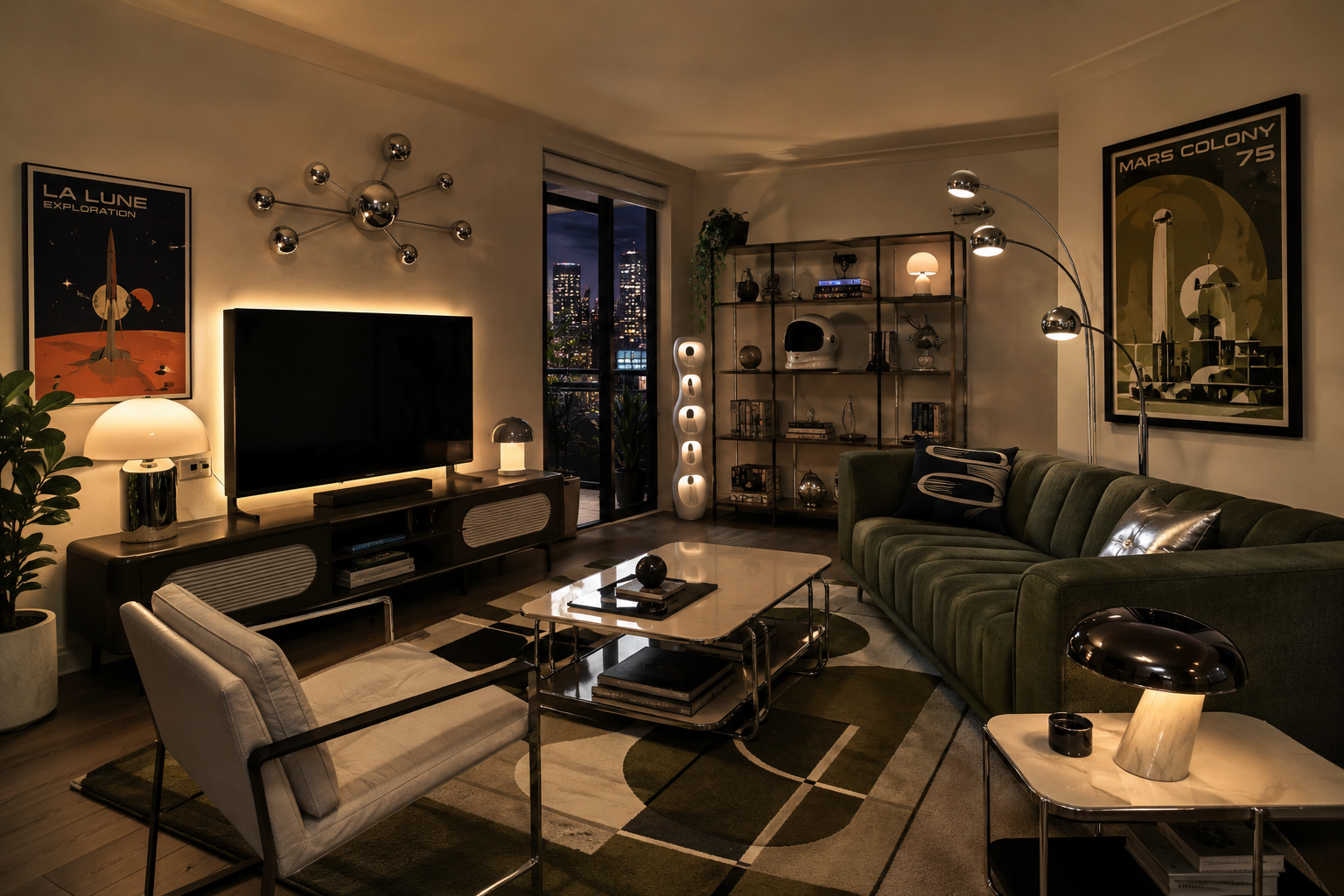
Sci-fi props are the worst entry point into the style. Mars colony posters, atomic wall clocks, ray-gun kitsch, and themed knickknacks cost very little and do real damage, because they turn a room into a set instead of a home. A space crammed with literal references photographs like a movie still and is miserable to actually live in.
You don't have to ban references entirely. The better move is to treat them the way you'd treat real art, framing just a few pieces and setting them against a grounded palette. The space posters in this living room work for exactly that reason: they hang like a curated gallery wall, and the rest of the room stays held to olive and chrome.
Pulling retro futurism into a remodel comes down to a short set of decisions. Pick a few committed elements rather than theming the whole house. Ground the palette so one or two bold moves have room to land. Spend on lighting first, since it gives you the most effect for the least money. Save the permanent changes for curved and arched forms, and skip the conversation pit.
The harder part is execution. Curved millwork and plaster islands require contractors who know how to build soft forms cleanly, and a bad install shows immediately on a rounded surface. Block Renovation matches you with vetted contractors and gives you fixed pricing and a clear project plan before any work starts, so the retro-futurist details you want come out looking intentional. If you're planning a remodel with this style in mind, Block Renovation can help you scope the work and set a realistic budget without the guesswork.

Renovate confidently with Block
Easily compare quotes from top quality contractors, and get peace of mind with warranty & price protections.
Design
Bathtub to Shower Conversion: Cost, Ideas, Examples & More
08.11.2026
Design
Open Shelving Bathroom Design Ideas & Optimal Placement
08.08.2026

Design
Dining Room Dimensions: Minimums and Standard Sizing
08.07.2026
Design
Split Foyer Renovation: Ideas, Costs & What Pays Off
07.16.2026
Design
Wainscoting vs Board and Batten: How to Choose
07.06.2026