



Backsplash
Backsplash Same as Countertop: Ideas, Costs and Upkeep
09.18.2026
06.17.2026


In This Article
You have a folder of rustic backsplash ideas saved by now: a brick wall behind the range, handmade zellige in a wash of green, a run of reclaimed wood under the shelves. Every one of those photos was taken the day the kitchen was finished, before anyone cooked bacon against it. That is the part the photo leaves out, and it is the part that decides whether you still love the wall in two years or spend your weekends scrubbing it.
The ideas below are sorted by how much work each one is once the kitchen is in use, and by where on the wall it actually belongs. A few of the most photographed materials are also the highest maintenance, and one of them can fail an inspection sitting directly behind your stove.
A backsplash is not one surface with one job. The wall behind your cooktop, the run behind your sink, and the stretch under open shelving each face a different problem, and a material that handles one easily will struggle with another.
That is why the same material can be a smart pick on one wall and a mistake on the next. Hold onto that split as you read the ideas, because it is what lets you keep the materials you love without taking on the upkeep they would need in the wrong spot.
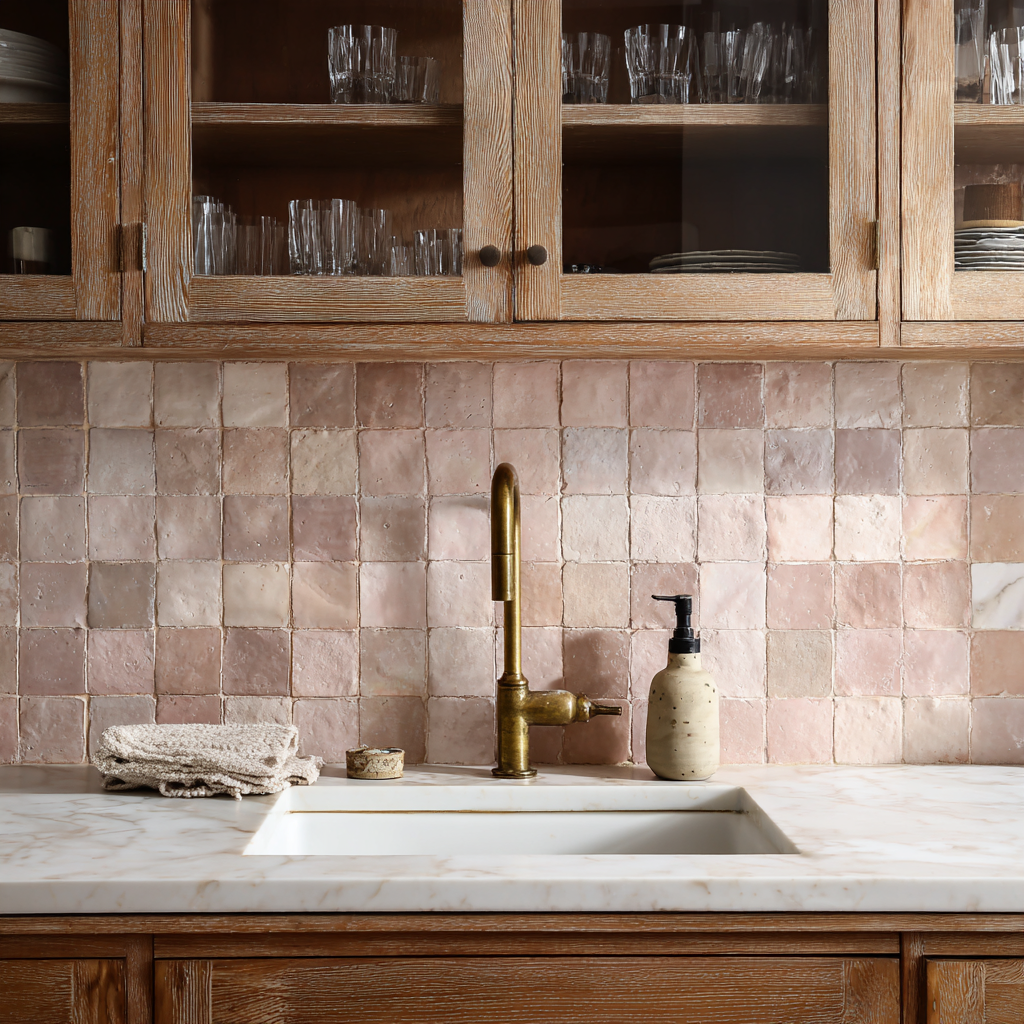
Here is how the materials these idea lists feature most often actually behave once the kitchen is working. The grease and water are a given. The column that surprises people is the last one.
|
Material |
Sealing and upkeep |
Fine behind a cooktop? |
|---|---|---|
|
Wood-look porcelain |
None beyond normal wiping, non-porous |
Yes, wipes clean and is non-combustible |
|
Glazed ceramic or porcelain brick |
Only the grout needs attention |
Yes |
|
Real thin brick veneer |
Seal after install, reseal now and then |
Yes if sealed, since brick and grout both hold grease |
|
Limewash or plaster |
Durable but porous, marks can set in |
Better off the cooktop wall |
|
Natural stone such as limestone or travertine |
Reseal once or twice a year |
Only if you keep up the sealing |
|
Zellige |
Seal, and expect lippage and batch variation |
Workable, but hard to wipe behind a stove |
|
Terracotta |
Porous, seal and reseal |
Only sealed, and it still darkens over time |
|
Real reclaimed wood |
Absorbs grease, never wipes fully clean |
No, it counts as unprotected combustible at the cooktop |
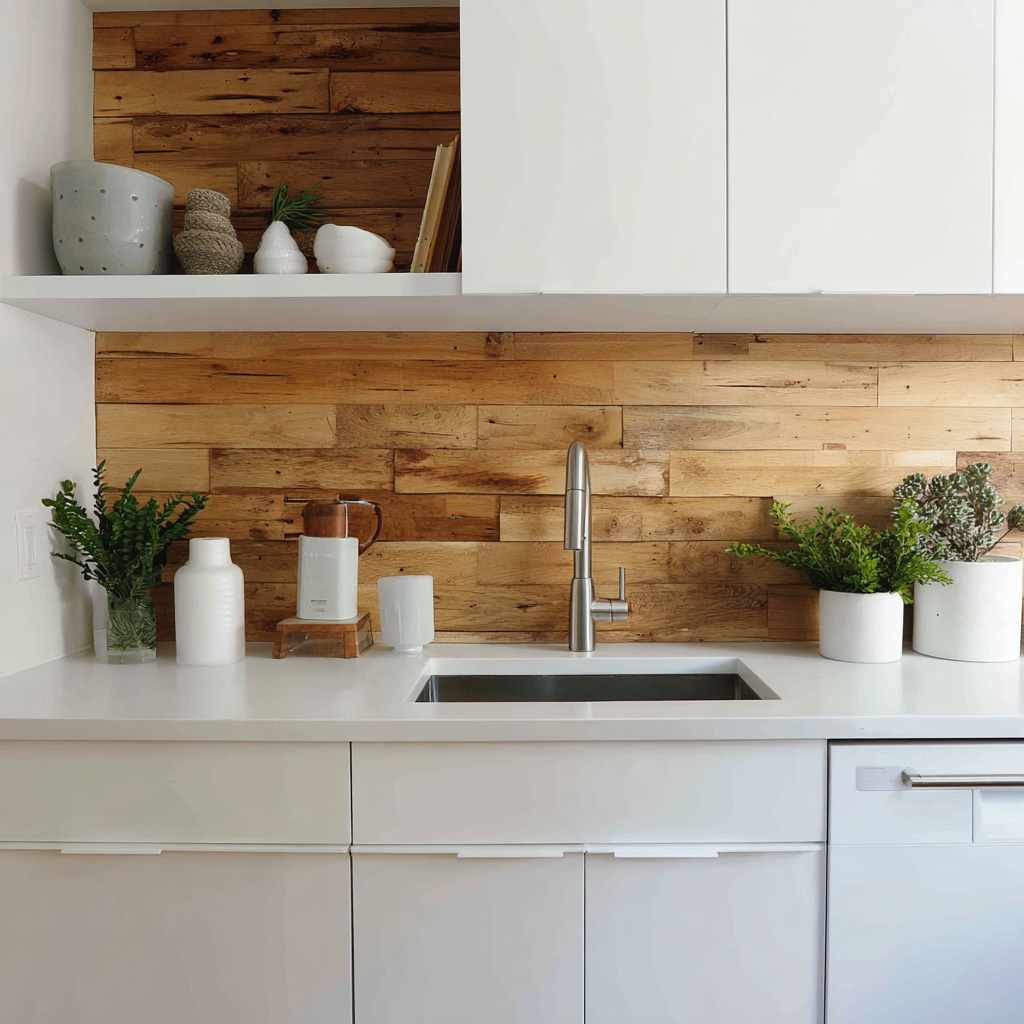
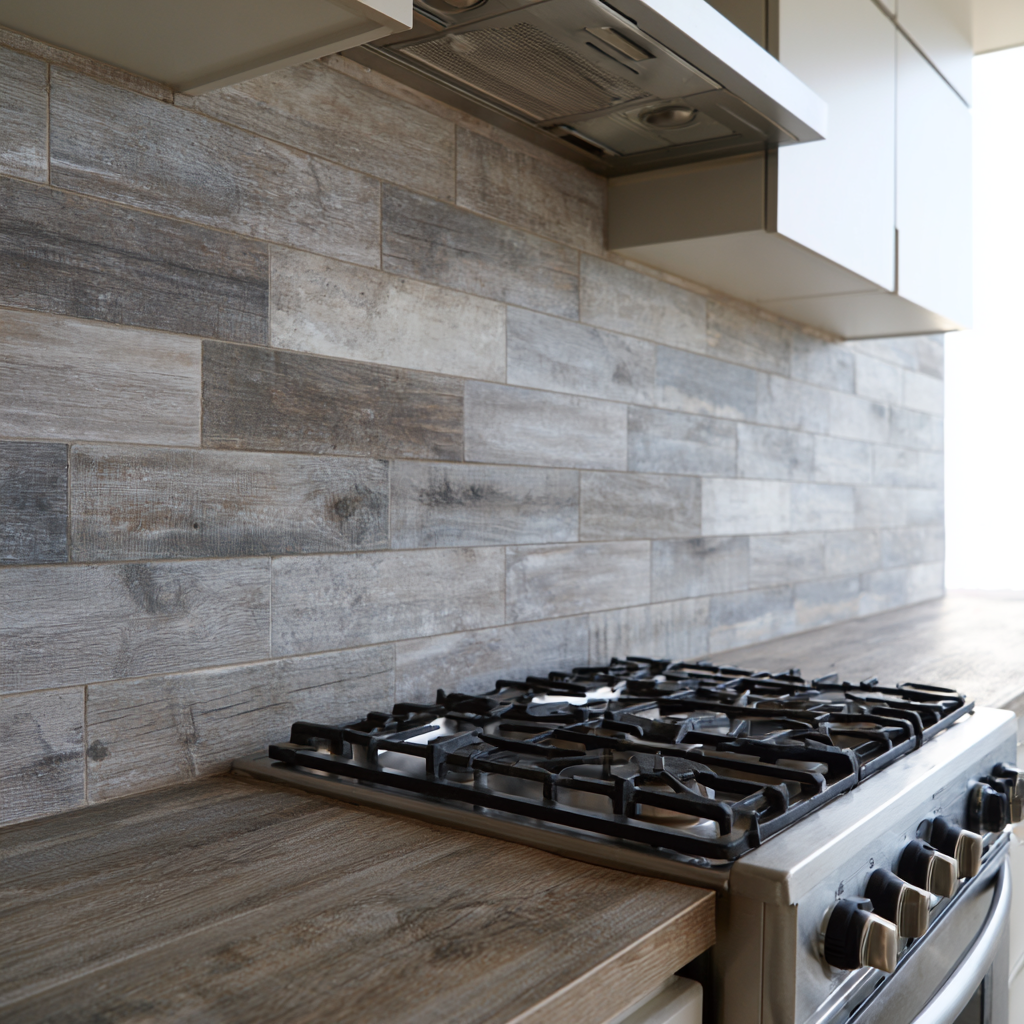
That last row is the one to slow down on, because reclaimed wood behind a range is the rustic idea most likely to run into a code problem. The code minimum is 30 inches of vertical clearance above a cooktop to unprotected combustible material, and on top of that, every range is listed for specific clearances to the combustible surfaces around it, set by the manufacturer's instructions rather than by the look you are after. Raw wood planks running up the wall behind the burners are the kind of unprotected combustible those rules exist to limit. A tall hood or a rated heat shield can buy back some clearance, but the wood still absorbs grease that no amount of wiping pulls back out. You can keep the look without the wood, and the swap is an easy one.
Renovate with confidence every step of the way
Step 1: Personalize Your Renovation Plan
Step 2: Receive Quotes from Trusted Contractors
Step 3: Let Us Handle the Project Details
Wood-look porcelain plank is the way around it. The tile carries the knots, saw marks, and grey-brown tones of reclaimed wood, but it is fired clay, so the heat and combustible-clearance worries fall away, and it wipes clean instead of soaking up grease. You can run it right behind the cooktop where a real plank can't go, with no sealing and no upkeep beyond the sponge you already use on the counter.
Brick-look and subway tile in a handmade-style glaze do the same trick for a different look. A glazed ceramic or porcelain tile with a slightly uneven face and a soft, off-white tone looks old and handmade from a step back, while the glazed surface keeps grease and water on top where you can wipe them away. A mid-tone grout keeps the grout lines themselves low-effort.
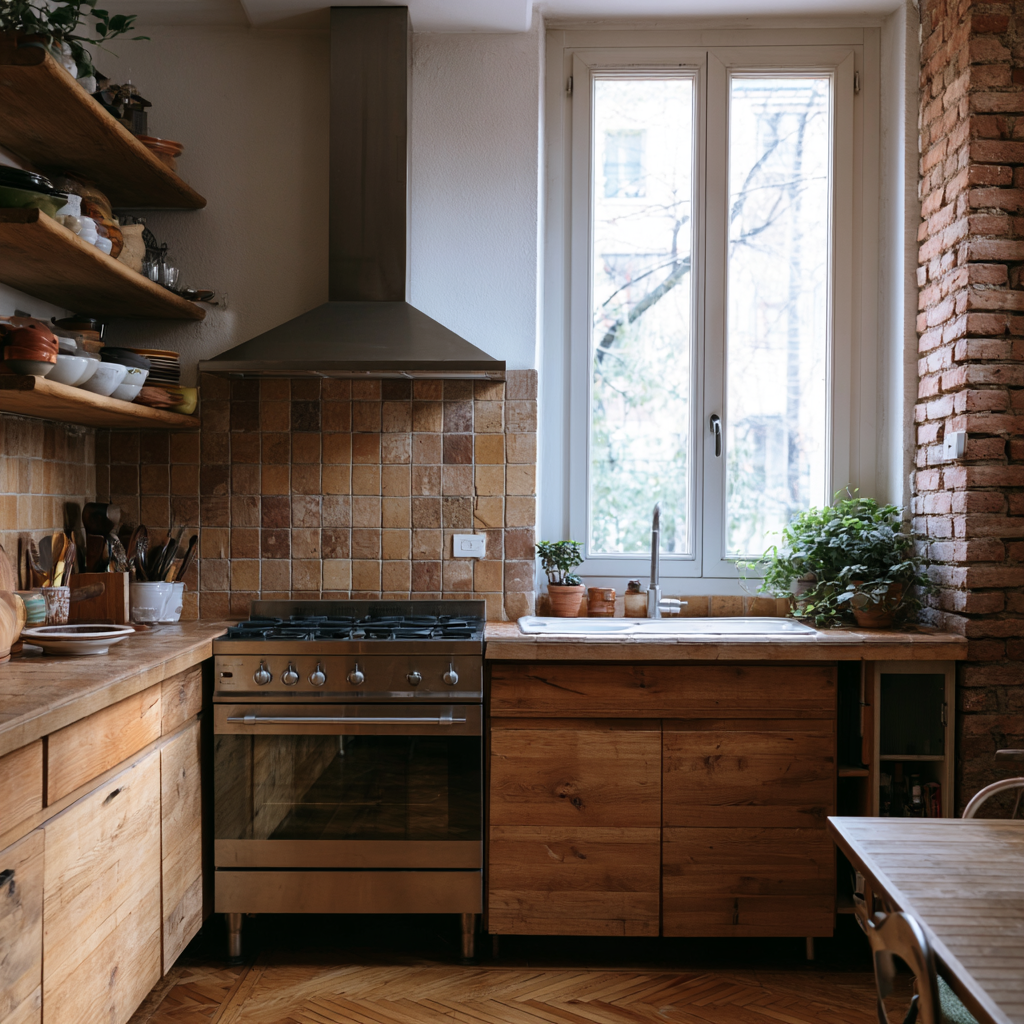
Some materials sit in the middle: more genuine texture than porcelain, more upkeep than a wipe-down, but far less than full natural stone.
Thin brick veneer is the clearest example. It is a real fired-clay brick face, usually about half an inch deep, cut from the same brick you would lay in a wall. Full brick runs 3 to 4 inches deep and brings weight that sometimes needs the counter or wall reinforced to carry it. Thin brick gives you the identical face and color range without eating into your counter depth or adding the load, which is why many of the brick backsplashes you have saved are veneer rather than full brick. Laid in a standard running bond it leans classic farmhouse, while a herringbone or a stacked vertical set turns the same brick into something more deliberately designed. It still needs sealing, and the grout still holds grease, so thin brick makes the most sense when you like brick enough to wipe it down and reseal it now and then.
Limewash and skim-coat plaster skip tile altogether. A mineral wash or a troweled plaster finish over the existing wall passes for a genuine old-house surface more readily than brand-new "rustic" tile, and it costs less because there is little material and no tile-setting labor to pay for. The finish softens and marks as it ages, which is part of the appeal on a dining-side or shelf wall, less so in the splatter zone right behind the burners.
The cheapest, fastest rustic backsplash is often not tile at all. Painted beadboard or shiplap gives a kitchen the farmhouse look for the price of a few boards and an afternoon, with the one restriction that it is wood and has to stop short of the burners like any other combustible material.
The most rustic-looking materials are, with few exceptions, the highest maintenance. Handmade zellige, raw limestone, terracotta, and real wood look old and handmade because they are porous and irregular, and those same traits make them hold grease, snag a sponge, and need resealing.
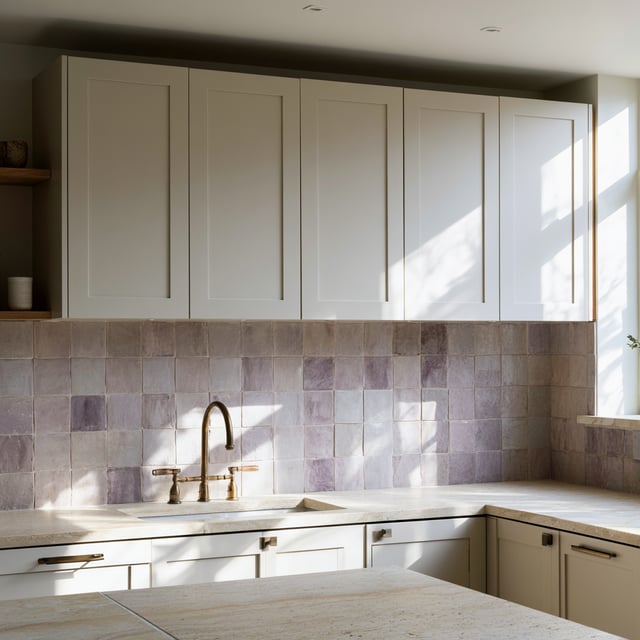
The handmade Moroccan tiles are gorgeous and genuinely irregular, and that irregularity is exactly the problem behind a stove.
None of this makes zellige a bad choice. It just needs careful placement off the cooktop wall, and a buyer who wants the variation rather than puts up with it.
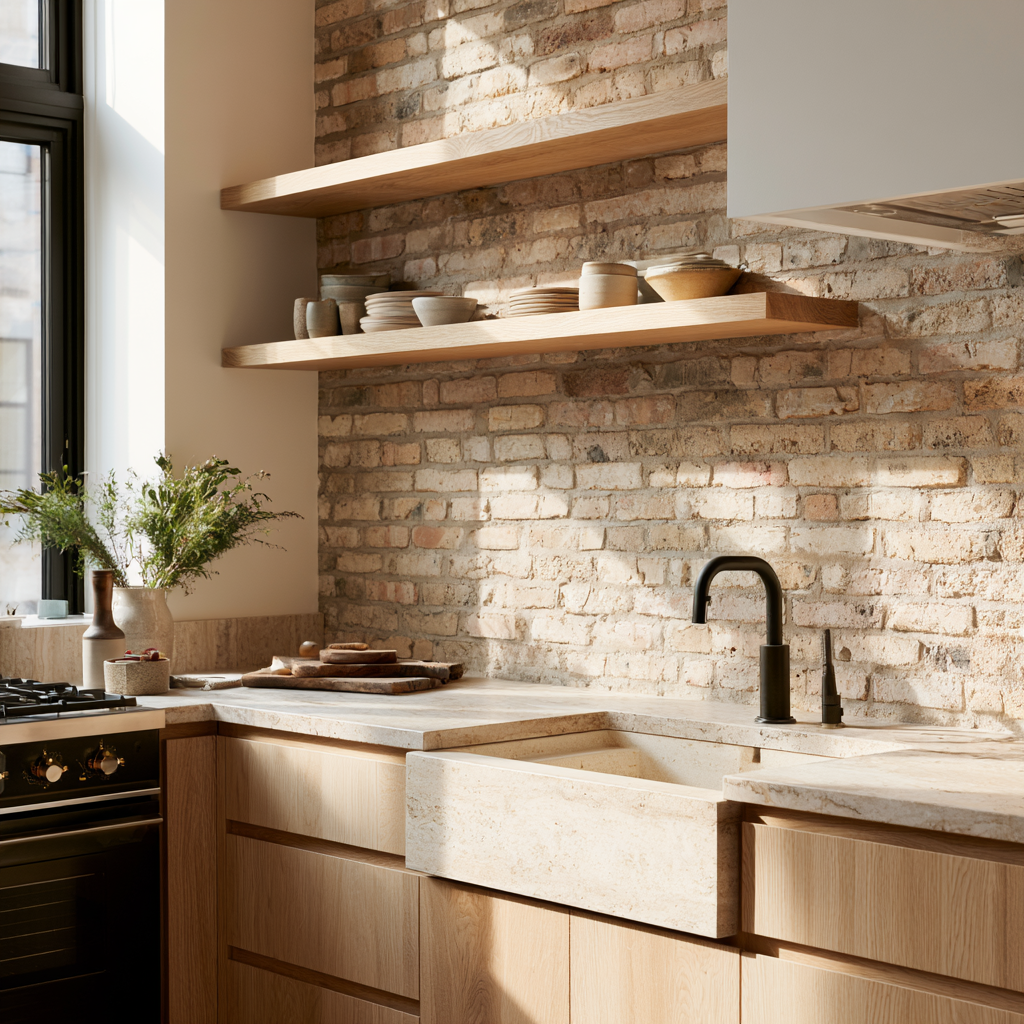
These bring real geological texture and the same porosity tax that zellige does.
These still have a place, just not by the stove. Put zellige, raw stone, or terracotta on a display stretch, under open shelving, or on a run clear of the heat and water, and you get all of the character with almost none of the upkeep that comes with the cooktop wall.
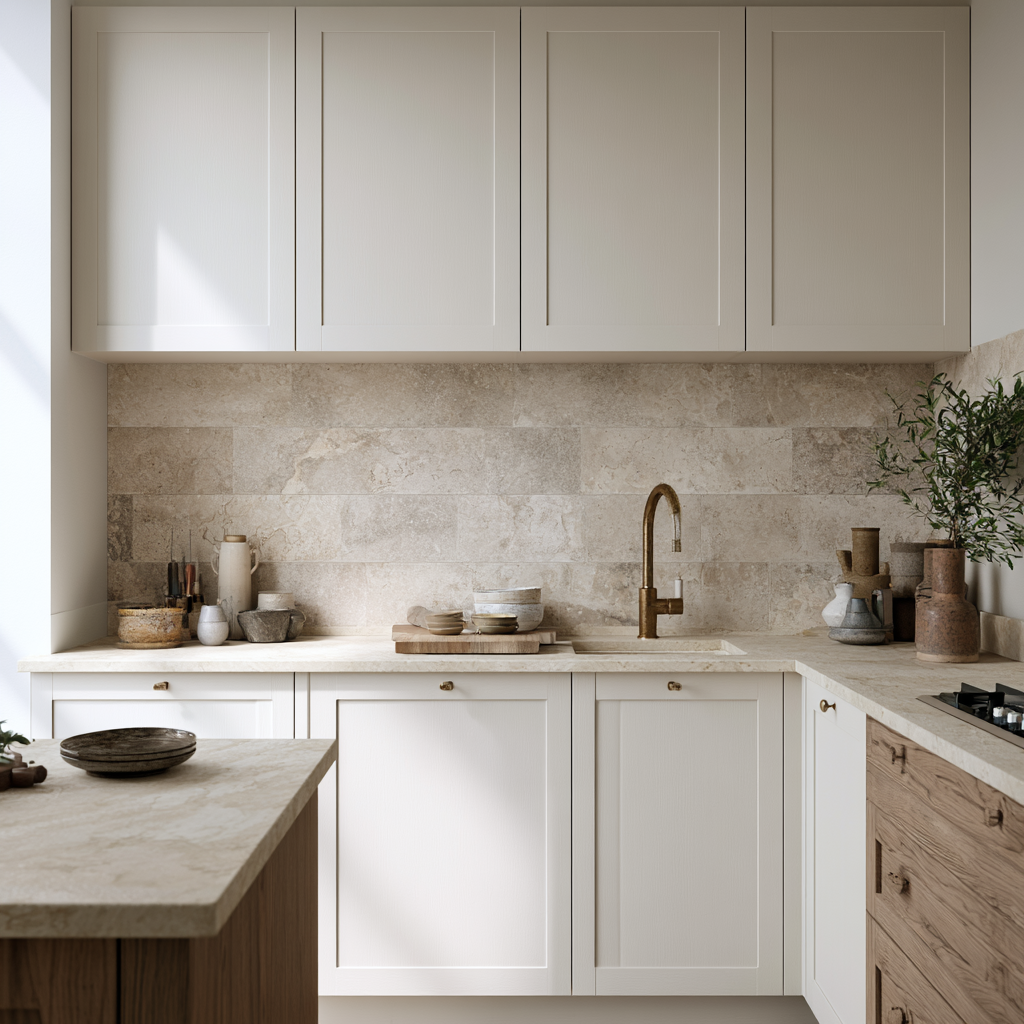
The common mistake is treating the whole kitchen as one continuous backsplash. It does not have to be. The smartest rustic kitchens often run an easy, non-combustible field behind the cooktop and save the handmade, porous, characterful material for a feature stretch where it stays clean.
That split also fixes the two ways rustic kitchens tend to go wrong. One easy tile wrapped around the entire room can fall flat. Wrap the same handmade tile from wall to wall instead, and the room tips the other way, into busy and a little exhausting. Two materials chosen in the same tone, one workhorse and one feature, give you the character without either problem.
A few pairings that work:
Match the two in tone and the kitchen holds together as one rustic idea, not two competing ones.
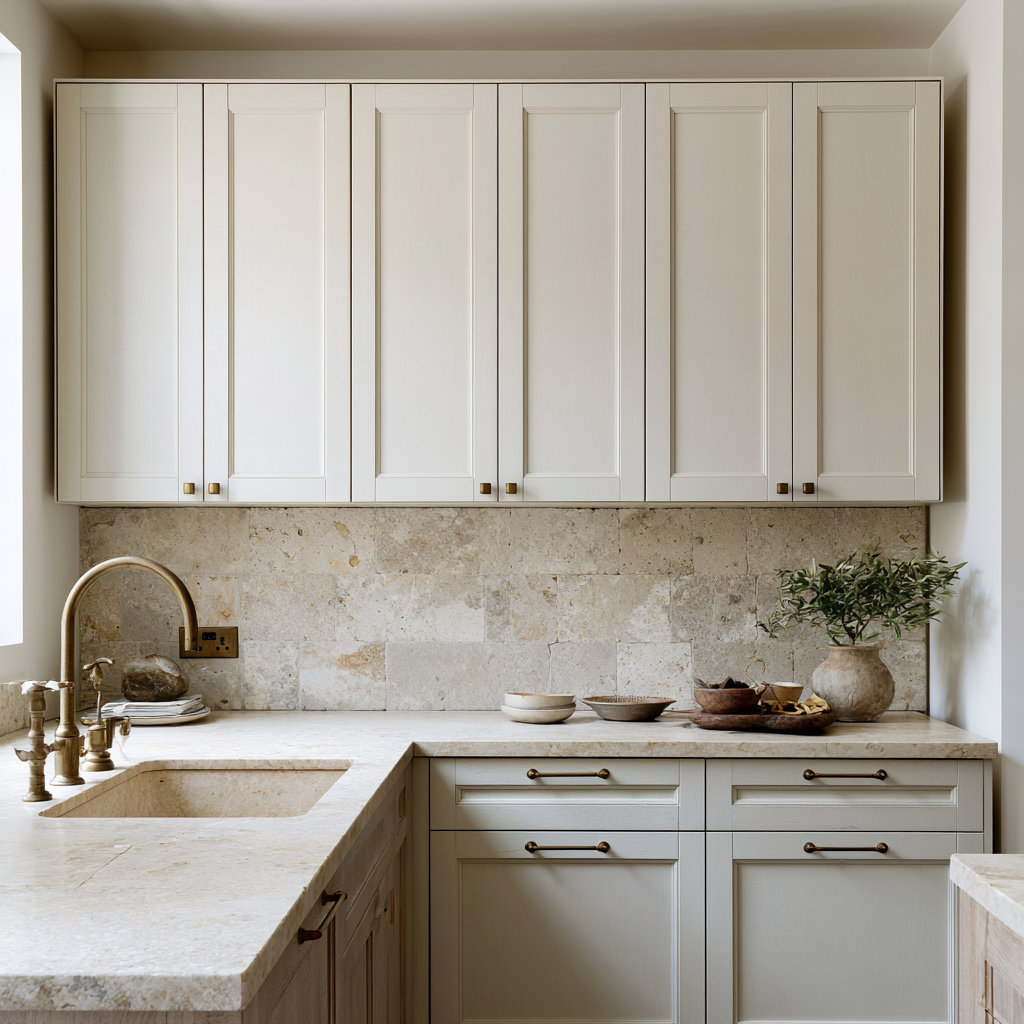
A rustic backsplash comes down to details a photo never shows, like whether the material behind the range is rated for the heat and whether the porous tile got sealed before the first dinner. A good tile contractor catches those before they become your problem.
Block Renovation matches you with vetted local contractors who bid your actual scope and review it line by line, so what goes behind the stove is settled before anyone orders tile. Tell Block about your kitchen once, and start the work knowing the wall behind your range was planned, not improvised.
Remodel with confidence through Block

Connect to vetted local contractors
We only work with top-tier, thoroughly vetted contractors

Get expert guidance
Our project planners offer expert advice, scope review, and ongoing support as needed
Enjoy peace of mind throughout your renovation
Secure payment system puts you in control and protects your remodel

Renovate confidently with Block
Easily compare quotes from top quality contractors, and get peace of mind with warranty & price protections.
Backsplash
Backsplash Same as Countertop: Ideas, Costs and Upkeep
09.18.2026
Backsplash
Rustic Backsplash Ideas That Survive a Real Kitchen
06.17.2026
Paint & Color
Backsplash Ideas to Flatter Gray Cabinets
04.17.2026

Backsplash
Wallpaper as a Kitchen Backsplash: Ideas & Practical Advice
04.14.2026

Backsplash
Backsplash Ideas for White Cabinets & Granite Countertops
04.06.2026