




Flooring
Top Rated Luxury Vinyl Tile Brands Worth Sampling
09.11.2026
08.18.2026


In This Article
A beach house floor can face its toughest conditions after everyone has gone home for the season. Once the property closes up, indoor humidity may fluctuate for months with little or no help from the HVAC. Summer adds a different set of problems: gritty sand underfoot, puddles around doors, and repeated salt exposure. The best flooring for a beach house has to account for the full year.
How you use the property therefore matters. Keeping the interior conditioned year-round gives you more freedom to use wood, whereas a seasonal home calls for materials that are less sensitive to long humidity swings. Across the nine options below, expect installed prices from about $3 to $40 per square foot.
Flooring is one line item inside a larger project, and the sequence matters. Block Renovation's guide to a beach house remodel covers how flooring fits alongside window replacement, siding, and mechanical work on the same schedule.
Quartz makes up much of the sand carried indoors from the beach, and it is hard enough to abrade residential floor finishes over time. You tend to see the damage along repeat traffic routes first: from the back door toward the kitchen, across the main living space, or wherever people drop towels and beach gear.
Grit also collects along seams and in grout joints. Block goes deeper into that maintenance issue in its guide to low-maintenance flooring. When you compare flooring, pay attention to three details:
What happens to a wood floor when the house closes in October and stays mostly untouched until May? Even with nobody walking across it, the material keeps responding to the moisture in the surrounding air. Boards swell as they absorb moisture and shrink again as conditions dry, with the same cycle repeating each season.
Here's the thing that surprises a lot of homeowners: high coastal humidity alone does not explain why one wood floor survives and another cups or gaps. Flooring manufacturers commonly call for indoor relative humidity around 30 to 50%. The bigger advantage in a year-round home is consistency because heating, cooling, and dehumidification keep the indoor environment from following every outdoor swing.
If you want hardwood or engineered wood in a seasonal property, include moisture management in the flooring budget. A dehumidifier connected to a humidistat and set around 55% costs a few hundred dollars plus a modest amount of electricity to operate through the closed months. Block's guide to sunroom flooring covers similar temperature and humidity limits in spaces that do not stay conditioned all year.
Underneath the flooring, coastal air can attack hardware you rarely see. Salt enters crawl spaces and wall cavities, then accelerates corrosion on nails and staples securing the subfloor. A floor that begins squeaking after only a decade may have lost holding strength at those connections even though the surface material remains sound.
Put hot-dipped galvanized or stainless fasteners in the written scope wherever the assembly requires corrosion-resistant hardware. In a crawl-space house, deal with moisture below at the same time by installing an appropriate ground vapor barrier and managing humidity in the crawl space.
Design a Home That’s Uniquely Yours
Block can help you achieve your renovation goals and bring your dream remodel to life with price assurance and expert support.
Get Started
Come in with wet feet, leave a swimsuit on the bathroom floor, or roll a sandy cooler through the entry and porcelain will take very little damage from it. The material absorbs less than 0.5% of its weight in water, making it a strong fit for kitchens, bathrooms, entries, and other rooms exposed to frequent moisture. Wood-look formats can also bring a plank appearance into those spaces.
Most residential installations land around $12 to $25 per square foot. Complex patterns, leveling, and subfloor correction push the price upward. If the house uses pier-and-beam construction, make sure the floor is stiff enough before tile goes down because excessive flex can crack the grout or the tile itself.
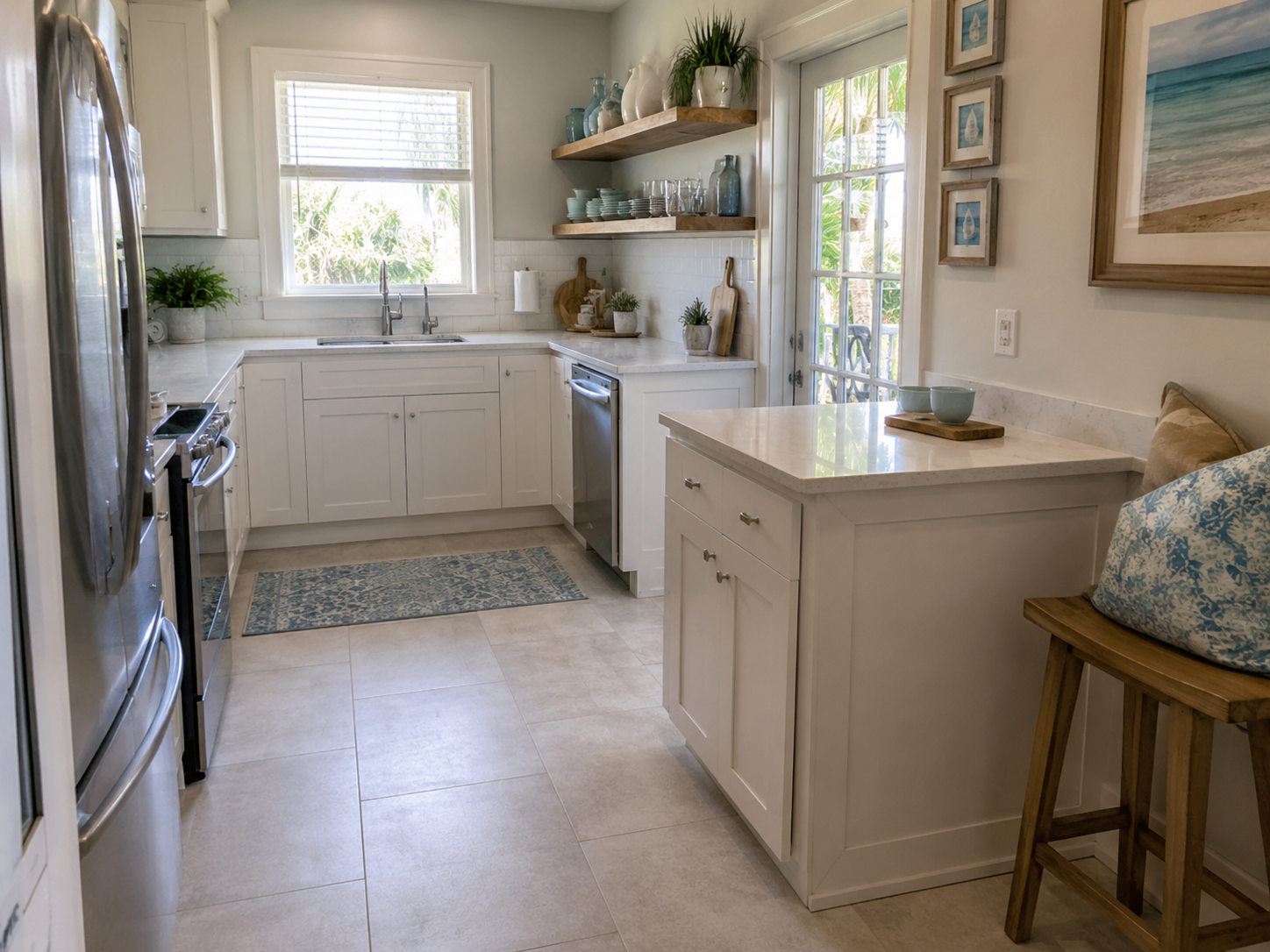
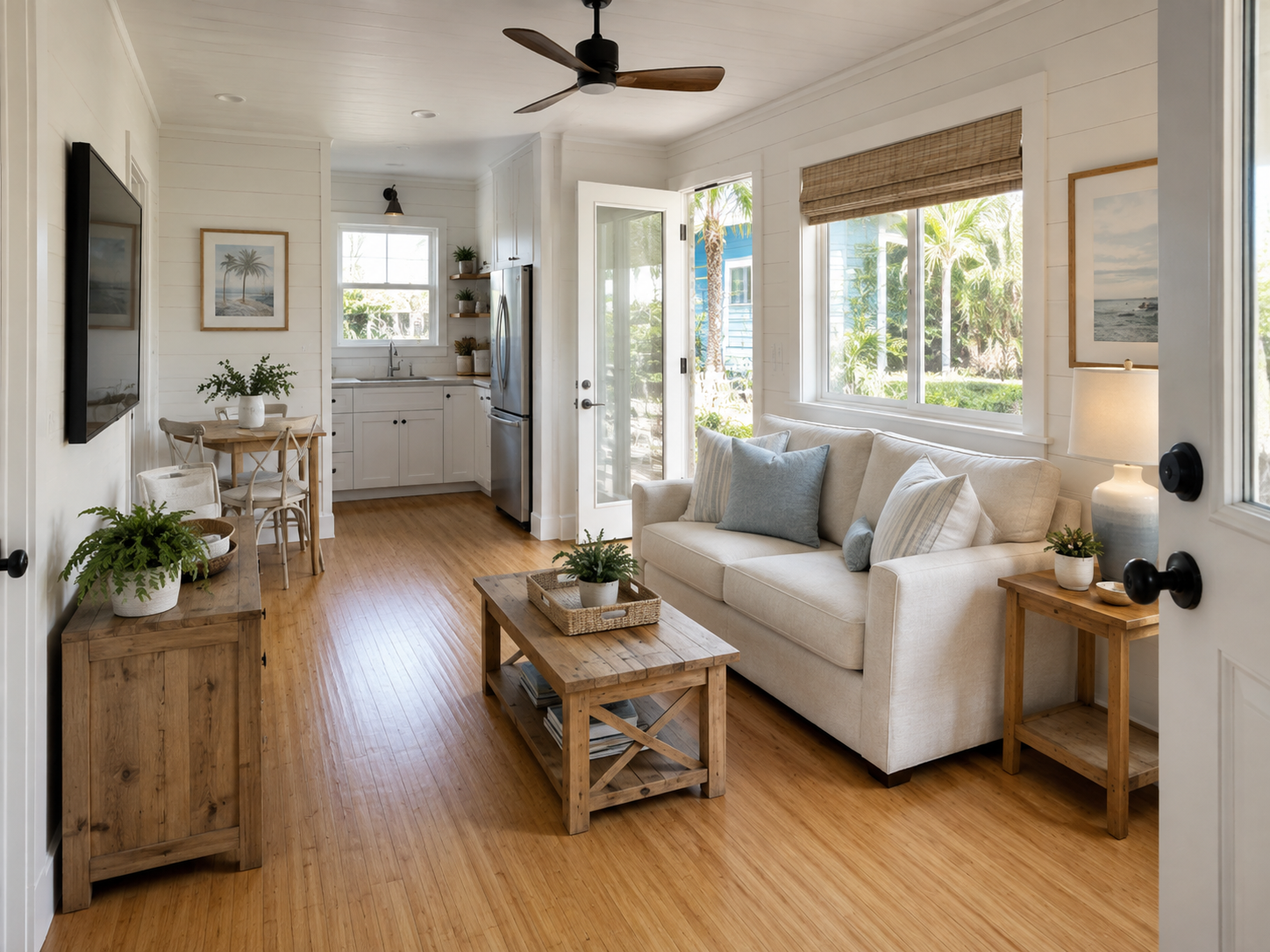
Luxury vinyl plank remains one of the most practical flooring choices for a beach property. Installed costs run about $4 to $9 per square foot, water does not damage the plank itself, and a badly gouged section can often be repaired by replacing a small number of planks.
Two LVP products that look nearly identical can have very different wear layers, cores, and temperature limits:
Up close, the printed grain will not reproduce the depth of real hardwood. In a busy beach house or rental, the easier cleanup and repairs usually matter more than a perfect wood imitation.
Take an engineered floor with a 2 mm veneer over a fiberboard core, install it above a damp slab without the right vapor protection, then leave the house humid for months at a time. Failure in that setup says as much about the product specification and installation as it does about engineered wood as a category.
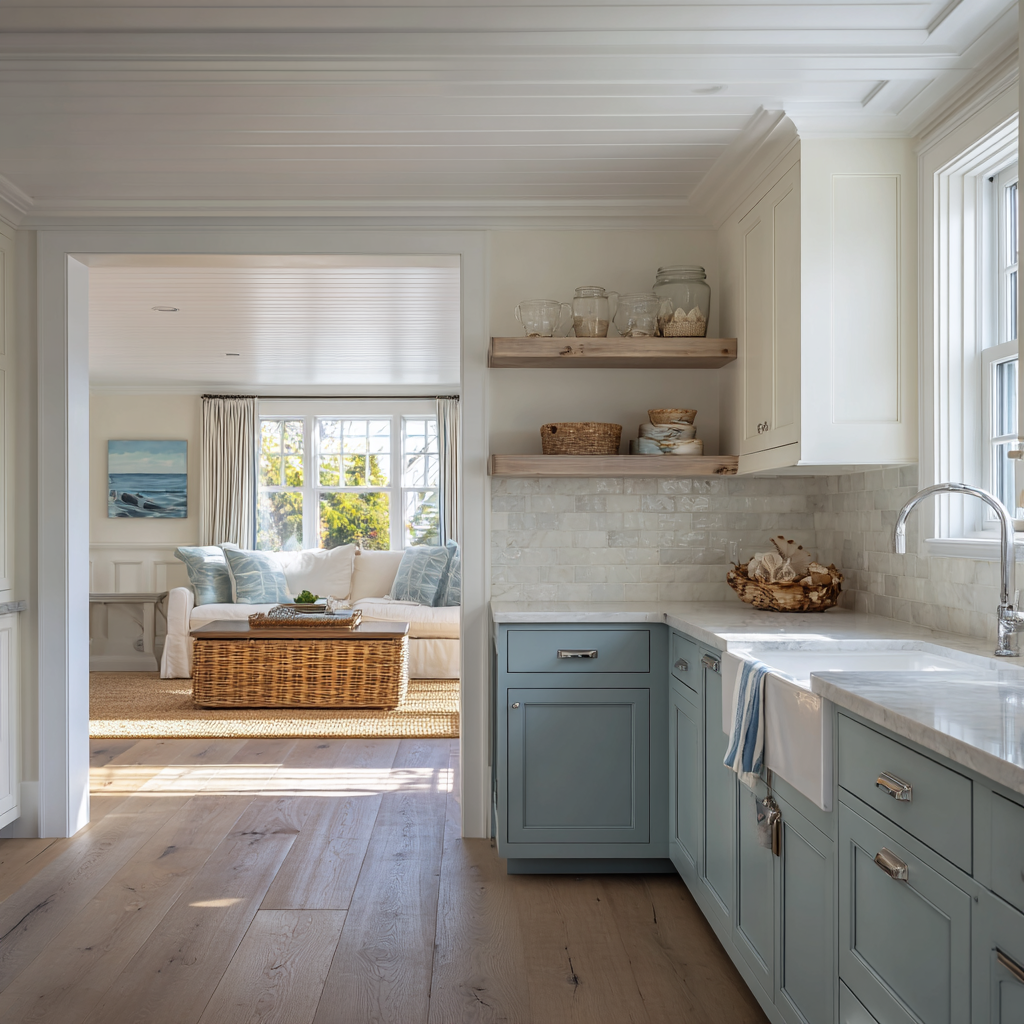
For coastal use, shop for a plywood core and a 3 to 6 mm wear layer. That gives you a thicker layer of real wood at the surface and enough material for at least one future sanding. Year-round conditioning or dehumidification also reduces the moisture swings the floor has to absorb. Installed prices run about $9 to $18 per square foot.
There is more to settle before installation day than the board color. Test the subfloor for moisture, address any preparation it needs, and choose the board direction before material arrives. Our guide to wood flooring direction explains how joists and sightlines affect that decision, especially across long open rooms.
Is solid hardwood ever a good beach house floor? Yes, particularly upstairs in an elevated property where you keep humidity controlled throughout the year. White oak and hickory move less with moisture than many less stable species, and solid boards give you the option to refinish the surface several times over their lifespan. Installation runs about $10 to $20 per square foot. For a house that will close for months with neither HVAC nor dehumidification running, another material is a safer choice.
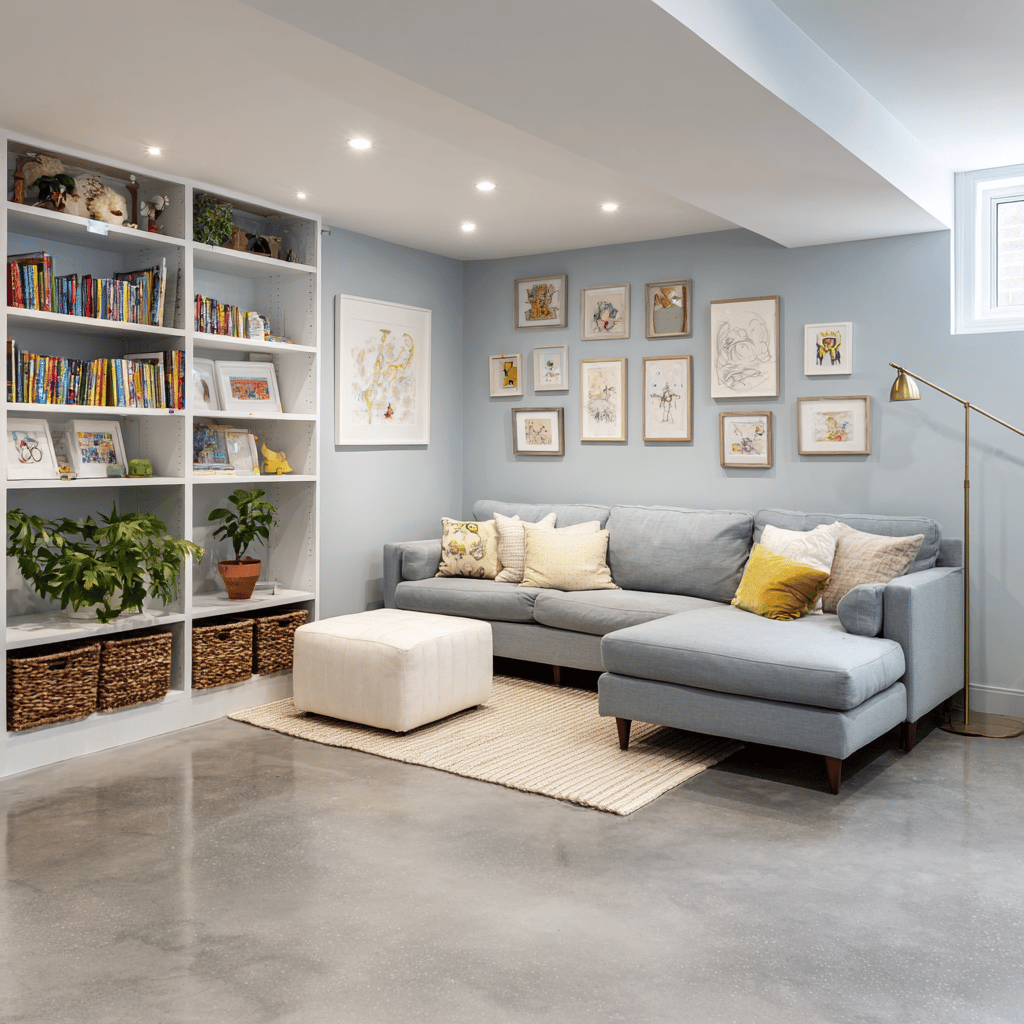
If the lower level already has a concrete slab, consider finishing that surface instead of covering it. Grinding, polishing, and sealing costs about $4 to $12 per square foot, tolerates water, and allows heavy cleaning after a flood. The drawbacks are a colder feel underfoot and visible slab cracks.
Use natural stone in spaces where its appearance justifies an installed cost of roughly $18 to $40 per square foot. Limestone and travertine work well with sandy coastal interiors, though both require periodic sealing. For wet areas where you want less routine maintenance, look instead at slate or quartzite.
Finish selection matters close to an exterior beach entrance. When seawater dries repeatedly on polished stone, salt deposits can leave visible marks; honed and tumbled finishes disguise that exposure better. Stone also adds substantial weight, so a pier-and-beam house may need a framing review before installation.
At $4 to $8 per square foot installed, laminate gives you a hard, scratch-resistant surface for about the same money as entry-level LVP. The limitation is inside the plank: most products marketed as waterproof still rely on a wood-fiber core. Water that penetrates a seam, particularly from a leak that goes unnoticed, can swell that core beyond repair. The risk is easier to manage when you occupy the property yourself than when renters rotate through every week.
Strand-woven bamboo gives you a harder surface than many traditional hardwoods for roughly $6 to $12 per square foot installed, so tracked-in grit is less likely to mark it quickly. Moisture still moves through the material. In a seasonal house, plan for the same humidity control you would provide for a wood floor.
Carpet does not automatically fail just because the property is by the beach. The problems start when you put it along the route from an exterior door to the kitchen or bath, where sand works into the pile and wet traffic repeatedly reaches the backing.
Upstairs bedrooms receive far less grit and standing water, and carpet can make a crowded house quieter while adding warmth underfoot. Stairs are another reasonable place for it because a runner muffles footsteps and improves traction for bare feet. Installed prices of $3 to $8 per square foot make carpet the least expensive material in this comparison. Block's guide to bedroom flooring compares carpet with wood and resilient products at similar price points.
These ranges cover material and labor for a straightforward residential installation. They do not include removing the old floor, correcting major unevenness, or repairing a damaged subfloor. On an older coastal property, that preparation can add roughly $2 to $6 per square foot.
| Material | Installed cost per sq ft | Coastal weak point |
|---|---|---|
| Carpet | $3 to $8 | Traps sand, moisture can linger in backing |
| Waterproof laminate | $4 to $8 | Wood-fiber core can swell permanently |
| Luxury vinyl plank | $4 to $9 | Thin wear layers show traffic paths |
| Sealed concrete | $4 to $12 | Cold underfoot, slab cracks stay visible |
| Bamboo | $6 to $12 | Moves with seasonal humidity |
| Engineered hardwood | $9 to $18 | Needs year-round humidity control |
| Solid hardwood | $10 to $20 | Prone to cupping and gaps with large moisture swings |
| Porcelain tile | $12 to $25 | Needs a stiff substrate |
| Natural stone | $18 to $40 | Salt can mark polished finishes; heavy |
Subfloor work can erase the price advantage of a cheaper material. A lower-priced floor installed over a slab that needs extensive leveling can finish surprisingly close to a more expensive material going over a substrate that is already ready for installation.
Living in a Special Flood Hazard Area adds requirements that go beyond normal flooring preferences. Under the National Flood Insurance Program, new construction and substantial improvements must use flood damage-resistant materials for building components below the base flood elevation. FEMA's technical bulletins explain how products and assemblies are evaluated.
Acceptable beach house flooring choices can include clay tile or stone set in waterproof mortar, solid vinyl installed with a chemical-set adhesive, sealed or stained concrete, terrazzo, and certain decay-resistant or pressure-treated woods. Standard hardwood, carpet, laminate, and finishes built around particleboard or fiberboard generally are not suitable below the required elevation.
Before ordering, confirm the details with your local floodplain administrator. A larger renovation may also cross the substantial-improvement threshold, commonly 50% of the building's pre-improvement market value, and trigger additional compliance requirements elsewhere in the project.
You do not need to force one material through every room. Coastal homes often benefit from putting the most water- and sand-resistant surfaces around exterior entries, then using wood or carpet farther away from those high-exposure areas.
When two flooring types meet, figure out the transition before ordering either material. Finished heights should line up at the doorway, and wood tones that seem compatible on separate samples can look wrong once they touch. Check out our insights into mixing flooring types covers placement of those transitions and ways to coordinate adjacent floors.
A coastal flooring estimate should include moisture testing, subfloor preparation, vapor management, crawl-space conditions, and any fastener requirements tied to the environment.
Tell Block about your project once, and vetted local contractors matched to your renovation can compete for the work. Each scope gets an expert review aimed at finding missing line items before construction begins, making it easier to see whether items such as moisture testing and subfloor preparation have actually been priced.
Remodel with confidence through Block

Connect to vetted local contractors
We only work with top-tier, thoroughly vetted contractors

Get expert guidance
Our project planners offer expert advice, scope review, and ongoing support as needed
Enjoy peace of mind throughout your renovation
Secure payment system puts you in control and protects your remodel

Renovate confidently with Block
Easily compare quotes from top quality contractors, and get peace of mind with warranty & price protections.
Flooring
Top Rated Luxury Vinyl Tile Brands Worth Sampling
09.11.2026
Flooring
Best Carpet Brands: 7 Lesser-Known Names Worth Sampling
09.02.2026
Flooring
Maple vs Oak Flooring: Which Hardwood Is Right for Your Home?
08.31.2026
Bathroom
Non-Tile Bathroom Flooring Options
08.26.2026
Flooring
Comparing Different Types of Natural Stone Flooring
08.25.2026