


Paint & Color
Designing Around Beige Walls: Finishes That Work
10.26.2026
10.26.2026


In This Article
Beige walls give you more room to work with than their reputation suggests, and a remodel is where that pays off. The same warm neutral that looks flat behind a beige sofa and a beige rug looks deliberate next to white oak cabinets, a veined countertop, or a dark stone floor. Those are the decisions that stay in the house for 15 years, so they deserve more attention than the paint, and beige rewards them more than most colors do. Beige also comes with real risks, since a mismatched undertone or a cool light bulb will make the whole room look dingy. The cabinet, countertop, flooring, and lighting choices below are how you counter those risks.
Every beige leans toward yellow, pink, or gray, and that lean matters more than the name on the paint chip. A beige with a yellow or pink base pairs with warm whites, honey-toned wood, and gold-veined stone. A beige with a gray base, the greige that replaced flat gray in most paint lines, pairs with cooler partners: soft black, gray-veined marble, and ash or rift white oak. Mismatches show up fast. Set a gray-veined quartz against a warm beige and the stone turns icy, the wall turns muddy, and no amount of styling fixes either one.
To find the lean, hold a sheet of white printer paper flat against the wall in daylight. Whatever shows against the pure white, yellow, pink, or green, is the undertone every other finish has to agree with.
Choosing beige now puts you on the right side of a cycle that takes a decade to turn. Meredith Sells, an interior designer at Block Renovation, sees that cycle play out in client projects.

The extremes of every color kind of have their day, but the softer mid-tone palettes are more timeless. You see it happening with gray right now. People are removing all the gray in their spaces and now it's beige.
The practical move for a remodel is to keep the long-lived finishes in the mid-tone range too. Natural oak, honed stone, and muted green cabinets will outlast the beige itself, and they still look right when the next wall color comes through.
Cabinets are the largest single finish in a kitchen or bathroom, so they set the relationship with the wall before anything else does.
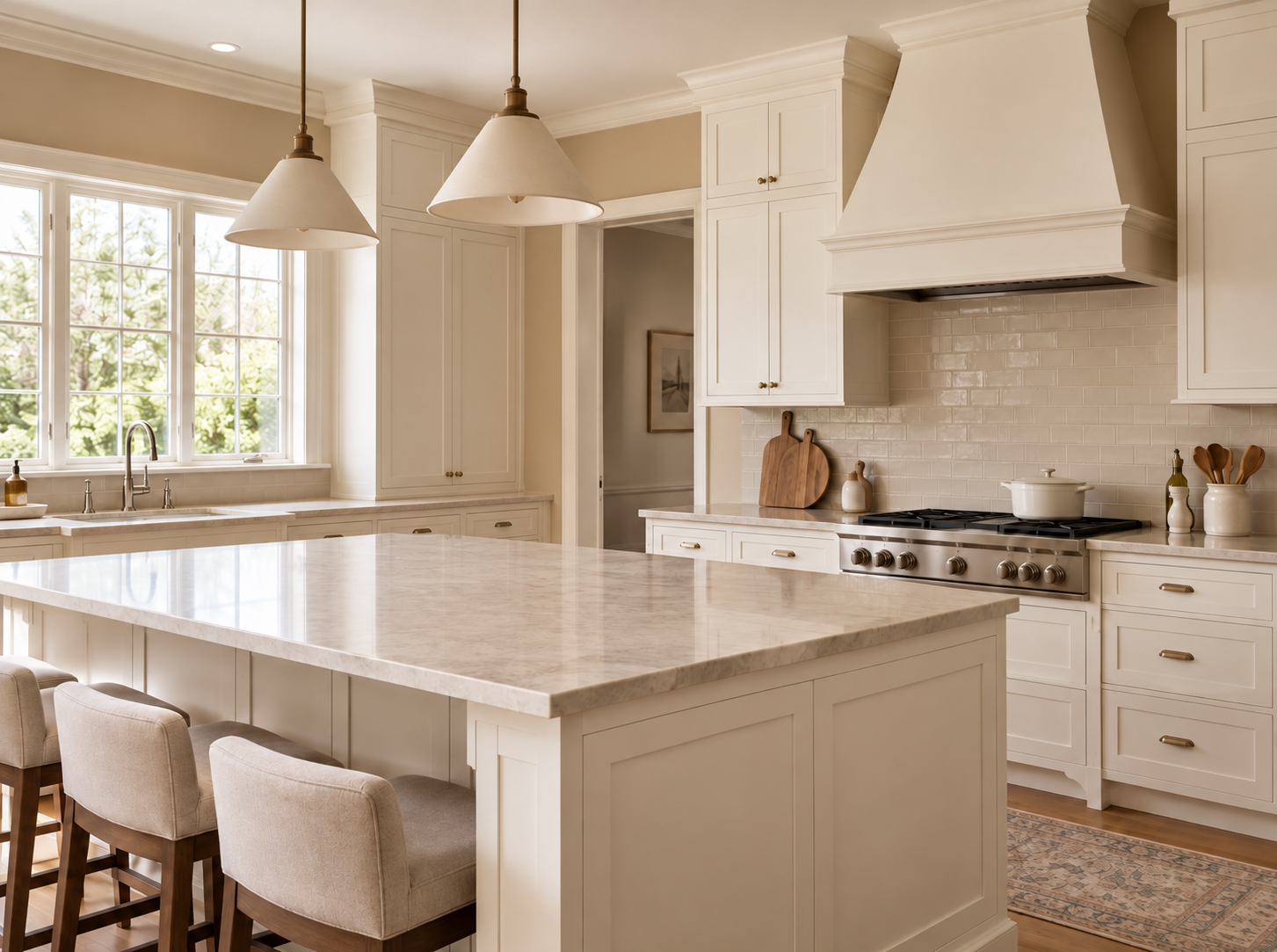
A bright, blue-based white against beige is the pairing that makes beige look dirty, and it is the most common one in builder kitchens. The fix is a white with a drop of cream or gray in it, close enough to the wall tone that neither one looks off next to the other. Ask for samples in the room, in the afternoon light you'll live with most.
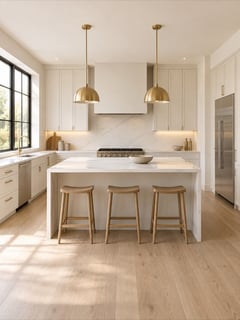
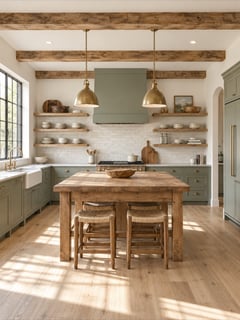
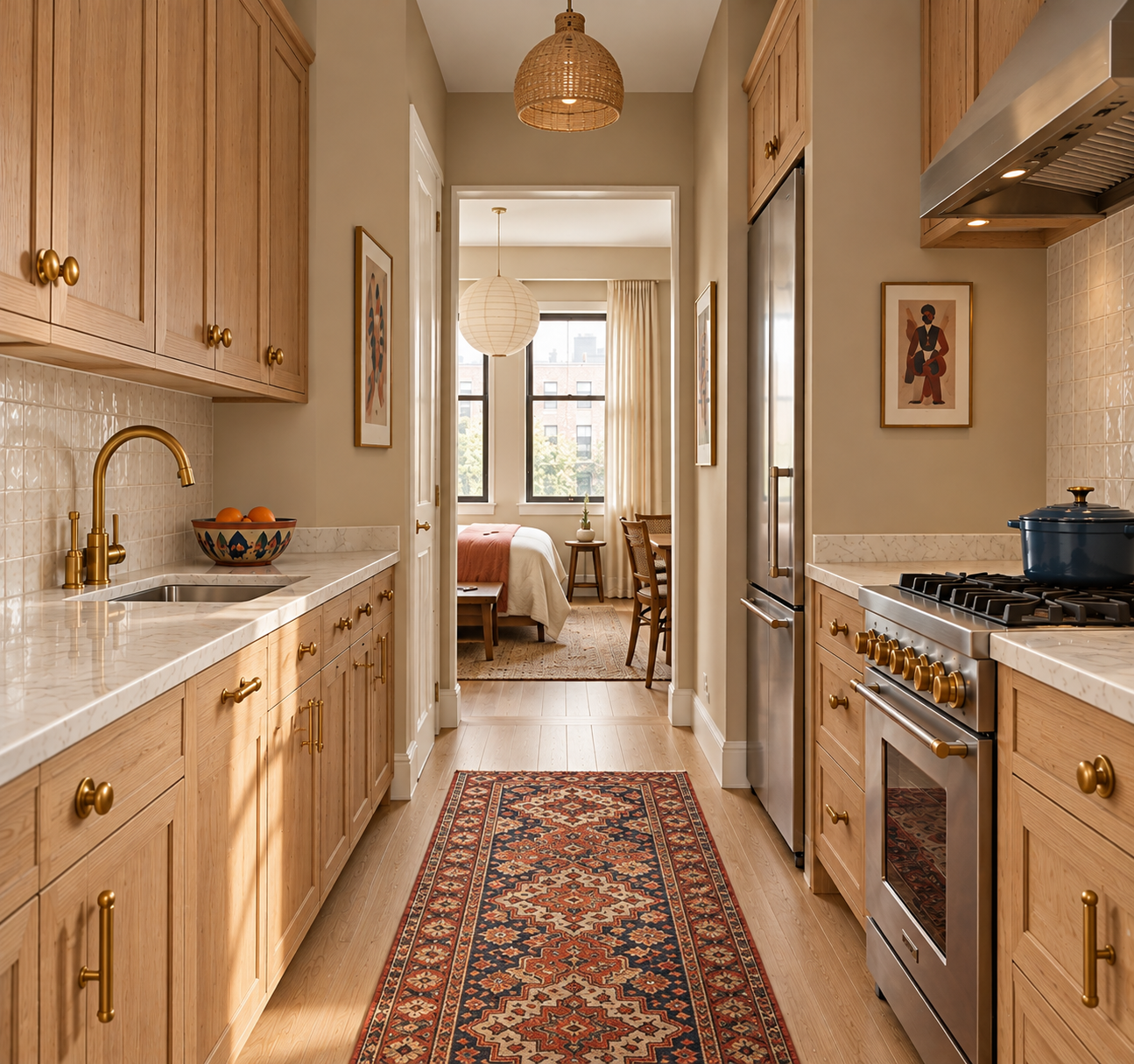
Wood cabinetry adds warmth to a beige room without introducing a second color to coordinate. White oak, rift-cut oak, and walnut all carry warm undertones in the same family as beige, so nothing has to be color-matched exactly. Stain choice matters more than species. A clear or light stain keeps the oak in the beige family, while a red-brown stain pushes the whole room toward 1998. Rift white oak and walnut fronts cost 15 to 30% more than painted fronts in the same door style.
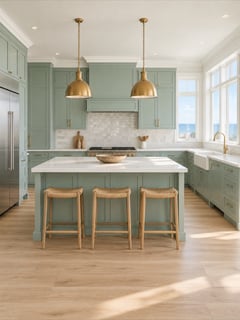
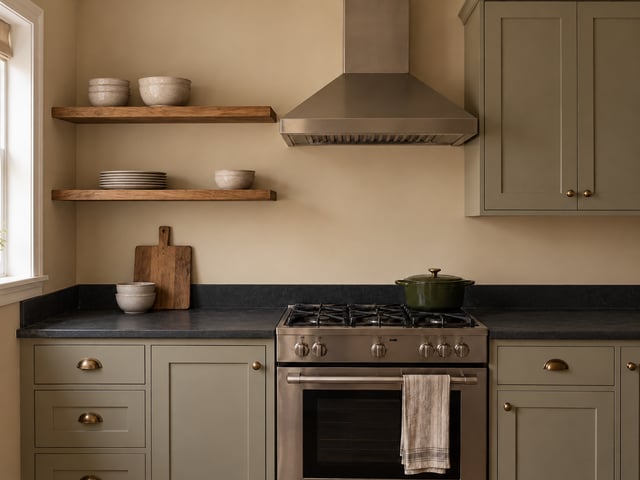
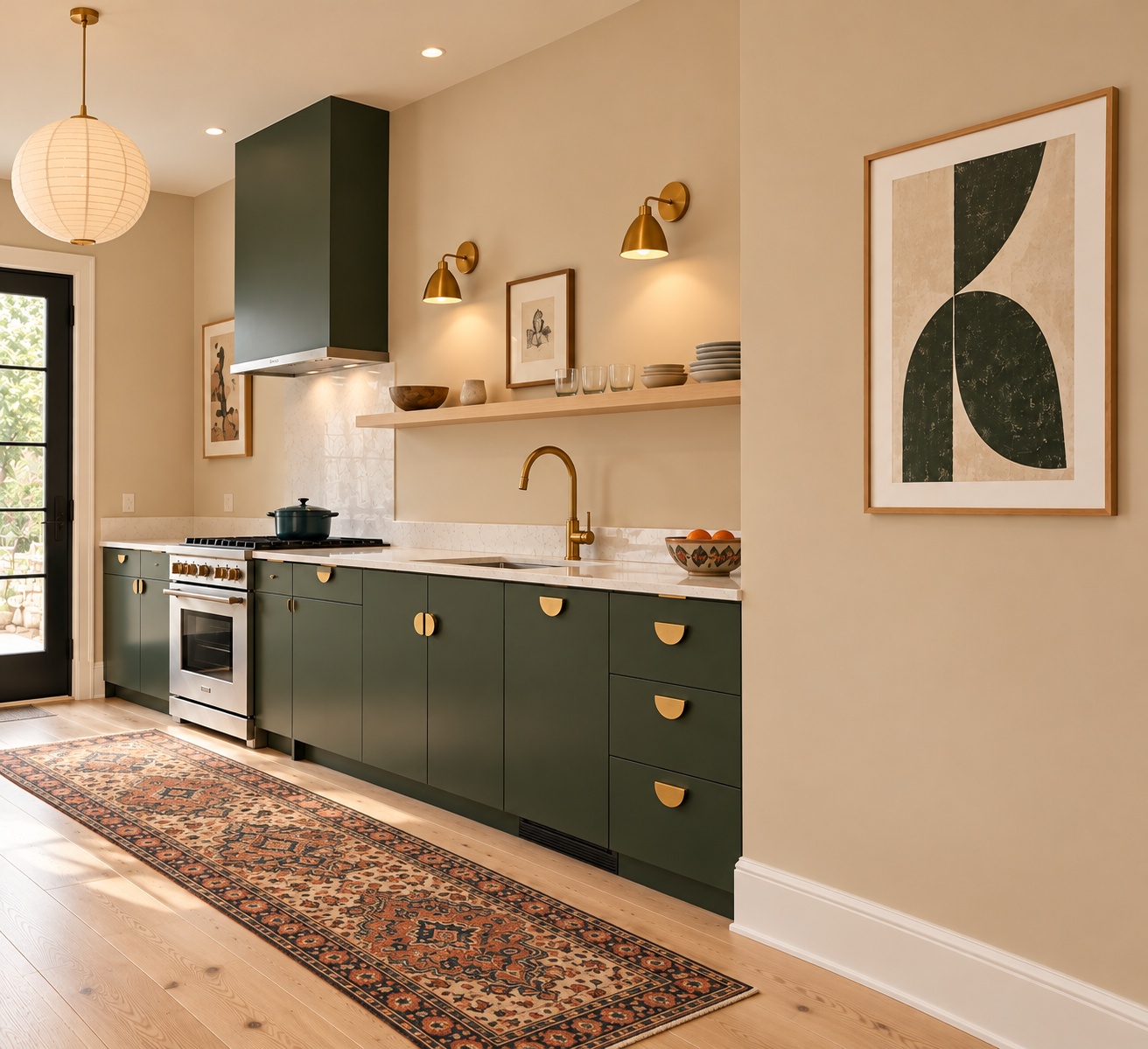
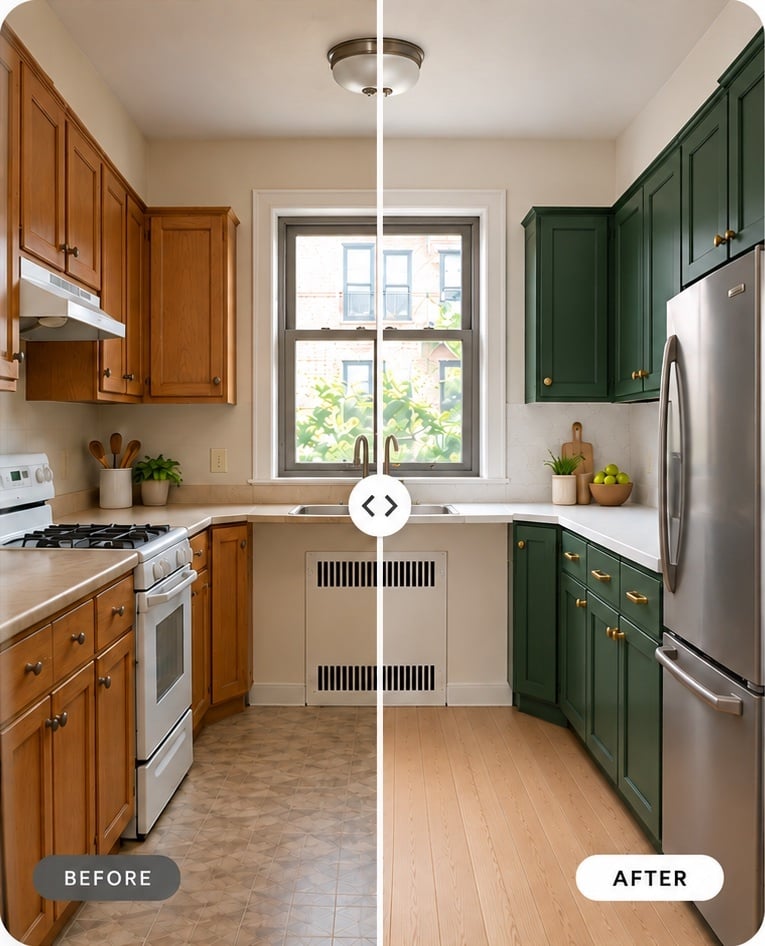
Pick from the softer end of the deep range: forest green, navy, oxblood, or warm charcoal rather than true black. The saturated cabinet supplies the contrast beige lacks, and the wall keeps the room from feeling heavy. Keep the countertop light.
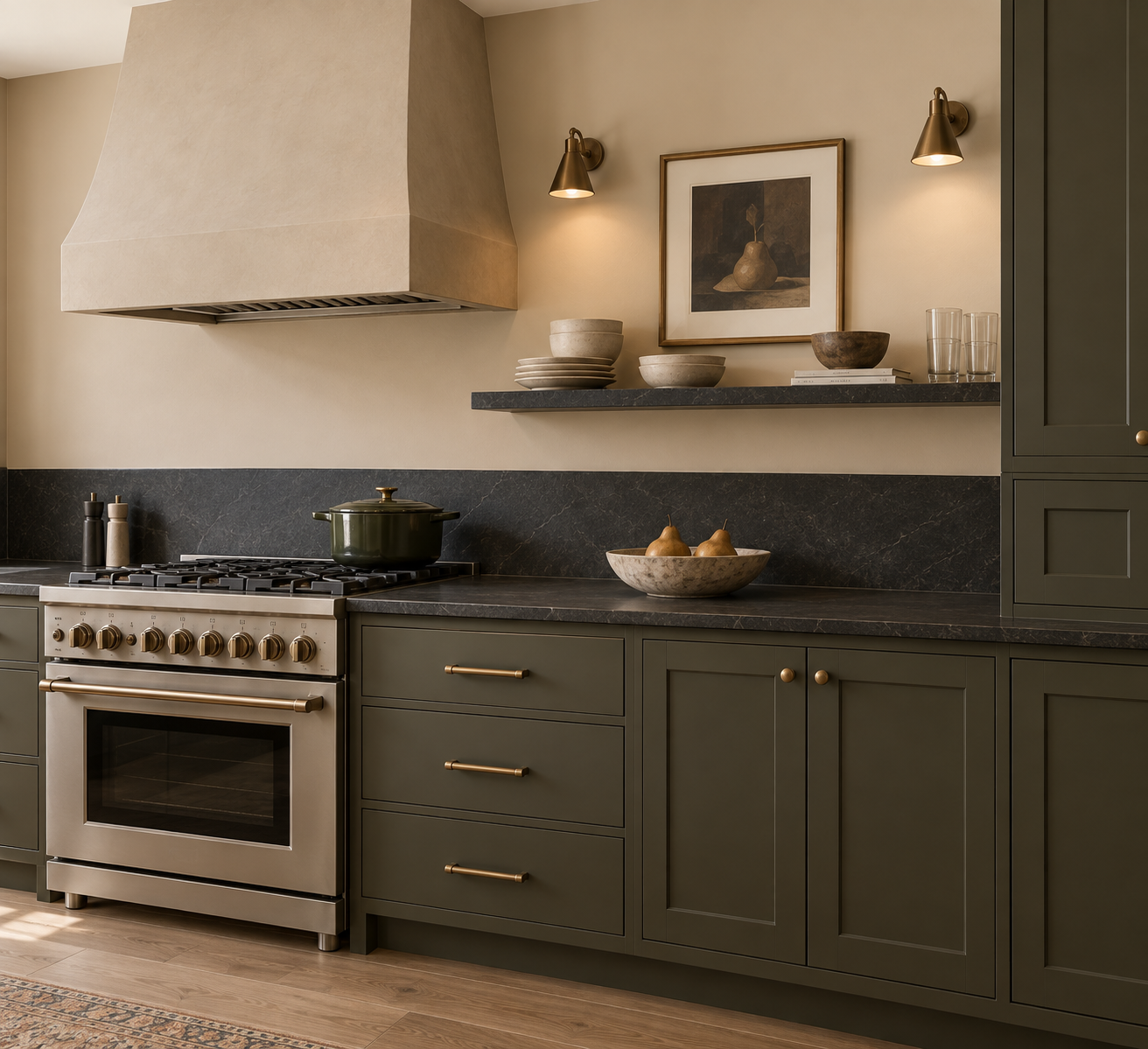
Can the cabinets be the same beige as the walls? Only when the cabinet brings a texture the wall lacks, and three things supply it:
Without that texture, the cabinets blend into the wall at close to custom cabinet prices.
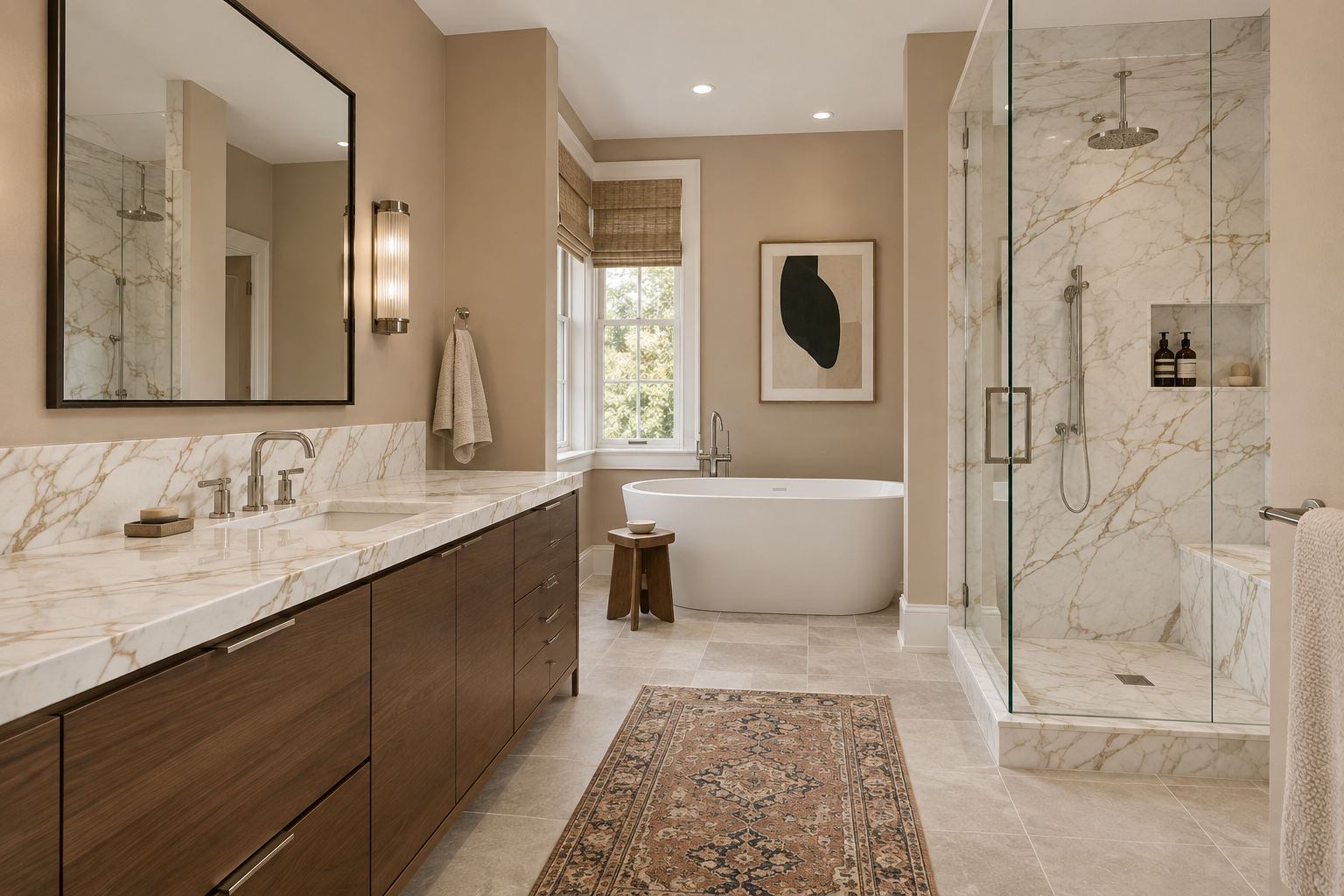
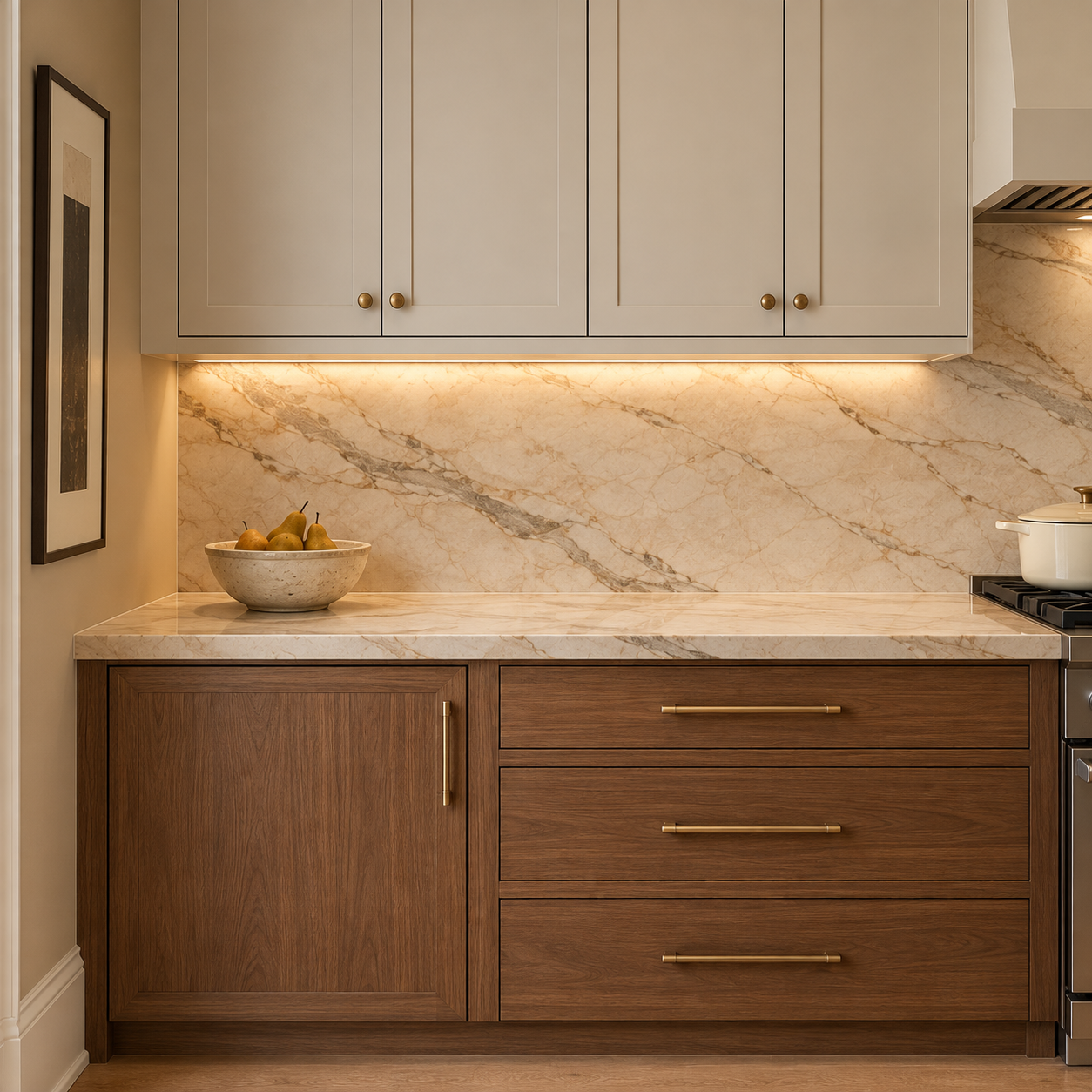
Hold a Carrara sample and a Calacatta Gold sample against the same beige wall and one of them will look wrong within seconds. The vein color, not the slab color, is what you're seeing. Gold, taupe, and brown veining belongs with warm beige, and gray veining works only once the wall has moved toward greige. Natural marble etches and stains, so quartz and quartzite in the same palette give you the look with less upkeep, at $70 to $150 per square foot installed.
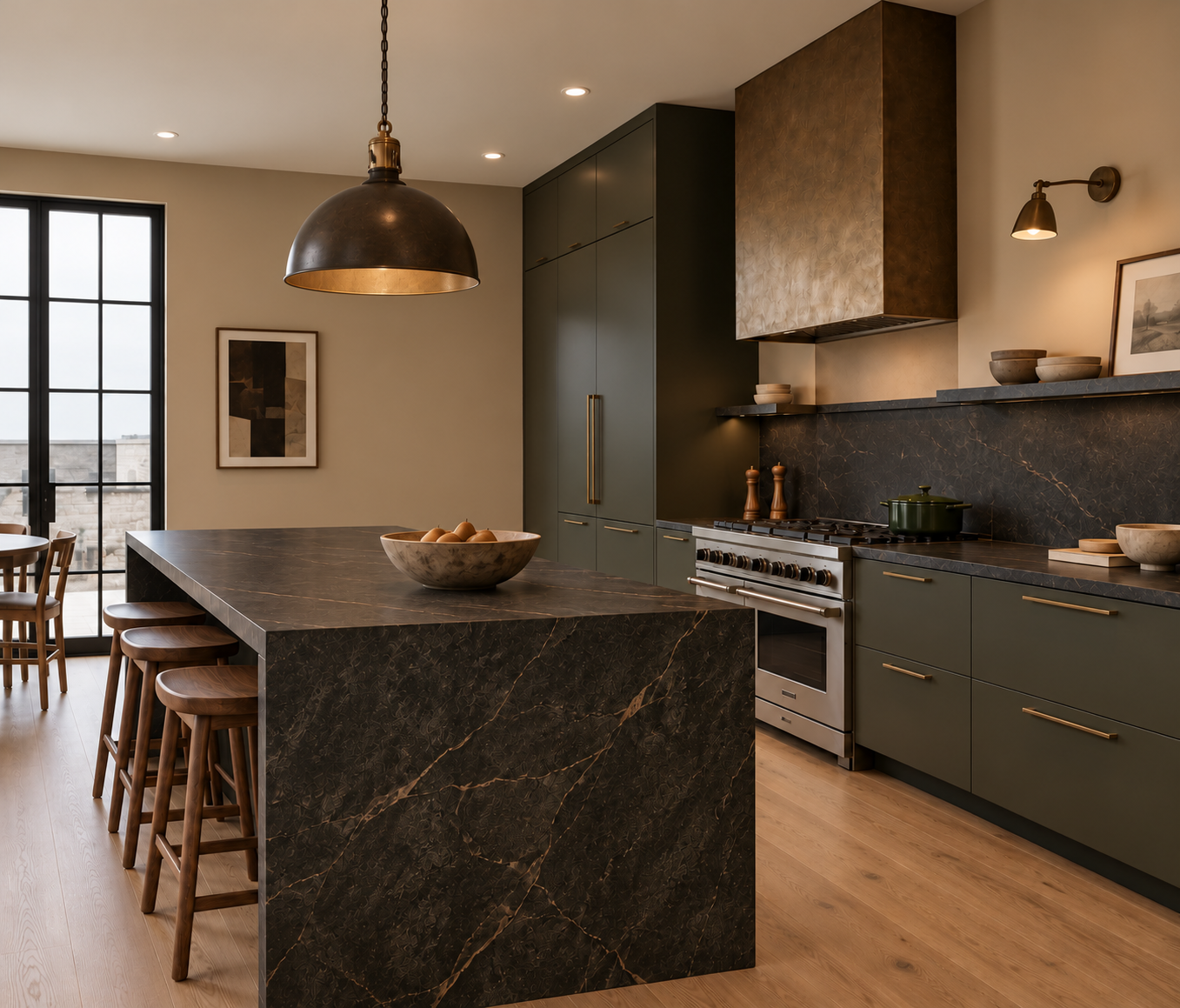
A dark countertop buys you the contrast a beige room needs without committing a whole cabinet run to color. It also sidesteps the undertone problem, since black and deep green work next to either kind of beige.
Soapstone, honed black granite, and dark green quartzite all work, and honed finishes suit beige better than polished because the matte surface matches the flatness of the paint. Soapstone darkens and needs oiling to keep its color even, so ask the fabricator what the upkeep looks like before you choose it.
Speckled beige granite over beige walls is the kitchen most homeowners are demolishing right now. The flecked pattern repeats the wall color without contrast or texture, so the room goes flat at every height. Put a tonal budget into a honed solid-color surface instead.
Can you keep red oak floors with beige walls? Yes, with the right stain, and that is the question to settle before you pick anything else in the room.
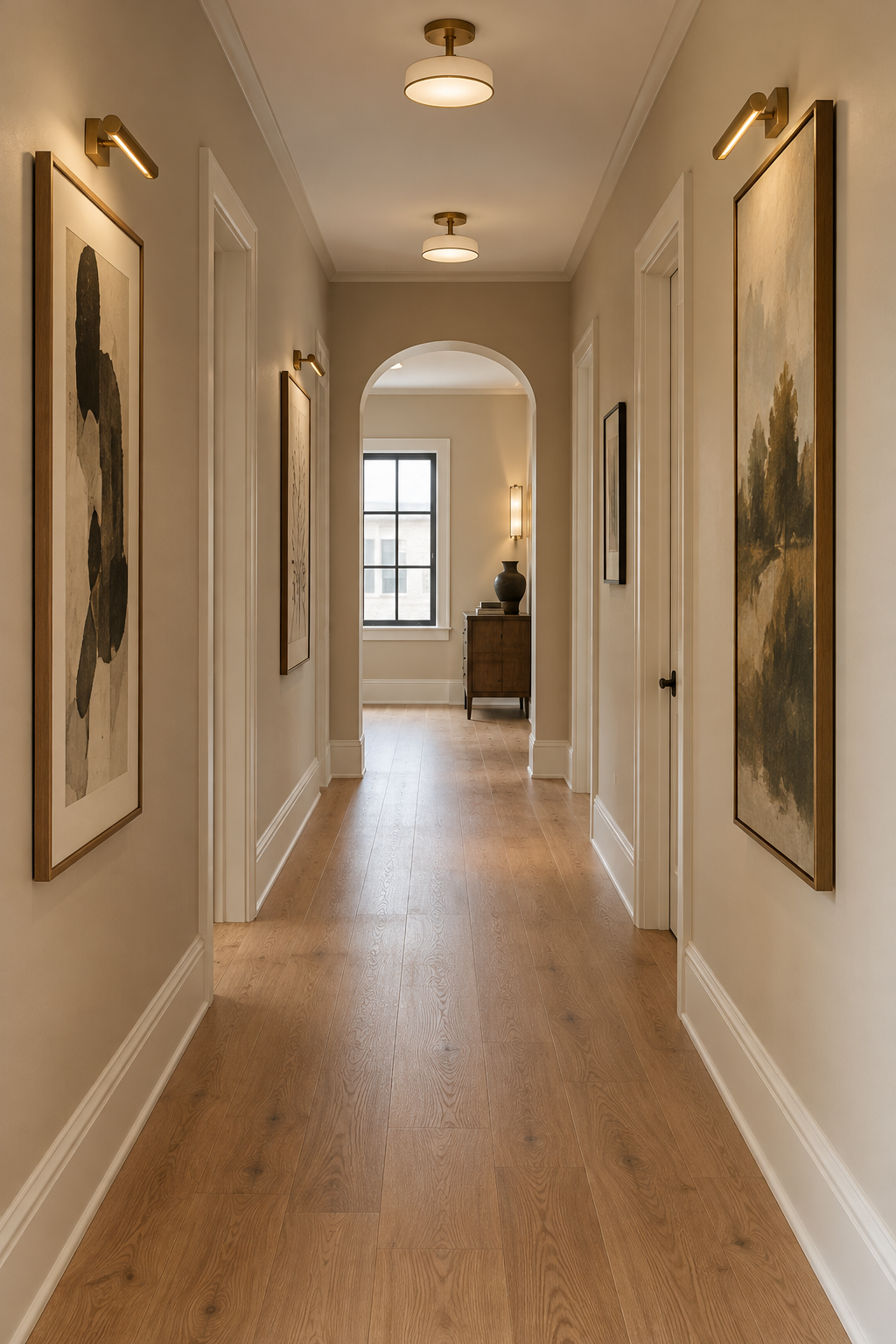
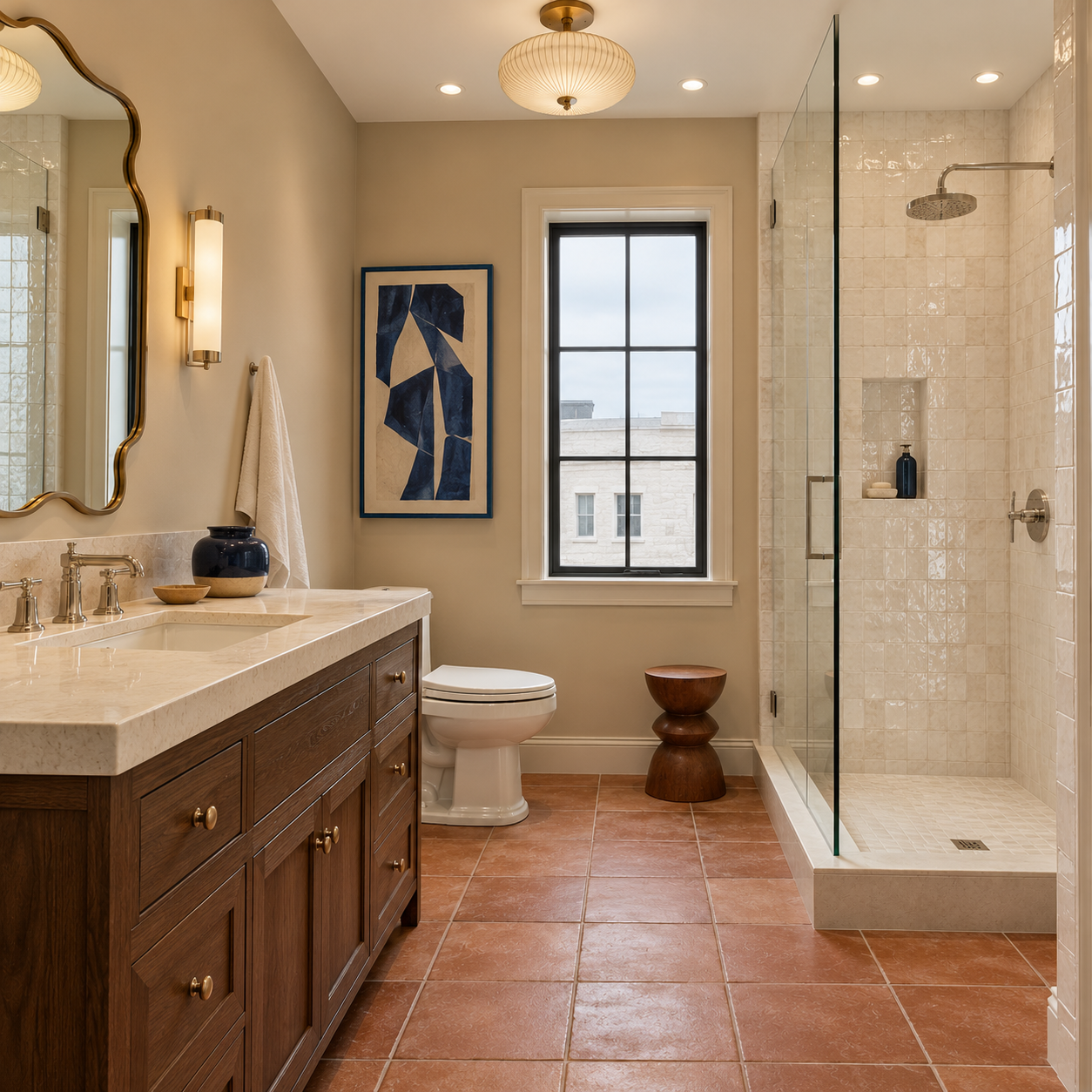
Red oak takes on an orange cast under a yellow beige, so a stain with a gray or green undertone (most brands sell one labeled natural, nutmeg, or weathered) pulls it back toward neutral. White oak needs less correction and takes a clear matte finish well. Gray-washed oak is the one stain to refuse, because gray floors are coming out of houses for the same reason gray walls are. Dive deeper with our guide to dark vs. light wood flooring.
Large-format tile in a beige room has to carry the warmth on its own, since beige walls will not warm up a cool gray porcelain. Three finishes do it:
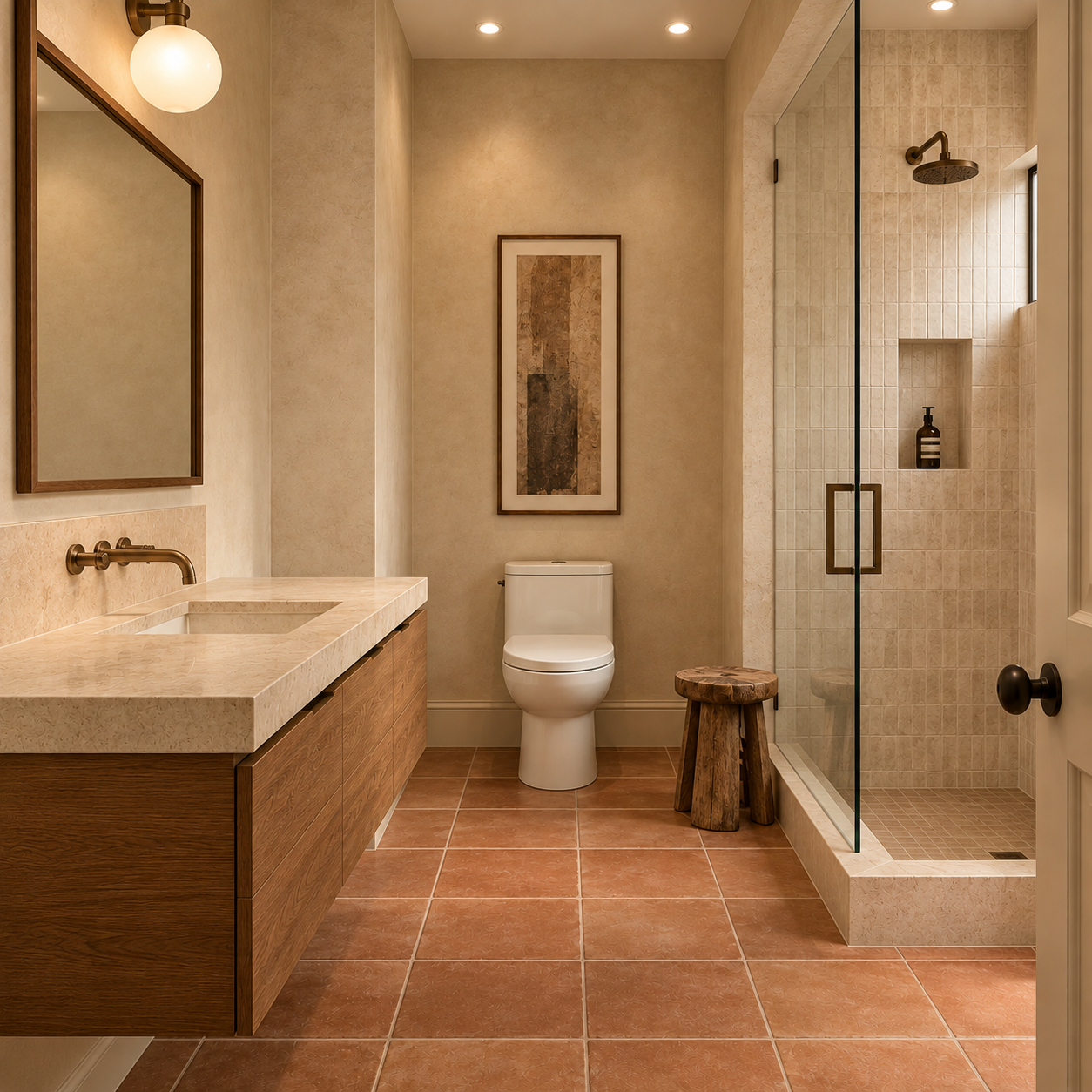
Gray porcelain, the default in most showrooms, makes the beige look yellow by comparison. Ask the tile shop for a 24 by 48 sample, not a chip, and set it on the floor against the baseboard.
Picture a light oak floor, a beige wall, and warm white trim in the same room. Each one is fine on its own, and together they produce a room with no edges, where the floor and the wall meet in a blur. The floor needs to sit clearly lighter or clearly darker than the wall, by at least two or three steps on a paint deck. A pale, almost white oak against a mid-tone beige gives you as much separation as a walnut floor does, with a brighter room to show for it.
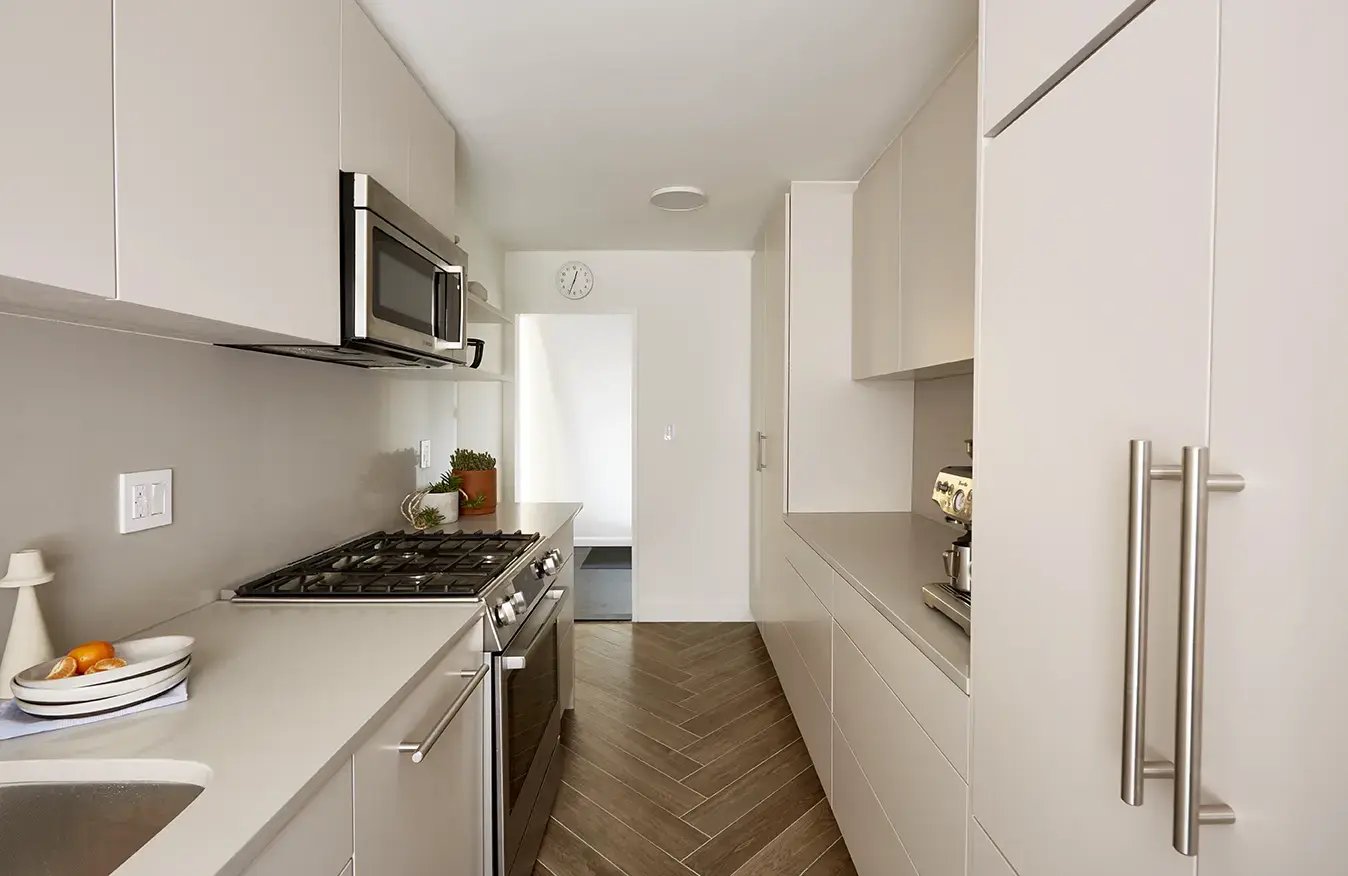
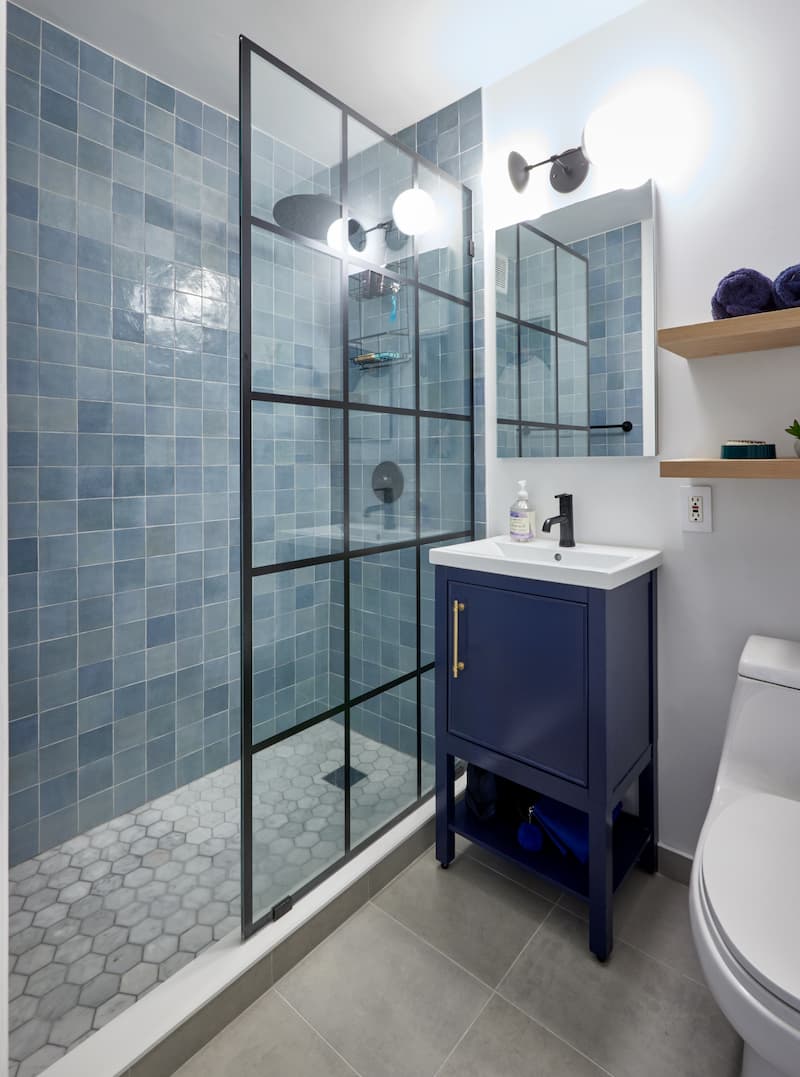
A backsplash or shower wall in handmade white tile gives you the brightness of white without the clash that a flat, machine-made white creates against beige. Zellige, hand-glazed ceramic, and crackle-finish tiles vary from piece to piece, so some pieces match the wall tone and others reflect light. Look for whites labeled warm, bone, or ivory, and expect handmade tile to run $20 to $50 per square foot for material alone, versus $3 to $10 for a standard subway.
Grout decides the rest. A warm gray or sand grout keeps the field soft, and a bright white grout turns the whole wall into a grid.
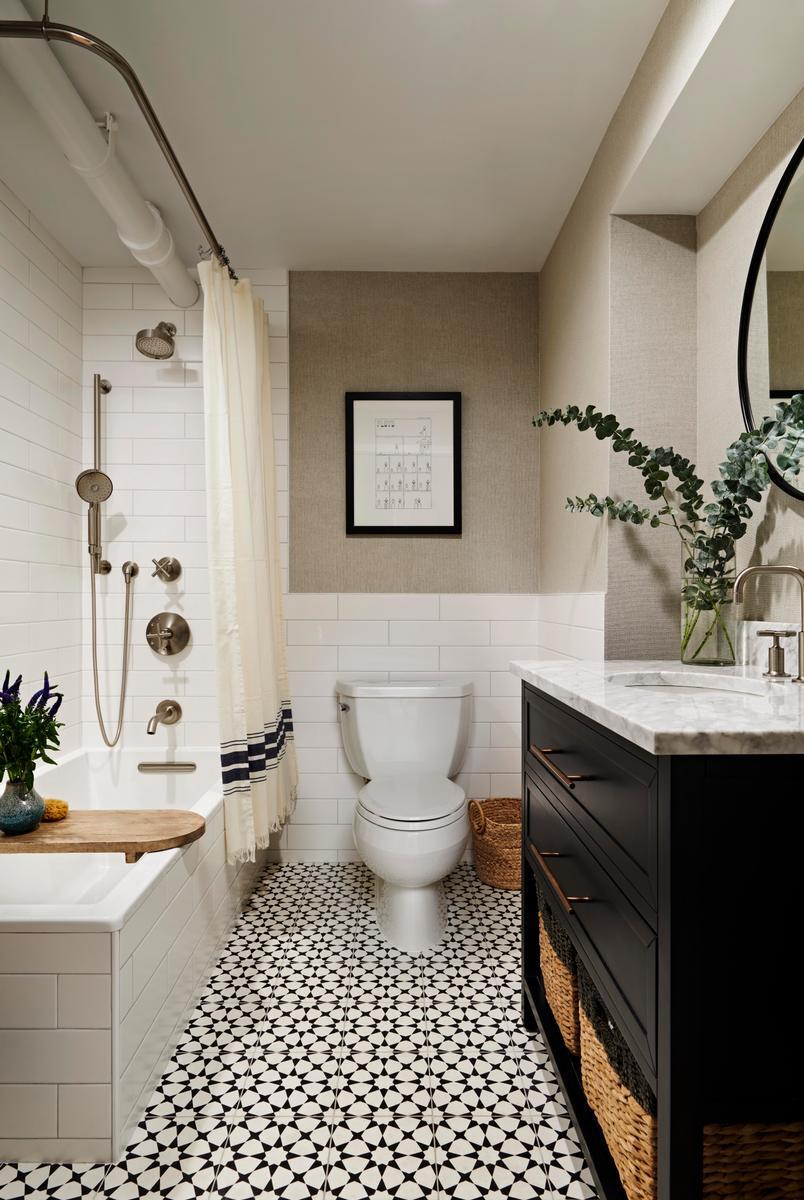
Run the countertop material up the wall to the underside of the upper cabinets. A slab backsplash removes the grout grid entirely, so the only pattern in the room is the stone's own veining, and that is the pattern you already matched to the wall. A slab backsplash adds $1,500 to $4,000 to a standard kitchen depending on the slab and the number of cutouts.
What color should the trim be when the walls are beige? There are three answers, and each one dates the room differently.
A beige room lit with 4,000K recessed cans is the room that gets blamed on the paint. The light is doing it. Beige pigments carry yellow and green, and a cool bulb pulls the green forward until the wall looks like a hospital corridor. The same wall under 2,700K light looks like the sample you picked.
But here's the kicker: the wall color matters less than the light on it, for every color, not only beige. A $60 gallon of paint changes in an afternoon. Recessed cans, under-cabinet strips, and dimmers are decided during the electrical rough-in, and changing them afterward means opening finished ceilings. Spend the planning time on the lighting plan and treat the wall color as the adjustable part.
Specify 2,700 to 3,000K for every fixture in the room, a color rendering index of 90 or higher, and dimmers on at least the overhead layer. Mixed temperatures in one room look worse than a uniformly wrong one, so check the under-cabinet strips against the cans before the electrician leaves.
Renovate with confidence every step of the way
Step 1: Personalize Your Renovation Plan
Step 2: Receive Quotes from Trusted Contractors
Step 3: Let Us Handle the Project Details
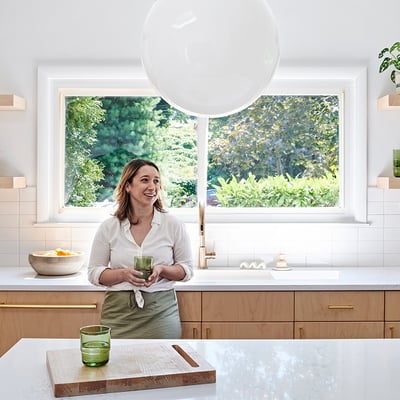
Walk into a beige kitchen with polished chrome pulls and a chrome faucet and the metal will be the first thing you notice, because it is the only cold object in the room. Unlacquered brass, aged bronze, and matte black all share beige's warm range, and brass in particular picks up the yellow in the wall. Keep the metals to two finishes across the room, including the light fixtures, and choose the plumbing fixtures first since they come in the fewest finishes.
Beige is the hardest neutral to design around, and the mistake most homeowners make is treating it as the safe one and choosing it first. Every finish above has an undertone, and beige exposes a mismatch faster than any other neutral. A gray or white wall has enough contrast with a slightly wrong finish that the mismatch is hard to see. Against beige, the yellow, pink, or green in a finish is visible from the doorway.
So pick the cabinets, the countertop, and the floor, in that order, and bring the samples home before you open a paint deck. Then choose the beige that agrees with all three. A coat of paint is the cheapest decision in the room, and it is the one you adjust to fit the others.
You make most of these choices at the cabinet shop and the stone yard, and the rest of them at the electrical rough-in. A contractor who has worked through all three will catch an undertone clash before the slab is cut. Block matches you with vetted local contractors who compete for your project, and a Block project planner reviews each proposal line by line so the lighting plan and the finish allowances are spelled out before you sign.
Remodel with confidence through Block

Connect to vetted local contractors
We only work with top-tier, thoroughly vetted contractors

Get expert guidance
Our project planners offer expert advice, scope review, and ongoing support as needed
Enjoy peace of mind throughout your renovation
Secure payment system puts you in control and protects your remodel

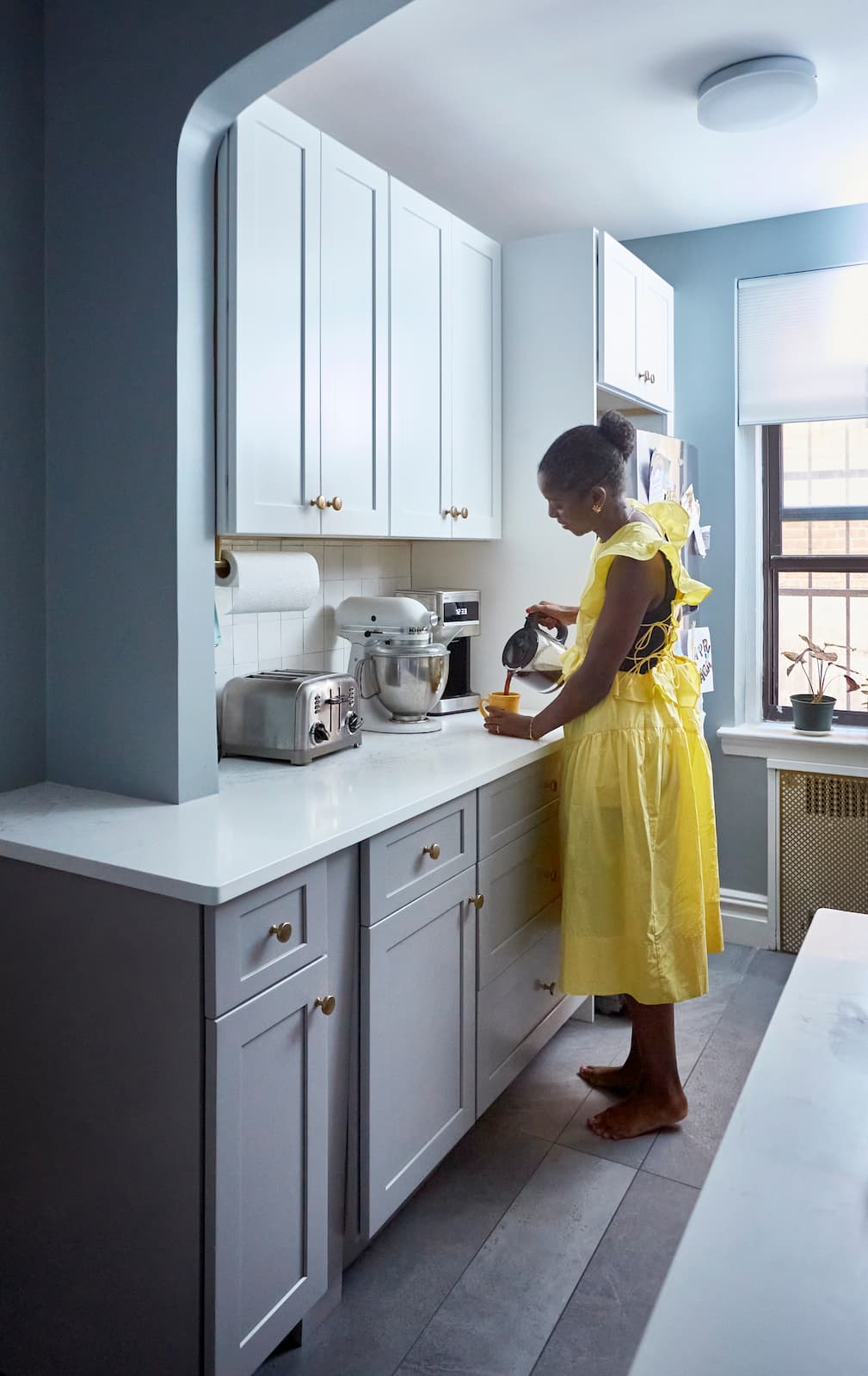
Renovate confidently with Block
Easily compare quotes from top quality contractors, and get peace of mind with warranty & price protections.
Paint & Color
Designing Around Beige Walls: Finishes That Work
10.26.2026
Paint & Color
Two Tone Bathroom Walls: 15 Ideas & Where to Split
08.14.2026
Cabinets
Brown Cabinets With White Countertops: Design Guide
06.04.2026
Paint & Color
Wall Colors for Light Wood Floors: Grays, Whites & More
05.13.2026
Paint & Color
Gray Walls with Dark Hardwood Floors: Pull Off the Look
05.06.2026