



Countertops
Laminate Countertops vs. Quartz: How to Choose
09.15.2026
08.10.2026


In This Article
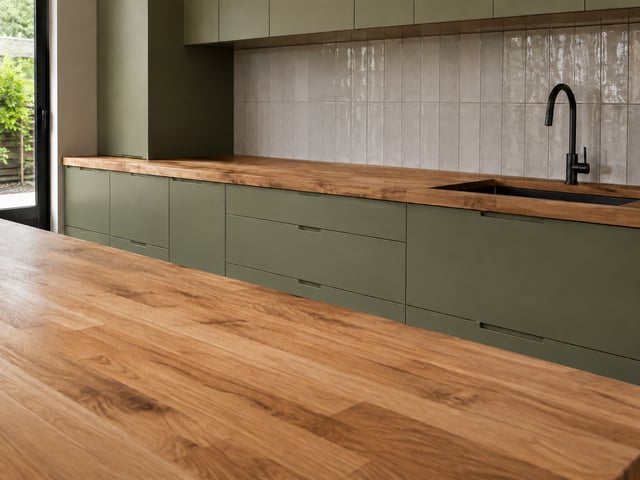
You have probably saved a dozen photos of green cabinets with butcher block counters, and some of them look right while others look slightly off. The cabinet color is rarely the difference. It usually comes down to the wood species, the backsplash, and the bulbs overhead, which are all easy to change now and costly to change after templating.
Intrigued by the idea of having cabinets that are two different colors? Stay in one undertone family and separate the two greens by three or four steps on the same paint strip, or about 25 to 30 points of light reflectance value. Anything closer looks like a color match that failed. The darker green belongs at floor level, on base cabinets and the island, so the room carries its visual weight low and a full-height pantry run stops dominating the sightline. Your counter sits at the boundary between the two colors, so the wood tone has to work against both.
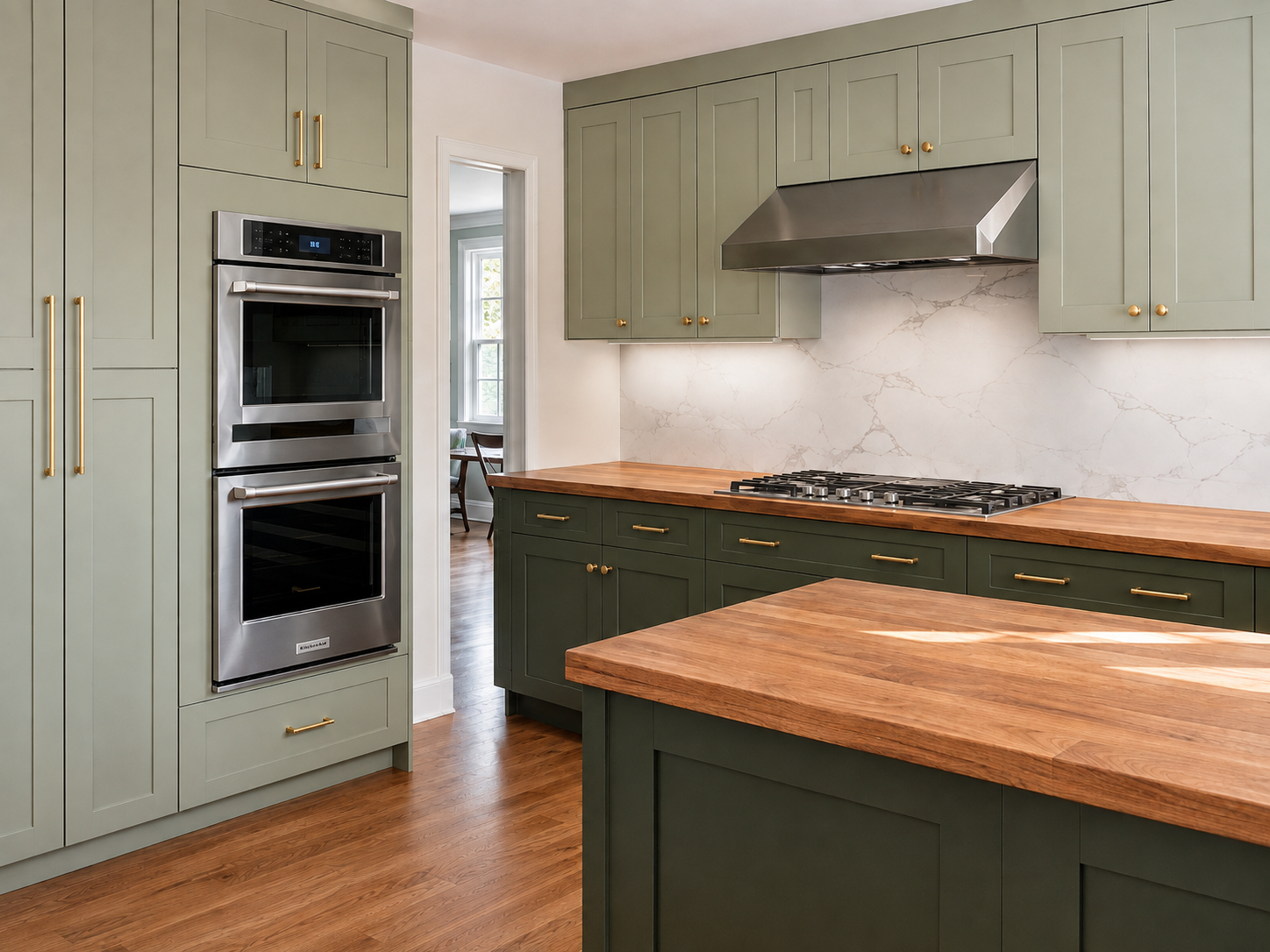
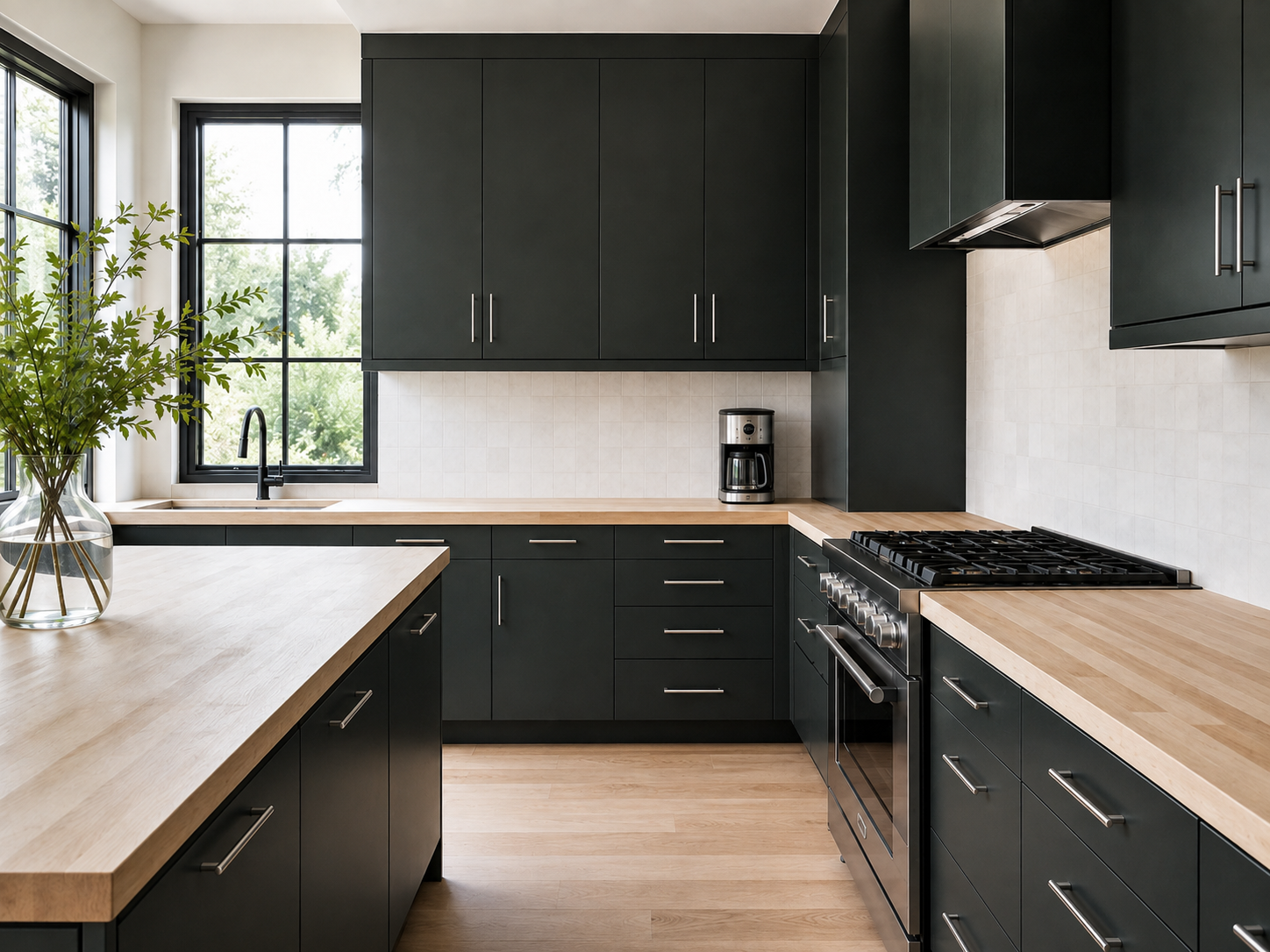
Most homeowners shopping for green cabinets are picturing a mid-value sage. That is a narrow slice of what's available. Very dark greens get overlooked and are often the better answer, since they behave like a neutral, they hide the wear that shows on pale painted doors, and their color only comes forward in daylight. Cabinets that dark want a light counter and a light floor. They also want a tinted primer underneath, because deep greens take more coats than a mid-tone does.
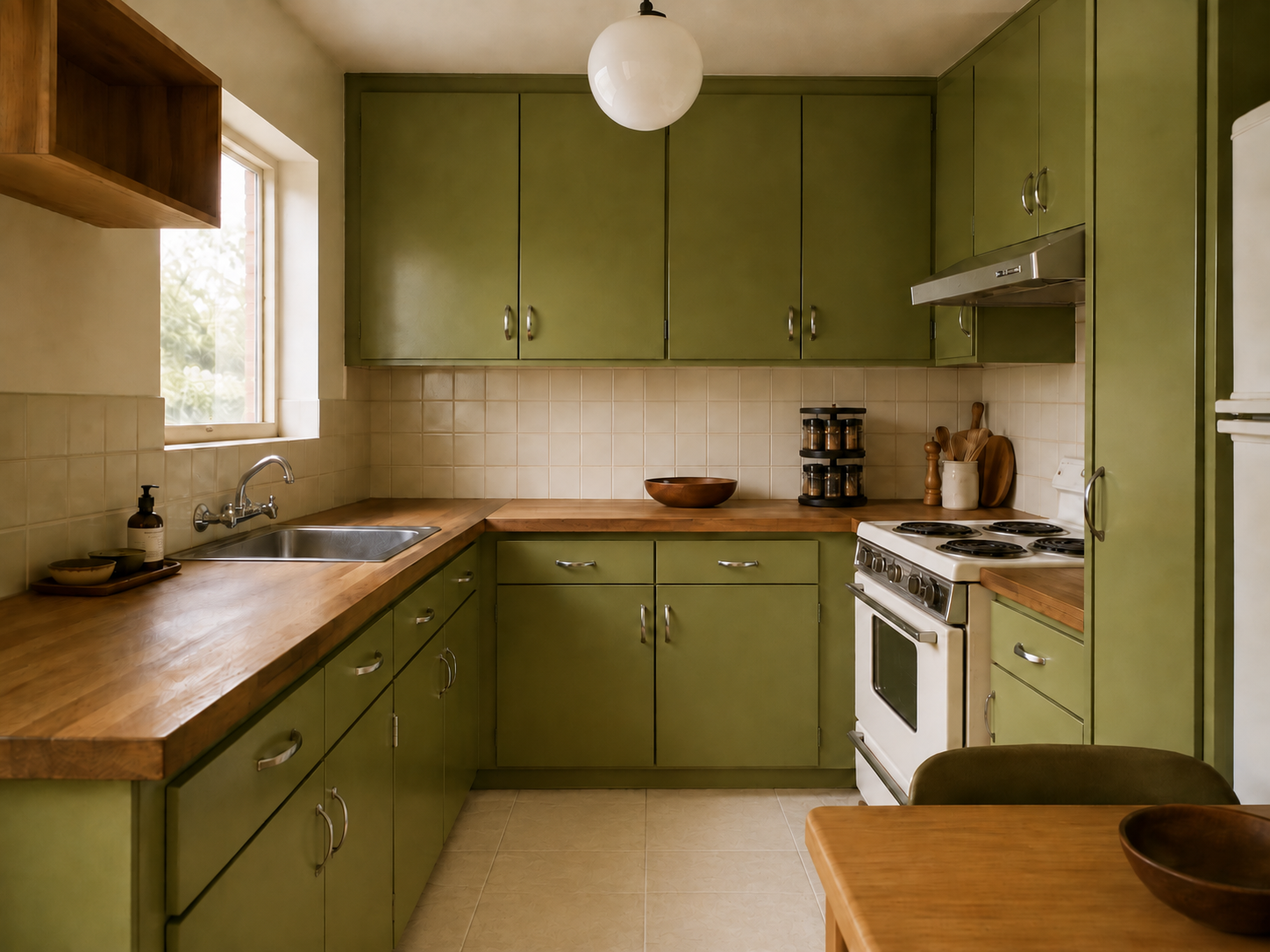
Drop a yellow-heavy avocado into a contemporary shaker kitchen and it looks like a mistake nobody caught. The same color anchors a kitchen built on a 1970s reference, as long as the door style, the pulls, and the tile commit to the era alongside it.
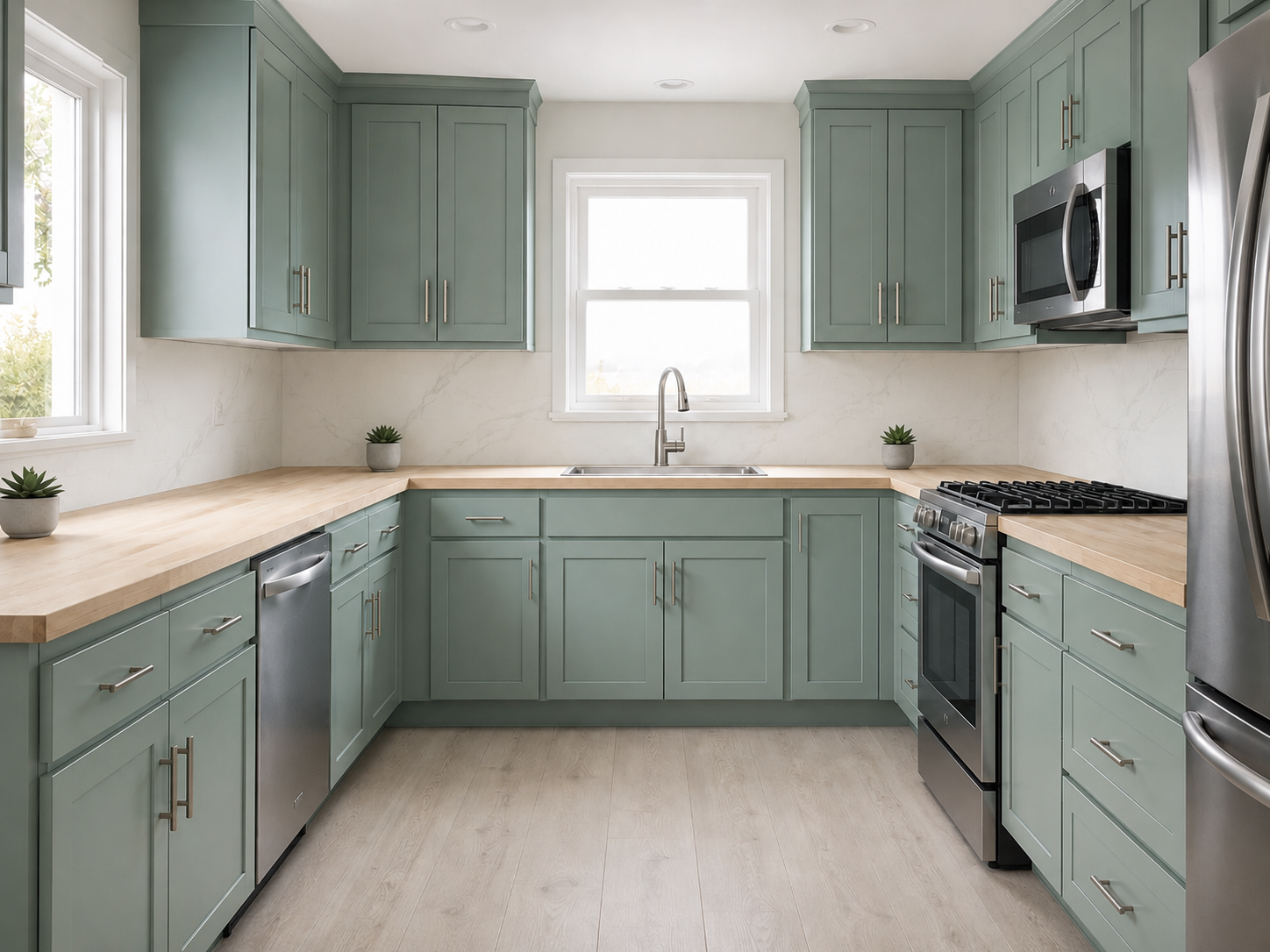
A 2700K bulb pushes a yellow-based green toward gold at night, and sage or moss can go muddy under it. Blue-based greens hold up better in north-facing rooms where warm greens turn gray, and forest or aquamarine will look lighter than a yellow-based green of the same value. North-facing kitchens are where this decision goes wrong most often, because the color you approved at the store had warm showroom lighting on it.
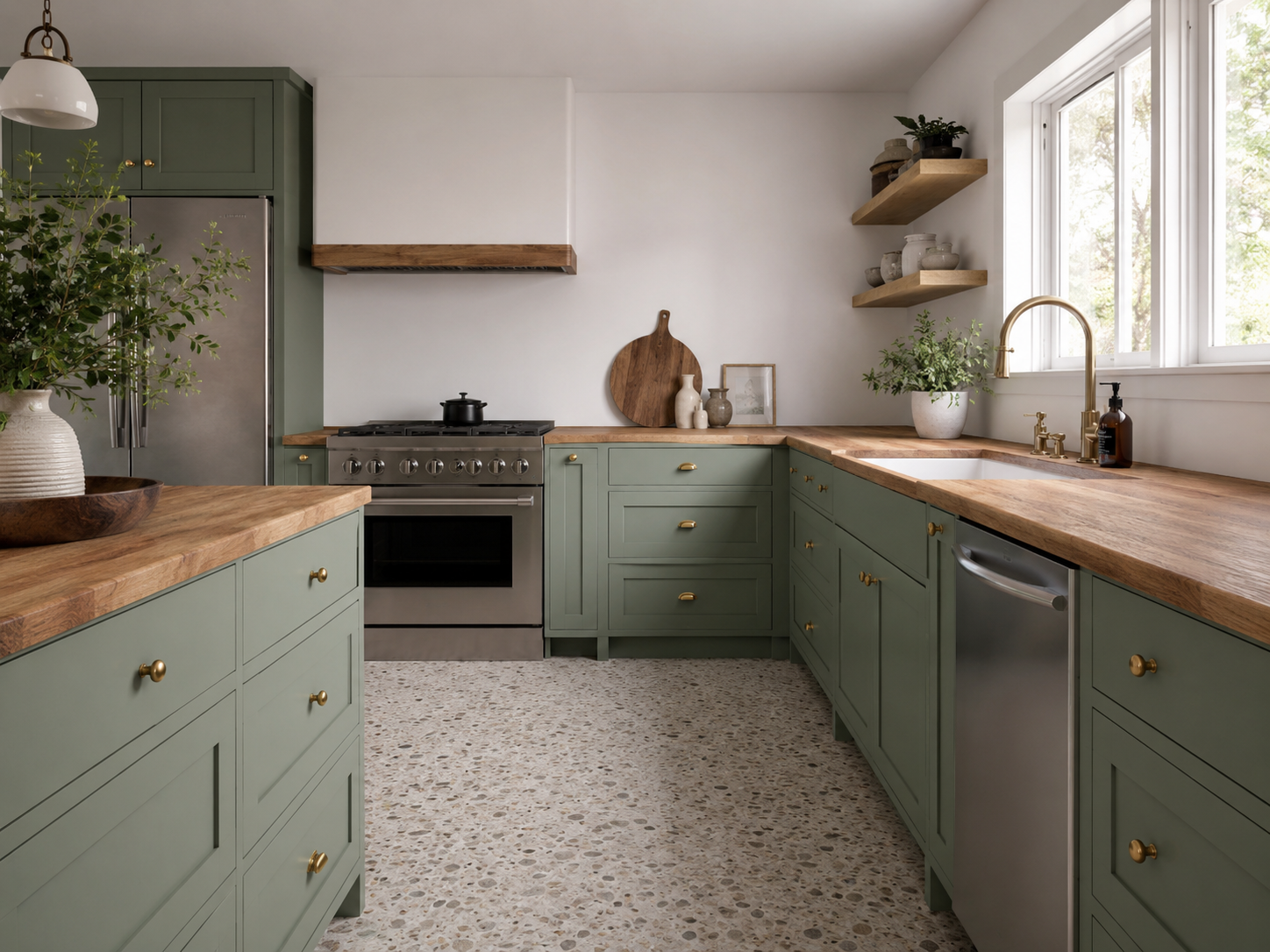
Half-committing is what leaves a green-and-wood kitchen looking unresolved. Going all the way means the rest of the materials agree: tumbled stone instead of a machine-perfect tile, open shelving on visible brackets, cup pulls, a thick end-grain island that shows its seams. An oiled counter that patinas belongs in that group too, since a uniform sealed sheen would be the one surface in the room looking factory-made.
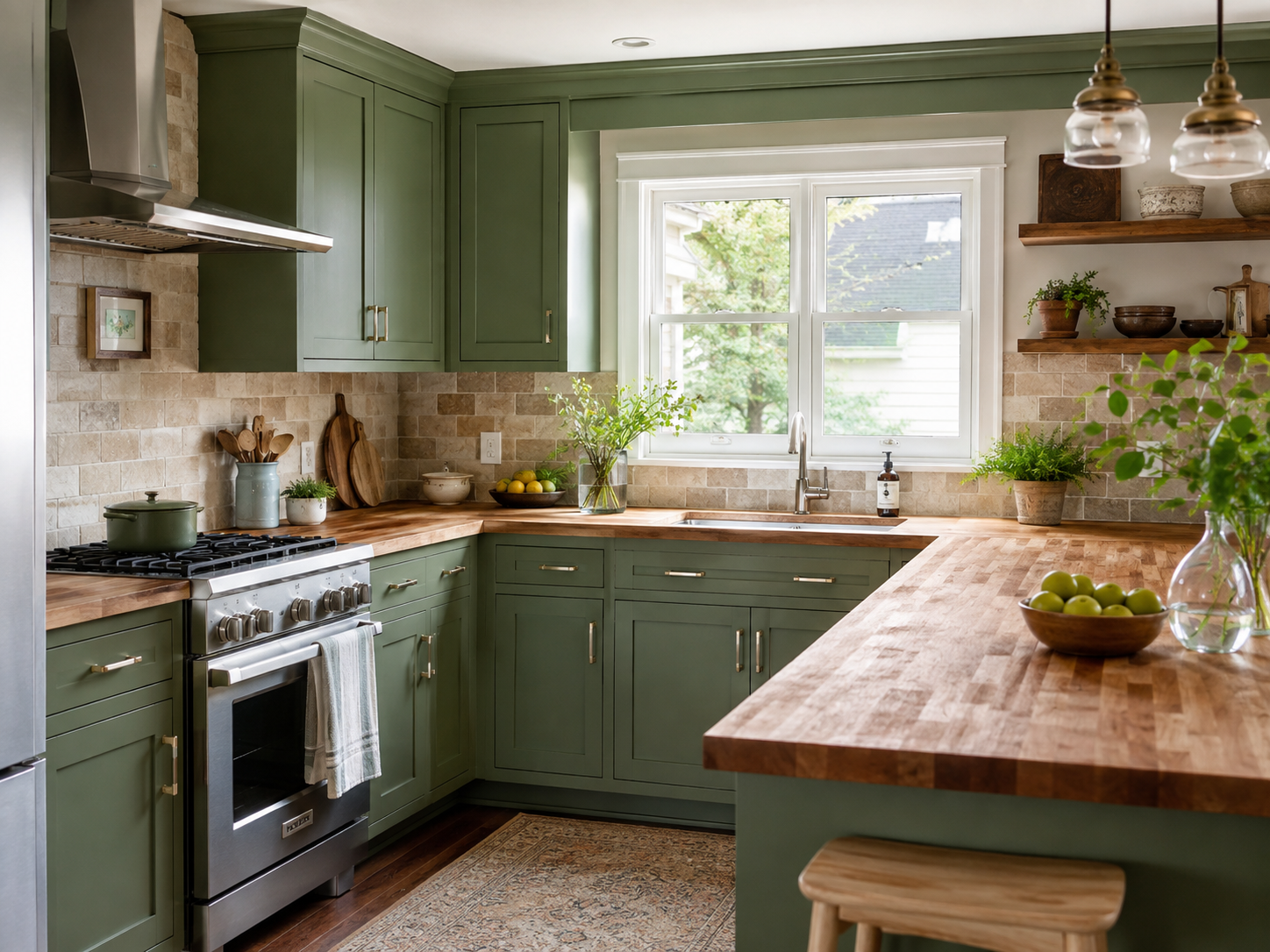
Put the end grain where you actually chop. It is the only orientation that closes up under a knife instead of scarring. That makes the extra cost worth paying on an island or a prep run, and not on a perimeter counter you mostly set groceries on. Pattern cuts like herringbone turn the counter into the room's visual interest, and a plain backsplash behind them saves you money you can put toward the wood.
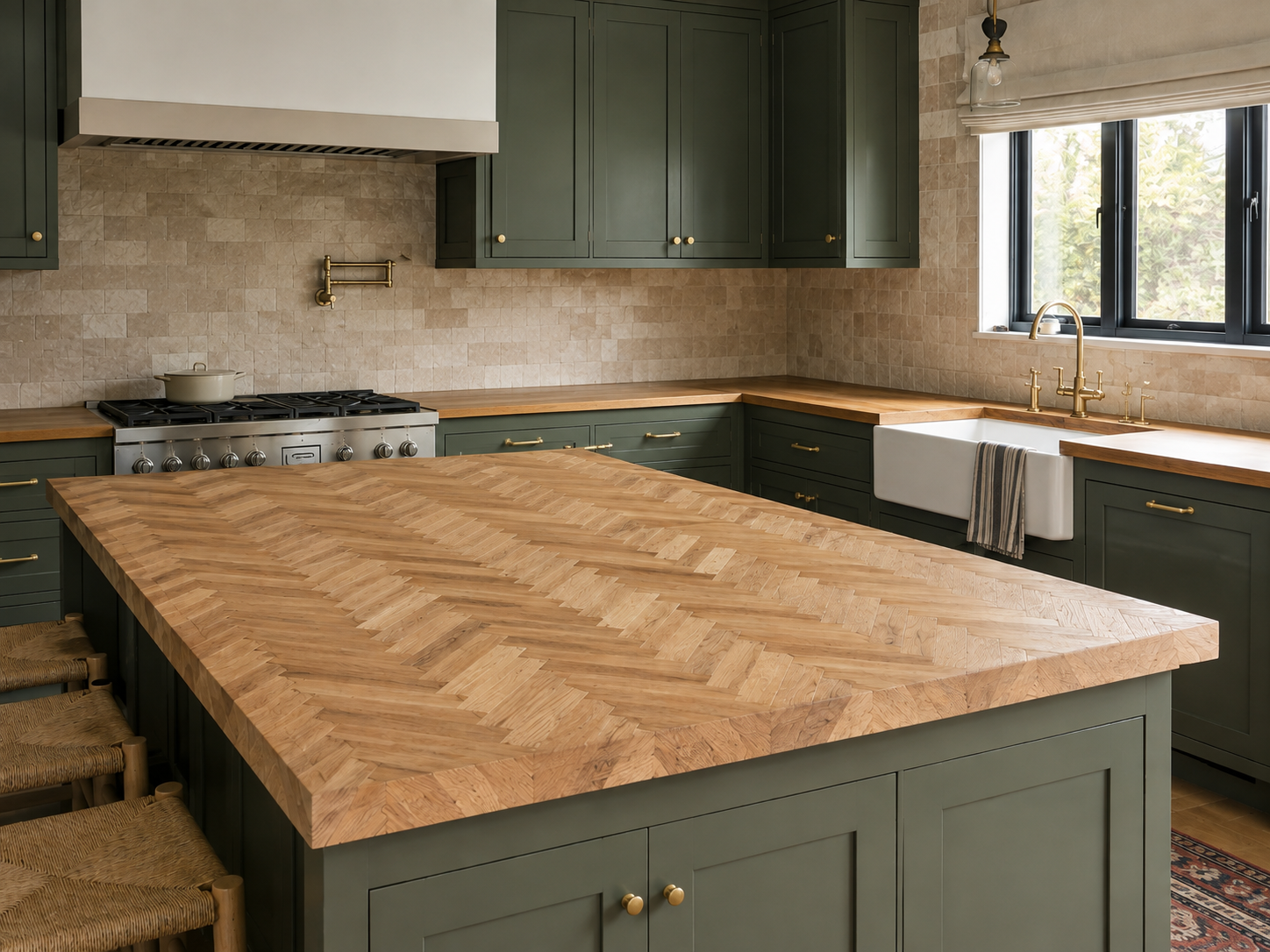
Species does more to set the room's contrast than the green does. Maple and birch are pale enough to sit close to neutral, so they are the standard partner for a near-black green and the reason those kitchens photograph as well as they do. Oak, warmer and more visibly grained, holds its own against a mid-value green without disappearing into it. Watch cherry, since it darkens substantially over the first few years and won't be the pairing you approved by year five. Walnut goes darkest of the four and costs the most, often two to three times birch in the same grain orientation.
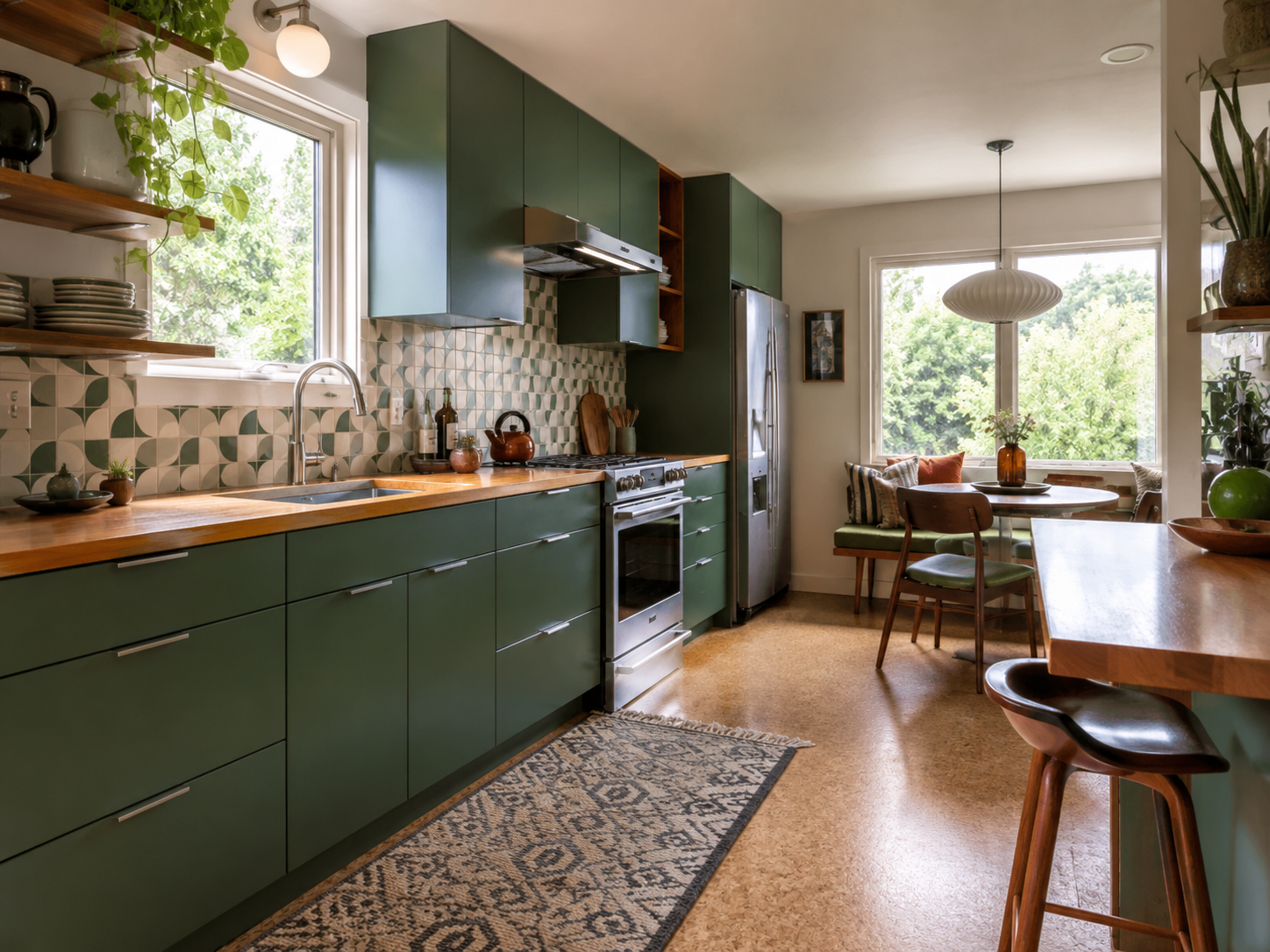
The most common failure in a green kitchen is a backsplash that adds a fourth element to a room already carrying two colors and one strong wood grain. Cream zellige, stacked ceramic, and white subway all add texture without a new color, and they keep the wood in front. That is the right call when the counter has heavy figure or a pattern cut.
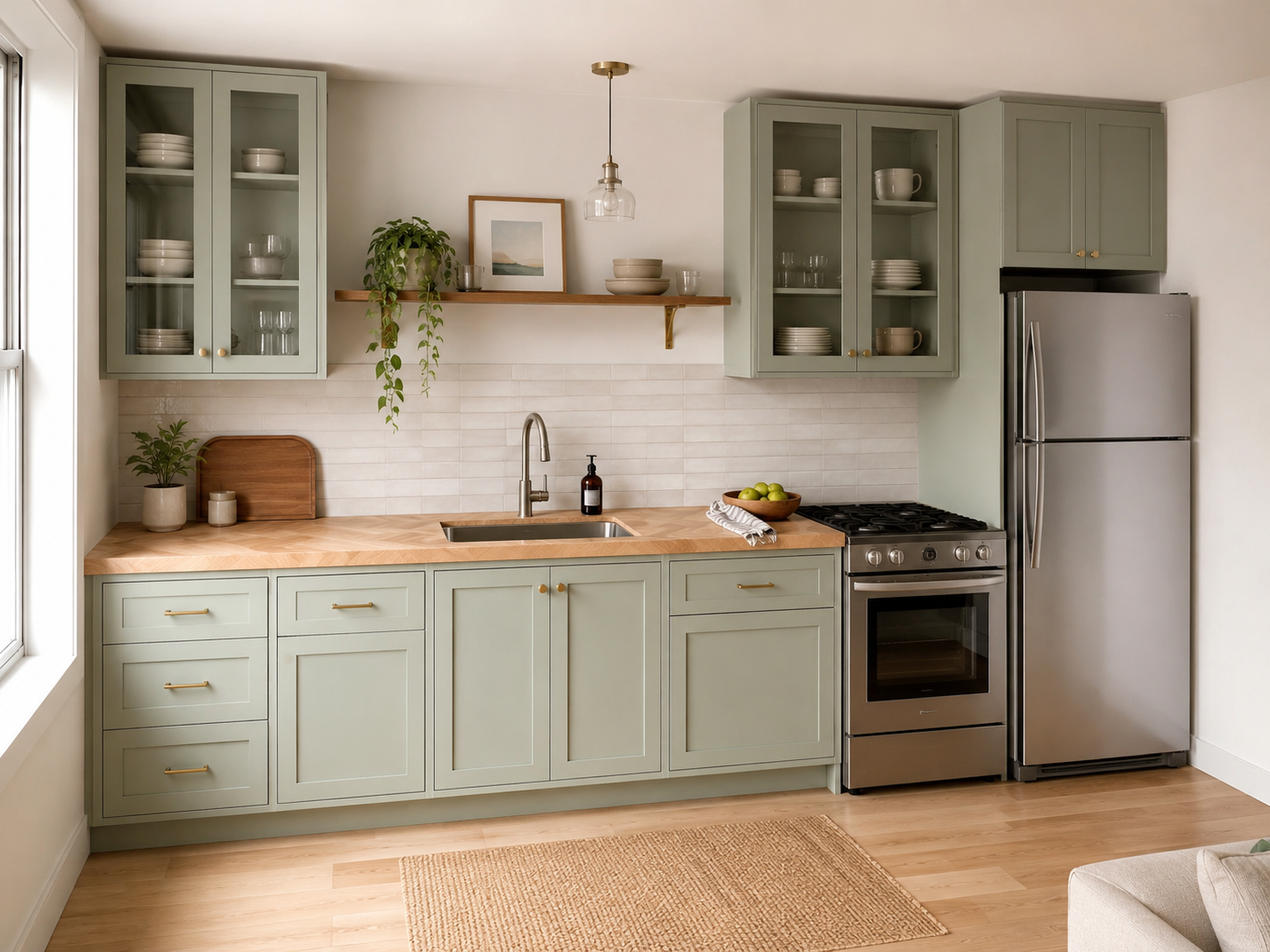
A patterned backsplash works under one condition: every color in the tile already appears somewhere in the room. Tile that pulls the same green off the doors and a rust tone out of the wood extends what you have. Any color with no match on a cabinet, the counter, the floor, or the hardware is the one to question before you order.
Grout is the variable people forget. Warm gray or greige keeps a busy tile calm, while bright white sharpens the grid and adds contrast you may not want against green.
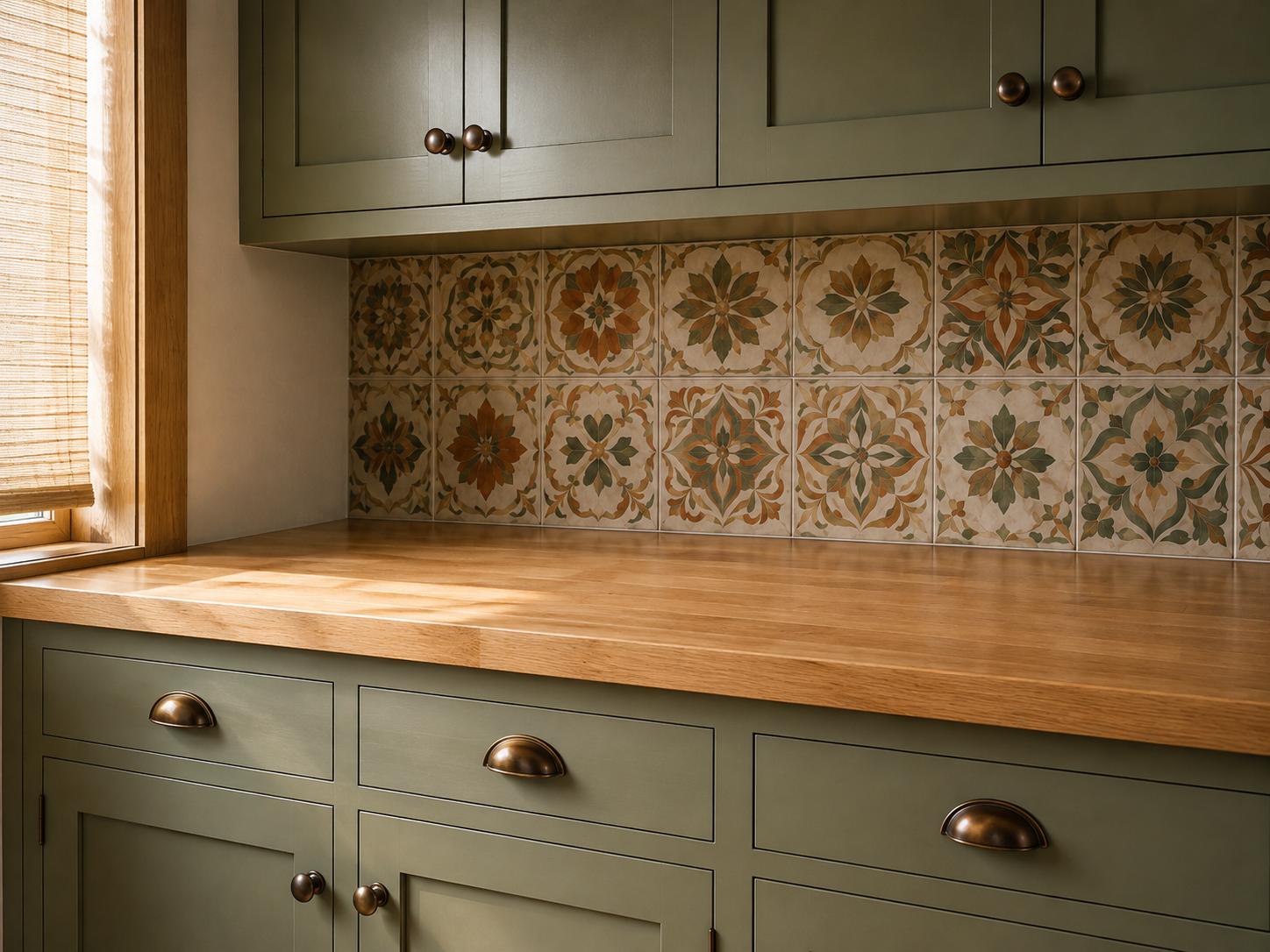
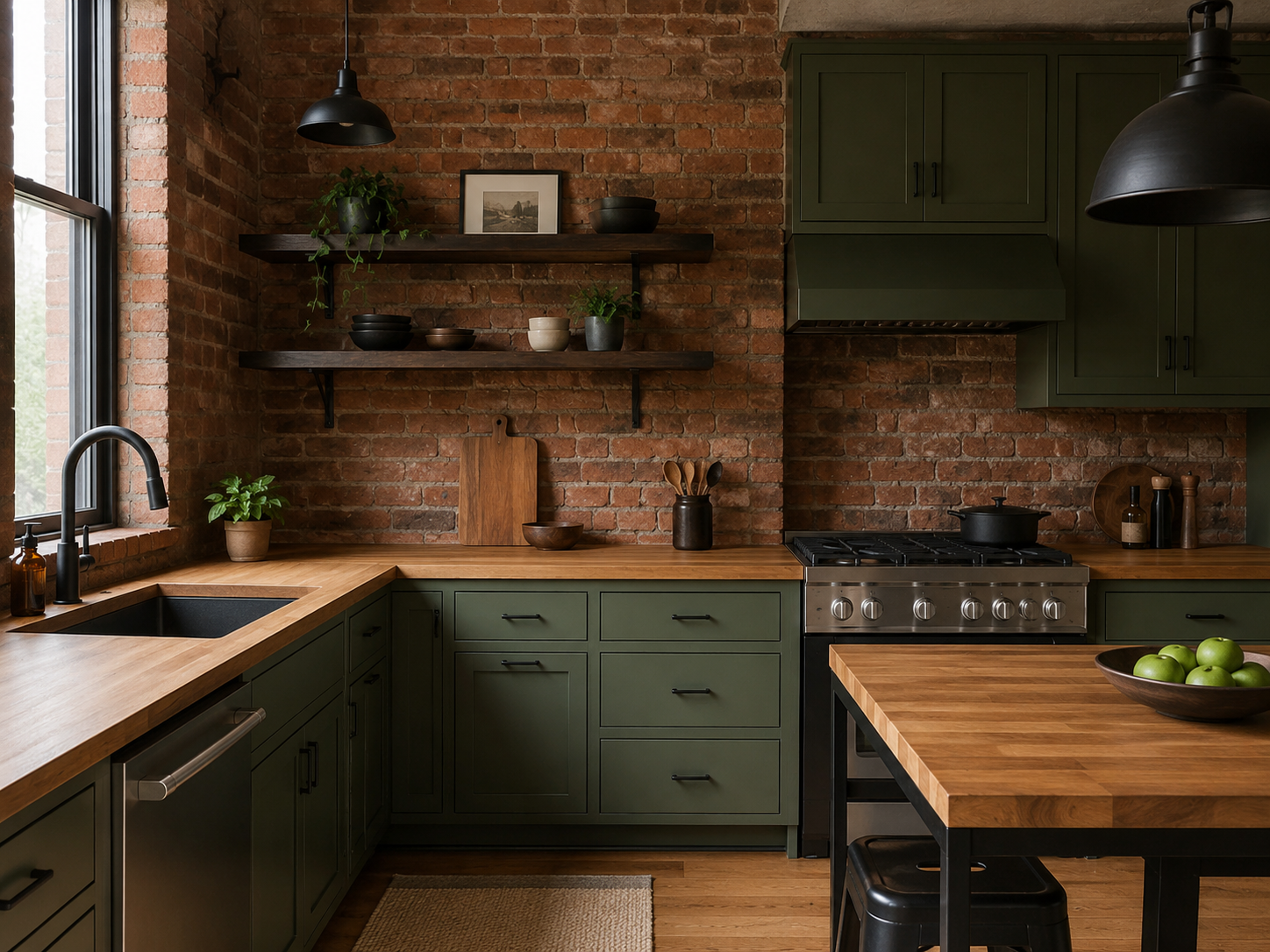
Warm masonry looks riskier than it is. Terracotta, saltillo, and exposed brick sit in the same clay range as most butcher block, so they extend the counter rather than compete with it. You get depth and texture without adding a color the room doesn't already have. Both directions want a dark, saturated green rather than a pale sage, plus black or bronze hardware, since brass against clay tends to muddy.
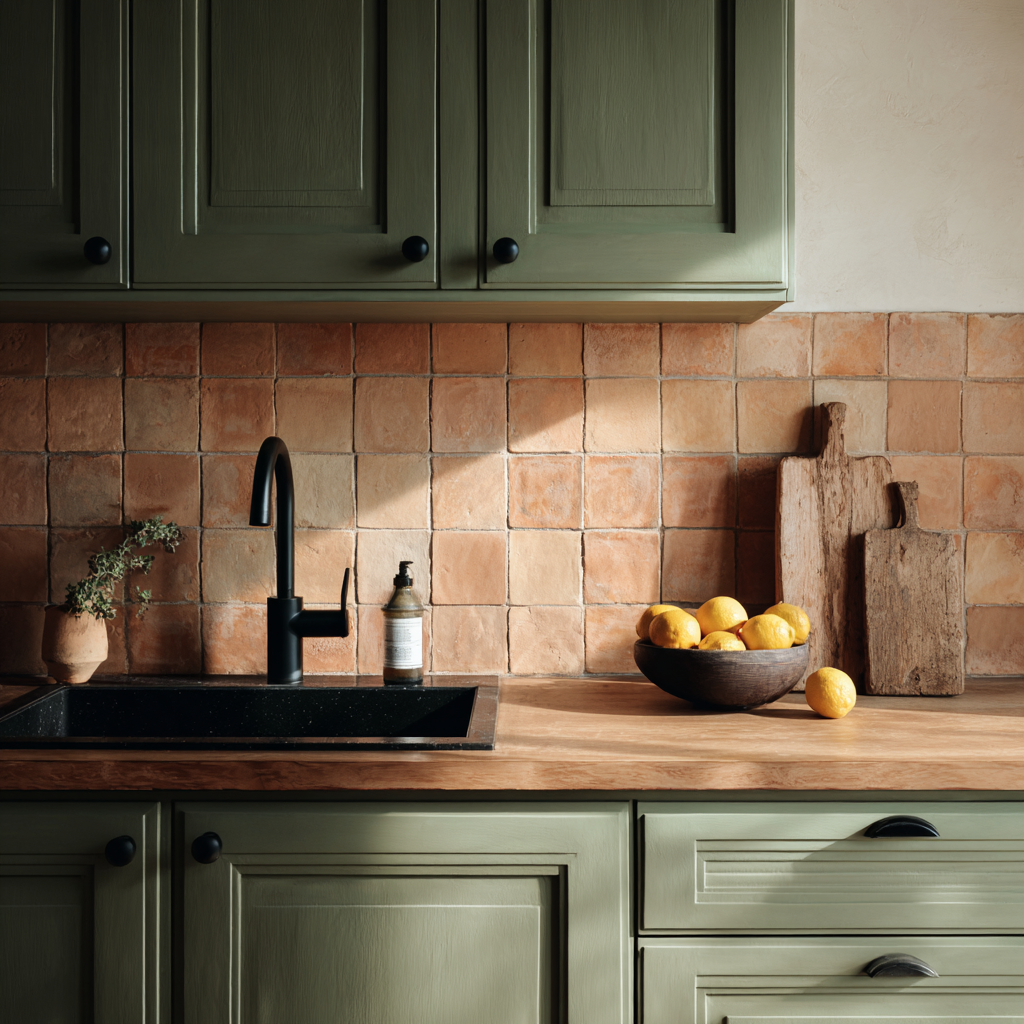
The practical notes belong in your scope, not on the mood board. Unglazed terracotta and saltillo are porous and need sealing before grout and again after, especially behind a range. Exposed brick needs a moisture plan plus a determination of whether the wall is structural masonry or a veneer, and that answer changes what a contractor can cut into for outlets and a hood run.
If having a "wall of green" intimiates you, the solution may be glass front cabinets. Put the glass next to a window or at the end of a run, and stop at one or two boxes. What's behind the doors does the rest, since white ceramics, a wood bowl, and clear glassware repeat colors already in the room. Muntins add a little detail to flat shaker doors that don't have much.
Glass boxes cost more than solid ones and need finished interiors, so a low count helps the budget too. And if you'd rather not keep a shelf tidy, reeded or seeded glass blurs what's behind it.
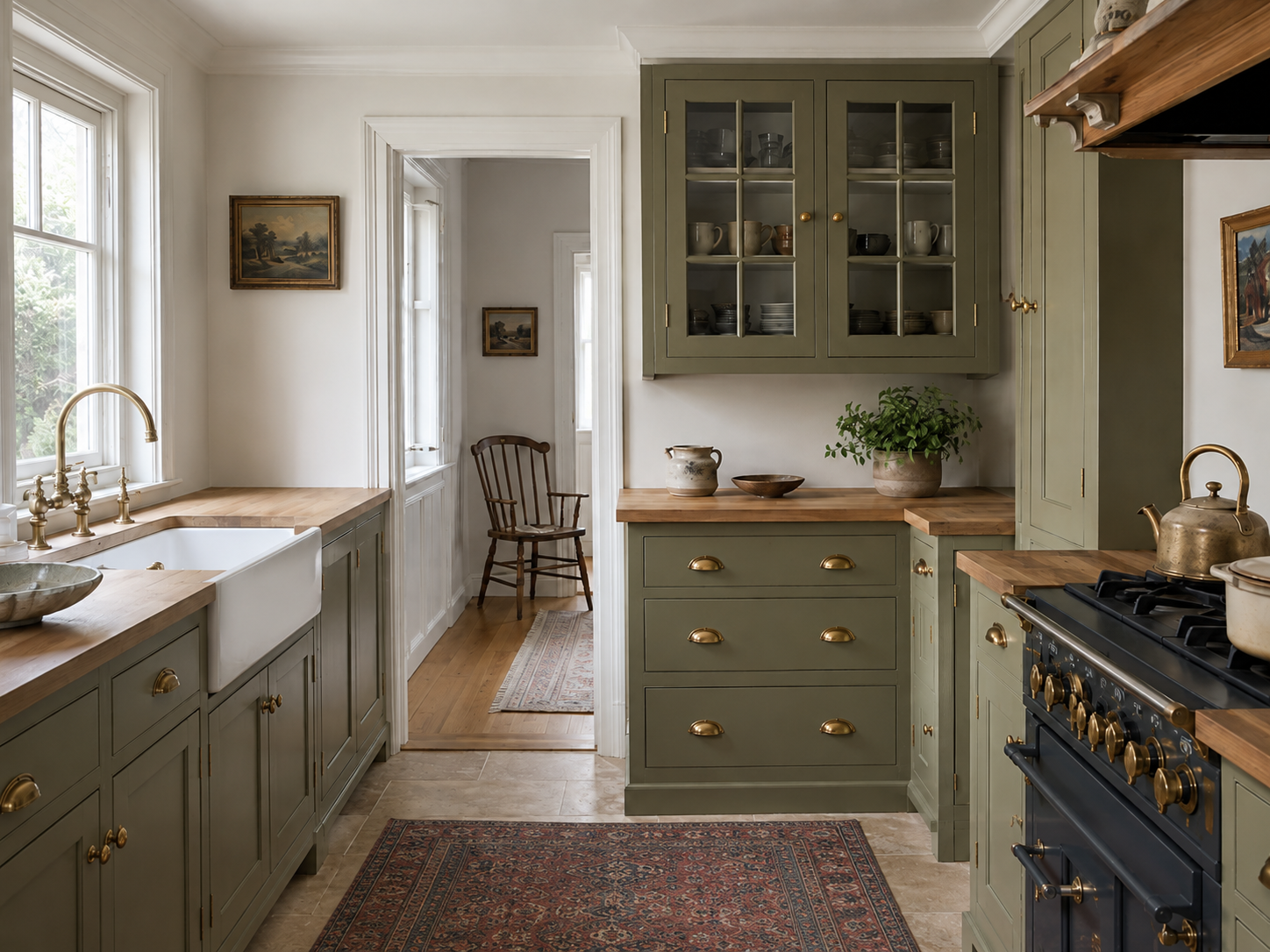
A single wood counter floating in a green room can look like a leftover from a different kitchen, and a second wood in a slightly different tone looks worse. Give the counter one or two echoes in the same species and the same finish: floating shelves, a hood shroud, a range shelf. Warm oak underfoot with an oak counter and oak shelves leaves green as the only color decision anyone has to make, and that is an argument for keeping original floors in an older home. An exact match isn't always realistic, and the fallbacks are real distance between the two wood tones or a floor that isn't wood at all.
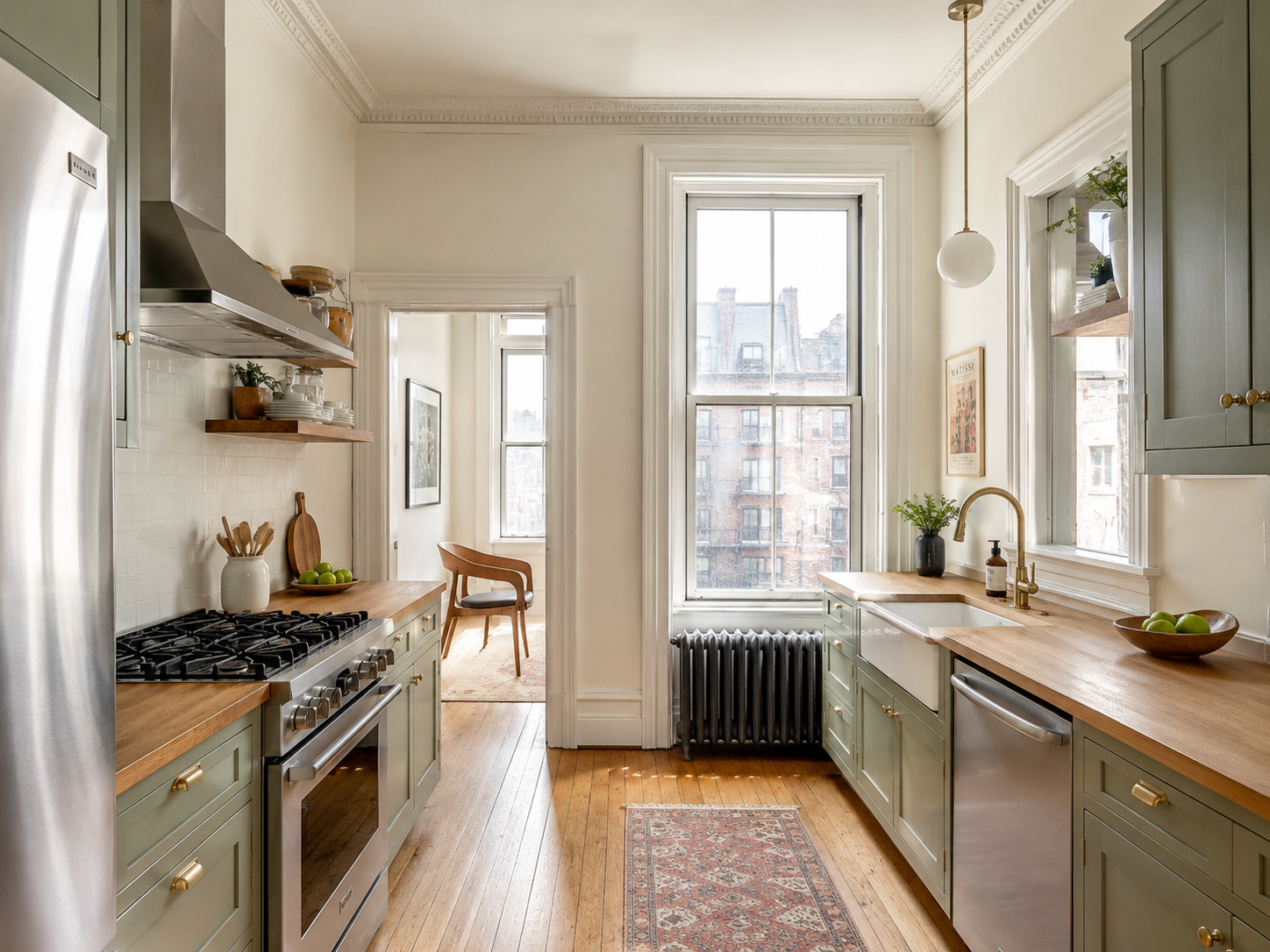
Pick the metal after the green and the wood are locked, because it is the cheapest of the three decisions to change later. Unlacquered brass pushes yellow-based greens warmer and patinas on roughly the same curve as an oiled counter, so the kitchen ages as a set. Matte black adds contrast without a third color temperature, and it is the safer pick when the cabinets are dark enough that a bright metal would look like jewelry.
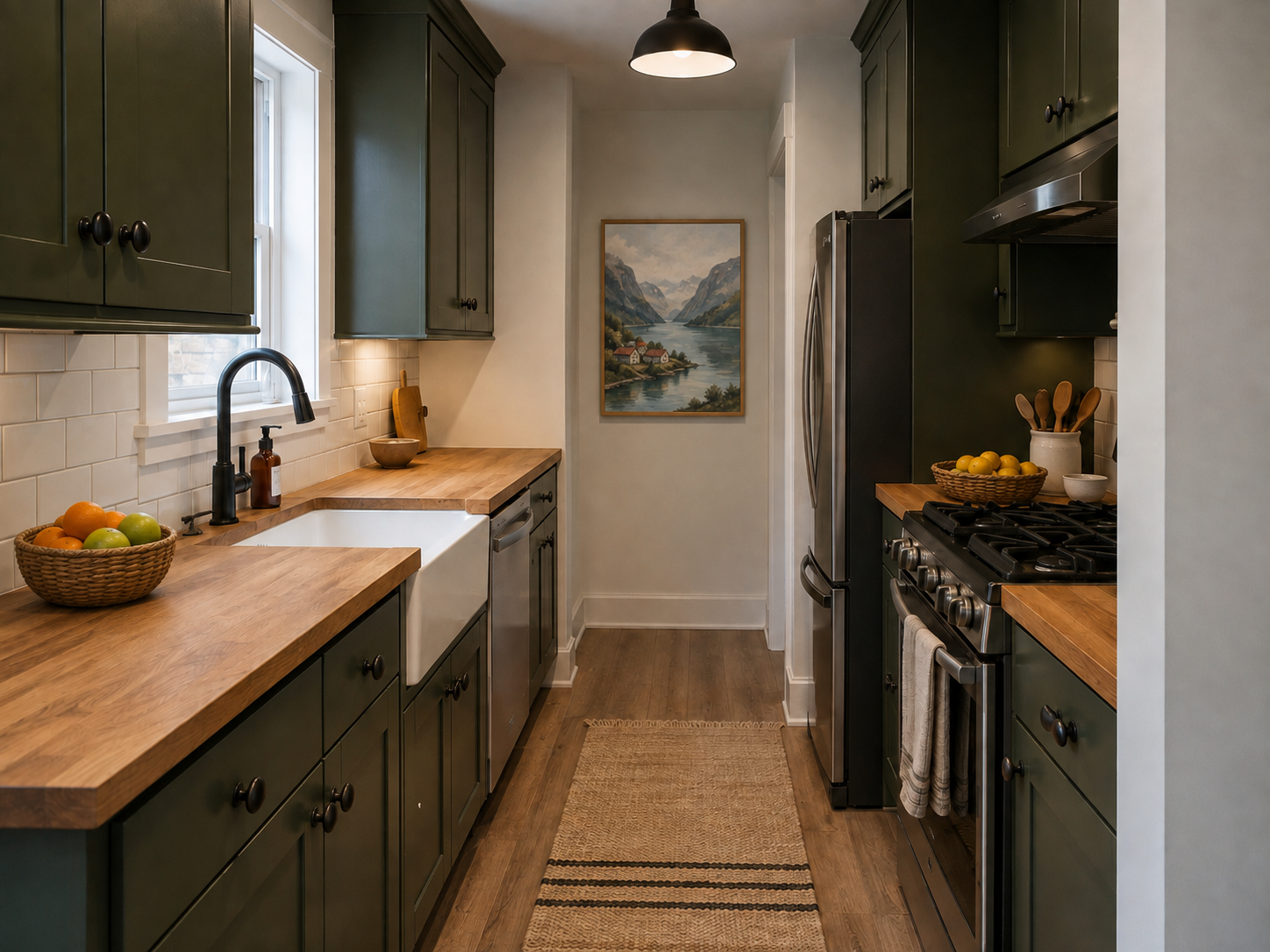
Cooler metals belong with blue-based greens and mid-century door profiles, where chrome or brushed nickel keeps the room from tipping warm. The finish matters less than the consistency across pulls, faucet, and visible light fixtures. A brass faucet against black pulls is the most common mismatch in this palette, and it costs nothing to catch at the specification stage.
Design a Home That’s Uniquely Yours
Block can help you achieve your renovation goals and bring your dream remodel to life with price assurance and expert support.
Get Started
Wood counters cost less than stone and ask more of you afterward. Anyone selling butcher block as low maintenance is skipping the part where you have to reapply finish, keep water off the seams, and accept that the surface will show its age.
| Grain type | Best use | Relative cost |
|---|---|---|
| Face grain | Bars, low-traffic runs | Lowest |
| Edge grain | Perimeter counters | Middle |
| End grain | Islands, prep stations | Highest |
Green cabinets and butcher block only work when the details behind them get specified correctly, from who seals the counter to how the paint gets sprayed and cured. Block matches you with vetted local contractors who bid on an expert-reviewed scope, so the finish schedule, the seam locations, and the sealing responsibility are settled in writing before demolition starts. Tell Block about your kitchen once and let the right contractors compete for it.
Remodel with confidence through Block

Connect to vetted local contractors
We only work with top-tier, thoroughly vetted contractors

Get expert guidance
Our project planners offer expert advice, scope review, and ongoing support as needed
Enjoy peace of mind throughout your renovation
Secure payment system puts you in control and protects your remodel

Renovate confidently with Block
Easily compare quotes from top quality contractors, and get peace of mind with warranty & price protections.
Countertops
Laminate Countertops vs. Quartz: How to Choose
09.15.2026
Countertops
Kitchen Counter Overlay: Cost, Durability and More
09.13.2026
Countertops
What Color Countertops Go With Oak Cabinets?
09.01.2026
Countertops
Walnut Cabinets With White Countertops
08.24.2026
Cabinets
Blue Cabinets With Black Countertops
08.19.2026