



Home Addition
Building Kitchen Additions: Costs & Design
08.21.2026
12.22.2025


In This Article
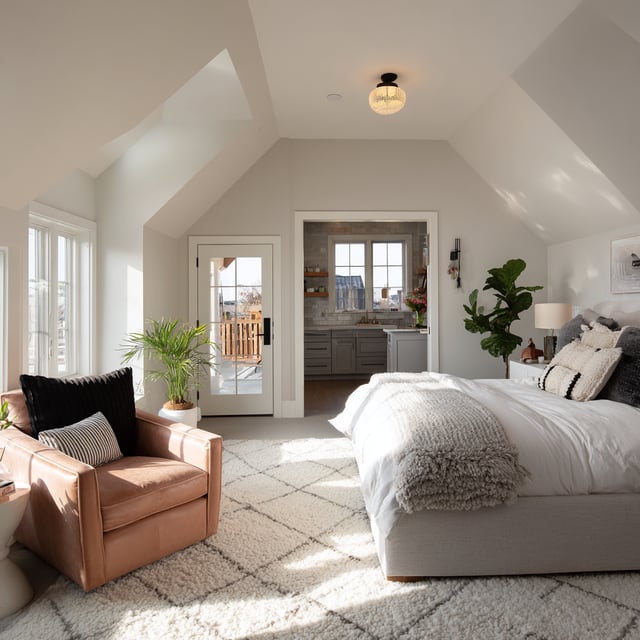
Adding usable living space can mean expanding upward, not outward. Creating a master suite above your garage is a smart, flexible option—one that lets you gain square footage without shrinking your yard, and can add privacy and resale value. As with any major addition, this project involves decisions around cost, timeline, structural integrity, and design.
Here’s how to know if an above-garage master suite is right for your home, and what it takes to do it right.
| Start with structure | Finishes are not the first cost variable. If the garage was not built for living space above, an $80,000 to $200,000 suite can pick up $5,000 to $40,000+ in foundation, framing, or load-bearing work before the room takes shape. |
| The ensuite is the jump | A $45,000 to $60,000 finished room becomes a different project once a bathroom is added. Plumbing, drainage, venting, waterproofing, and HVAC coordination can push the scope into the $80,000 to $200,000 range. |
| Comfort is not cosmetic | A room over a garage can meet code and still live poorly. Weak floor insulation, air sealing, sound control, or HVAC zoning can leave it cold underfoot, hot in summer, noisy, or exposed to garage air. |
The advantages of an above-garage addition:
Makes use of existing footprint—no need to pour a new foundation or lose valuable outdoor area to a ground-level bump-out.
Adds privacy and a true "retreat" feeling since the space feels set apart from the rest of the house.
Gives you the opportunity to introduce new utilities, layouts, or insulation standards without disrupting main-floor living during construction.
Great for maximizing value per square foot in neighborhoods with small or already-built-out lots.
Can create architectural interest and improve curb appeal when well integrated. In some cases, this approach is more cost-effective or less disruptive than adding a wing or finishing a basement.
Potential disadvantages of an above-garage addition:
Above-garage rooms can run hot in summer and cold in winter unless carefully insulated, ventilated, and zoned for HVAC—more than a ground-level addition or basement project would demand.
Structural work is virtually always required (for support beams and code). This can increase scope, expense, and permitting complexity compared to simply converting interior space or pushing out into the yard.
Noise and vibration from garage doors and vehicles are common complaints, requiring thoughtful soundproofing.
Matching rooflines, materials, and floor levels with the original house isn’t always straightforward. This can make an above-garage addition look or feel like an add-on if not expertly designed.
Unlike a first-floor suite, above-garage primary suites are less ideal for aging-in-place or accessibility.
To learn more about other types of expansions, read our guides related to garage conversions, bump outs, and ADU tips for in-demand markets like California.

"Above-garage additions can be complex—projects may require reinforcing the floor structure, adding stairs, insulating the space, and extending electrical and mechanical systems."
Above-garage additions are among the more complex home projects, with costs driven by structure, finishes, location, and scope. Based on data from Angi, Norman Builders, Cedreo, Realm, and other sources, you can expect:
Nationally, finishing a basic bonus room above a garage starts around $45,000–$60,000. A full master suite with a bathroom and walk-in closet often ranges from $80,000 to $200,000, with luxury or large projects exceeding $250,000. Typical per-square-foot costs fall between $150–$450, with labor covering 40–60% of your total budget.
According to Quinn Babcock, licensed contractor and partner, "Above-garage additions can be complex because the existing structure often wasn't designed to support finished living space above it. Projects may require reinforcing the floor structure, adding stairs, insulating the space, and extending electrical and mechanical systems."
Key factors influencing the price of your above-garage addition include:
Square footage: More space = higher cost. Most above-garage additions range from 350–700 sq ft.
Structural upgrades: Many garages need $5,000–$40,000 or more in new supports or foundations.
Scope of finish: Simple drywall and carpet are less expensive than tile, stone, or custom millwork.
Adding plumbing/HVAC: A master bath or dedicated climate zone increases total investment.
Local labor & permitting: Big city or coastal areas typically see higher costs and longer approval timelines.
Architectural harmonization: Matching ceiling heights, rooflines, and exterior materials may add complexity.
Contingency: Industry pros recommend setting aside an extra 15% of the budget buffer for changes and surprises.
We asked Maksim Sauchanka, the owner of BMR Belmax Remodeling in Pennsylvania and New Jersey, about what one question was most important for homeowners to ask their addition builders.

Ask “What is included in your price that people usually assume is included, and what is not?” That question reveals a lot very quickly. It gets into assumptions around permitting, demolition, debris removal, finish matching, temporary protection, utility tie-ins, paint, trim, and all the little things that tend to create tension later if nobody spelled them out.”
An above-garage primary suite is one of the lower-recouping additions you can build.
Nationally, primary suite additions recoup roughly 48% of their cost at resale according to the 2025 Cost vs. Value Report, and upscale versions fall further, often under 35%. Most builder data lands the practical range at 50–65% recouped. The over-garage version tends toward the lower end of that band, because the structural work that makes the project possible—reinforced framing, new supports, stair access—adds cost that a future appraisal doesn't credit dollar-for-dollar.
Transparent Pricing You Can Trust

Master suite additions over a garage can be transformative, but they’re also among the most involved projects—especially when structural work, utility extensions, and high-level finishes are involved. Including permitting, planning, and potential weather delays, the process can take six months and, for complex builds, up to a year.
Design and planning: 1–2 months
Permitting and approvals: 1–2 months (longer in some cities)
Construction: 3–6 months for most, up to 9–10 months if extensive reinforcement or custom features are needed
Final inspections and touch-ups: 2–4 weeks
Preparation, transparency, and a detailed construction plan matter most when your household has to live around the work for months.
Renovate with confidence every step of the way
Step 1: Personalize Your Renovation Plan
Step 2: Receive Quotes from Trusted Contractors
Step 3: Let Us Handle the Project Details

Ideally, your above-garage addition will visually integrate with the rest of the house rather than look bolted on. Here’s how you can make sure your new addition feels genuinely connected to your home:
Match exterior finishes and rooflines: Use siding, brick, or stucco that matches or complements the main house, and align roof pitches, overhangs, and trim for a cohesive silhouette. A consistent color palette and similar window styles help unify old and new.
Scale windows and doors proportionally: Choose window sizes, shapes, and placements that echo the existing architecture. Avoid making the addition’s windows or entry features dramatically larger or smaller—balance keeps the exterior harmonious.
Mind the transitions: Thoughtful detailing where the original house and new suite meet—like using matching fascia, eaves, or decorative trim—helps visually tie things together. Consider a simple cornice line or repeating design elements from your home’s front elevation.
Plan for interior flow: On the inside, connect the addition with a well-placed hallway or landing, and keep ceiling heights, moldings, and flooring materials in sync with the rest of your home. Keeping these consistent makes the suite read as part of the original floor plan.
.png?width=1920&height=1080&name=Suite%20over%20garage%20floor%20assembly%20layers%20(1).png)
Maximize natural light: Large windows, skylights, or dormers bring daylight into what could otherwise be a shadowy bonus space. This makes the bedroom retreat feel airy and connected to the outdoors. This shift toward 'wellness-driven design' is a top priority this year, with 52% of homeowners citing improved natural lighting as a key motivator for their primary suite layouts, according to How America Renovates in 2026.
Create a true suite layout: Include an ensuite bath, walk-in closet, and a defined sleeping and sitting zone. Locating the bathroom near existing plumbing helps with cost and reliability.
Layer in sound-absorbing finishes: Use carpets or area rugs, upholstered furniture, and soft window treatments. These add both quiet and comfort—key for a restful bedroom.
Private entry feel: Create a landing, reading nook, or “mini foyer” at the suite entrance. Thoughtful lighting or architectural detailing reinforces that this is a special, private retreat.
Alcove for flexible use: Reserve a corner for a desk, morning coffee area, or a stretch of built-in cabinets, so the suite adapts gracefully to different needs.
Outdoor connection: If the structure allows, add a Juliet balcony, small deck, or oversized window. This both lends a sense of openness and improves ventilation.
Building a master suite above your garage demands careful integration—structurally, mechanically, and aesthetically. Block connects you with thoroughly vetted, experienced contractors who understand these challenges.
Our Project Planners guide you through the details: from early feasibility, to budgeting, design, and final walkthrough. With Block’s oversight and transparent quotes, you can proceed knowing that the engineering, code compliance, and materials are all accounted for.
Remodel with confidence through Block

Connect to vetted local contractors
We only work with top-tier, thoroughly vetted contractors

Get expert guidance
Our project planners offer expert advice, scope review, and ongoing support as needed
Enjoy peace of mind throughout your renovation
Secure payment system puts you in control and protects your remodel

Renovate confidently with Block
Easily compare quotes from top quality contractors, and get peace of mind with warranty & price protections.
Home Addition
Building Kitchen Additions: Costs & Design
08.21.2026
Cost
20x20 Room Addition Cost: What to Budget in 2026
07.28.2026
Home Addition
Bump Out Addition Cost, Ideas & Planning Guide
07.08.2026
Cost
2026 Home Addition Cost Guide: Per Square Foot & ROI
07.07.2026
Home Addition
How to Plan a Home Addition: Process and Timeline
07.01.2026