


Recycled Glass Countertops: Cost, Durability & More

In This Article

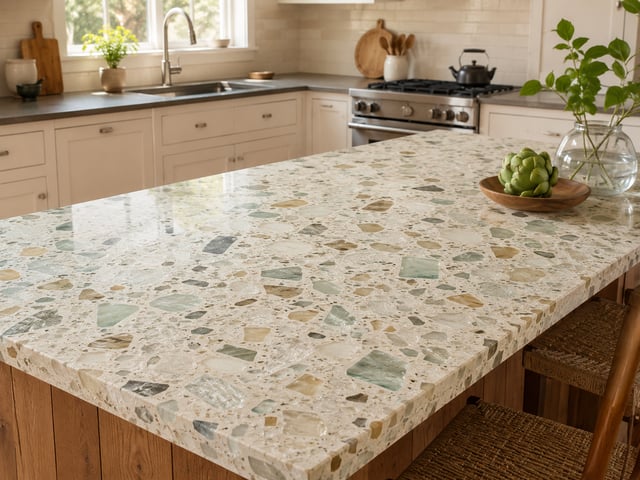
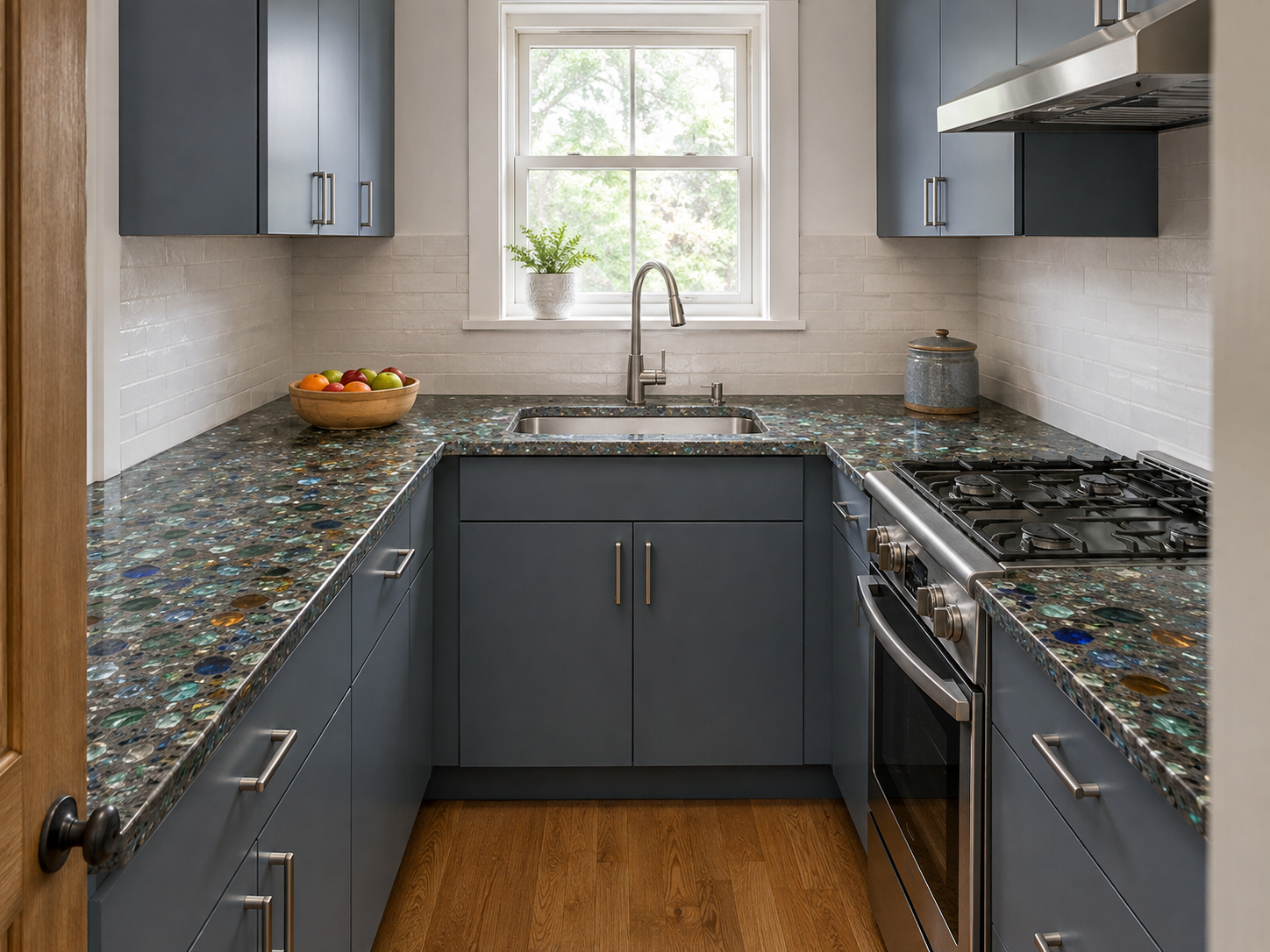
    Recycled glass countertops instantly change the overall feel of a kitchen. They're chips of cobalt, amber, and sea green suspended in a cement or resin base. That look runs $65 to $150 per square foot installed, which puts it alongside quartz and mid-grade granite on price.

    Most homeowners research the price and never ask about the binder. That's the wrong order. Whether those glass chips sit in cement or in resin decides how often you seal the surface, whether acidic spills etch it, and whether you can set a hot pan down, and it's the one spec you should nail before you fall for a color.

    What recycled glass countertops are made of

    Recycled glass countertops are crushed or hand-placed glass suspended in a binder and cast into slabs. The glass is usually post-consumer (curbside bottle glass, plate glass, windshields, stained glass, traffic lights) or post-industrial factory cullet. Most products run 75% to 100% recycled glass by weight, and the better manufacturers publish the exact percentage.

    One caution on the sustainability math. A countertop covers 30 to 40 square feet of a renovation that will fill a 20-yard dumpster before it's finished, and the demolition waste, the new cabinet boxes, and your mechanical decisions all carry more environmental weight than the slab does. Recycled glass is a better use of material than stone quarried and shipped from overseas. It's also a small lever on a big project, so buy it because you love how it looks and count the recycled content as a bonus.

    The binder is where products separate from each other, and it comes in two forms.

    • Cement-based slabs use a portland cement matrix. They're heavier, slightly porous, and have a matte terrazzo look with visible aggregate. Vetrazzo and IceStone are the two best-known names, and Vetrazzo hand-places larger glass shards into molds, so its pattern runs bolder and more mosaic-like than IceStone's more uniform field.
    • Resin-based slabs use an acrylic or polyester resin, sometimes blended with natural quartz. They're lighter, non-porous, and closer to engineered stone in feel and finish. Curava and GEOS are the common names here, and Curava's blend runs roughly 60% recycled glass, 30% quartz, and 10% resin binder.

    Ask which binder you're buying before you ask anything else. It sets your maintenance routine, your heat tolerance, your stain behavior, and a meaningful share of the price.

    Cement gets marketed as the authentic version of this material, but for most kitchens resin is the better buy. Cement earns its keep when you actively want the matte terrazzo look and will commit to resealing every one to three years. If that upkeep sounds like something you'd skip in year two, resin delivers the same recycled content without it.
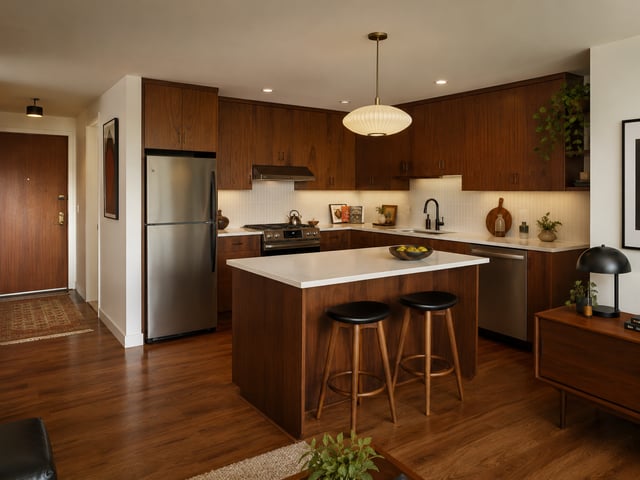
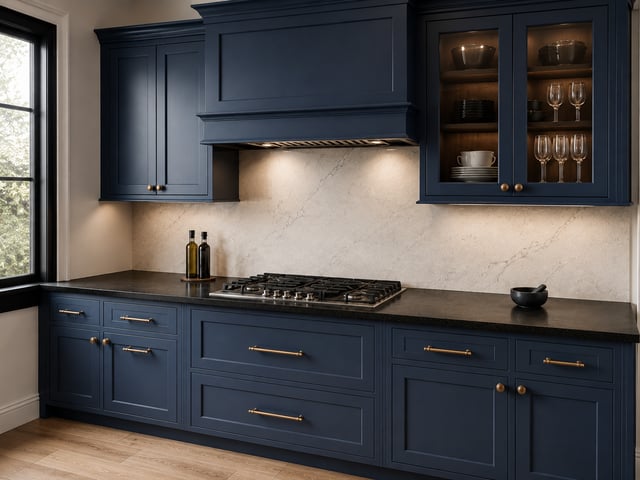
    Recycled Glass Countertop - Dark

    Pros and cons of recycled glass countertops

    The upsides 

    • Genuinely distinctive. No two slabs match, and the aggregate becomes a design feature in its own right.
    • Hard enough for daily kitchen use. Glass sits around 5.5 to 6 on the Mohs hardness scale, close enough to granite that scratch resistance looks the same in practice.
    • High recycled content. Most products run 75% to 100% recycled glass by weight, with the majority of manufacturing based in the United States. That domestic footprint also shortens freight, which matters on a slab this heavy.
    • Better suited to a bathroom than most people assume. Vanities, powder rooms, and wet bars have no burners to worry about, and the smaller square footage keeps a premium brand within reach.
    • Counts toward green building certification. Several brands carry credentials that contribute to LEED points, and regional manufacturing can add to that if the plant sits close to your project.
    • Recyclable when you eventually tear the kitchen out. Manufacturers say the slabs can be crushed and reprocessed rather than landfilled, which is not true of a laminate or solid-surface counter.

    Why some shoppers should reconsider

    • Priced above what the name suggests. These slabs sit in the mid-to-upper tier of countertop surfaces, and the premium brands reach into marble territory.
    • Edges chip more readily than stone. Glass pieces near the perimeter can pop out under a hard impact, occasionally leaving a sharp spot behind.
    • Cement versions need ongoing maintenance. Plan on resealing every one to three years and wiping acidic spills quickly.
    • Resin versions have real heat limits. A pan taken straight off the burner can scorch or discolor the binder.
    • Edge profiles are limited. Ornate bullnose and ogee profiles are often unavailable or add significant cost.
    • Fewer fabricators have worked with the material. Not every countertop shop has cut it, and the ones that have may charge a premium for that experience. This is the con that actually costs people money, because an inexperienced shop chips edges during fabrication and the slab is not something you can run down to the yard and replace the same week. Get the fabricator named in your bid, ask how many of these slabs they've cut, and confirm in writing who absorbs the cost if one breaks in the shop.

    Turn your renovation vision into reality

    Get matched with trusted contractors and start your renovation today!

    Find a Contractor

    How much recycled glass countertops cost

    Budget $65 to $150 per square foot installed for most residential projects. That covers material, template, fabrication, and standard installation on a typical kitchen run. Hand-cast premium slabs and authentic sea glass products go higher, sometimes to $250 per square foot installed.

    The costs break down like this:

    • Material only: $40 to $165 per square foot, depending heavily on brand
    • Fabrication and installation: $20 to $50 per square foot
    • Typical 30 to 40 square foot kitchen: $2,500 to $6,000 all in
    • Bathroom vanity, 6 to 12 square feet: $700 to $2,500

    Recycled glass countertops are expensive relative to what most homeowners expect, because the word "recycled" sets up a budget assumption the pricing doesn't meet. Granite and quartz move through established supply chains at enormous scale, while recycled glass comes from a small number of North American manufacturers, some of it hand-cast one slab at a time.

    Recycled glass countertop cost by brand

    Brand is the single biggest variable in material cost. These two manufacturers publish their pricing.

    Brand Binder Material cost per square foot
    Curava Resin and quartz $50 to $70
    Vetrazzo Cement $85 to $165

    Other names worth pricing include IceStone and GEOS, both of which sell through distributors and quote by project rather than publishing a rate.
    What else adds to your recycled glass countertop cost

    • Sink and cooktop cutouts, typically $100 to $400 each
    • Waterfall edges and mitered returns, which pull the vertical panel from the same slab
    • Thicker slabs and complex edge profiles
    • Rare or discontinued colorways
    • Freight from the plant, since these slabs weigh roughly 14 to 15 pounds per square foot
    • Tear-out and disposal of your existing counters, if the bid doesn't already include it

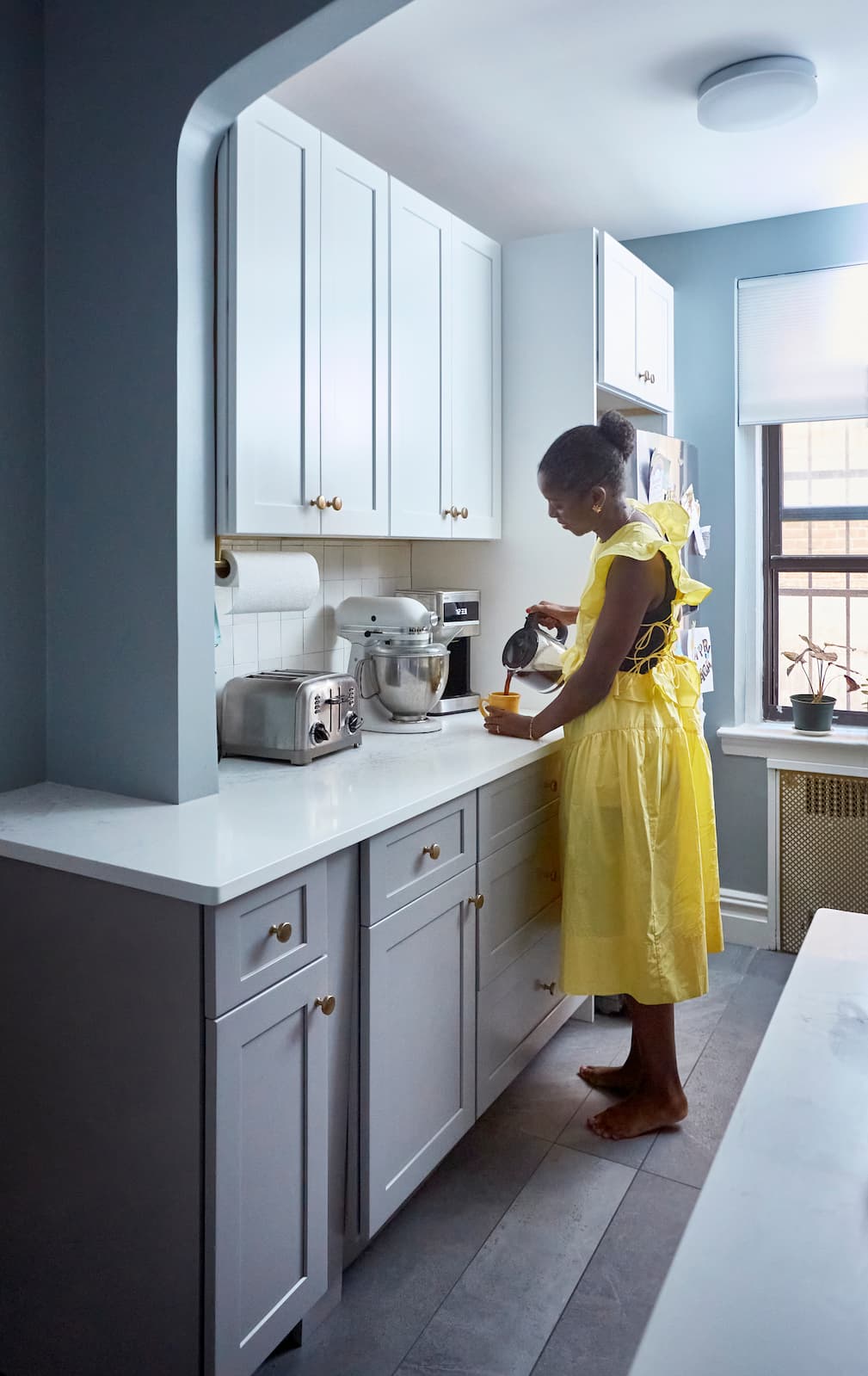
    Recycled Glass Countertop - Retro

    Recycled glass countertop durability and maintenance

    Cement-based recycled glass countertops

    Cement-based slabs are slightly porous and need resealing every one to three years to hold their stain resistance. They'll etch from acidic contact such as vinegar, citrus, wine, and tomato. The glass itself survives those spills, and the cement matrix around it takes the damage. On the plus side, cement handles heat well and won't scorch, and plenty of homeowners come to like the patina these slabs develop over the years. If you cook with a lot of citrus and hate wiping counters immediately, this is not your material.

    Resin-based recycled glass countertops

    Resin-based slabs are non-porous, never need sealing, and shrug off acid etching and staining far better than cement does. Heat is where they give something up, since resin can scorch, discolor, or soften under a hot pan. Thermal shock is a risk with both binders anyway, because a pan straight off the burner can crack the glass aggregate itself, so trivets belong in every recycled glass kitchen.

    Edge chipping in recycled glass countertops

    Glass pieces near the perimeter pop out more readily than stone does under a hard impact, and the repair is straightforward but visible. Island overhangs and outside corners in a traffic path are the vulnerable spots. Deal with this at the layout stage: pull the overhang back an inch or two, spec an eased edge instead of a sharp square one, and read what your warranty says about chips before you sign anything.

    How to style recycled glass countertops

    Keep your cabinets and backsplash neutral

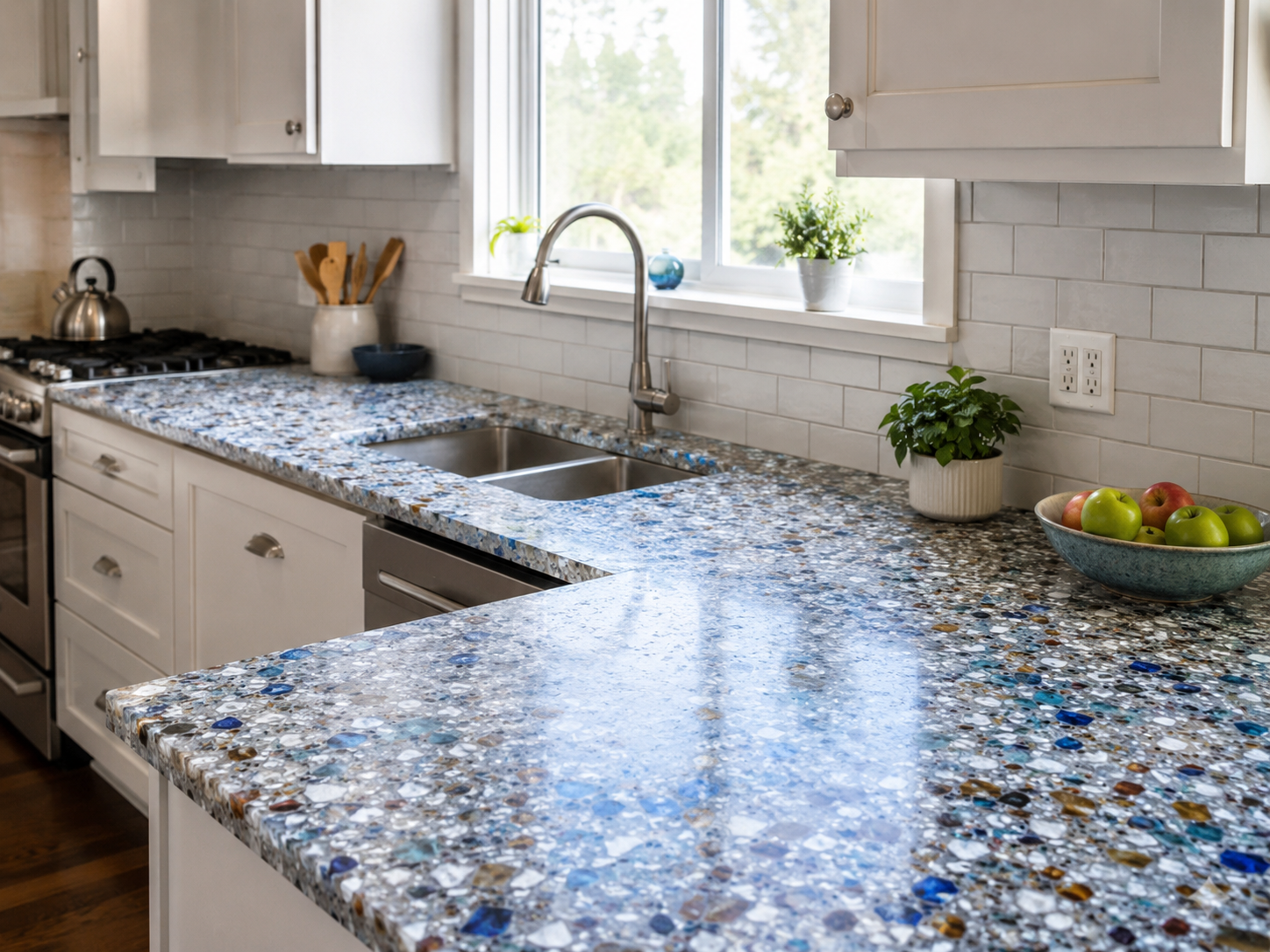
    White cabinets are the strongest partner for recycled glass, because they make the countertop the only source of color in the room. Set a slab full of cobalt, amber, and green chips against a saturated cabinet color and the whole kitchen looks busy. Set the same slab against flat white or off-white doors and it becomes an obvious focal point.
    Recycled Glass Countertop - White Cabinets

    The backsplash needs the same discipline. Running the same recycled glass full height above the counter is visually heavy in almost every kitchen, and a plain field tile, a solid slab, or simple white subway tile gives the eye somewhere to rest. Save the pattern for the horizontal surface.

    If you're still choosing a palette, these countertop colors that pair well with white cabinets cover how different surfaces behave against a white base, including which undertones to watch for.

    Two refinements once the cabinets are set:

    • Pull your hardware and paint colors from one chip color inside the slab. A counter that looks gray-green from across the room usually contains a specific blue or amber worth repeating elsewhere, and matching the overall field instead tends to produce a muddy result.
    • Warm whites change the math. Cream and greige fronts flatten cool blue and green aggregate, so lean toward slabs with amber, brown, or clear chips if your cabinet color runs warm.

    Choose an aggregate scale that fits the room

    • Large shards give you a mosaic. Hand-placed products like Vetrazzo use recognizable chunks of bottle and window glass, which is striking on an island and overwhelming across 40 feet of perimeter counter.
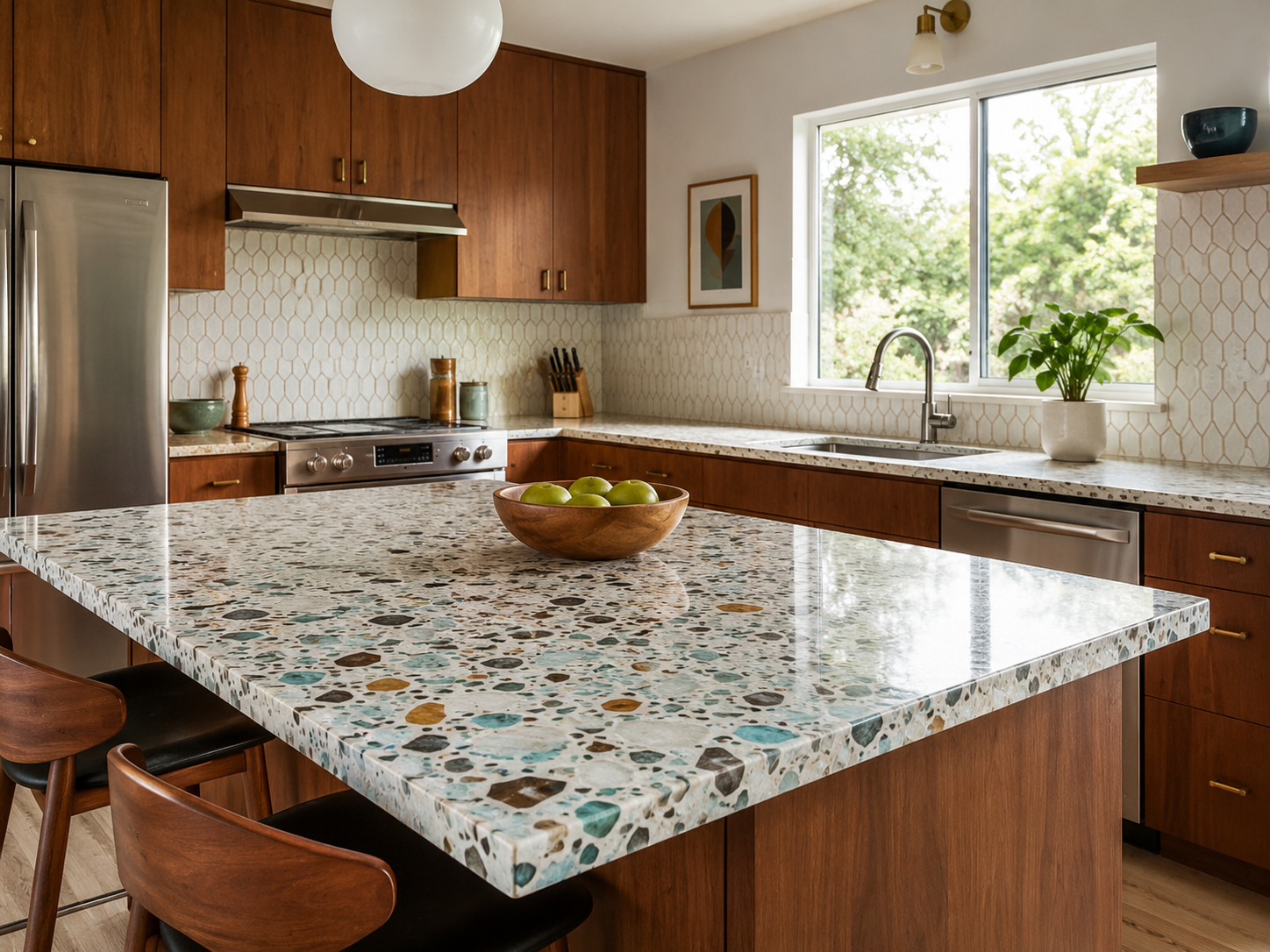
    • Fine crushed aggregate gives you terrazzo. Smaller, uniform particles produce a speckled field that looks almost like a solid color from a few feet away, which suits smaller kitchens and galley layouts where you can't get any distance from the counter.
    • Scale down as the room shrinks. A powder room vanity can carry the boldest slab in the catalog because you see all of it at once, while a small kitchen with the same slab feels closed in.
    • Match the aggregate to your cabinet style. Chunky mosaic patterns suit contemporary and coastal kitchens, and fine terrazzo fields sit more comfortably with traditional, Craftsman, and farmhouse cabinetry.

    Use recycled glass as one of two countertop materials

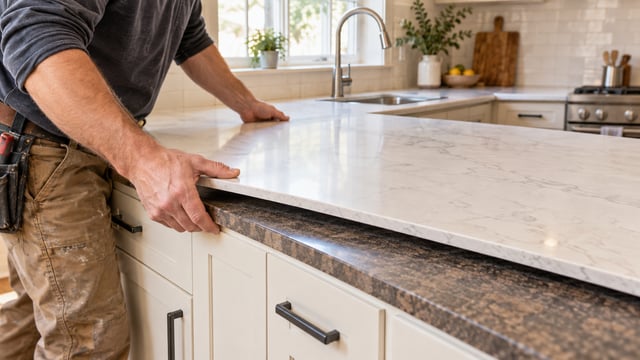
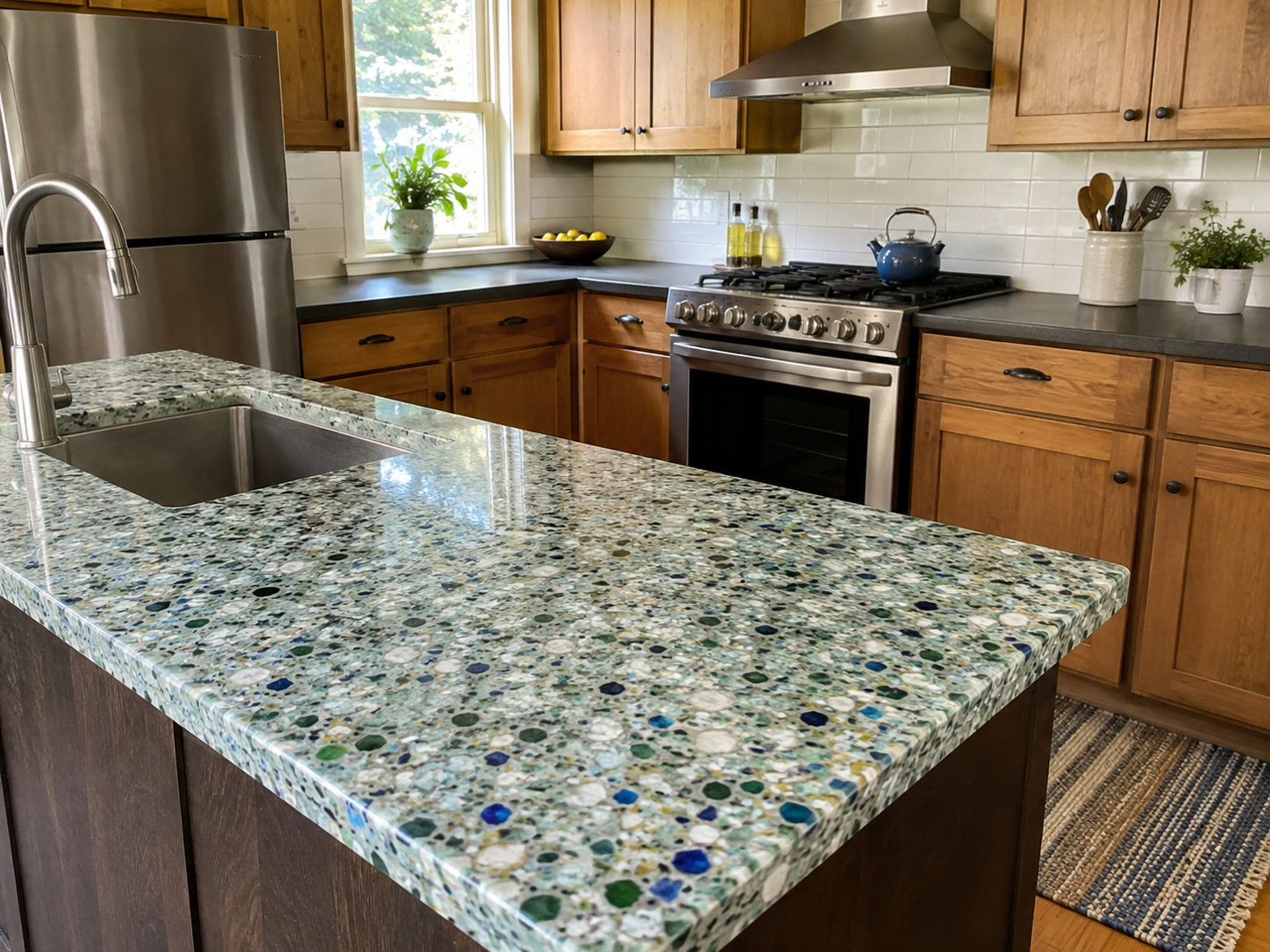
    Recycled glass performs especially well in kitchens that already run more than one surface. Put the glass on the island or a single feature run, then use quartz or a solid-surface material on the perimeter. You get the visual payoff in the spot people actually look at, and you cut the material cost significantly, since the island is often a third of the total square footage.
    Mixed Countertops - Recycled Glass

    Perimeter counters take the most abuse from hot pans, standing water near the sink, and cutting, so putting the more forgiving material there and reserving the glass for the island keeps maintenance manageable.

    The pairing rules matter here, and this guide to mixing two or more countertops in a kitchen walks through how to combine surfaces without the result looking accidental.

    Recycled glass countertops work even better in a bathroom

    Recycled glass gets marketed as a kitchen product, and it performs better in the room nobody advertises it for. After all, the material's biggest weakness is heat.

    A vanity is small enough that a premium brand stays affordable, a bold slab looks like a deliberate choice instead of a wall of pattern, and resin options handle constant moisture with no sealing at all. Powder rooms, wet bars, and laundry counters follow the same logic.
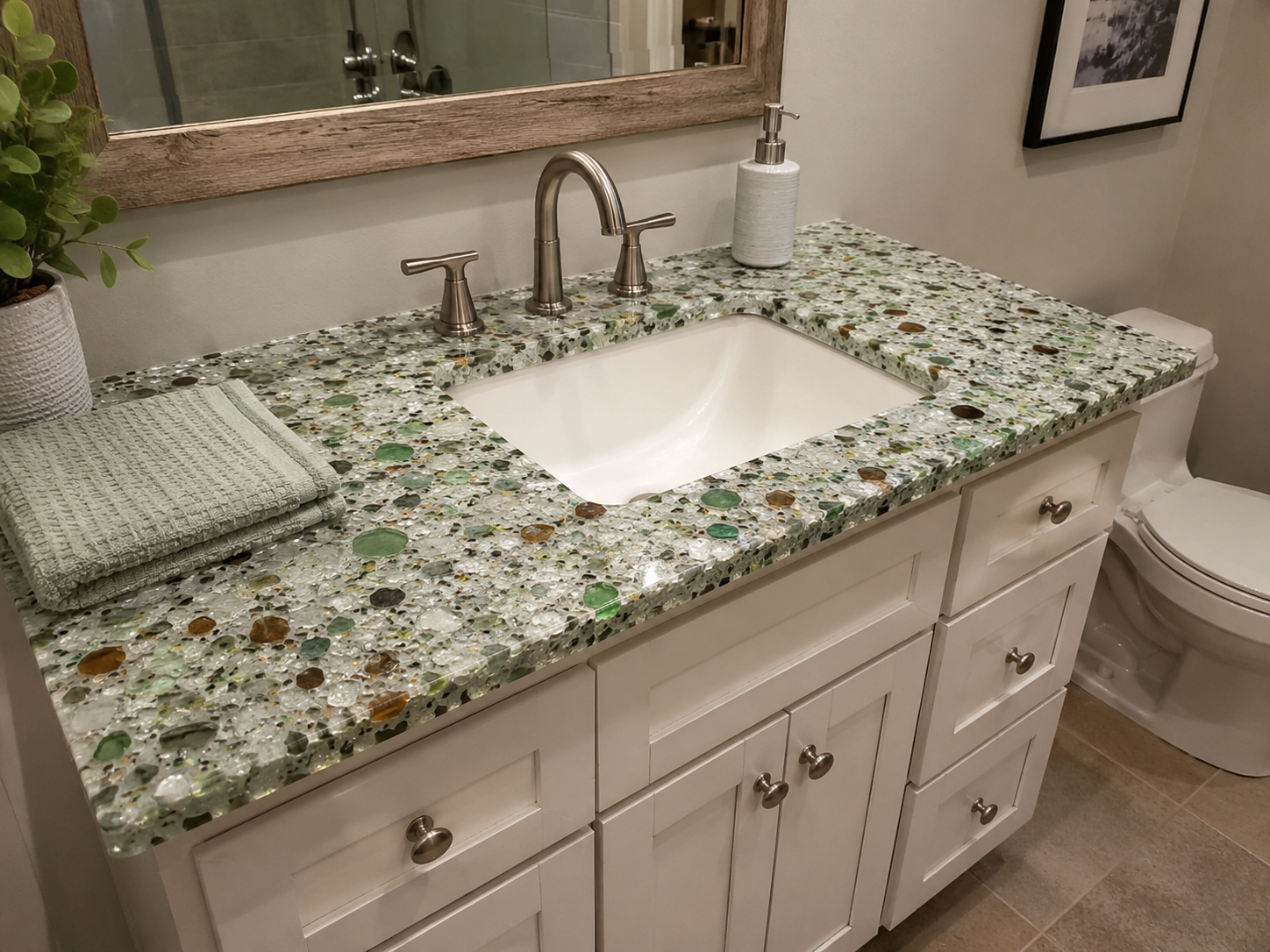
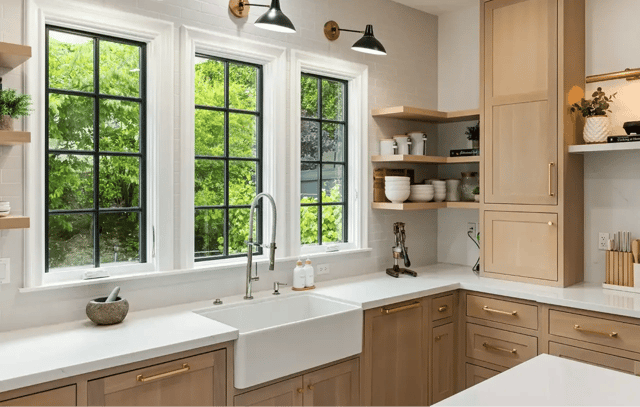
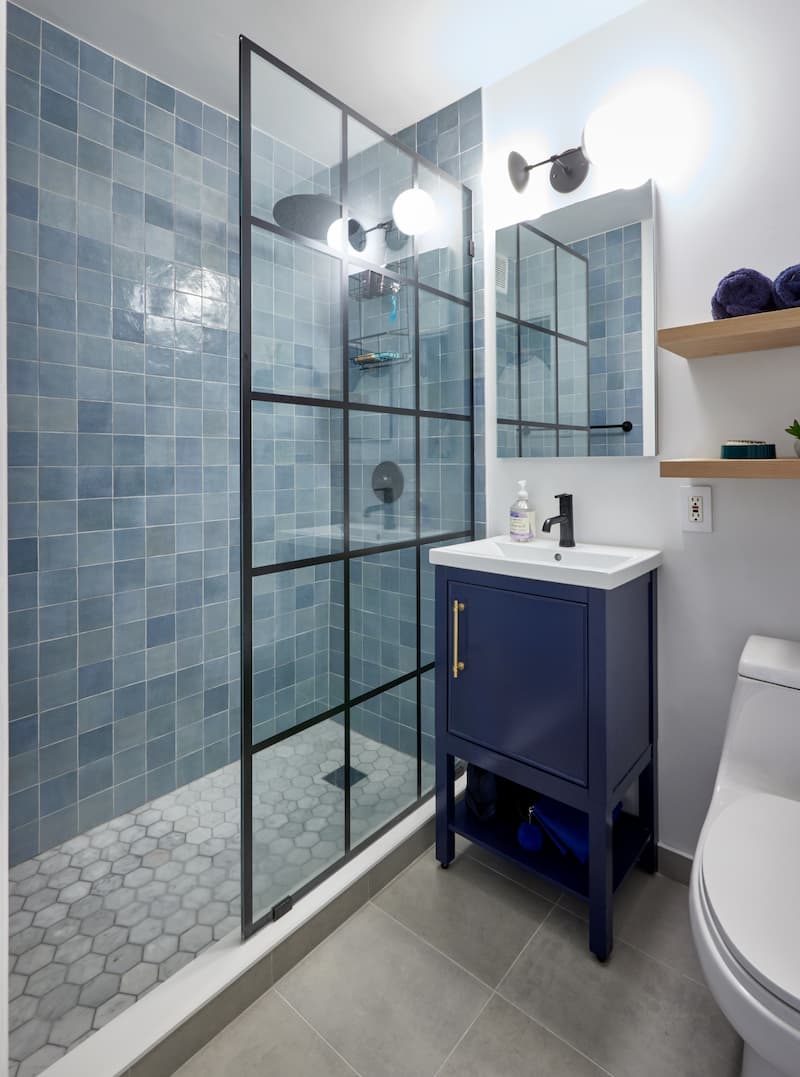
    Recycled Glass Countertop - Bathroom

    Finish and lighting

    • Match the finish to the rest of the kitchen. Cement slabs arrive matte and terrazzo-like, resin slabs arrive polished and reflective, and the honed option suits traditional or farmhouse cabinetry while the polished one suits contemporary work.
    • Plan your under-cabinet lighting around the aggregate. Glass catches direct light and shifts color with bulb temperature, so warm 2700K LEDs pull out ambers and browns while cooler 4000K light sharpens blues and greens.
    • Look at the full slab, never a 4-inch sample. Aggregate clusters, color shifts, and pattern scale don't show up in a chip, and this material varies more slab to slab than almost anything else in the showroom.

    Transparent Pricing You Can Trust

    Start your renovation using Block’s Price Assurance. See a detailed cost breakdown with no unexpected expenses along the way.
    Get Started


    What to ask before you buy recycled glass countertops

    • Which binder is this? Cement or resin. Get the answer in writing, then match your maintenance expectations to it.
    • What percentage is recycled, and is it post-consumer or post-industrial? Post-consumer is the stronger sustainability claim, and reputable manufacturers publish the number.
    • Has this fabricator cut this brand before? Ask for photos of completed installations in this specific material, since experience with quartz doesn't transfer cleanly.
    • Can I see and reserve the full slab? The piece you approve should be the piece that gets cut, and that only happens if somebody tags it for you.
    • What does the warranty cover? Ask specifically about edge chipping, which is frequently excluded.
    • What's the lead time? Many of these slabs are made to order, and 8 to 12 weeks is common. Templating can't happen until your cabinets are set, so a long lead time means living with plywood counters for a month or more unless your contractor sequences around it.

    Find a countertop contractor through Block Renovation

    A countertop quote is only as good as the scope behind it, and recycled glass adds variables most bids gloss over: fabricator experience with the specific brand, freight from the plant, edge profile limits, and who covers the cost if a slab chips during installation. Block matches you with vetted local contractors who compete for your project, and every scope gets an expert review to catch the line items that turn into change orders later.

    Tell us about your kitchen or bath and start comparing quotes from contractors who have done this work before.

    Remodel with confidence through Block

    Happy contractor doing an interview

    Connect to vetted local contractors

    We only work with top-tier, thoroughly vetted contractors
    Couple planning their renovation around the Block dashboard

    Get expert guidance

    Our project planners offer expert advice, scope review, and ongoing support as needed
    Familty enjoying coffee in their newly renovated modern ktchen

    Enjoy peace of mind throughout your renovation

    Secure payment system puts you in control and protects your remodel

    Get Started

    Frequently asked questions

    Are recycled glass countertops expensive?

    Yes, relative to what most homeowners expect from a recycled material. Installed pricing of $65 to $150 per square foot puts recycled glass in the same tier as quartz and mid-grade granite, and premium hand-cast brands run higher. The cost comes from low production volume and specialty fabrication.

    Are recycled glass countertops cheaper than granite?

    Usually not. Most straightforward granite kitchens land between $70 and $115 per square foot installed, and entry-level granite can start around $55, which undercuts almost every recycled glass option. The two materials price similarly in the mid-range, and only rare exotic granite consistently costs more.

    What other recycled countertops are available?

    Paper composite surfaces like Richlite compress recycled paper with phenolic resin into a warm matte slab, usually for less than recycled glass. Reclaimed wood reuses old-growth lumber from demolished buildings, which suits islands but holds up poorly around sinks. Several mainstream quartz brands now build in 20% to 50% pre-consumer recycled content, and recycled porcelain and concrete are available through fabricators who do commercial work.

    Do recycled glass countertops need to be sealed?

    It depends entirely on the binder. Cement-based slabs from brands like Vetrazzo and IceStone are sealed at the factory and need resealing every one to three years to maintain stain resistance. Resin-based slabs from brands like Curava and GEOS are non-porous and never need sealing. Always follow the specific manufacturer's care instructions.

    Can you put a hot pan on a recycled glass countertop?

    You shouldn't, regardless of which binder you have. Cement handles heat better than resin, but thermal shock from a pan straight off the burner can crack the glass aggregate in either type. Resin binders can also scorch or discolor.