



Kitchen
20k Kitchen Remodel: What $20,000 to $30,000 Buys
09.07.2026
08.08.2026


In This Article
Here's some simple truths about remodeling rental properties:
Those four constraints decide almost every choice in a rental kitchen renovation, and they usually point the same way. Pay more per square foot up front, and stop paying for the same repair at every turnover.
The guidance below assumes a long-term unit with a layout that already works. Short-term rentals and gut renovations that relocate plumbing answer to different priorities.
Landlords gut rental kitchens because water reached a material that could not handle it.
Renovate with confidence every step of the way
Step 1: Personalize Your Renovation Plan
Step 2: Receive Quotes from Trusted Contractors
Step 3: Let Us Handle the Project Details

Rent sets the ceiling on a rental property kitchen renovation, and the arithmetic is simple enough to run before you call a contractor.
Divide the project cost by the annual rent increase it supports. A $9,000 refresh that adds $75 a month returns $900 a year, a 10-year payback that runs longer than the finishes will look current. The same $9,000 against $150 a month clears in five. Pull three or four comparable listings nearby before you scope anything. Those rents cap what the work can return.
Three line items justify the spend in a rental kitchen:
Everything else is where the budget flexes:
Relocating a sink runs $500 to $2,000 and climbs with distance from the existing drain and vent. None of that spending is visible to a prospective tenant. Holding the sink, range, and dishwasher in their current positions turns the project into a surface swap and keeps labor near its minimum. Block Renovation's guide to kitchen plumbing remodel tips covers the rough-in calls worth making on the rare occasion walls do come open.
Countertops take more abuse than anything else in a rental kitchen.
| Material | Installed cost per sq ft | Years of service |
|---|---|---|
| Laminate | $15 to $50 | 10 to 15 |
| Entry-level quartz | $45 to $85 | 25+ |
| Solid surface | $50 to $100 | 20 to 30 |
| Butcher block | $55 to $110 | 20+ with regular oiling |
| Level 1 granite | $40 to $80 | 30+ |
Do the math on a 35 square foot kitchen. Mid-range laminate at $35 per square foot comes to about $1,225, and you will be paying it again around year 12, plus the turnover days the second install costs you. Level 1 granite at $60 comes to $2,100 once.
Butcher block needs oiling every few months, and no renter will do it, so gray staining shows around the sink inside two years. Tile counters have the same problem in grout form. Budget marble etches the first time somebody cuts a lemon.
Quartz is the safest default in a unit that turns over often, since it never needs sealing and asks nothing beyond a trivet near the range. Level 1 granite is the better pick where the kitchen sees heavy cooking, because it takes a hot pan without the scorching a quartz resin binder can suffer. Solid surface earns its place in a building where you handle repairs yourself, since a scratch that would mean a fabricator visit on stone comes out with a sanding block.
Block's comparison of affordable countertop materials prices each of these out against local fabricators.
Not sure how to begin your renovation?
Get free, expert guidance from a dedicated Block Project Planner who can help you navigate proposals, timelines, contractor selection, and more.
Book A Free Consultation
Cabinet boxes usually outlive their doors by a wide margin. Full replacement rarely earns its cost in a rental kitchen renovation.
New knobs and pulls cost $75 to $400 and update a tired kitchen faster than anything else in that price range. Measure the hole spacing on your existing hardware before ordering, because a mismatch means drilling fresh holes and filling the old ones. Pick one finish and use it on the pulls, the knobs, and the faucet.
Painting costs $200 to $800 if you do the work and $1,500 to $5,000 hired out, and nearly all of that difference is labor spent on preparation. Degreasing, scuff sanding, a bonding primer, and real cure time before the doors go back on are what keep the finish from lifting under daily handling. A repaint that skips those steps starts peeling before the second lease begins. In a unit that turns over often, this is the job most worth hiring out.
New doors on sound boxes cost $1,000 to $6,000 and avoid the demolition, plumbing disconnection, and countertop removal that a full cabinet order forces. Buy hinges and hardware in the same order so depth and alignment stay consistent across a full wall. Skip thermofoil at any price, since painted MDF in the same bracket survives a working kitchen considerably better.
Replacing a kitchen floor means emptying the room, so it can only happen between tenants.
Rigid core luxury vinyl plank shrugs off standing water, its printed layer disguises scratches, and it installs over most existing floors without demolition. Budget $3 to $7 per square foot installed, and specify a wear layer of at least 12 mil in a unit that changes hands every year or two.
Porcelain tile at $10 to $25 installed outlasts everything else, with grout as the maintenance you take on in exchange. The premium pays off in a long-hold property, where cleaning grout every few years beats scheduling another floor.
Design a Home That’s Uniquely Yours
Block can help you achieve your renovation goals and bring your dream remodel to life with price assurance and expert support.
Get Started
Ask remodeling professionals what cheapens a good kitchen and busy backsplash tile comes up more than almost anything else. In a rental, where you are not designing for a specific person, erring on the side of simplicity carries even more weight.
Loud patterns, oversized glossy tile, and mosaic mixes get attention in the showroom and look dated three years later. A plain field tile in white, off-white, or a soft neutral, set in a running bond, avoids that problem and costs less per square foot. Professional installation of standard ceramic or porcelain runs $300 to $1,500 depending on tile and layout. Material is a small share of that number, so hunting a cheaper tile saves very little.
Peel-and-stick panels belong on the avoid list for the same reason as peel-and-stick flooring. Grease and steam work at the edges, and a $200 panel job you redo twice costs more than the tile you passed on.
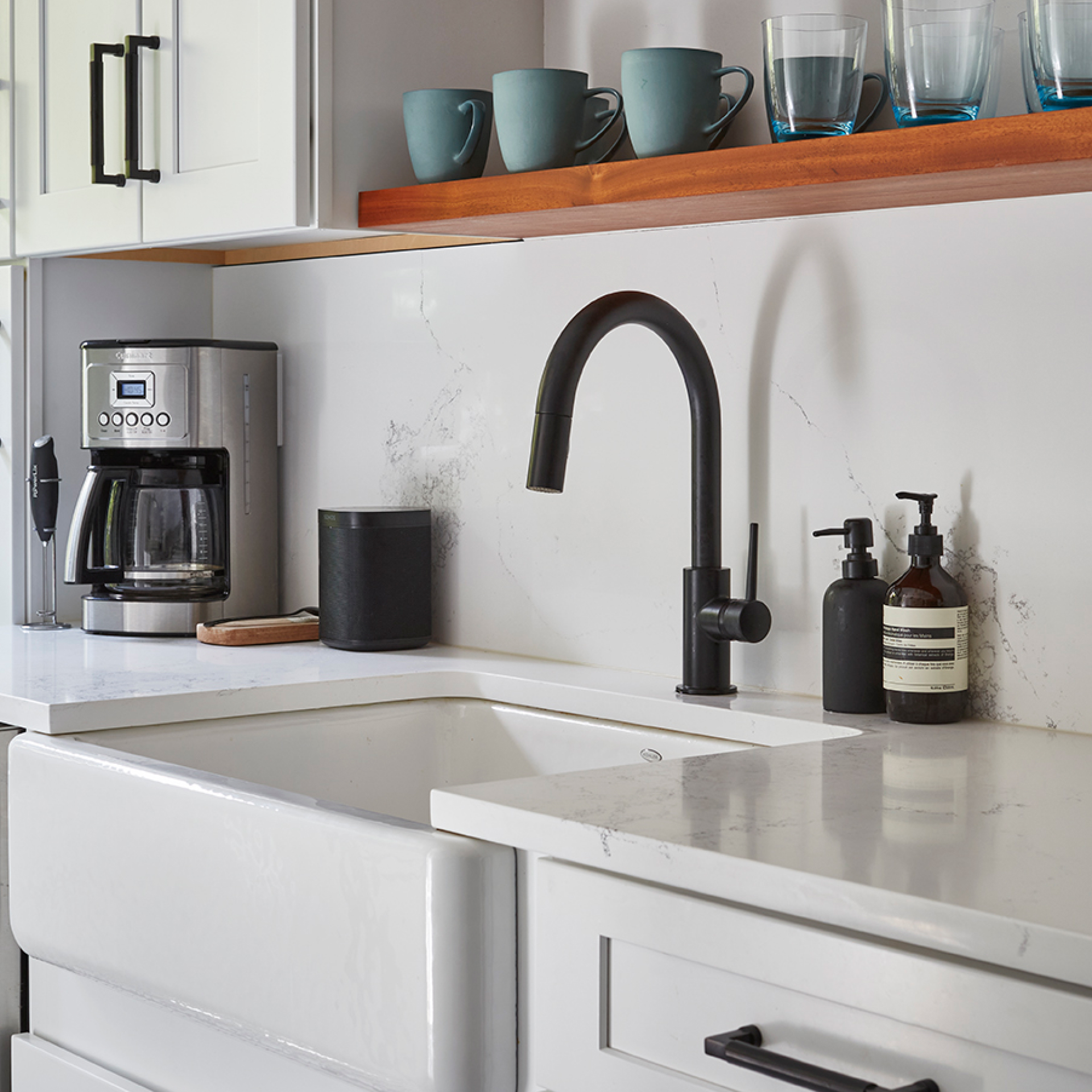
White grout behind a range looks clean for about two leases. Cement grout is porous, so it takes on grease and cleaning residue and darkens unevenly, and the worst of it lands exactly where a prospective tenant looks. A mid-tone grey or greige hides that and looks deliberate rather than tired.
Epoxy grout solves the problem at the material level, since it is non-porous, needs no sealing, and resists the grease and staining that cement grout absorbs. It costs more per square foot and sets fast enough to want an installer who has used it before, so put it in the scope at bid time rather than asking for it once tile is on the wall.
A backsplash chosen to match one exact countertop and one exact cabinet color commits you to both. Replace the counter in eight years and the tile comes off with it. A plain neutral field tile works against whatever cabinet color and counter you choose next.
There is room for one distinctive element in a higher-rent unit where character helps the listing. A short run of handmade tile behind the range covers a small area at manageable cost, and American-made tile sits outside the import duty swings that have moved pricing recently. Block's roundup of American tile brands profiles studios that press and fire domestically.
Nobody applies to a unit faster because the range is nicer. A dishwasher works differently, because it is a search filter on the major rental listing sites, so a unit without one drops out of a share of searches before anyone sees a photo.
That makes it the appliance most worth adding when the budget covers only one. A mid-tier dishwasher runs $400 to $900, and installation lands around $200 to $500 where a supply line, drain connection, and dedicated circuit already exist. Building those from scratch costs more, and it usually means giving up a 24-inch base cabinet, which is a real loss in a small kitchen and still generally worth taking.
In-unit laundry outranks a dishwasher where the hookups and the square footage exist. Below that, the order is dishwasher, then range, then refrigerator.
A refrigerator, range, and dishwasher in the same finish look like a set at any price point, and mismatched stainless looks worse in photos than a matched white or black package. Mid-tier models also cost less to repair when a tenant calls.
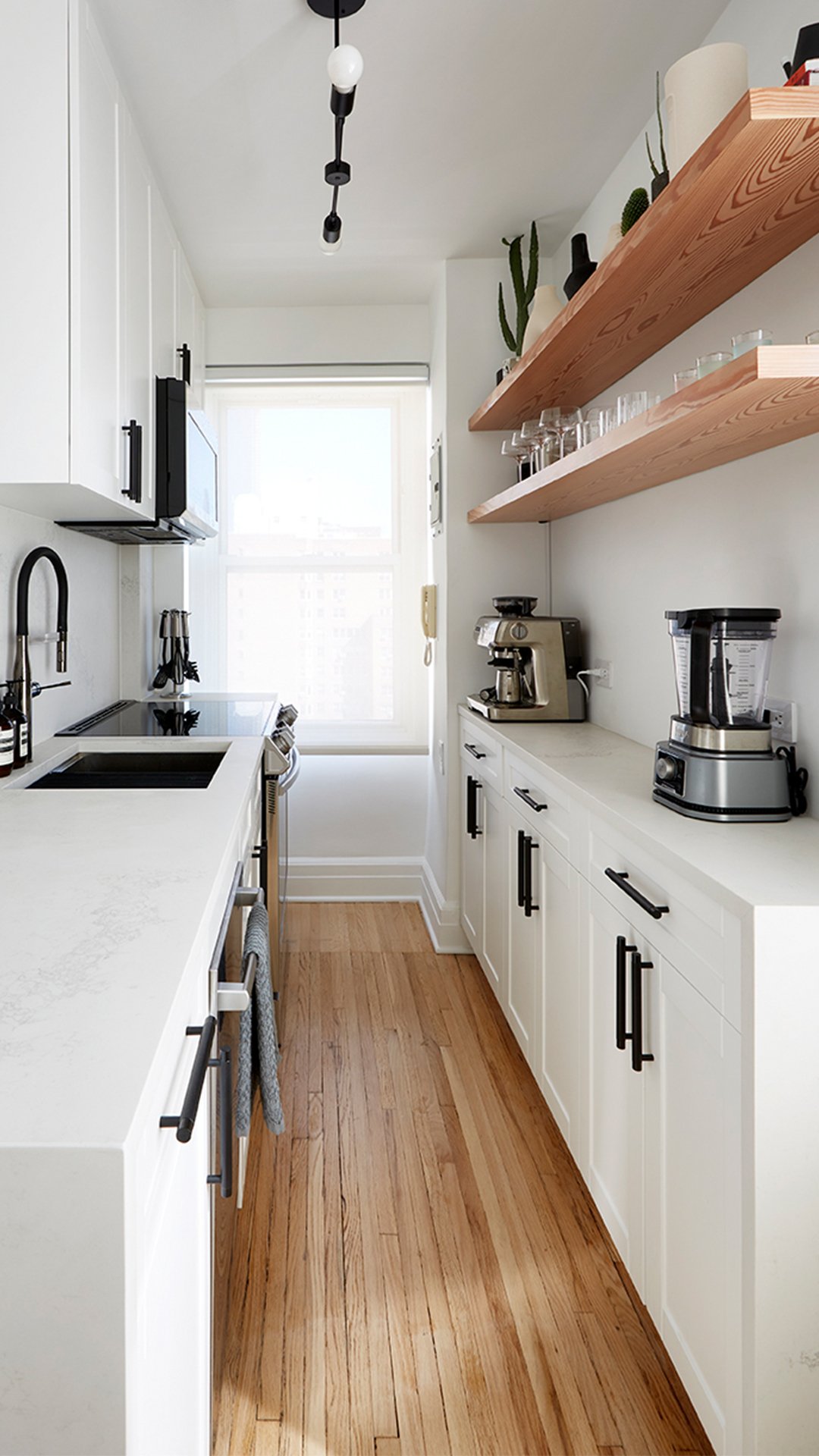
Anything touching plumbing, electrical, or flooring belongs in a kitchen remodel for rental property scheduled between leases. A unit without a working sink or range is not habitable, and most leases and many local rules say so plainly.
Order cabinets, doors, and stone before the current tenant moves out, because fabrication and delivery both run weeks, and a crew waiting on material is vacancy you are financing. Book the contractor on the same timeline, since the good ones are scheduled out further than a 30-day notice period.
Hardware, paint, and lighting can go in with someone living there when the lease and the tenant allow it. For updates that have to fit inside a turnover window, Block's list of budget kitchen renovation ideas ranks lower-cost projects by payoff per dollar.
Good material choices still depend on the crew installing them, and a lifting floor edge or a chipped counter seam in year two usually traces back to workmanship rather than the product. Block connects property owners with vetted local contractors who compete for the job, and an expert reviews every scope before work starts, so the quotes you compare cover the same line items instead of burying tear-out and disposal. Payments release against approved milestones, and a turnover project stays on schedule without you carrying the risk.
Remodel with confidence through Block

Connect to vetted local contractors
We only work with top-tier, thoroughly vetted contractors

Get expert guidance
Our project planners offer expert advice, scope review, and ongoing support as needed
Enjoy peace of mind throughout your renovation
Secure payment system puts you in control and protects your remodel

Renovate confidently with Block
Easily compare quotes from top quality contractors, and get peace of mind with warranty & price protections.
Kitchen
20k Kitchen Remodel: What $20,000 to $30,000 Buys
09.07.2026
Kitchen
Best Time to Remodel Your Kitchen Plumbing & Other Projects
09.05.2026
Kitchen
Kitchen Remodel Mistakes to Avoid When Planning
08.13.2026
Kitchen
Rental Kitchen Renovation: Smart Materials & Design Choices
08.08.2026
Kitchen
Wall Oven Installation Cost & Are Wall Ovens Worth It?
08.07.2026