




Countertops
Slate Countertops vs. Granite, Quartz and Soapstone
09.20.2026
08.16.2026


In This Article
You already have black granite countertops, or you've chosen the slab and now need cabinets that belong with them. That order gives you plenty of room to experiment. Black granite works with a broad range of cabinet colors, from warm white and pale wood to blue, green, taupe, and black. Your choice determines whether the kitchen has crisp contrast, more warmth, or a stronger dose of color.
Black countertops in any material take many of the same color families, though granite adds a variable the others don't. Undertone, flecks, and movement all differ from slab to slab.
Granite is natural stone, and slabs sold under the same trade name still vary. Your slab's undertone narrows the cabinet field before individual paint chips enter the conversation.
| Black granite | What you'll see in it | Cabinet colors to consider |
|---|---|---|
| Absolute Black | Flat black with very little movement | Bone white, pale oak, charcoal, deep navy |
| Black Pearl | Silver and gray flecks | Cool white, dove gray, mushroom, slate blue |
| Black Galaxy | Gold and copper flecks | Walnut, cherry, cream, warm greige |
| Uba Tuba | Green and gold flecks | Alabaster, olive, honey oak, warm taupe |
Those pairings are a starting point. Hold cabinet samples next to the actual slab at counter height, then check them again under the lighting you use at night.
No single cabinet color works best with every black granite. The strongest choice depends on the slab, the amount of daylight in the room, and how much contrast you want between the cabinets and countertop.
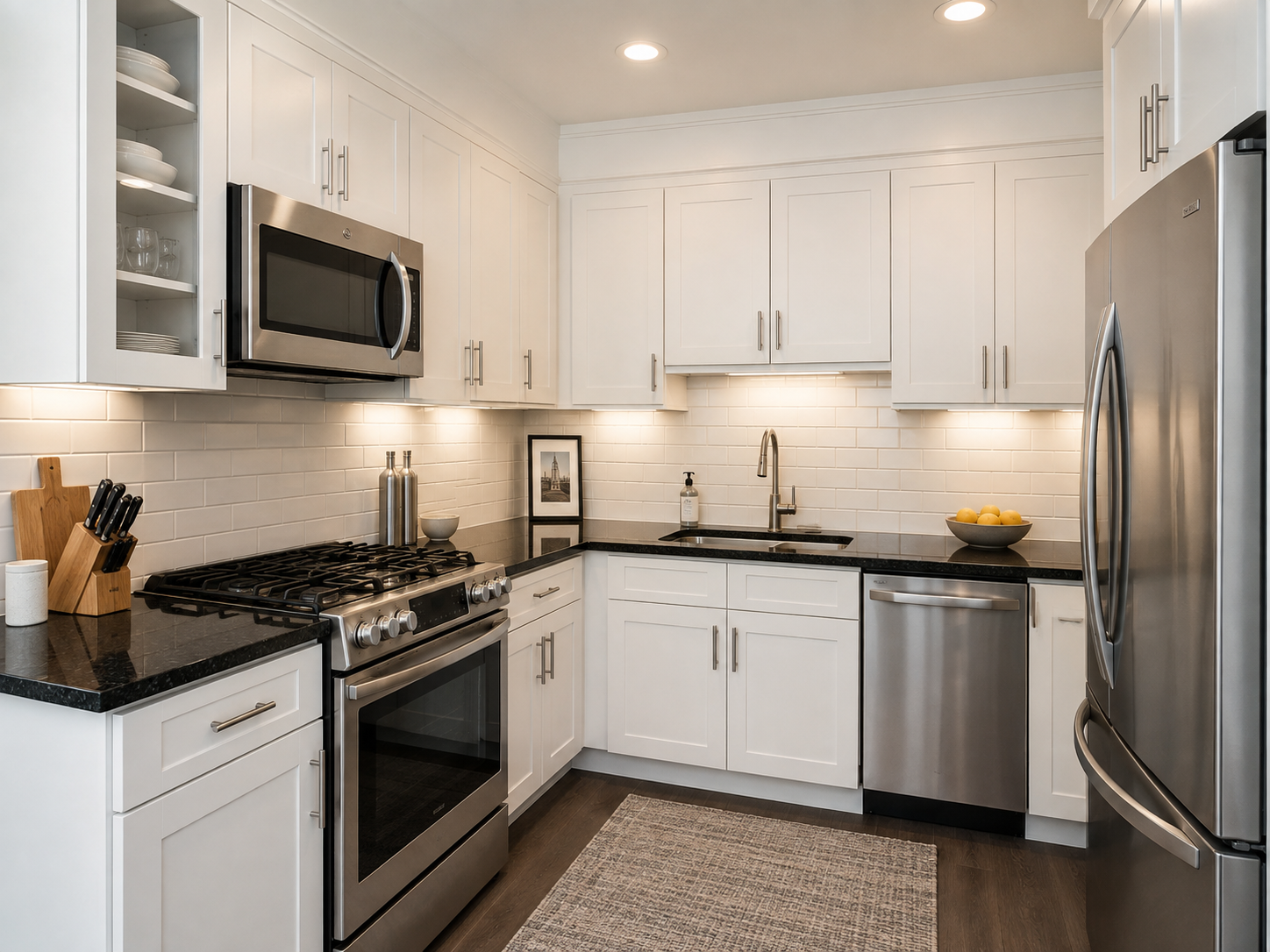
White gives black granite maximum contrast, so the stone's flecks, edge profile, and natural movement become much easier to see. That contrast is one reason white cabinets and dark countertops remain such a familiar pairing.
The shade of white matters. A cold white sometimes turns gray or slightly blue when contrasted with green-tinted granite. Alabaster, bone, and other warm whites carry enough cream or gray to soften the pairing without making the kitchen yellow.
Here's the thing that surprises a lot of homeowners: a black-and-white sample board usually appears harsher than the finished kitchen. Walls, backsplash tile, flooring, and daylight all soften the contrast once the room comes together.
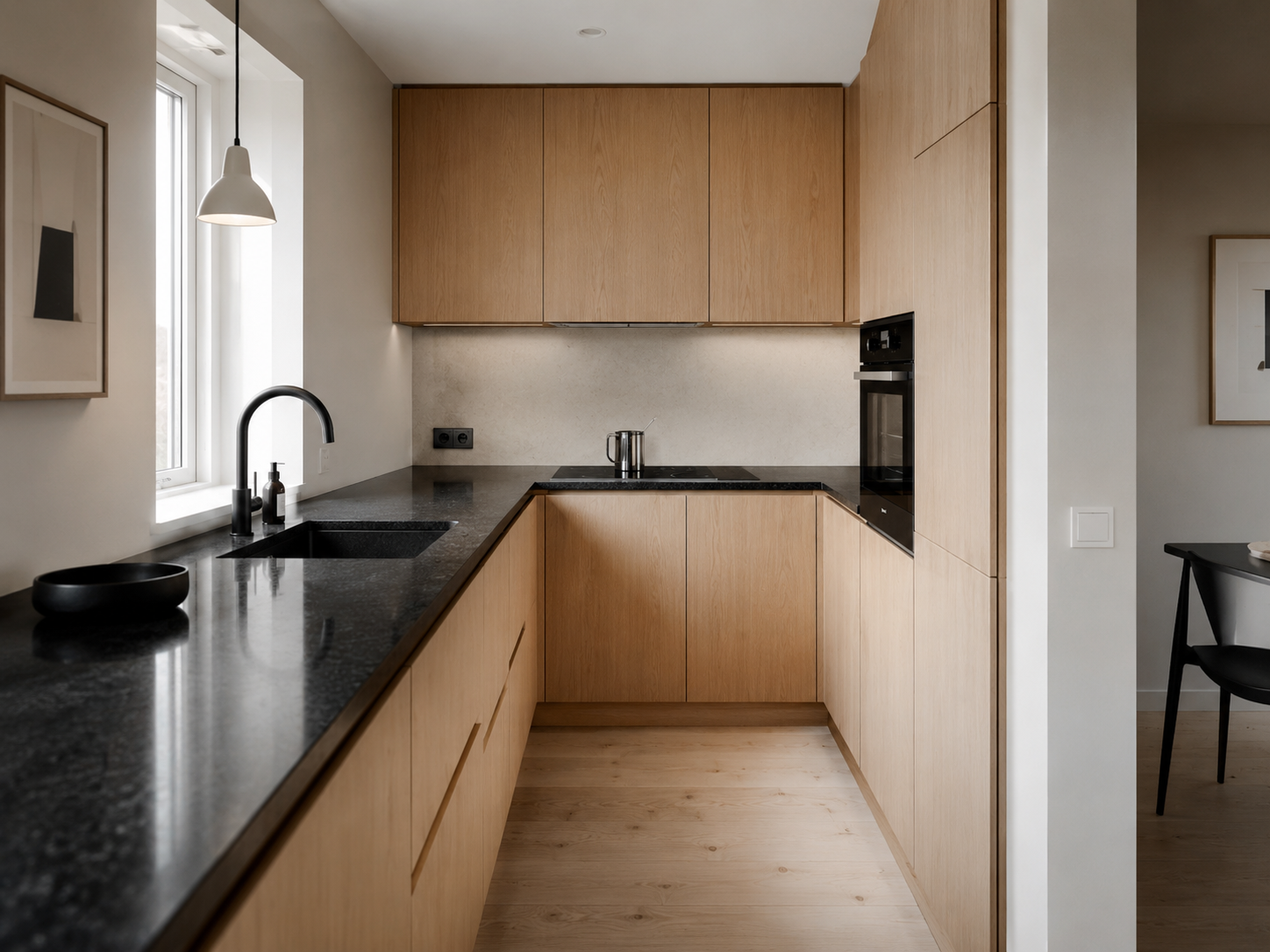
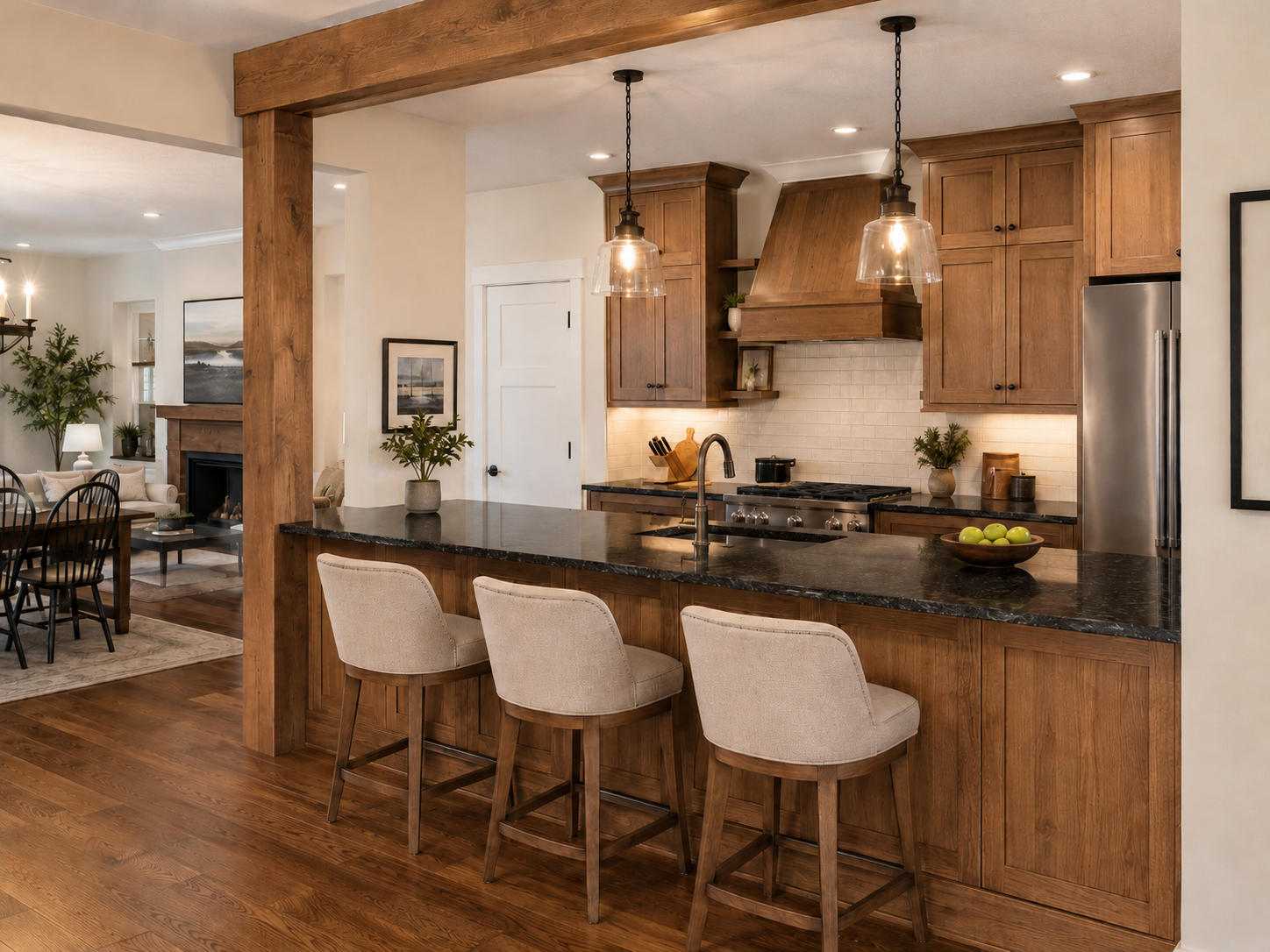
You get warmth and visible grain without giving up much contrast. Pale oak works well in Scandinavian and Japandi kitchens because the black counter anchors an otherwise light palette, and natural grain supplies texture where a painted door would go flat.
A medium walnut with black granite shows why this combination has lasted. The wood contributes warmth and visible grain, but the countertop still carries enough contrast to remain distinct.
Neutral-brown walnut, hickory, and cherry also appear more current than the orange and red stains common in many kitchens from the late 1990s and 2000s. Those hotter stains are harder to coordinate with green-and-gold granite such as Uba Tuba. Orange oak, in particular, shifts much of the visual attention toward the cabinets.
Before replacing solid wood cabinets, price refinishing. Good wood doors and quality veneers are often worth sanding and restaining when the boxes remain in good condition.
Blue has the depth to hold the lower half of the room without fading against a black countertop. It works across traditional, coastal, transitional, and English-inspired kitchens.
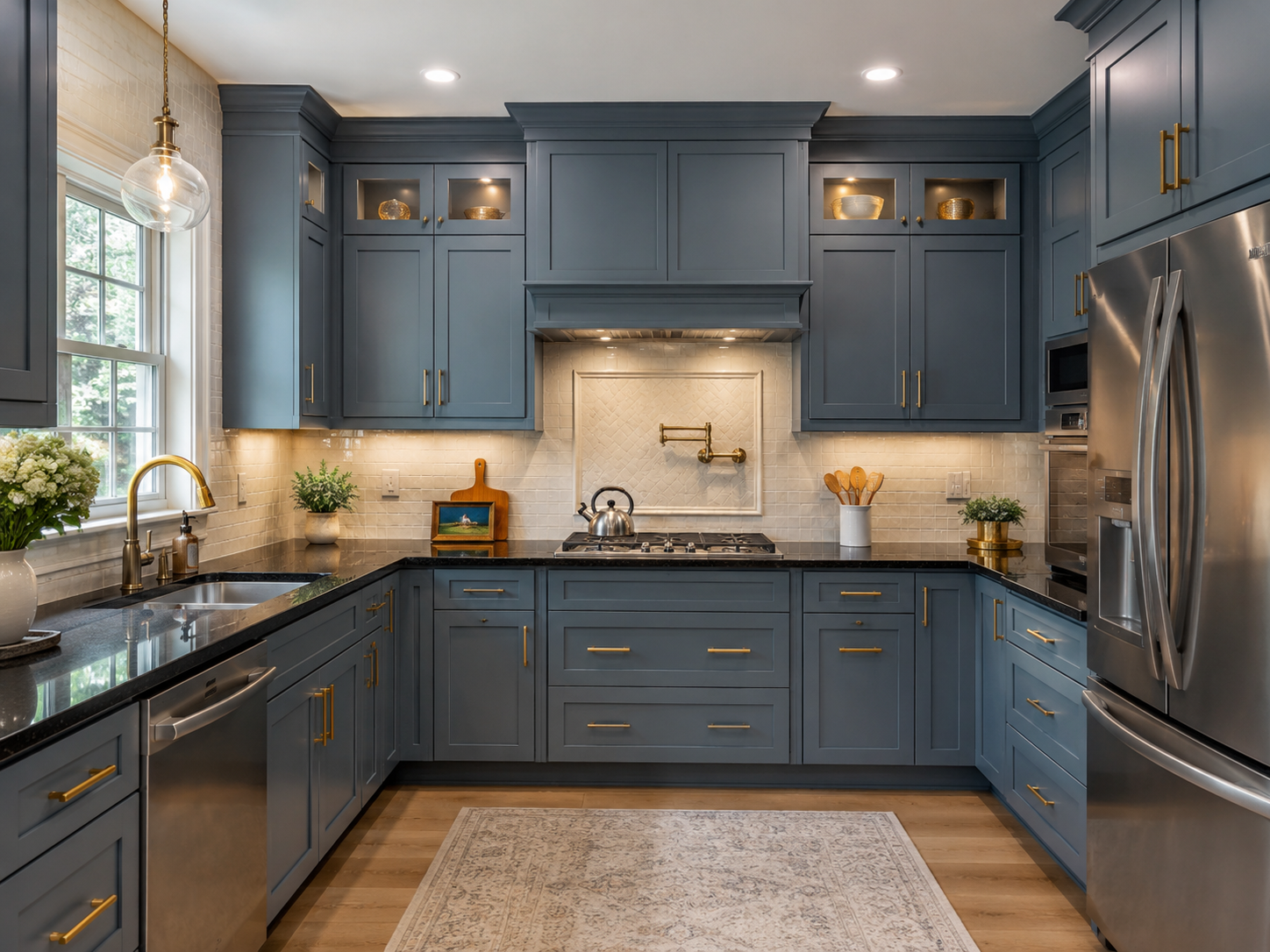
Three versions cover most situations:
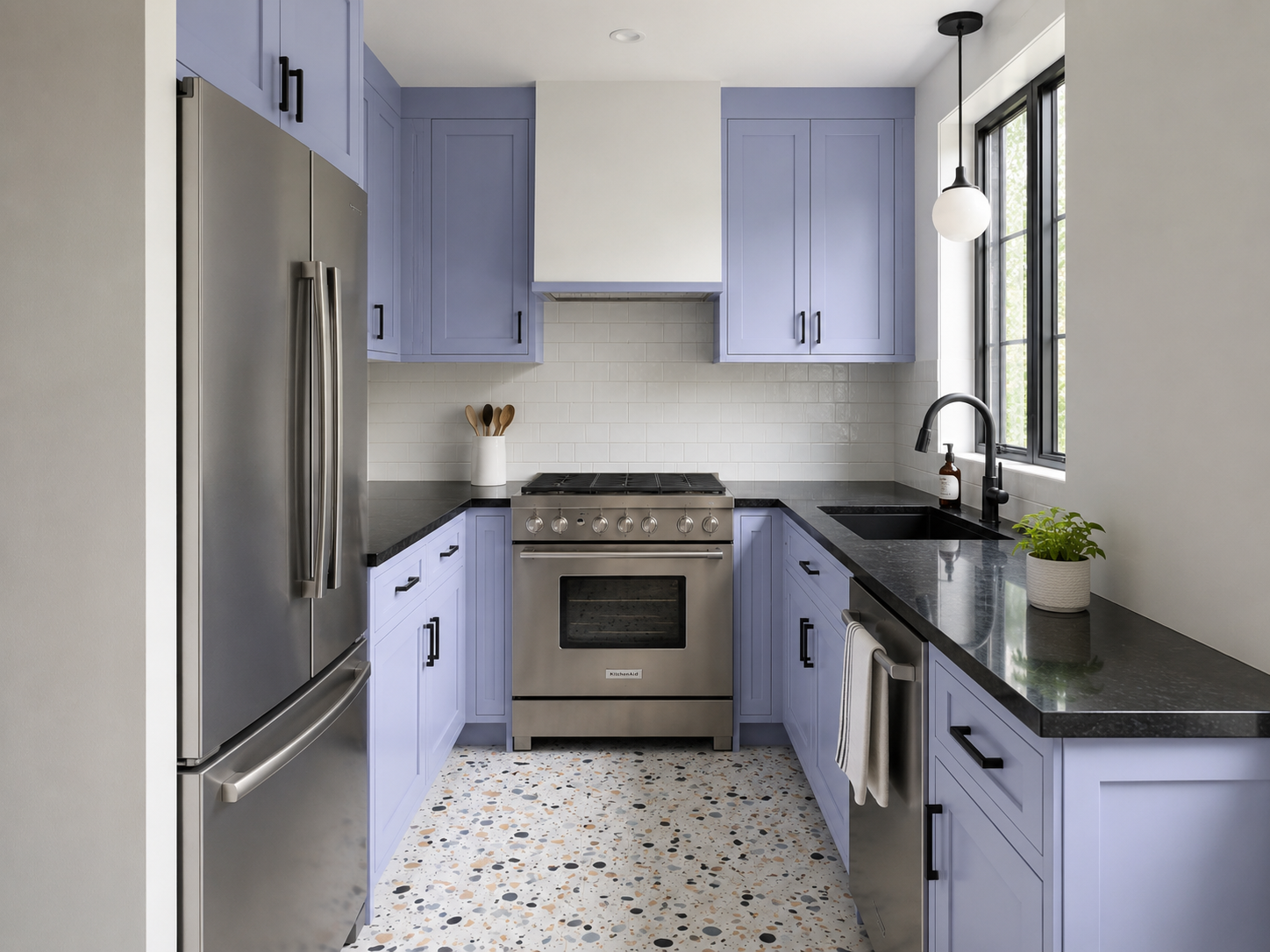
Pale blue can appear "chalky" when paired with black granite if the countertops lack purple or gray. A muted periwinkle has more depth, leaving the cabinetry light and the granite as the strongest dark element.
If you choose this direction:
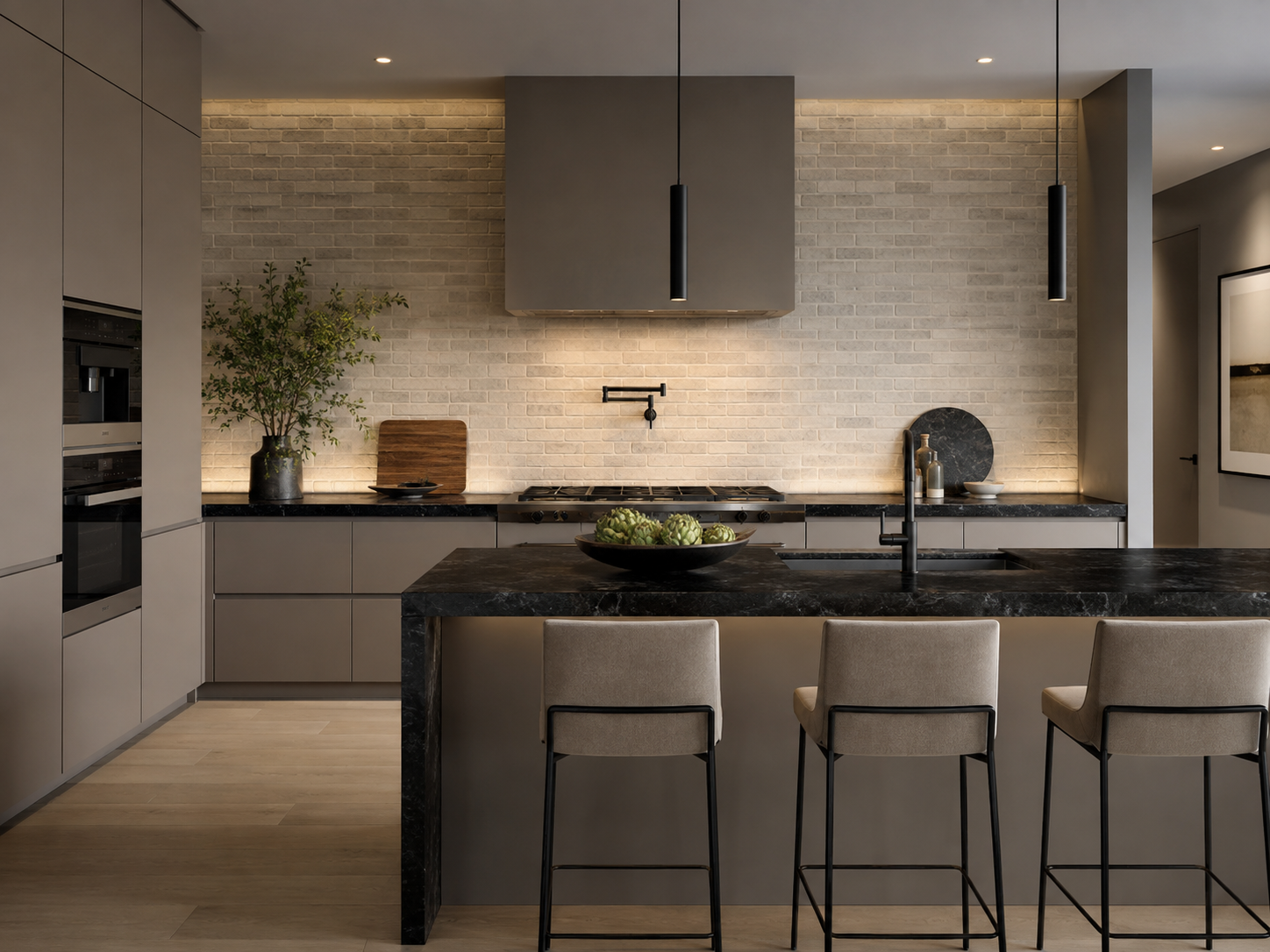
That same value relationship explains the rise of mushroom in flat-panel kitchens. Its gray-brown tone is much closer to black granite than white or pale wood, creating a softer transition between cabinet and counter.
Flat-panel doors push the palette contemporary. Apply the same mushroom color to a shaker front and the room shifts toward transitional. Granite with pale veining can tie the two surfaces together further.
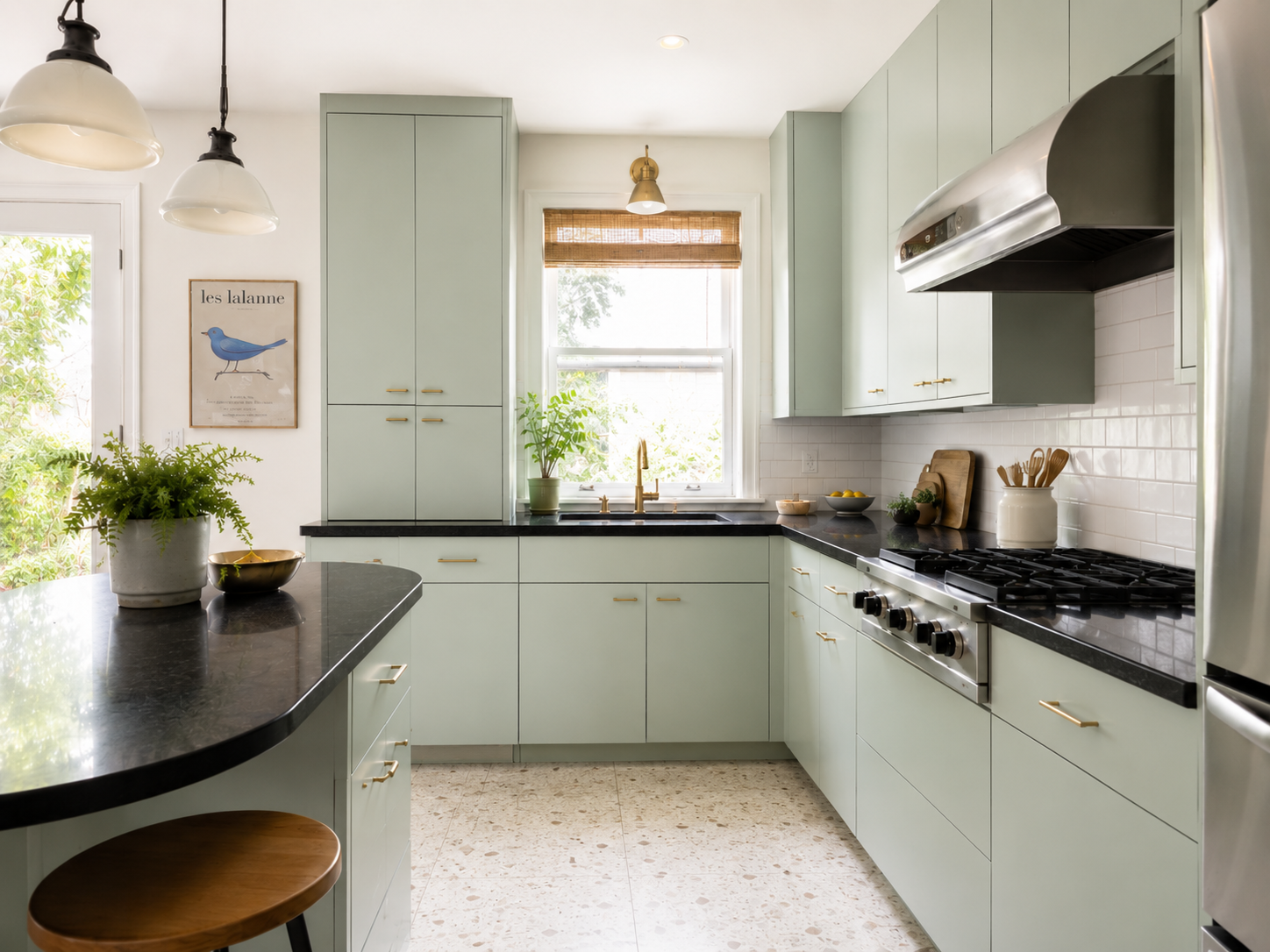
Graying the mint down takes it out of retro diner territory. Against black granite, muted celadon registers as a true color without turning the kitchen pastel. Clean cabinet fronts and simple hardware give it a current edge, with the dark counter adding weight to the lighter cabinetry.
Warm terrazzo, cream tile, and softly speckled floors are good options underfoot. If you're considering blue-gray flooring, test it with the cabinet sample first. Too many cool surfaces can make the green appear sharper than expected.
Traditional white subway tile works well for the backsplash because it separates the two colors without adding another strong pattern.
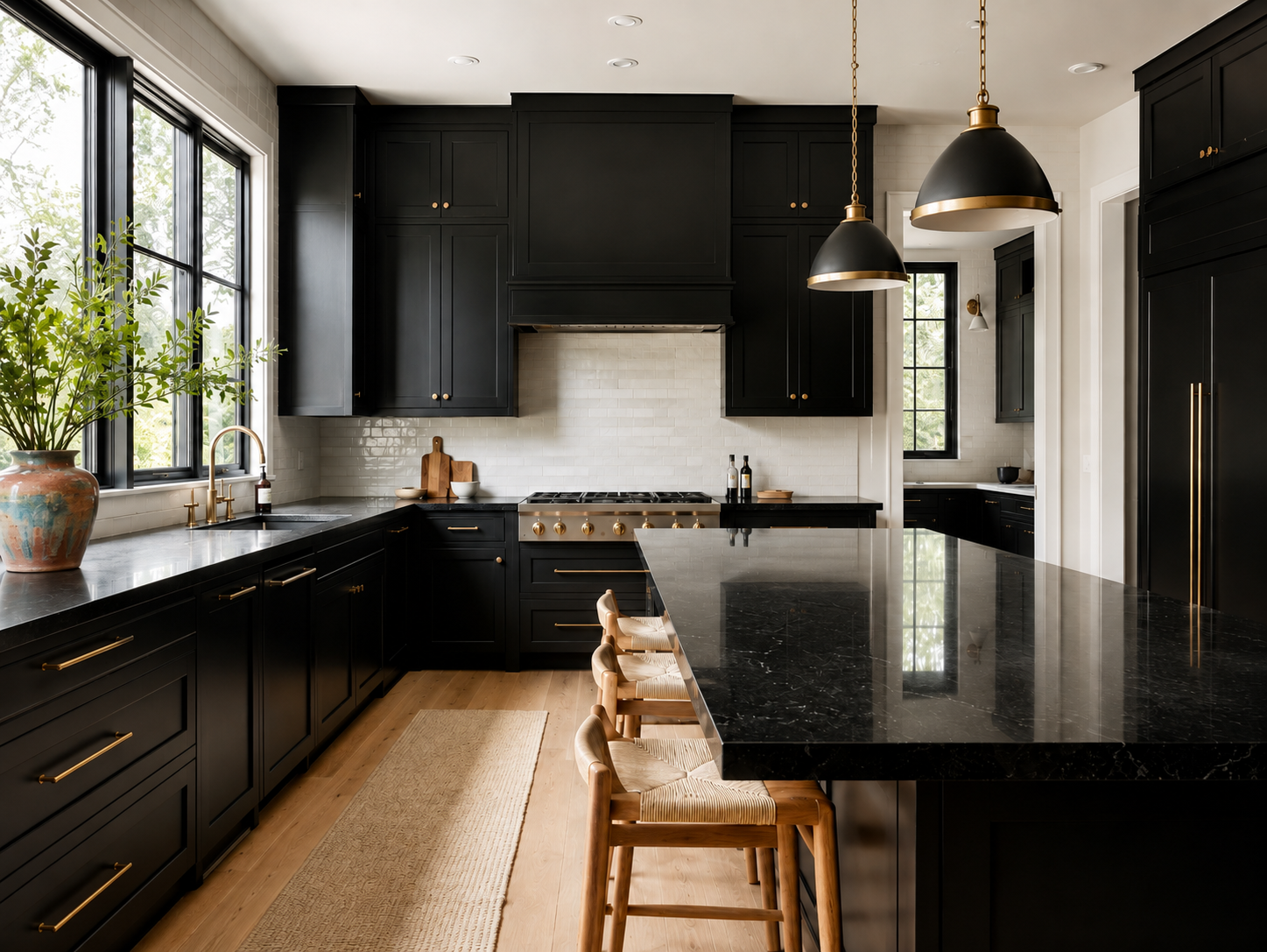
One small window, black cabinetry, and black stone flatten together once daylight fades. If you're going dark on both surfaces, add contrast through pale floors, a light backsplash, or larger windows.
Matte or satin cabinet paint also gives polished granite a distinct surface to contrast. Block Renovation covers those practical differences in its guide to satin vs. semi-gloss cabinets.
Pale oak floors, brass fixtures, or a warm off-white backsplash bring warmth into the room. For a more monolithic cabinet wall, matte black hardware lets the pulls recede into the fronts.
Use a break the room already gives you. Change the finish between the island and perimeter, between upper and lower cabinets, or at a corner where one cabinet run becomes another. A color change in the middle of an uninterrupted bank of doors usually appears arbitrary.
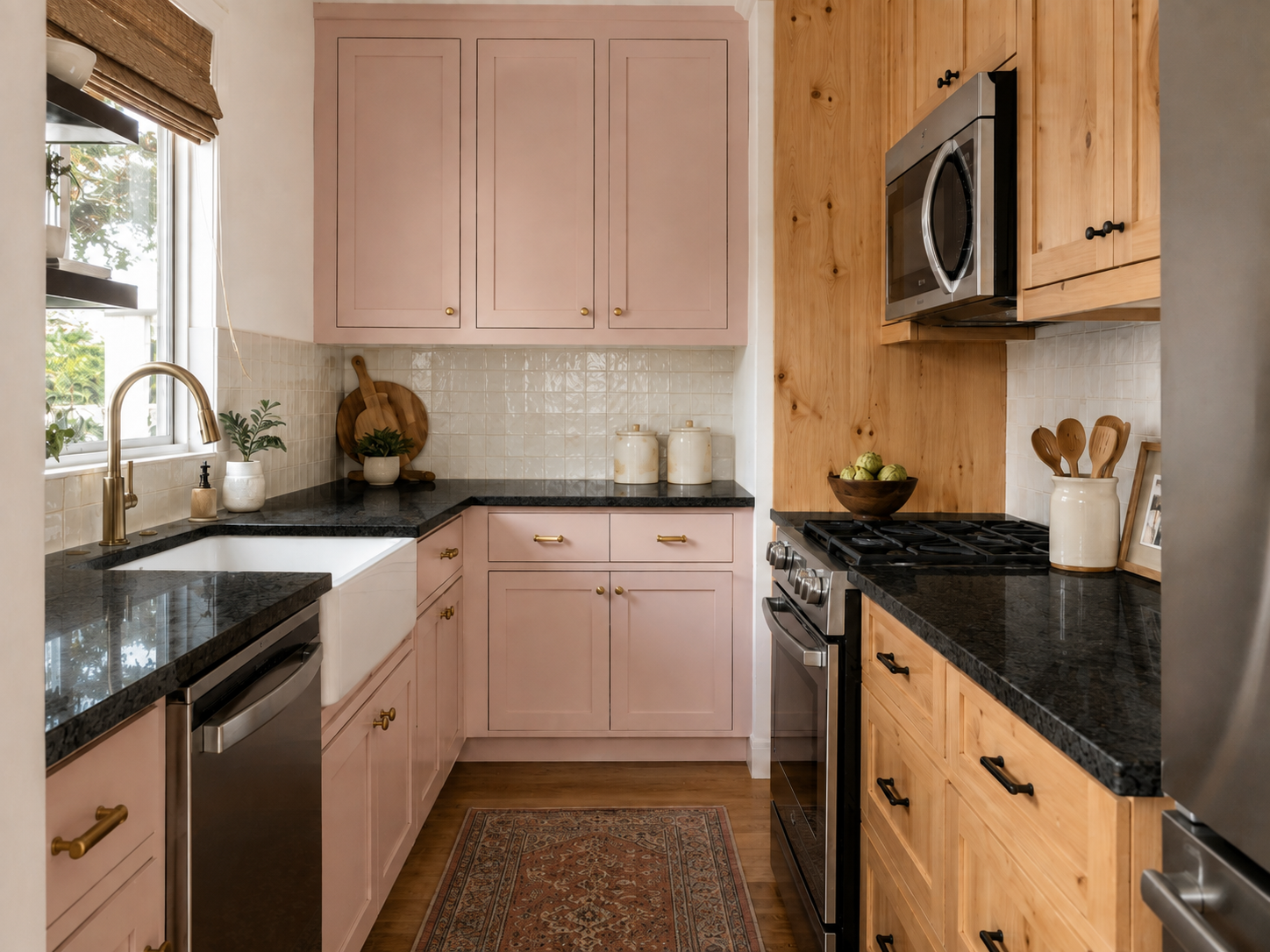
Black granite helps because the countertop creates continuity across both cabinet finishes.
A second professionally painted cabinet finish adds another setup for the painter and often raises that line item by roughly 5 to 15%.
Swap two or three solid fronts for glass before changing an entire wall of cabinetry. A long row of upper doors in one finish can become visually dense, and a few glass panels break up that surface through reflection and depth. Block's overview of upper cabinets with glass doors covers more available styles.
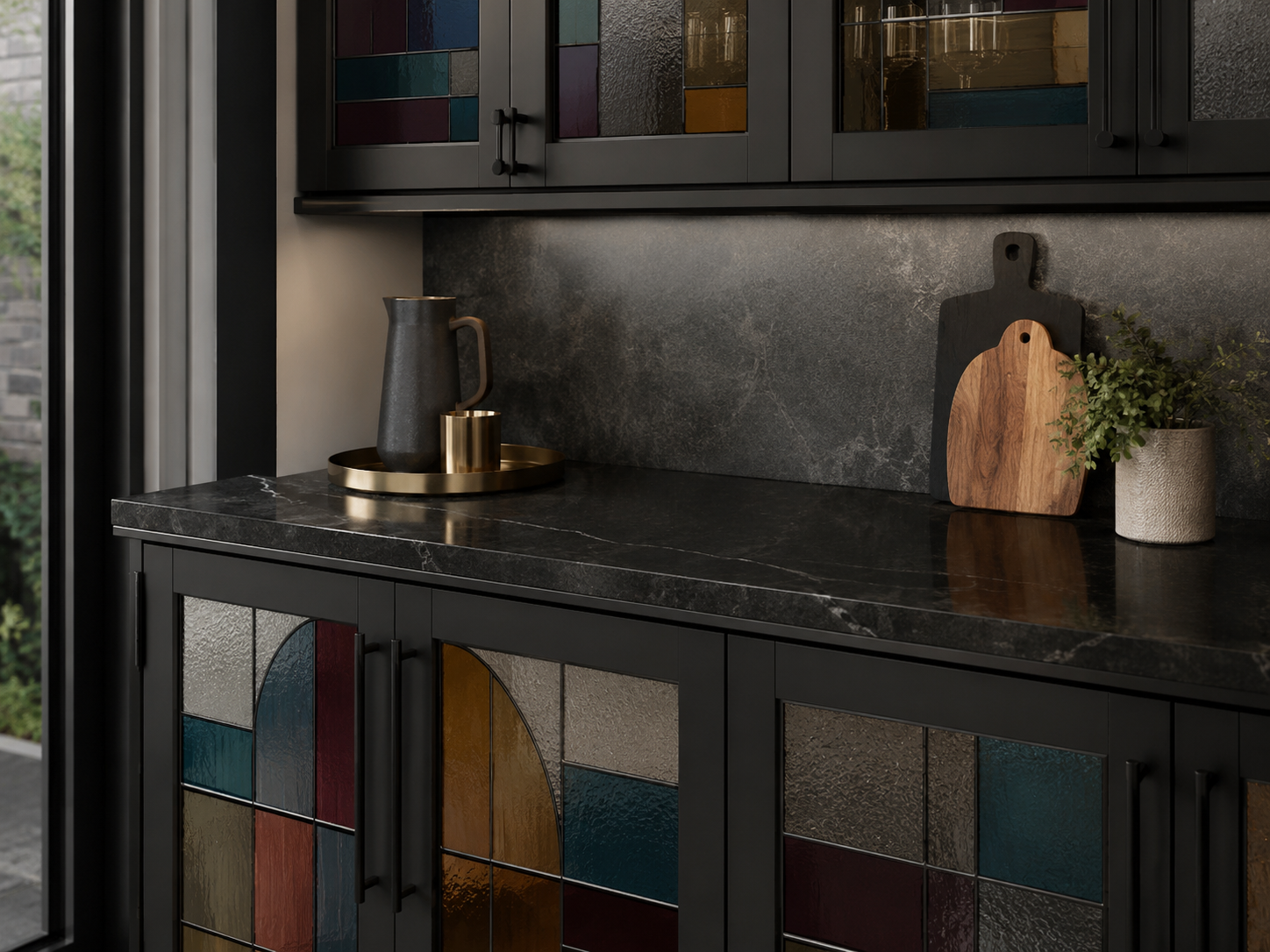
The right glass depends on how much you want to reveal:
Standard glass inserts run roughly $150 to $400 per door. Custom leaded or stained panels run about $400 to $1,200 per door, depending on the glass and fabrication.
Cabinet color gets most of the attention, but the surrounding finishes push the combination warmer, cooler, more traditional, or more contemporary.
Design a Home That’s Uniquely Yours
Block can help you achieve your renovation goals and bring your dream remodel to life with price assurance and expert support.
Get Started
Cabinet paint alone doesn't determine whether the combination works. Test the entire group of finishes together before making the final decision.
Cabinet color is one decision inside a much larger kitchen project. Countertop templating, electrical and plumbing changes, appliance clearances, cabinet installation, and the condition of the existing space all affect the finished result.
Block matches homeowners with vetted local contractors who compete for the project. Each scope is reviewed for missing line items and potential red flags before you commit, making proposals easier to compare on the details that matter. Block also manages payments through a progress-based system, so funds are released as the renovation moves forward.
Remodel with confidence through Block

Connect to vetted local contractors
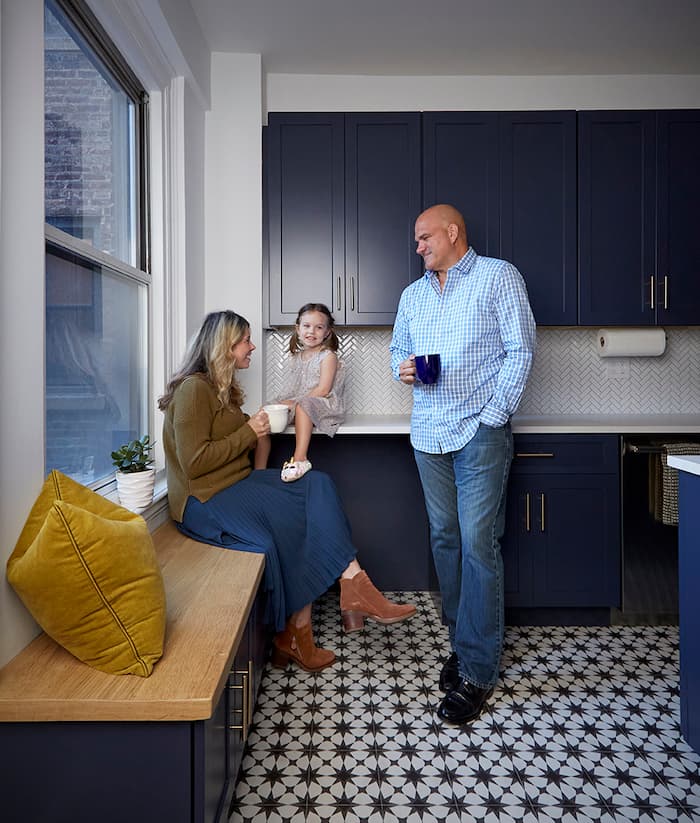
We only work with top-tier, thoroughly vetted contractors

Get expert guidance
Our project planners offer expert advice, scope review, and ongoing support as needed
Enjoy peace of mind throughout your renovation
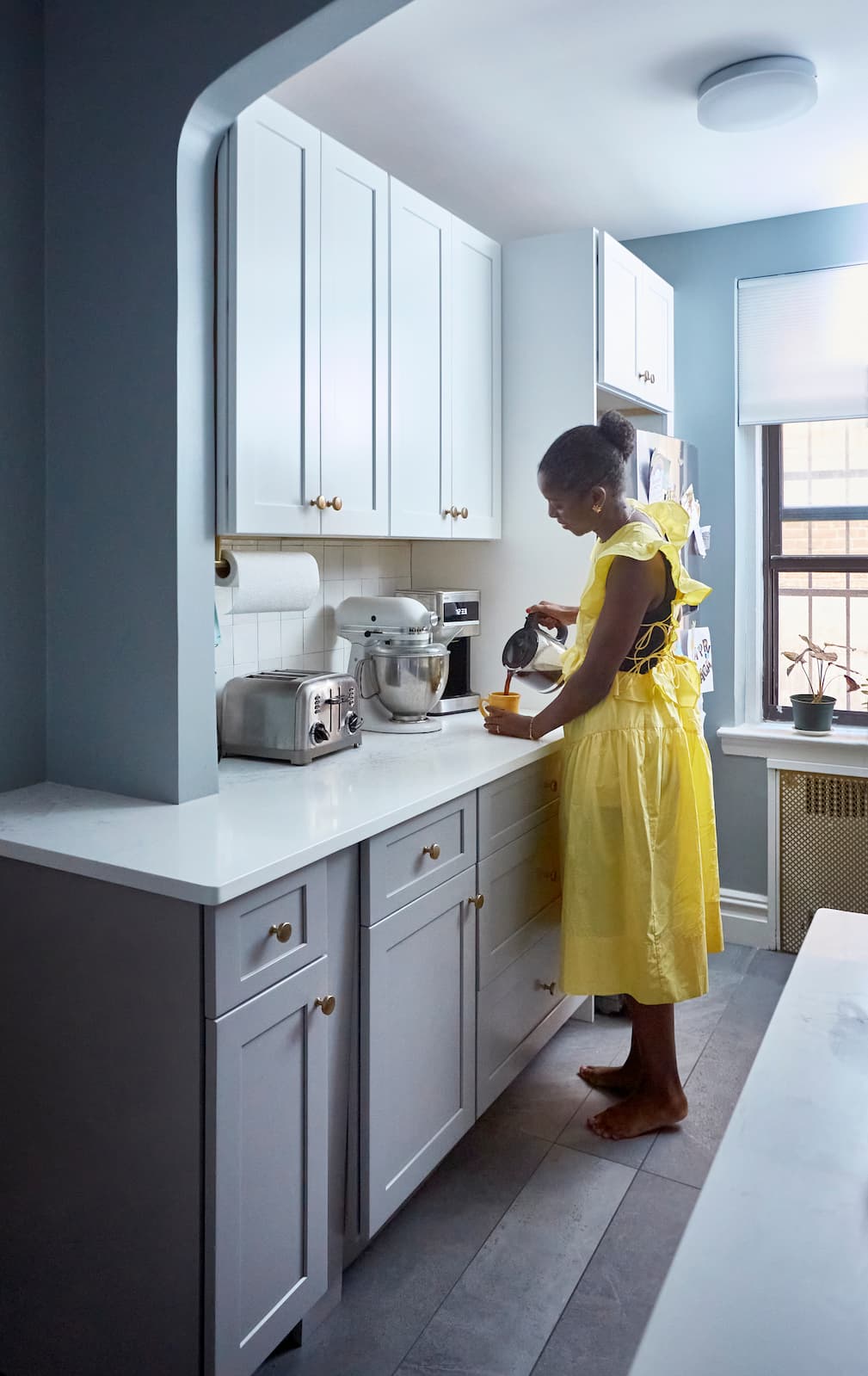
Secure payment system puts you in control and protects your remodel

Renovate confidently with Block
Easily compare quotes from top quality contractors, and get peace of mind with warranty & price protections.
Countertops
Slate Countertops vs. Granite, Quartz and Soapstone
09.20.2026
Countertops
Laminate Countertops vs. Quartz: How to Choose
09.15.2026
Countertops
Kitchen Counter Overlay: Cost, Durability and More
09.13.2026
Countertops
What Color Countertops Go With Oak Cabinets?
09.01.2026
Countertops
Walnut Cabinets With White Countertops
08.24.2026