




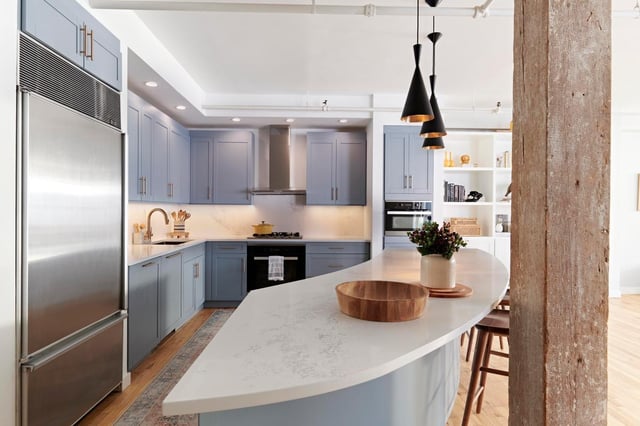
Backsplash
Backsplash Same as Countertop: Ideas, Costs and Upkeep
09.18.2026
09.18.2026


In This Article
Once you've chosen a countertop you love, picking a completely different backsplash means starting the materials search all over again. Choosing a backsplash same as countertop material avoids that second decision while giving you fewer grout lines to clean and one less pattern competing for attention.
How much it costs depends largely on how far you take the material. A 4-inch ledge adds only a few hundred dollars, while full-height natural stone around the kitchen can reach $7,500. For most kitchens, the real decision is whether you want the slab only at the range, across one full wall, or around the entire perimeter.
Meredith Sells, an interior designer at Block Renovation, sees two main benefits: easier upkeep and a kitchen that feels visually connected.

"Using the countertop material as a backsplash gives you simplicity and ease of maintenance. It's not like people are missing having a patterned tile. You can really appreciate the countertop material because there's more continuity through the space."
For homeowners who already like the countertop enough to see more of it, the practical case is strong:
But having the same backsplash as your countertops isn't without its drawbacks:
Design a Home That’s Uniquely Yours
Block can help you achieve your renovation goals and bring your dream remodel to life with price assurance and expert support.
Get Started
Matching the backsplash and countertop does not require covering every available wall. Where you stop the material changes the price, the amount of pattern in the room, and how much maintenance you eliminate.
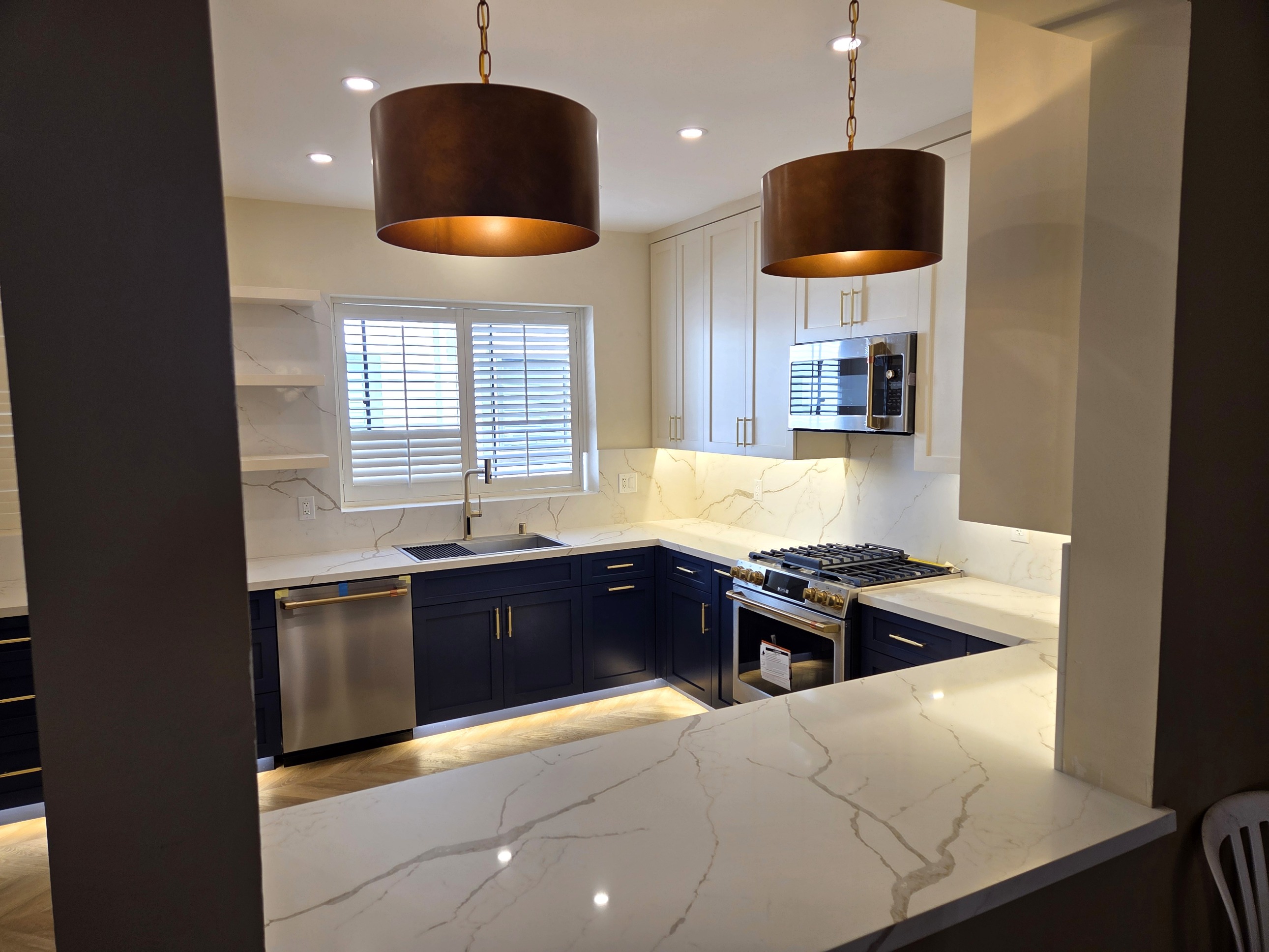
A house remodel in Encino, California by Gold Standard Builders carries white veined quartz behind the sink, behind the range, and through the window opening above the faucet. There is very little visual interruption between one work area and the next.
That kind of coverage adds around 25 to 35 square feet of material in a typical kitchen. It works especially well when you want cabinet color or millwork to carry more of the personality of the room instead of adding another decorative surface.
At that scale, pattern matters more. A subtle vein is easier to repeat across several walls, while a dramatic pattern that looked restrained on a countertop sample becomes much busier once 30 square feet of it is standing vertically.
If you only want slab on one wall, the range gives you the biggest practical payoff. Most range installations need about 10 to 15 square feet of material, and that surface sits directly behind the grease and cooking splatter.
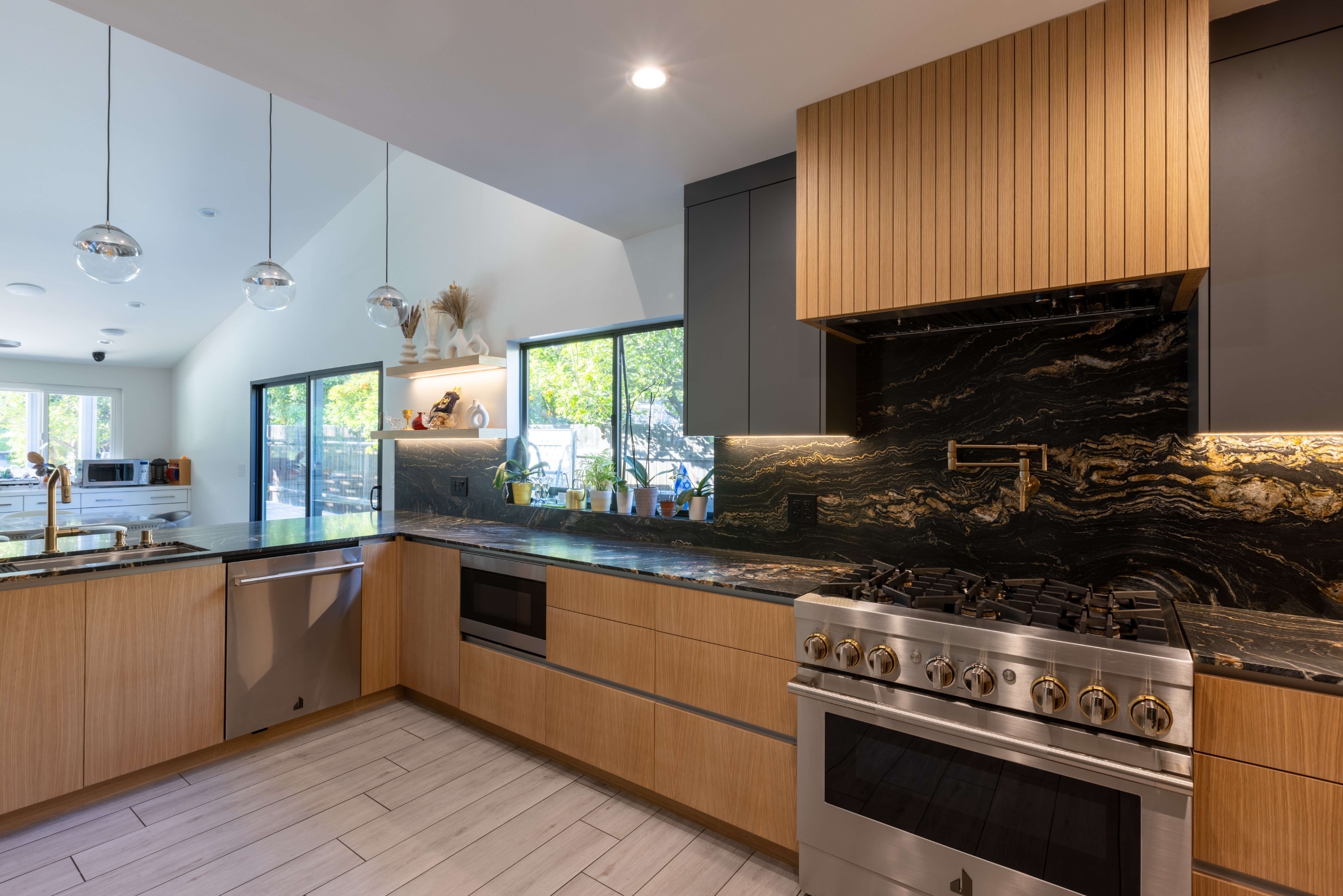
A Los Angeles kitchen by Royal Construction uses black and gold stone from the countertop to the wood hood, with a pot filler installed through the slab. The large surface gives the veining room to show, while the oak cabinetry and restrained hardware keep another pattern from competing with it.
Engineered quartz changes the calculation around a gas range because its resin binder can discolor under sustained direct heat, while granite and porcelain do not have that same resin-related concern. The range itself still has installation clearances regardless of the backsplash material. Set those clearances before fabrication.
A 4-inch backsplash does not have to look like the speckled granite strips common in older builder kitchens. Cut it from the same slab, polish the exposed edge, and finish the joint cleanly. You get protection where sink water and countertop spills are most likely to hit while leaving the wall above available for paint.
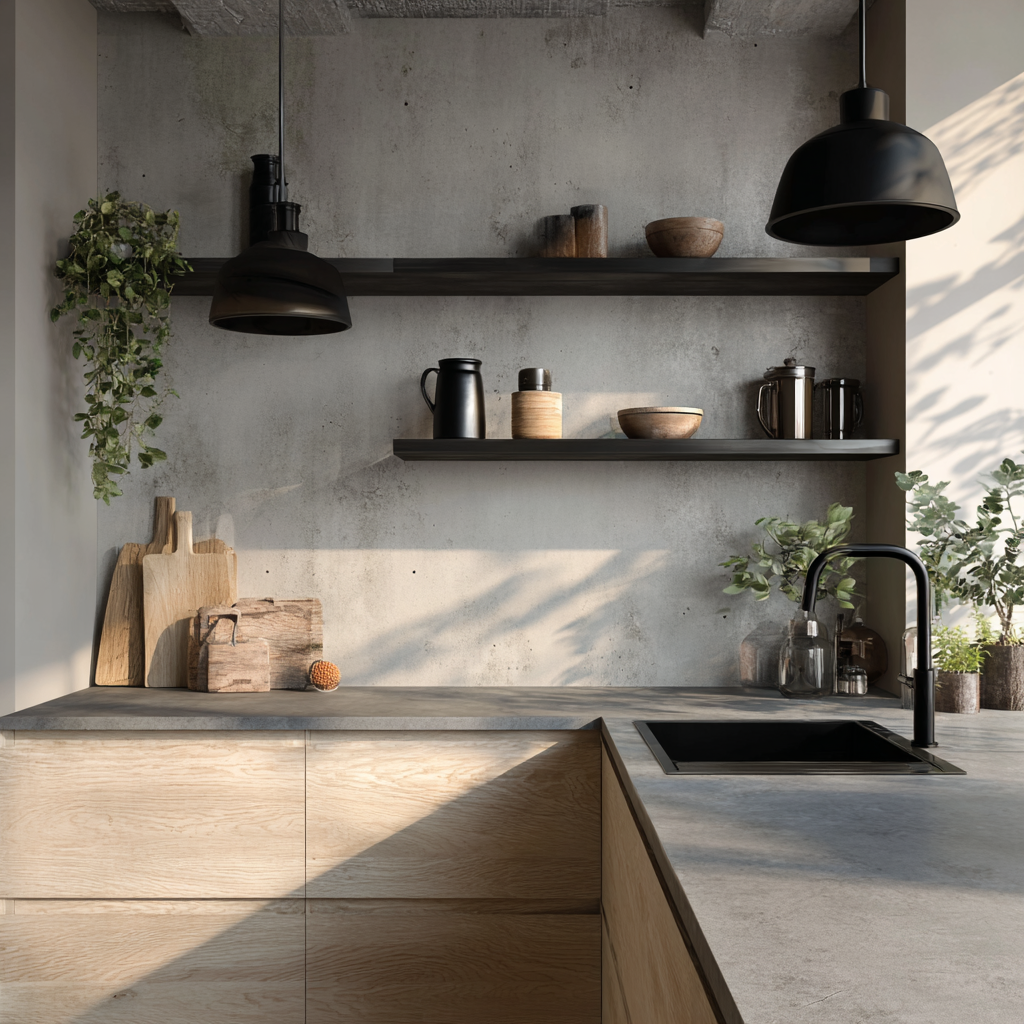
Decide on your shelf brackets before the backsplash goes in. With tile, the bracket locations have to work with the layout or penetrate the finished surface cleanly, and the grout grid remains visible behind everything stored on the shelves. Slab removes the grid from the equation.
That is especially useful when the shelving already carries a mix of dishes, glassware, cookbooks, and everyday objects:
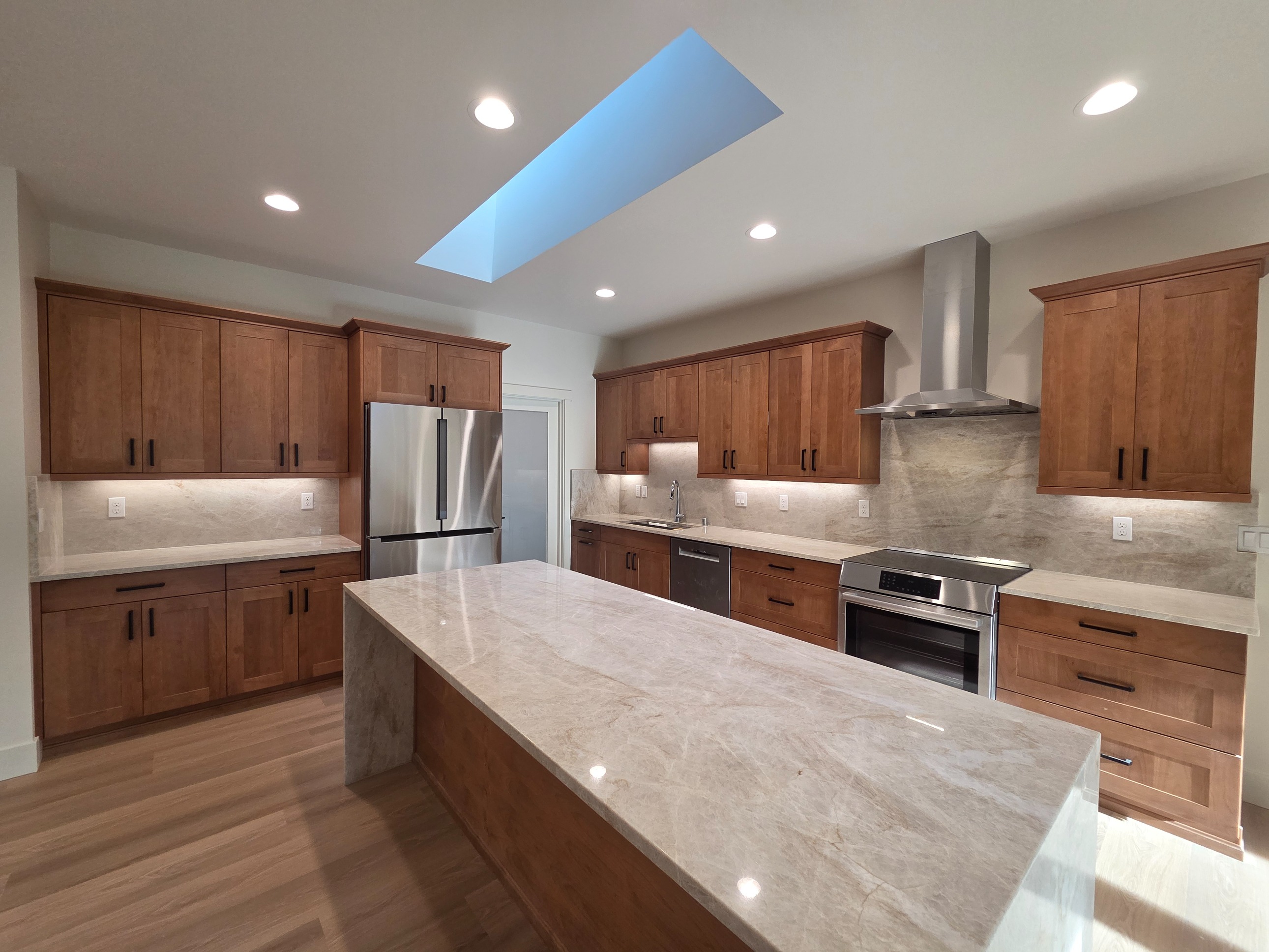
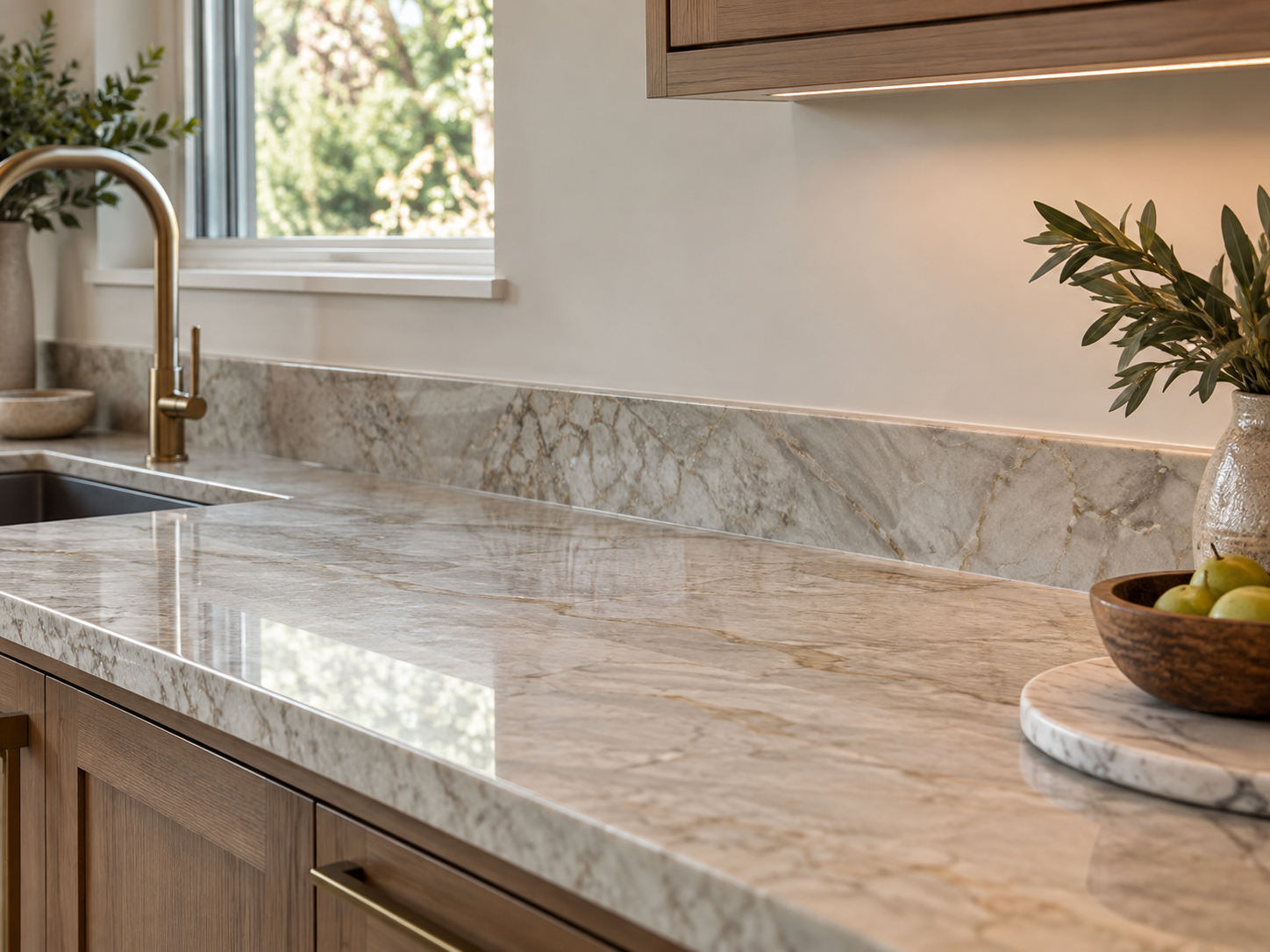
A new build in Olalla, Washington by TNT Home Builders uses pale quartzite across the perimeter counters, full-height backsplash, and long island. Repeating the stone connects those three prominent surfaces, while the warm wood cabinets keep the kitchen from becoming a field of pale stone.
When you want fewer joints, handles, and decorative breaks in the kitchen, carrying the countertop material onto the wall fits naturally with that approach. A warm minimalist kitchen in New York combines flat slab cabinet fronts with the continuous countertop treatment, leaving very few edges around the main work surfaces where cooking residue can collect.
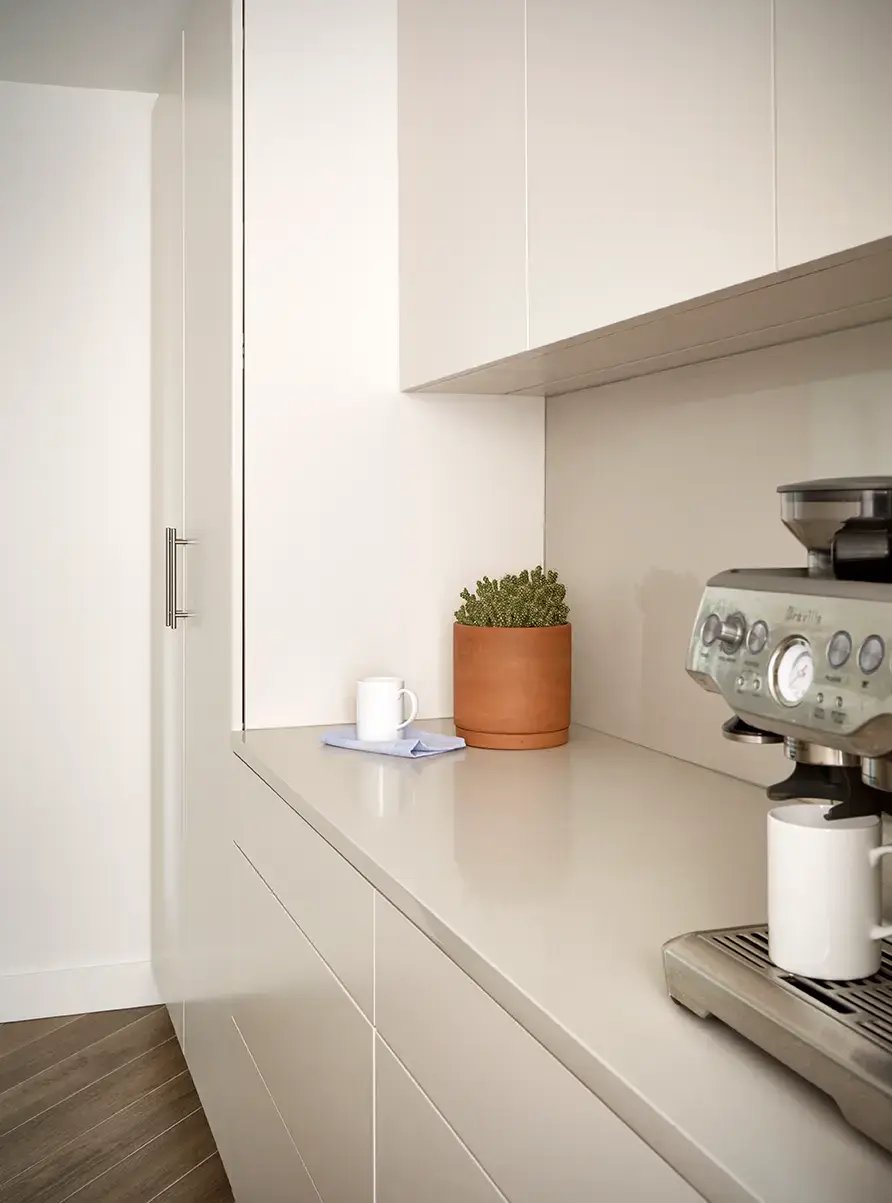
Still, a room with that many smooth surfaces needs warmth somewhere. In this project, the natural-toned herringbone floor provides it.
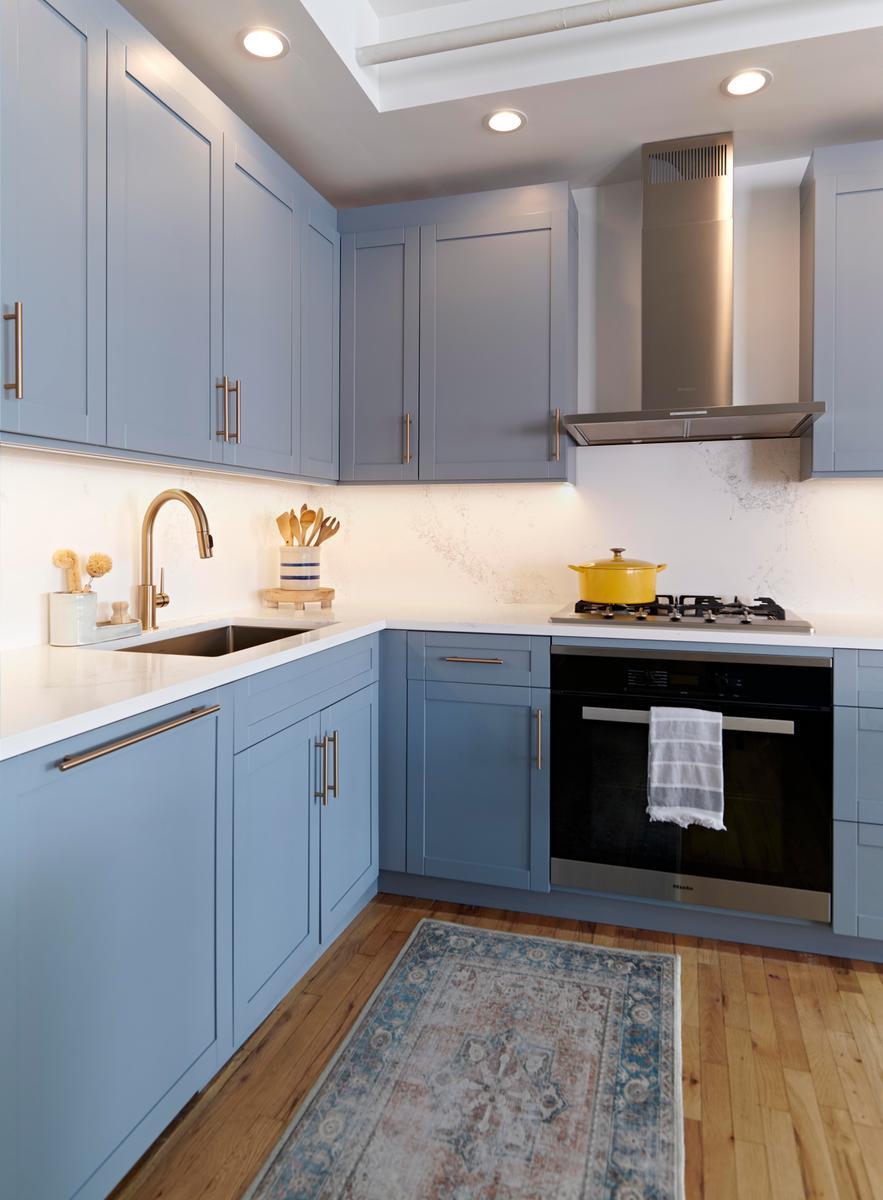
Can the same countertop and backsplash work outside a modern kitchen? An Earthy Chic Kitchen in New York shows how easily the idea can move into a transitional space.
Farmhouse details and traditional cabinetry change the character of the room even though the stone continues up the wall. The material, cabinet profile, hardware, and surrounding colors have more influence over the style than the absence of grout lines does.
The idea of having the countertops and backsplashes works well beyond the kitchen. A full-height backsplash above a 60-inch double vanity adds about 8 square feet of material and protects the area exposed to faucet spray, toothpaste, hairspray, and cosmetics every day.
At about 8 square feet, even a higher-priced slab adds far less material cost than a full kitchen perimeter. That makes natural stone easier to fit into the budget here.
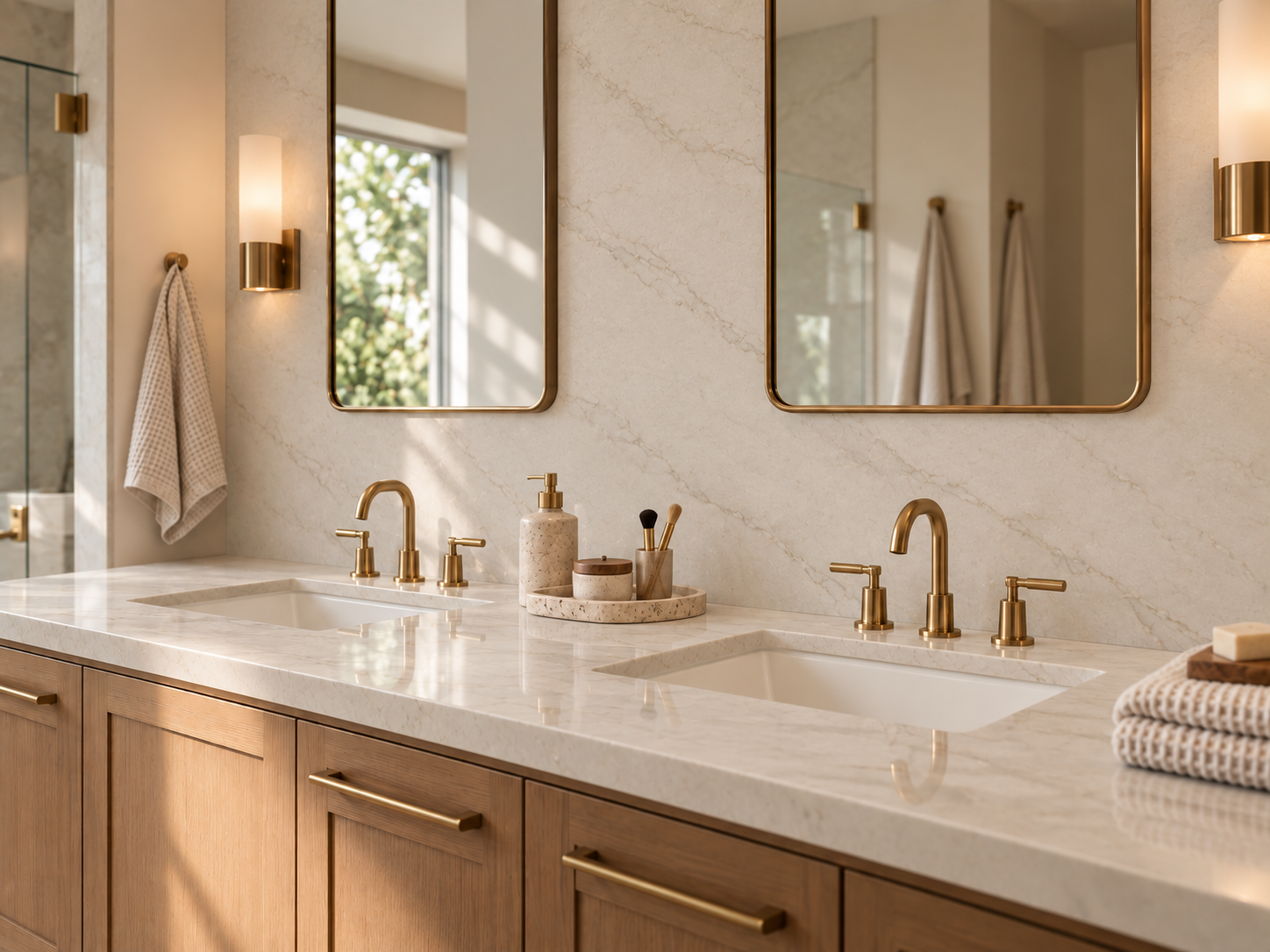
Marble is the higher-maintenance choice for your backsplash and countertop. Acidic products can etch polished marble and leave dull areas around the sink, while honed marble hides that wear better. Quartz is easier to care for if maintenance is your priority.
The amount of wall you cover matters as much as the material itself. For engineered quartz, these ranges give you a useful starting point:
| Approach | Rough square footage | Installed cost, engineered quartz |
|---|---|---|
| 4-inch ledge | 5 to 7 sq ft | $300 to $600 |
| Behind the range only | 10 to 15 sq ft | $500 to $1,500 |
| Full height, one wall | 15 to 20 sq ft | $750 to $2,000 |
| Full height, full perimeter | 25 to 35 sq ft | $1,500 to $3,500 |
Engineered quartz runs about $50 to $100 per square foot installed. Natural marble, quartzite, and exotic granite run $100 to $250, putting the same full-perimeter treatment closer to $3,000 to $7,500.
The comparison with tile gets more interesting once you move beyond inexpensive ceramic. Standard ceramic or porcelain at $25 to $50 per square foot puts 30 square feet of backsplash at roughly $750 to $1,500. The same area in quartz slab runs around $1,500 to $3,000.
Handmade zellige can reach $50 to $100 per square foot installed, putting it in the same general price range as quartz. You would still have grout to maintain, and that's before you get to the potential fabrication savings from ordering the counter and backsplash in the same run.
A slab backsplash quote should tell you more than the price of the stone. Seams, outlet cutouts, edge finishing, templating, and installation all affect the final number, and fabricators do not always bundle those items the same way.
The difference can be significant. The same 30 square feet of quartz can come back $1,200 apart between two fabricators in the same city, largely because of how each prices seams and outlet cutouts. When you compare proposals, look for the backsplash square footage and cutouts specifically.
With Block, you can tell us about your renovation once and compare bids from vetted local contractors matched to the project. Each scope is reviewed for missing line items and red flags before you make your decision, giving you a clearer picture of what each quote actually includes.
Remodel with confidence through Block

Connect to vetted local contractors
We only work with top-tier, thoroughly vetted contractors

Get expert guidance
Our project planners offer expert advice, scope review, and ongoing support as needed

Enjoy peace of mind throughout your renovation
Secure payment system puts you in control and protects your remodel


Renovate confidently with Block
Easily compare quotes from top quality contractors, and get peace of mind with warranty & price protections.
Backsplash
Backsplash Same as Countertop: Ideas, Costs and Upkeep
09.18.2026
Backsplash
Rustic Backsplash Ideas That Survive a Real Kitchen
06.17.2026
Paint & Color
Backsplash Ideas to Flatter Gray Cabinets
04.17.2026

Backsplash
Wallpaper as a Kitchen Backsplash: Ideas & Practical Advice
04.14.2026

Backsplash
Backsplash Ideas for White Cabinets & Granite Countertops
04.06.2026