




Home Addition
Building Kitchen Additions: Costs & Design
08.21.2026
11.14.2025


In This Article
Cape Cod homes are beloved for their measured proportions, straightforward layouts, and undeniable charm. The style still draws strong interest today: HGTV ranked Cape Cods among the 10 most-searched house styles in the U.S. in 2025, citing the appeal of their compact, efficient design.
Their compact size makes them cozy and manageable, but that same quality can limit how they function. Storage, living space, or even ceiling height can eventually feel tight. For homeowners who want to stay in their neighborhood and keep the character of their home, adding on can be a natural next step.
That said, Cape Cod additions come with distinct design and structural considerations. These homes are known for their steep rooflines, symmetry, and low profiles—details that can make expansion more complicated than it might be for other styles. Adding square footage without throwing off those proportions takes careful design from the first sketch.That's why it helps to work with a contractor who knows Cape Cod architecture and can expand the house so the new space looks like it was always there.
|
Historic reviews can add five figures |
One homeowner spent $20,000 replacing newly installed windows after approval issues surfaced. Another absorbed a $32,000 upcharge for custom-milled siding. A permit review can have a bigger budget impact than any finish package. |
|
The hidden cost is beneath the addition |
A second-story addition may cost $100,000 to $250,000+, but the expensive part is often reinforcing an aging Cape Cod to carry the new load. Structural work starts before the new space exists. |
|
Existing space is often the better buy |
A $50,000 attic, dormer, or porch conversion can deliver the extra room a family needs without the structural upgrades, permitting hurdles, and six-figure exposure that come with a full second-story addition. |
Maintaining your home’s curb appeal starts with proportional design. Additions should preserve the Cape Cod’s symmetrical facade, matching roof pitches, dormer styles, and window alignments. Even small mismatches in trim size, siding material, or shingle texture can disrupt the balance that makes Cape Cods so appealing. This often means sourcing materials that match the original as closely as possible or selectively restoring the existing exterior to keep everything cohesive.
A hallmark of Cape Cod architecture is its steep, simple roof. Adding onto that structure requires precision; poorly designed new roof sections can look awkward or collect water and snow where angles meet. Matching the existing pitch and ensuring proper flashing and drainage keeps the roof watertight and visually consistent with the original.
Classic Cape Cods depend on balance—windows and dormers arranged evenly around a central entryway. Additions should respect that visual order. Whenever possible, expansion should happen toward the rear or side of the home to preserve the iconic front profile. Even when enlarging secondary spaces, keeping window spacing and trim consistent helps new construction feel original to the home.
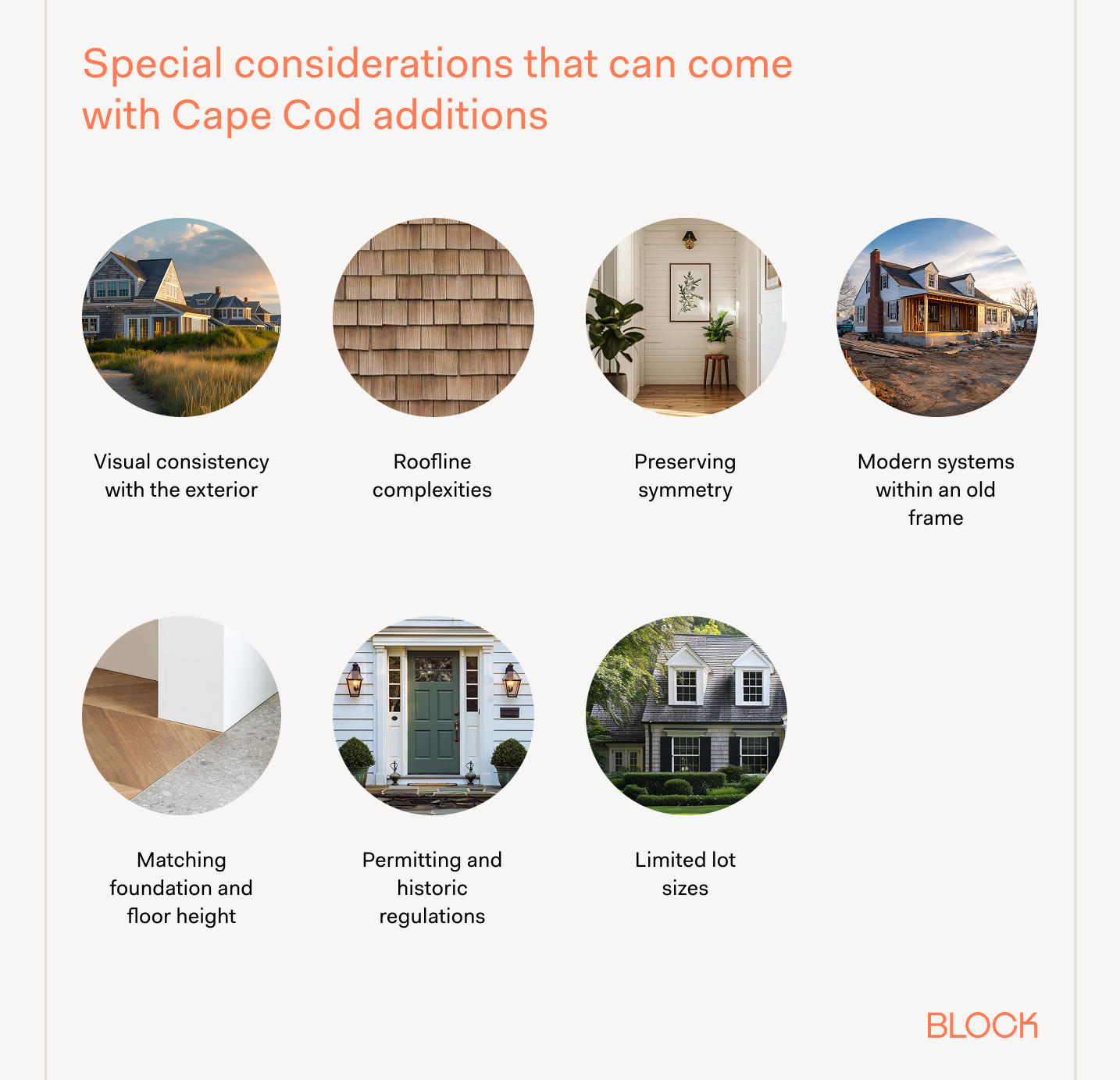
Expanding a mid‑century or pre‑war Cape Cod often reveals aging infrastructure. Outdated electrical, HVAC, or plumbing systems may need upgrades to meet code and handle the increased load from the new space. Integrating these updates during the addition avoids future disruptions and creates long‑term energy efficiency. While it adds some cost, doing this work proactively keeps your new square footage comfortable and safe.
Because most Cape Cods sit on shallow foundations, new additions have to align seamlessly with the existing structure. Differences as small as an inch in floor height can cause future issues with flooring, framing, or insulation. A well‑planned addition lines up the floor heights so you can't feel the seam between the old house and the new section underfoot.
In many northeastern towns, Cape Cods are part of older neighborhoods with historic preservation rules. Local ordinances might limit changes to rooflines, siding materials, or even window configurations visible from the street. Early consultation with architects familiar with regional codes helps you avoid costly revisions later. A team that knows the local codes can design an addition that satisfies the review board and still gives you the space you want.
Limited lot sizes
Cape Cod homes were often built on modest plots of land, leaving little room to extend outward. When space is tight, additions must be carefully planned within zoning setbacks and property boundaries. You may need to think vertically—adding dormers, finishing attics, or extending a partial second floor—instead of building horizontally. Good design makes the most of what’s available without overpowering the surrounding landscape or neighboring homes.
Renovate with confidence every step of the way
Step 1: Personalize Your Renovation Plan
Step 2: Receive Quotes from Trusted Contractors
Step 3: Let Us Handle the Project Details

Because Cape Cod homes are compact and symmetrical, thoughtful planning determines how naturally an addition integrates with the original structure. Some addition types preserve the home’s classic curb appeal, while others allow for bigger changes to living space and functionality. The right approach depends on your layout, lot size, and long‑term goals.
Typical cost for a Cape Cod: $80,000–$200,000
Rear additions are the most popular option, extending living or dining areas without changing the Cape Cod home’s street‑facing symmetry. They can add anywhere from 200 to 600 square feet—perfect for expanding a kitchen, creating a family room, or adding a flexible workspace. Because they’re tucked behind the main structure, homeowners can take more design liberties with windows, doors, and materials while maintaining consistent curb appeal.
Typical cost for a Cape Cod: $100,000–$250,000
Side additions work best for properties with wider lots, adding space for a garage, guest suite, or extended living area. Matching roof lines, window proportions, and siding details makes the new wing look like part of the original Cape Cod. When executed carefully, a side addition can double your usable space without disrupting the Cape Cod’s trademark balance.
Typical cost for a Cape Cod: $40,000–$120,000
Dormers are an excellent way to reclaim space on the second floor while improving both function and charm. Expanding or adding dormers increases headroom, brings in natural light, and can transform an attic into a comfortable bedroom or home office. Dormer upgrades often have the added bonus of refreshing your roofline and improving your home’s ventilation.
Typical cost for a Cape Cod: $150,000–$400,000+
When the lot doesn’t allow for expansion outward, building upward is a strong alternative. A full or partial second‑story addition can nearly double your square footage while keeping the footprint modest. Attention to detail—roof pitch, dormer placement, and chimney alignment—preserves the Cape Cod look while unlocking valuable new living space.
Typical cost for a Cape Cod: $40,000–$90,000
A mudroom or breezeway addition adds storage, convenience, and connection between living areas. These smaller extensions are ideal for linking the main house to a detached garage or side entrance without breaking architectural flow. With proper lighting, built‑in benches, and matching materials, they add real day-to-day function and still suit the house.
Typical cost for a Cape Cod: $30,000–$70,000
Turning a porch into a sunroom or enclosing existing outdoor space introduces year‑round livability without overwhelming the home. These additions often include large divided‑light windows, wood or stone floors, and beadboard ceilings to pay homage to traditional craftsmanship. They allow you to embrace natural light and seasonal views while staying true to the Cape Cod’s cozy, approachable spirit.
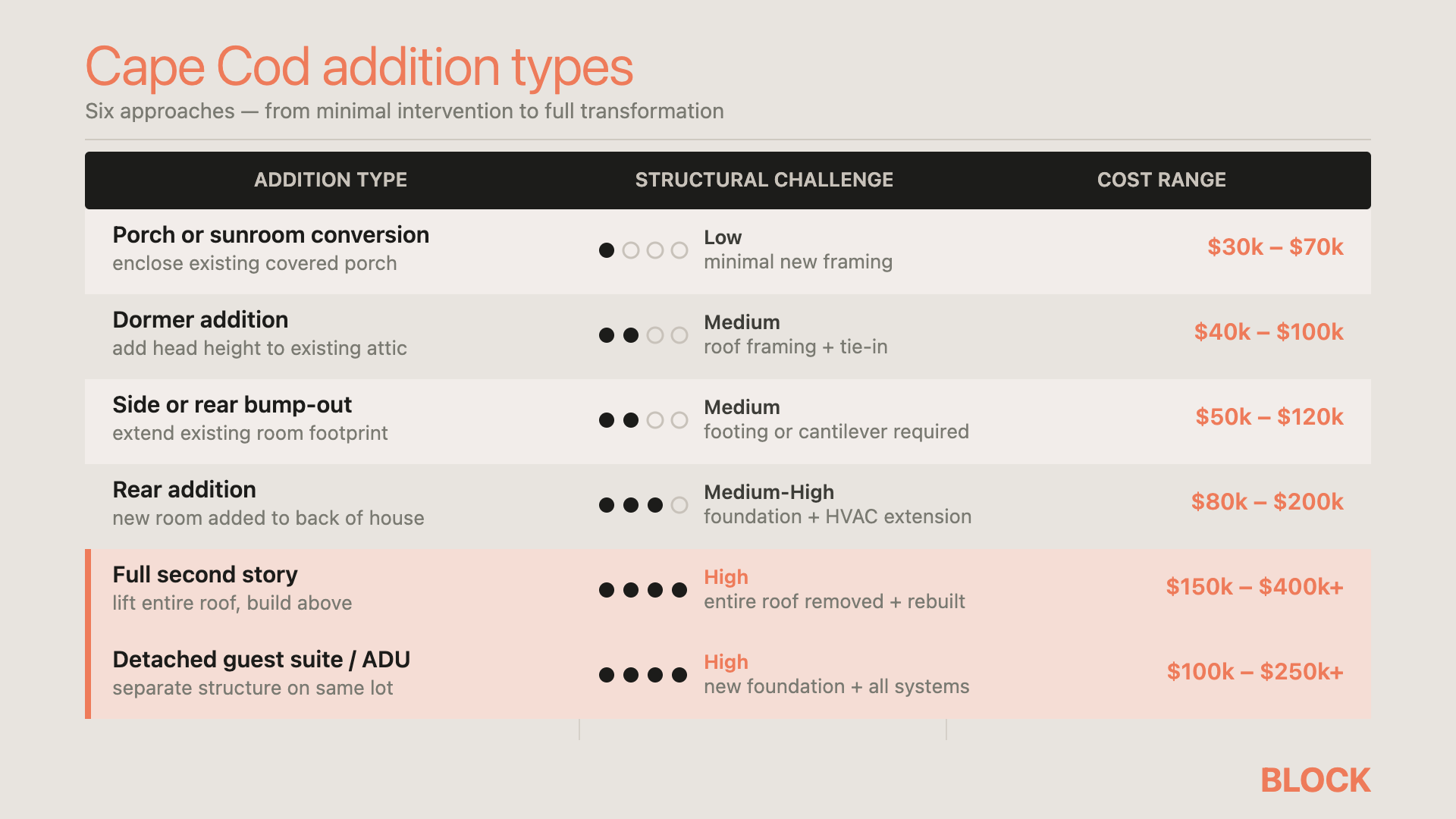
The prices presented above span a wide range, because there are numerous factors that heavily influence the final cost of your Cape Cod’s addition, including:
While your contractor will ultimately be the best source of project estimates, our guides to home addition costs can provide additional context.
Compare Proposals with Ease

The Cape Cod additions that go smoothly tend to share a trait: the homeowners settled the big questions early, well before construction began.
When finishes, fixtures, and layouts are still up in the air, work either stops or gets reopened, and each of those interruptions becomes a change order on your invoice.
It's a pattern Kevork Bardakjian, managing director of Bianco Design Build, sees play out repeatedly on residential projects.

The biggest source of change orders is incomplete selections before construction starts. Homeowners often delay choosing finishes, fixtures, or layouts until framing and rough-ins are underway, which can create extra costs and delays. Strong pre-construction planning and finalizing selections early help keep projects on track."
The practical step is to finalize your cabinetry, tile, plumbing fixtures, and lighting during the design phase, while those choices can still be drawn into the plans and priced accurately.
The details that make a Cape Cod addition look original—divided-light windows, custom trim profiles, siding or shingles matched to the existing house—are often the ones with the longest lead times. Special-order windows routinely run six to twelve weeks, and custom millwork or materials matched to historic profiles can take longer still. If those orders wait until framing is up, the crew can stall while materials are in transit, and that delay carries straight into your completion date.
As soon as your selections are final, place the long-lead orders, and ask your contractor early which items carry the longest waits so the schedule can account for them.
It's tempting to start with the floor plan you want and work backward, but on an older home that approach often leads to expensive redesigns. A property survey, a current set of as-built drawings, and a structural assessment show you what you're actually working with: where your lot lines and setbacks fall, how the existing frame carries load, and whether the foundation can support a second story. Gathering that information before design begins lets your architect base the plans on the home's real condition, and avoids the cost of redrawing approved drawings after a structural engineer flags a problem.
Adding onto a Cape Cod home requires balance: more space, modern function, and an exterior that still feels like home. With Block, you’ll have expert guidance from start to finish—helping you design an addition that reflects your needs while preserving the home’s character.
Our vetted builders understand the nuances of historic and coastal architecture, ensuring your addition complements the structure that’s already there.
Done well, an addition gives you the room you need while the house still reads as the Cape Cod you bought. Start your project with Block today.
Remodel with confidence through Block

Connect to vetted local contractors
We only work with top-tier, thoroughly vetted contractors

Get expert guidance
Our project planners offer expert advice, scope review, and ongoing support as needed

Enjoy peace of mind throughout your renovation
Secure payment system puts you in control and protects your remodel


Renovate confidently with Block
Easily compare quotes from top quality contractors, and get peace of mind with warranty & price protections.
Home Addition
Building Kitchen Additions: Costs & Design
08.21.2026
Cost
20x20 Room Addition Cost: What to Budget in 2026
07.28.2026
Home Addition
Bump Out Addition Cost, Ideas & Planning Guide
07.08.2026
Cost
2026 Home Addition Cost Guide: Per Square Foot & ROI
07.07.2026
Home Addition
How to Plan a Home Addition: Process and Timeline
07.01.2026