





Flooring
Top Rated Luxury Vinyl Tile Brands Worth Sampling
09.11.2026
08.25.2026


In This Article
You might fall for a stone floor’s color long before you consider how it handles wet shoes, spilled wine, or a chair dragged across the kitchen. Those everyday encounters determine how your flooring will look five years from now and how much effort you will put into maintaining it. Marble etches under acidic spills, travertine needs its natural voids filled, and slate varies considerably in quality. With different types of stone flooring costing $12 to $70 per square foot installed, choosing the wrong material gets expensive quickly.
Your room matters just as much as your taste when comparing types of natural stone flooring. A stone that performs beautifully in a quiet bedroom could be a frustrating choice beside the front door.
Three physical characteristics determine how a stone floor responds to everyday use:
Marble, limestone, and travertine contain calcium carbonate and react to acidic spills. Granite and genuine quartzite resist those reactions and tolerate heavier daily use.
Here’s the thing that surprises a lot of homeowners: the finish deserves as much attention as the stone itself. Polished marble makes every etched spot obvious because the damage interrupts its glossy surface. Honed marble disguises those same marks and gives wet feet better traction. Pick the wrong finish, and you will notice every damaged spot when sunlight hits the floor.
Ask your supplier for polished, honed, and textured samples. Compare them under your home’s lighting and confirm how each finish performs when wet.
| Stone | How it holds up | Best rooms |
|---|---|---|
| Marble | Scratches and etches | Bathrooms and formal spaces |
| Granite | Hard and highly durable | Kitchens and entryways |
| Travertine | Durable when filled and sealed | Bathrooms and sunrooms |
| Limestone | Soft and porous | Bedrooms and powder rooms |
| Slate | Durable with natural traction | Mudrooms and bathrooms |
| Quartzite | Hard and acid-resistant | Kitchens and busy living areas |
| Sandstone | Porous and moisture-sensitive | Dry interior rooms |
| Soapstone | Stain-resistant but soft | Powder rooms and small kitchens |
Is marble a realistic floor when your house includes children, pets, and everyday mess? It is, as long as you accept that the surface will change. Lemon juice, vinegar, and the wrong bathroom cleaner leave dull etched spots, especially on polished tile. Sealer will not stop them.
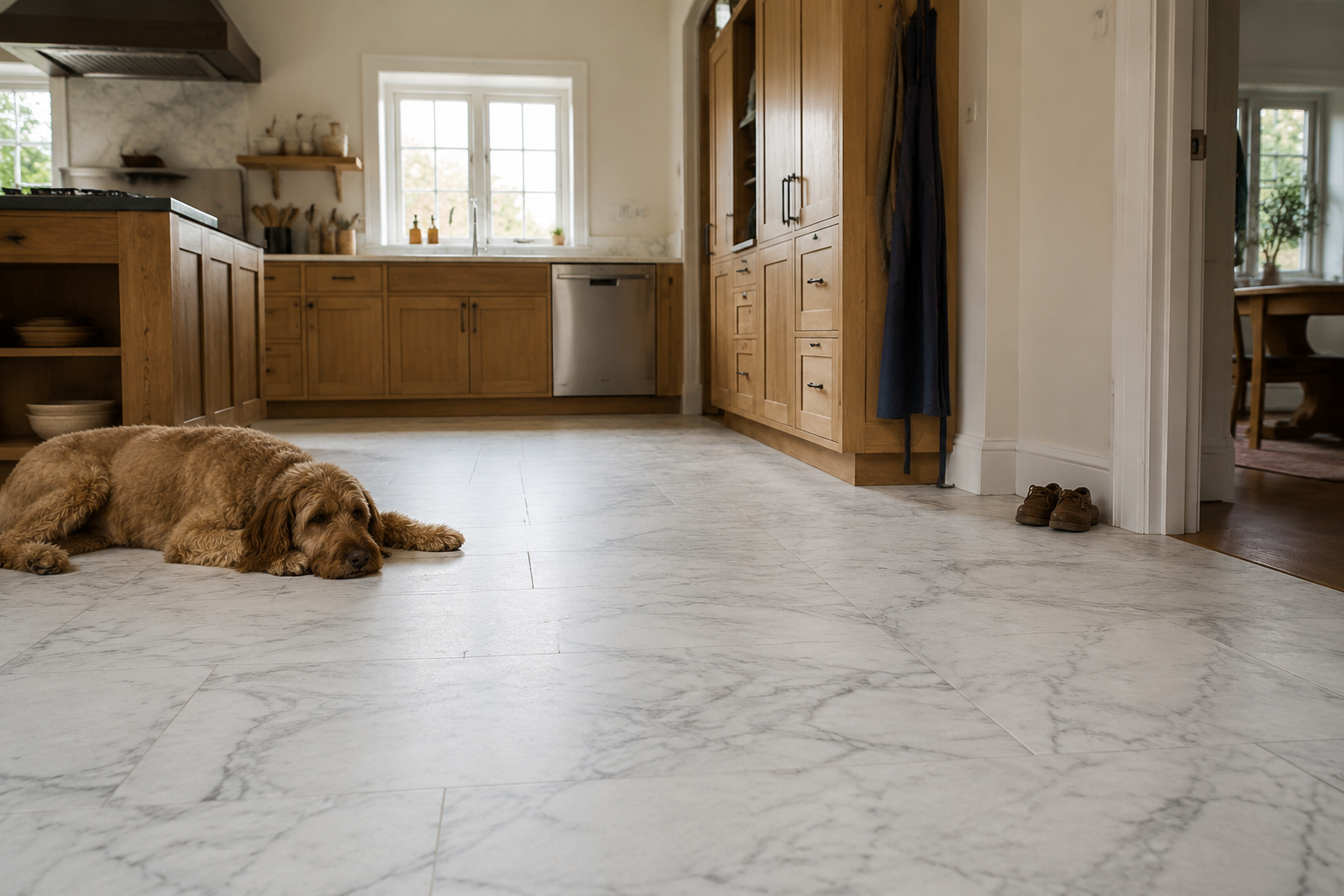
At $20 to $40 per square foot installed, Carrara and Vermont Danby offer familiar white backgrounds and softer veining. Choose a honed finish to make future marks less conspicuous, or expect a higher price for Calacatta marble with dramatic, highly defined veining. Porcelain faux marble floor tiles reproduce similar veining and require less maintenance.
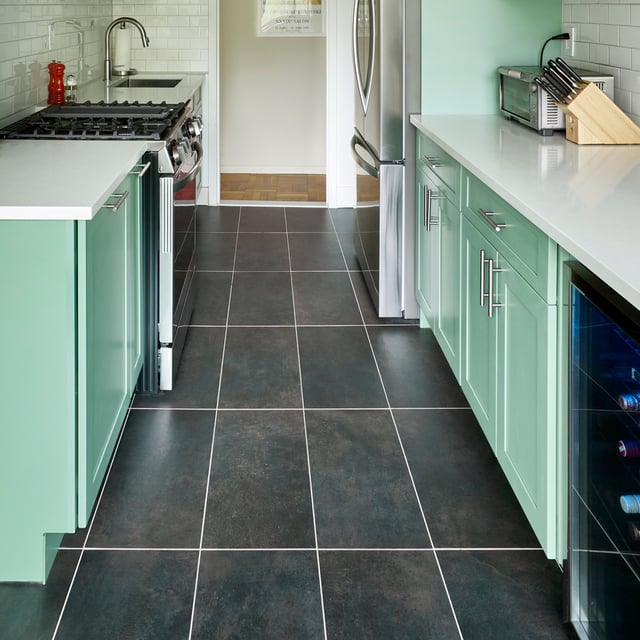
A busy kitchen or an entryway full of sandy shoes is a good place for granite. Its hard surface resists scratches, and everyday acidic spills do not create the etched marks associated with marble. Budget $18 to $35 per square foot installed.
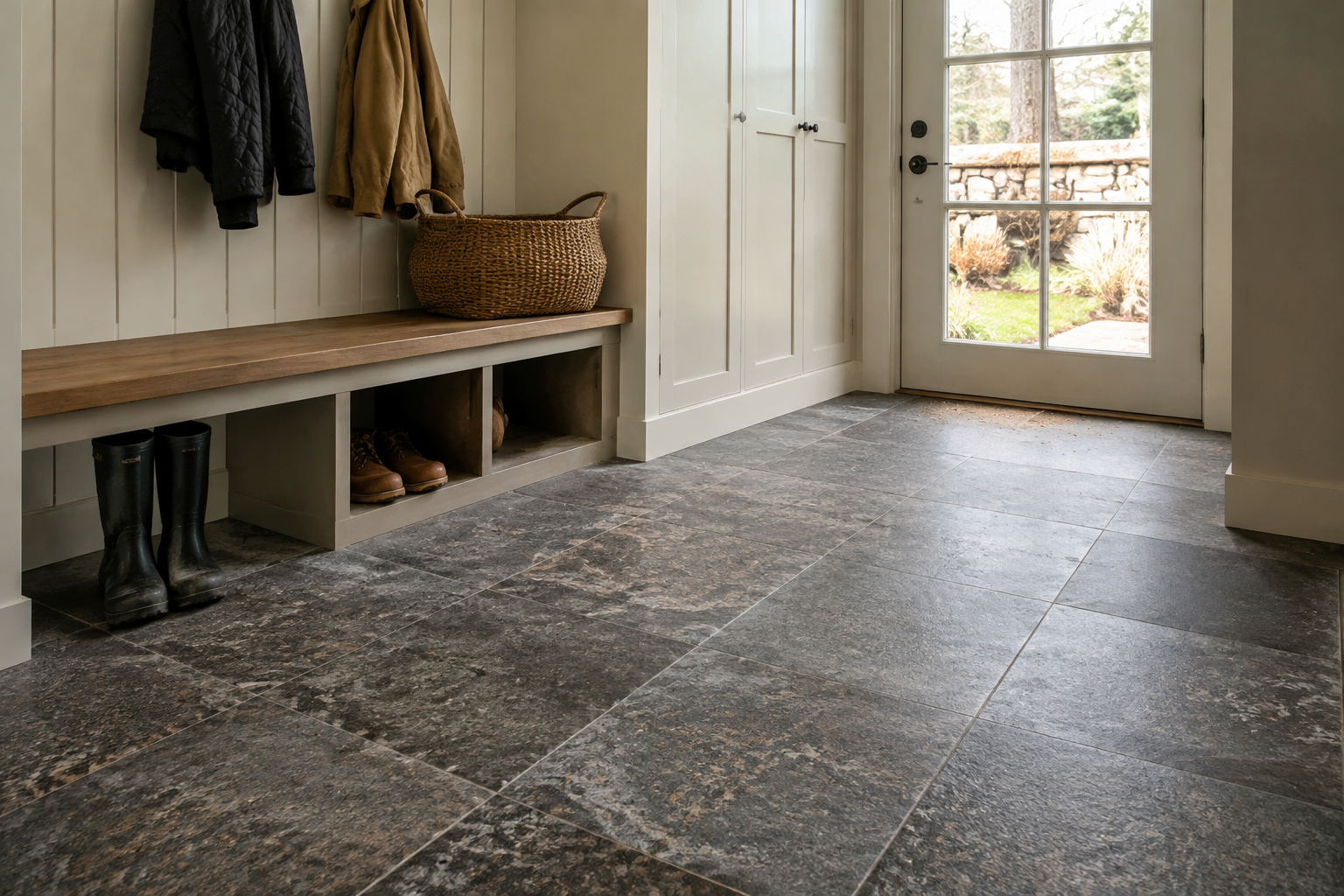
For a 150-square-foot kitchen, granite flooring installation costs $2,700 to $5,250. Major subfloor repairs will increase that total.
Travertine’s bad reputation is often a spec problem. Unfilled tile leaves natural openings exposed to shoes, dirt, and spilled liquids. Once grit works its way into those pits, cleaning becomes a recurring headache.
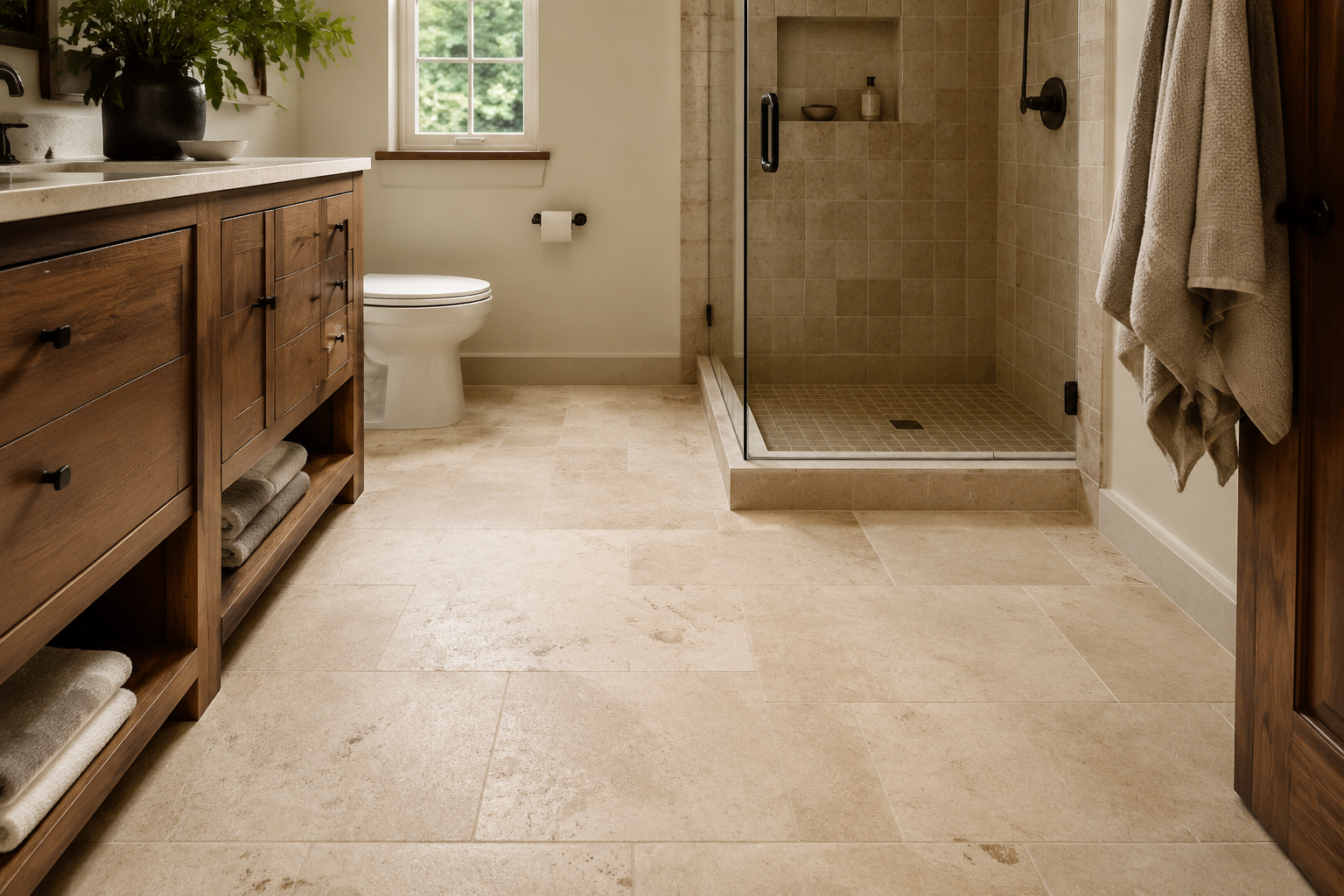
Honed and filled travertine arrives with those openings closed. Your upkeep shifts to occasional filler repairs and resealing every 12 to 18 months in busy or moisture-prone rooms.
At $12 to $25 per square foot installed, travertine costs less than most other natural stone flooring options. Cream, walnut, and silver tones pair well with wood cabinetry and warmer interior finishes.
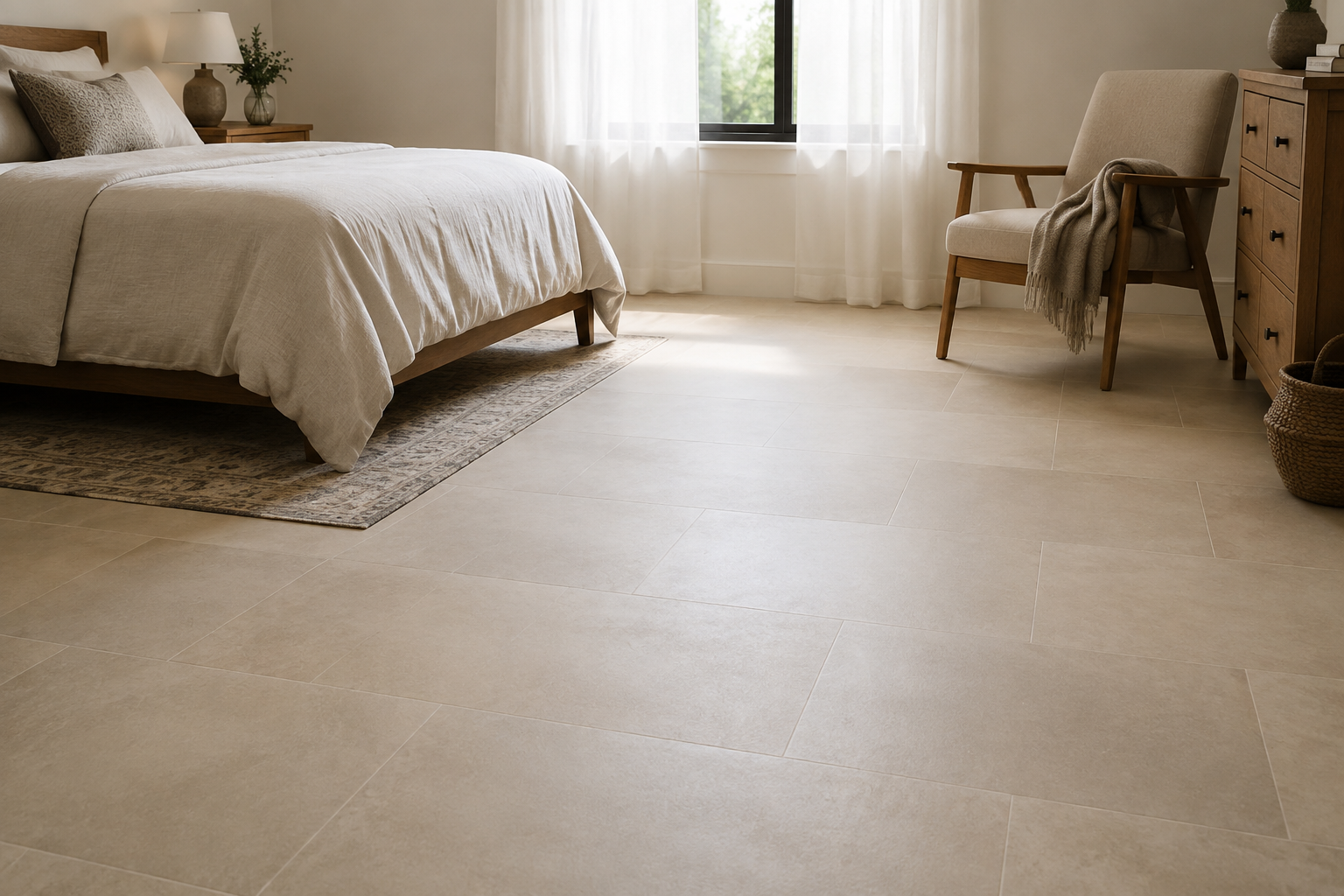
Limestone gives you a calm, consistent surface with less visual movement than marble or granite. It costs $15 to $28 per square foot installed and works best in bedrooms, powder rooms, and interior hallways. Keep it away from exterior doors, where tracked-in grit will scratch the softer surface.
Ask your supplier for gauged slate. Its consistent thickness helps your contractor keep the floor level and reduces the need to compensate with extra mortar. Installation costs $15 to $25 per square foot.
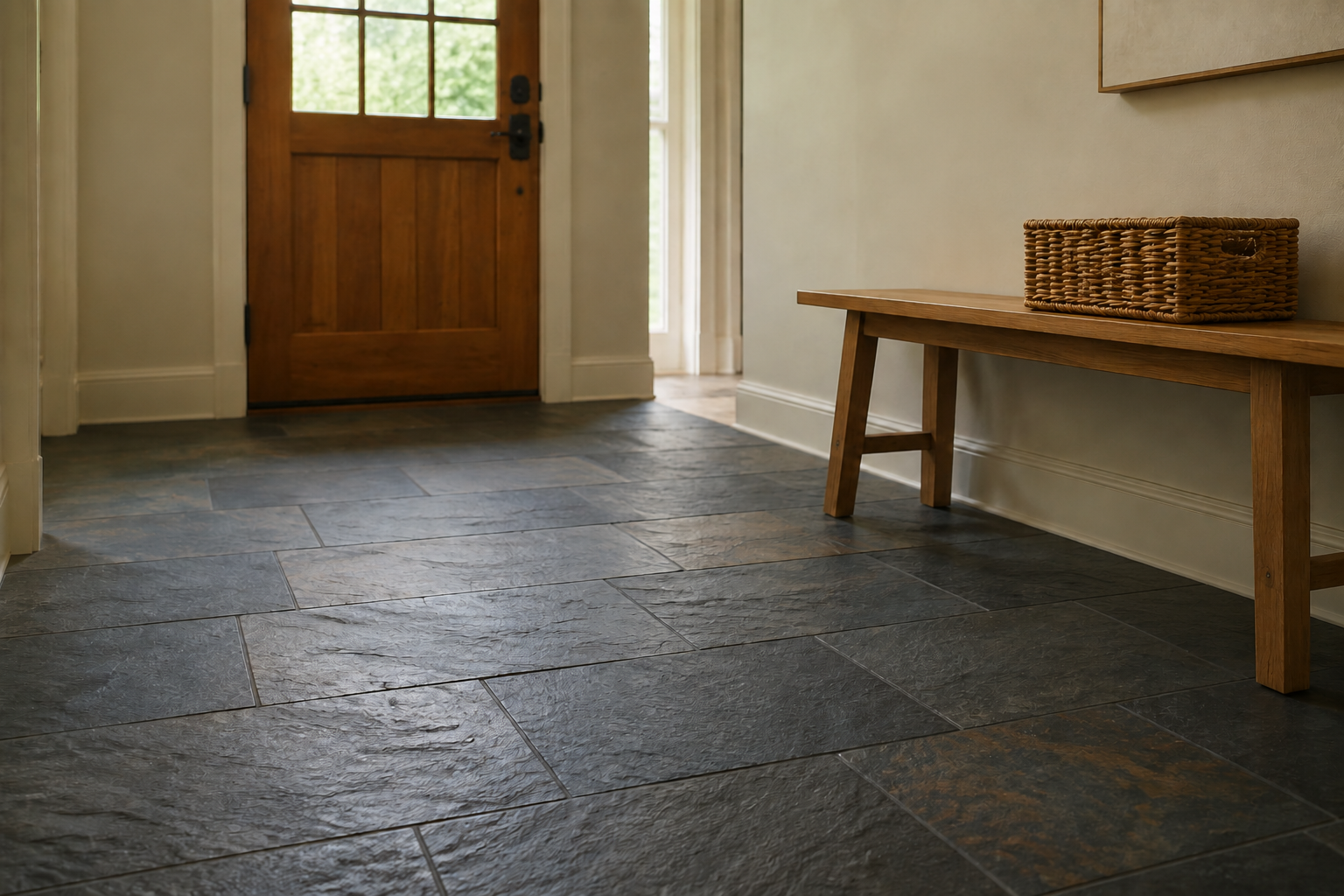
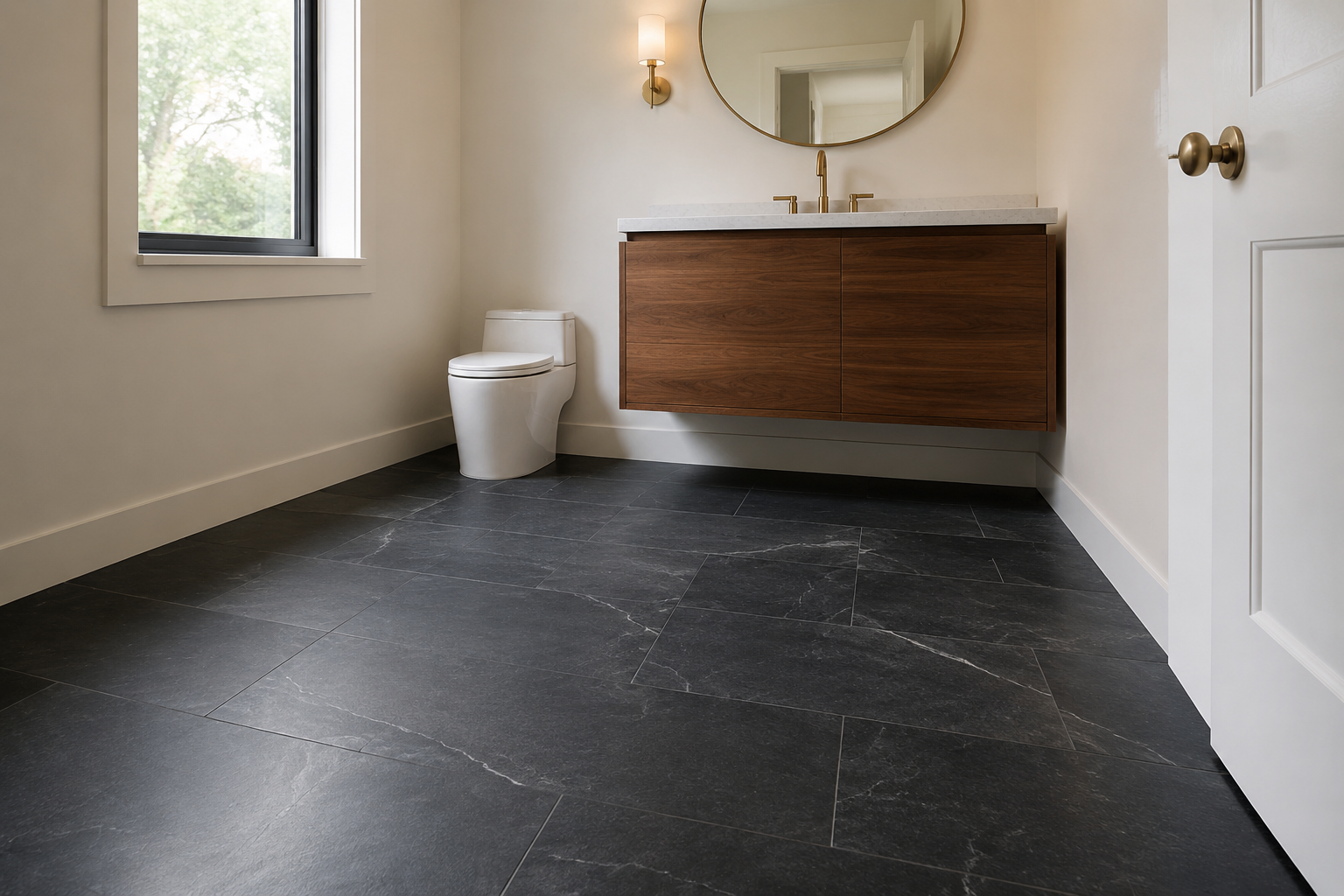
Natural cleft texture gives slate useful traction in mudrooms, bathrooms, and entryways. Its gray varieties pair well with wall colors that flatter gray floors. Inspect a sample for spalling, a condition that causes thin surface layers to flake away, and confirm that the selected product suits the room’s moisture conditions.
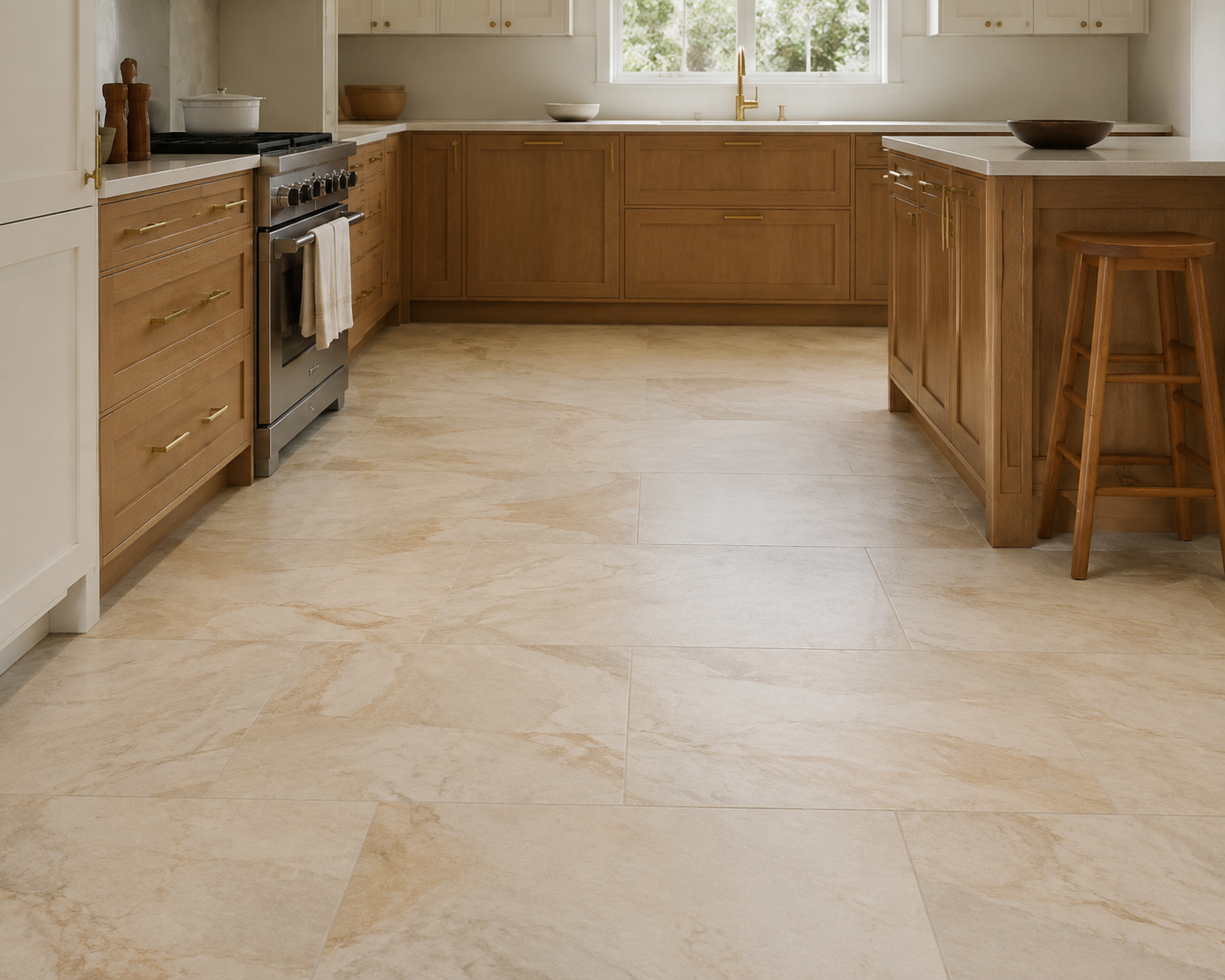
Taj Mahal and White Macaubas quartzite give you marble-like veining in a stone durable enough for a working kitchen. Heat and pressure compress sandstone into interlocking quartz crystals that resist scratches and acidic spills. Expect to pay $20 to $45 per square foot installed.
Misidentified stone is the larger concern. Softer marble sometimes appears under a quartzite label, and you need to catch that discrepancy before ordering:
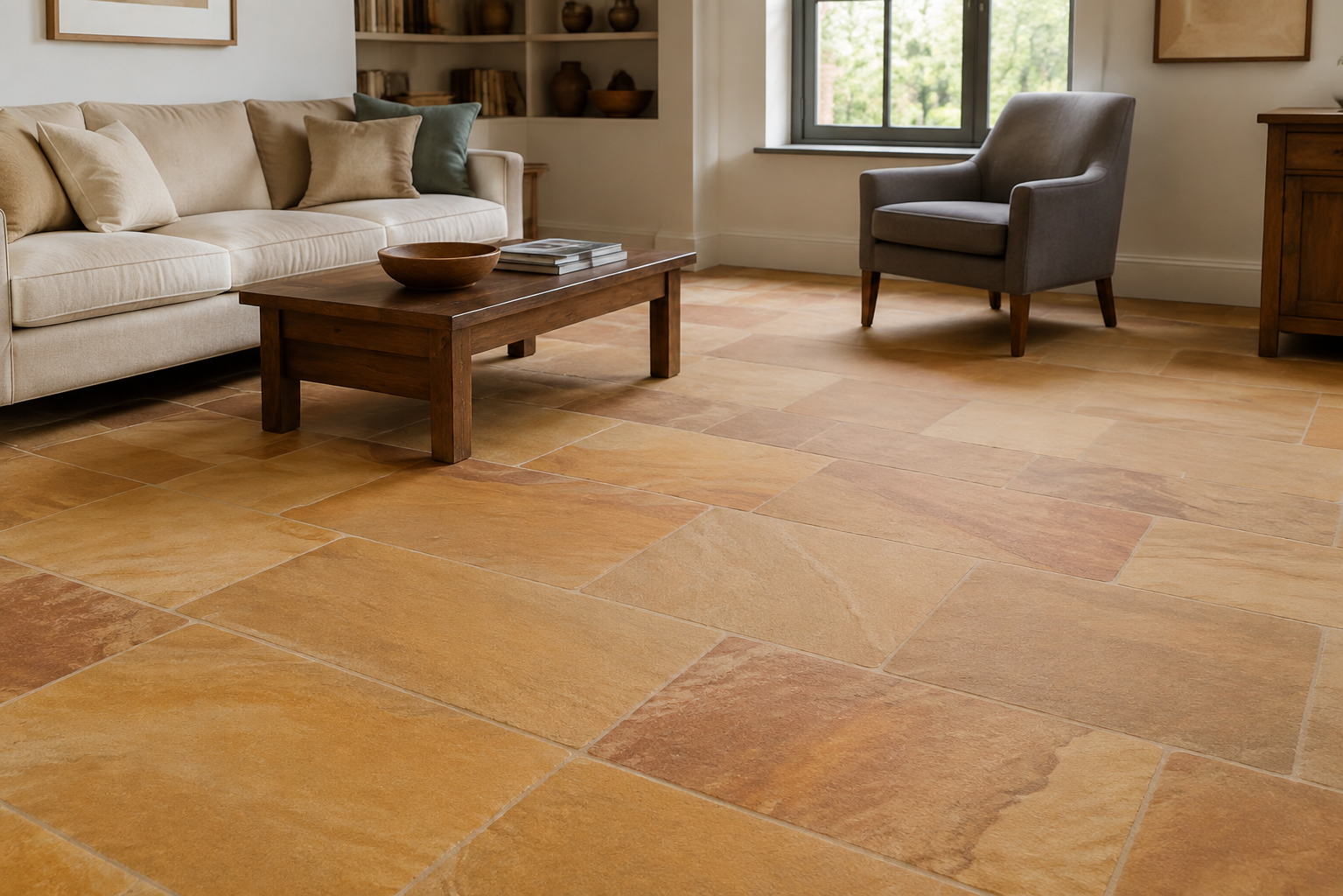
Once water penetrates sandstone, moisture becomes a serious maintenance concern. The stone absorbs spills readily, and freeze-thaw conditions damage varieties unsuitable for outdoor use. Keep it in dry interior rooms unless your supplier confirms an exterior rating. Warm ochre, rust, and golden varieties cost $14 to $25 per square foot installed.
Want a natural stone floor that never needs a penetrating sealer? Soapstone resists stains and the acidic spills that etch marble, limestone, and travertine. It also conducts heat efficiently over a properly installed radiant floor system.
At $35 to $70 per square foot installed, soapstone makes the strongest financial case in a powder room or smaller kitchen. Its softness deserves equal consideration because a dragged chair or dropped utensil leaves a visible scratch. Minor damage sands out.
Your flooring decision should start with how you use the space. Consider moisture, foot traffic, cleaning habits, and the kinds of accidents the room is likely to see.
Ask for the tile’s wet dynamic coefficient of friction before committing to a bathroom floor. A rating of 0.42 is the ANSI A326.3 threshold for level interior floors expected to get wet.
A honed or textured finish offers better footing than polished stone, although the actual product still needs an appropriate tested rating. Shower floors and sloped surfaces require additional consideration. Households considering flooring for wheelchairs and walkers also need to account for level transitions and dependable traction.
Tile size also affects traction. A 2 x 2-inch mosaic has more grout lines than a 24 x 24-inch tile, and those joints help bare feet grip the floor.
Your kitchen floor has to tolerate dropped cookware, acidic spills, sliding chairs, and frequent cleaning. Granite, genuine quartzite, and suitable slate handle that combination well.
Marble and limestone require a greater willingness to accept scratches and etched spots. Choose a honed finish if you prefer those marks to be less obvious, and keep acidic cleaners away from the floor.
Sand and grit act like sandpaper underfoot, especially near exterior doors and along the paths your household uses most. Softer stones show that wear quickly.
Slate and textured granite resist abrasion and offer useful traction. Place a substantial walk-off mat inside the door, then clean it regularly to keep grit from spreading farther into the house.
Design a Home That’s Uniquely Yours
Block can help you achieve your renovation goals and bring your dream remodel to life with price assurance and expert support.
Get Started
| Stone | Material per square foot | Installed per square foot |
|---|---|---|
| Travertine | $3 to $10 | $12 to $25 |
| Sandstone | $4 to $10 | $14 to $25 |
| Slate | $4 to $12 | $15 to $25 |
| Limestone | $5 to $12 | $15 to $28 |
| Granite | $6 to $15 | $18 to $35 |
| Quartzite | $8 to $20 | $20 to $45 |
| Marble | $8 to $25 | $20 to $40 |
| Soapstone | $20 to $45 | $35 to $70 |
All types of natural stone flooring require careful cutting, sufficient mortar coverage, and a stable subfloor. Large-format tiles also demand a flat surface because minor irregularities leave neighboring pieces at noticeably different heights. Preparation adds up.
And that’s before you get to demolition, disposal, subfloor replacement, waterproofing, radiant heating, or transitions between stone and another flooring material. Ask each contractor to identify those items separately and compare estimates against the same scope.
Set aside 10 to 20% of your project budget for conditions uncovered after the existing floor comes out. On a $12,000 installation, keep another $1,200 to $2,400 in reserve.
Sealing requirements depend on the material and how heavily you use the room. A bathroom floor exposed to daily moisture needs closer attention than stone in a quiet bedroom.
Check a sealed floor by placing a few drops of water on an inconspicuous area. Water that beads on the surface indicates the treatment is still working. Stone that darkens quickly needs a closer assessment.
Clean natural stone with a pH-neutral product formulated for the material. Vinegar, lemon-based cleaners, and harsh bathroom sprays damage acid-sensitive surfaces and interfere with some protective treatments.
Natural stone depends on what happens beneath the finished surface. A floor that flexes underfoot will crack even durable granite or quartzite, and your contractor needs to evaluate the framing and subfloor before installation begins.
Tell Block what your project involves and have vetted local contractors compete for the work. Block reviews project scopes for missing items such as demolition, subfloor preparation, sealing, and transitions, giving you a clearer understanding of what each bid includes.
Contractor payments are released as the project progresses. Every contractor in the network also provides a one-year workmanship warranty.
Remodel with confidence through Block

Connect to vetted local contractors
We only work with top-tier, thoroughly vetted contractors

Get expert guidance
Our project planners offer expert advice, scope review, and ongoing support as needed

Enjoy peace of mind throughout your renovation
Secure payment system puts you in control and protects your remodel


Renovate confidently with Block
Easily compare quotes from top quality contractors, and get peace of mind with warranty & price protections.
Flooring
Top Rated Luxury Vinyl Tile Brands Worth Sampling
09.11.2026
Flooring
Best Carpet Brands: 7 Lesser-Known Names Worth Sampling
09.02.2026
Flooring
Maple vs Oak Flooring: Which Hardwood Is Right for Your Home?
08.31.2026
Bathroom
Non-Tile Bathroom Flooring Options
08.26.2026
Flooring
Comparing Different Types of Natural Stone Flooring
08.25.2026