



Bathroom
Walk-In Tub vs. Walk-In Shower for Seniors
09.16.2026
08.18.2026


In This Article
Once grout starts crumbling, a panel seam opens, or the wall around your tub feels soft, the repair is no longer just cosmetic. The cost to install a tub surround runs $1,500 to $3,500 for most projects, including removal, wall preparation, waterproofing, and the new finish. What the contractor finds behind the old surround determines how close your project stays to that range.
These prices cover the walls around a standard alcove tub, roughly 50 to 70 square feet across three sides. Replacing the tub at the same time adds another scope of work.
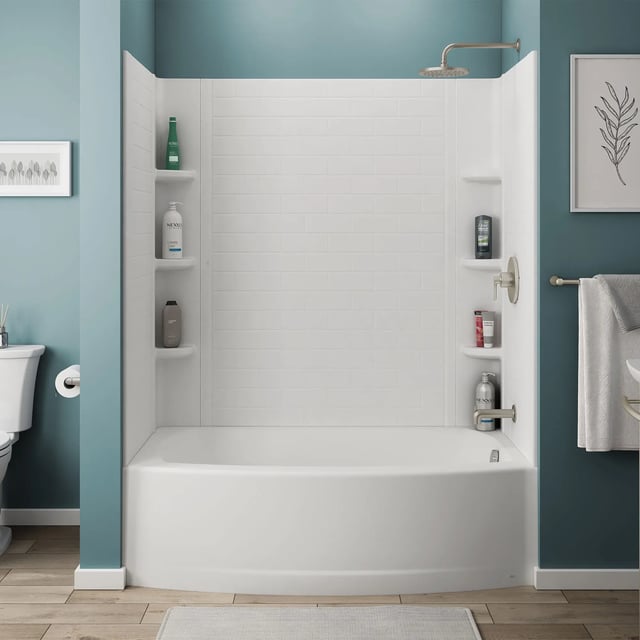
A tub surround has 2 jobs: give you a finished wall and keep shower water away from the framing. Tile, acrylic, fiberglass, solid surface, and stone provide the visible finish, with flat backing and waterproofing protecting the wall behind it.
A tub and shower surround gets direct spray every day, especially around corners and plumbing openings. When you compare quotes, look for specific language covering the backing, waterproofing, and seals around the faucet and showerhead.
Most tub surround projects cost $1,500 to $3,500 installed. Panel systems start toward the lower end of the range, standard tile overlaps much of the middle, and natural stone costs substantially more.
| Surround material | Installed cost | Typical scope |
|---|---|---|
| Fiberglass or acrylic panels | $1,500 to $3,000 | Ready-made panels with few joints |
| Solid surface or cultured marble | $2,000 to $4,500 | Large custom-sized panels |
| Ceramic or porcelain tile | $1,500 to $3,500 | Custom tile layout with grout |
| Natural stone or premium tile | $4,000 to $8,000 or more | Heavier material and added installation labor |
Labor accounts for roughly 50 to 65% of a tiled surround and closer to 40% of a panel installation. Demolition and debris removal add $300 to $900 before the new surface goes up.
How quickly do you need the bathroom back in use? Panel kits shorten installation and replace long grout lines with a small number of sealed joints. Retail kits run $300 to $900, with installed totals of $1,500 to $3,000 after removal, backing, and waterproofing. Sterling's Vikrell panels show what this price point looks like, and Delta, Maax, and Bootz make comparable kits.
Direct-to-stud panels require the old wall to come off before installation. With glue-up systems, the installer can sometimes leave sound existing tile in place, provided the surface is flat and dry. Acrylic costs about 20 to 30% more than fiberglass but holds its color better and resists scratching more effectively.
Standard panel kits become less convenient when the tub area does not match common dimensions. Solid surface solves that problem with large pieces cut to fit the actual walls, with installed prices of $2,000 to $4,500.
Those larger pieces eliminate most grout joints, so there are fewer seams to clean. Swanstone's bathtub wall kits are a widely stocked example, while Transolid and The Onyx Collection make custom sizes for tubs that do not fit a standard 60-inch alcove.
Cultured marble falls into a similar price range and is often fabricated locally to fit the room. If you want low-maintenance walls but do not want an entry-level acrylic kit, both materials are worth pricing before you default to tile.
A 60-inch alcove tiled to the ceiling with 12-by-24-inch porcelain covers about 70 square feet. Ceramic and porcelain tile costs $3 to $10 per square foot, with labor at $8 to $15 per square foot. Herringbone, small mosaics, and other labor-heavy layouts raise labor to $14 to $40 per square foot, bringing a typical installed surround to $1,500 to $3,500.
With tile, you have far more control over color, scale, layout, niches, and finished edges than you do with a ready-made panel system. That flexibility takes more installation time, particularly once the pattern requires frequent cuts or careful alignment.
Put waterproofing on its own line in the proposal. Cement board creates a stable base for the tile, but the waterproof protection comes from a membrane installed over or behind it. Ask the contractor to name the product and specify how high it will run.
That labor spread is also why Block Renovation's bathroom tile installation cost guide separates pricing by material and bathroom area.
Price the installation and the upkeep together. Stone tile starts around $10 per square foot and rises past $30, with installed totals of $4,000 to $8,000 or more for one alcove. The weight adds handling and cutting time, and the wall needs enough support for the finished material.
After installation, many stone surfaces need sealing every 1 to 2 years. Acidic cleaners damage marble, and polished finishes show hard-water spots quickly, so consider your normal cleaning routine before choosing the finish.
Transparent Pricing You Can Trust

Choose based on more than color and pattern. The number of showers the bathroom handles, your cleaning habits, water quality, and plans for future accessibility all affect how well a material fits the room.
A children's bathroom or rental puts a premium on surfaces that clean quickly. Panels replace long runs of grout with a few sealed joints, reducing the amount of scrubbing after heavy use. Tile works in a busy bathroom too, but you take on grout maintenance in exchange for more control over the design.
With hard water, mineral film appears quickly on dark glossy surfaces. If you're already wiping white residue from the faucets every week, compare matte tile and lighter panels before committing to a darker finish.
Start with the maintenance routine you will actually keep:
A homeowner already frustrated by grout maintenance will spend more time cleaning a small mosaic than a large-format tile or panel surround.
Do you expect this bathroom to serve you for another decade or longer? When the wall is open, ask the contractor to add wood blocking at likely grab-bar and bench locations. The support goes between the exposed studs now, even if you do not install the grab bars until years later.
A bathtub wall surround installation has 3 stages: removing the old finish, preparing and waterproofing the wall, and installing the new surface. Most differences between quotes show up during wall preparation, so compare more than the finished material and total price.
Removing an old surround costs $300 to $900, including debris disposal. Tile set in a thick mortar bed takes longer to remove and creates much heavier debris than lightweight panels, while glue-up panels come off faster but often bring damaged drywall with them.
With the wall open, the contractor can inspect the studs, plumbing, and any moisture damage directly. Framing, subfloor, or plumbing repairs then become part of the revised scope before the new finish goes up.
Before installation starts, get answers to 3 questions in the scope:
You will not be able to inspect these details once tile or panels cover them. Settle the materials and installation method in the scope before construction starts.
Panel installation takes about 1 to 2 days, including adhesive and caulk cure time. Tile takes about 3 to 5 days because mortar and grout need time to set between stages. With the wall open, your plumber also has direct access to the shower valve, and replacing an old two-handle faucet with a single-handle pressure-balancing valve costs $400 to $900 at this stage.
Here's the thing that surprises a lot of homeowners: postponing that valve replacement creates a much more disruptive job later. The plumber will need access through the new surround or from the opposite side of the wall.
Design a Home That’s Uniquely Yours
Block can help you achieve your renovation goals and bring your dream remodel to life with price assurance and expert support.
Get Started
Once the old walls are gone, you may find that keeping the existing tub creates more expense later. A leaking drain, structural damage, or movement underfoot changes the scope because replacing that tub in a year or two could require opening the new surround again.
Look closely at the tub before approving a surround-only scope. Deep chips, a leaking drain, movement underfoot, and a failed connection between the tub lip and wall all need attention before new material goes up.
Cast iron tubs in good structural condition are often worth keeping because refinishing costs much less than replacement and avoids removing a very heavy fixture. Thin acrylic needs a different calculation when it flexes underfoot or has structural damage, because the budget now includes bathtub removal costs along with any repairs found underneath.
A like-for-like replacement with a ready-made tub and panel set starts around $2,000 when the footprint and drain stay in place. Across the full range of materials and scopes, replacing the tub and surround together costs $2,000 to $9,400, with most alcove projects falling between $3,500 and $6,000.
Projects near the upper end include ceiling-height tile, a relocated valve, or subfloor repairs. For more detail on the fixture itself, Block's bathtub installation cost breakdown covers tub types and installation prices.
Before demolition, contractors price the conditions they can see and the scope you have agreed on. Keep 10 to 20% of your project budget in reserve for damage behind the old wall, especially in an older bathroom or one with a history of leaks.
Soft studs near the tub corner and damaged subfloor add $200 to $800 for straightforward repairs. Extensive rot costs more when moisture has damaged several studs or reached beneath the tub.
The stain you see on the finished wall does not show how far the water traveled. After removing the surround, the contractor can inspect the framing directly and price the repair. If that repair changes the wall dimensions or tile layout, check your remaining tile count before installation resumes because a later reorder can delay the project or arrive with slight color variation from the original tile lot.
Keeping the drain and supply lines in their current locations saves $500 to $2,500 in plumbing work. Moving a tub drain adds $500 to $1,000, and relocating supply lines adds $700 to $1,500. Some jurisdictions require permits for these changes, with minor bathroom permits running $50 to $200 in many areas, so check with your local building department before work begins.
Price custom details before placing the tile order:
A niche changes the framing, waterproofing, and tile layout. Include it in the original scope rather than adding it after installation starts.
Renovate now, pay later
Achieve the space you're looking for today, while financing it over time with our trusted partner.*
*Not available in NYC
Learn More
Give each contractor the same starting information so you can compare equivalent proposals:
When the quotes arrive, compare the scopes line by line rather than stopping at the totals. A $2,500 proposal without waterproofing or debris removal covers less than a $3,000 proposal that includes both.
Once the finished surface goes up, you cannot see the waterproofing, backing, fixture seals, or blocking behind it. A detailed scope records what the contractor plans to install before the walls are closed, giving you something concrete to compare across proposals.
Block matches homeowners with vetted local contractors who compete for their projects. You can compare proposals, references, past projects, and costs side by side, and Block reviews scopes for missing line items and red flags before you commit. Payments are released as the project progresses rather than paid directly to the contractor up front.
Planning a larger bathroom renovation? Block's bathroom remodel cost guide covers full-room budgets by scope and finish level.
Remodel with confidence through Block
Connect to vetted local contractors
We only work with top-tier, thoroughly vetted contractors

Get expert guidance
Our project planners offer expert advice, scope review, and ongoing support as needed
Enjoy peace of mind throughout your renovation
Secure payment system puts you in control and protects your remodel

Renovate confidently with Block
Easily compare quotes from top quality contractors, and get peace of mind with warranty & price protections.
Bathroom
Walk-In Tub vs. Walk-In Shower for Seniors
09.16.2026
Bath Tubs
Cost to Install a Tub Surround: Prices, Materials, and How to Choose
08.18.2026
-1.webp?width=640&name=5301c89b-3165-4f83-af34-a6b02eaa6c48%20(1)-1.webp)
Shower
Shower vs. Tub: How to Choose for Your Bathroom
07.06.2026

Bath Tubs
Shower-to-Tub Conversion Cost and Planning Guide
06.05.2026
.webp?width=640&name=5301c89b-3165-4f83-af34-a6b02eaa6c48%20(1).webp)
Shower
Freestanding Tubs & Showers - How & Why
04.16.2026