


Living Space
Fireplace Refacing Cost: Prices by Material and Scope
11.04.2026
11.04.2026


In This Article
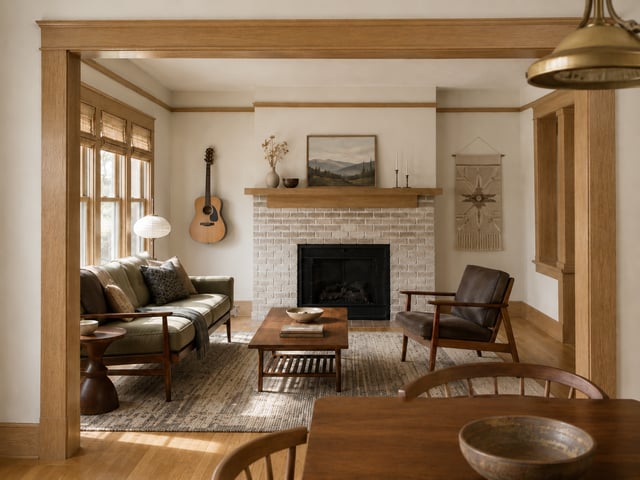
Your fireplace is likely the first thing people notice in your living room, and refacing it gives the room a new focal point without the cost of rebuilding the firebox or chimney. Most homeowners spend $1,500 to $5,000 to reface a fireplace, though a fresh coat of paint can come in under $1,000 and a full-height stone wall can pass $15,000. The material you choose, how much wall you cover and what sits under the old facing decide where your project lands in that range.
Fireplace refacing costs most homeowners $1,500 to $5,000 with a contractor, and the biggest variable is how much of the wall the new facing covers.
Fireplace refacing cost by scope, national installed ranges, 2026
|
Scope |
Typical cost |
What it includes |
|---|---|---|
|
Paint or limewash existing brick |
$300 to $1,000 |
Cleaning, prep and two coats on the surround |
|
Surround only |
$1,000 to $3,500 |
New tile, veneer or plaster around the firebox opening |
|
Surround, hearth and mantel |
$2,500 to $6,000 |
New facing, a new hearth surface and a new or rebuilt mantel |
|
Full-height feature wall |
$5,000 to $15,000 or more |
Facing from floor to ceiling, often with framing changes and new trim |
Labor usually makes up half or more of a refacing quote. The area is small, but the cuts around the opening, hearth and mantel are slow, detailed work, and many masons and tile setters charge a day minimum that keeps even a small surround near $800 to $1,000.
When the fireplace is the focal point of the room, going full height is usually the better buy. A surround-only refacing on a tall wall tends to look unfinished, and the added square footage costs less per foot because setup, demolition and trim work are already paid for.
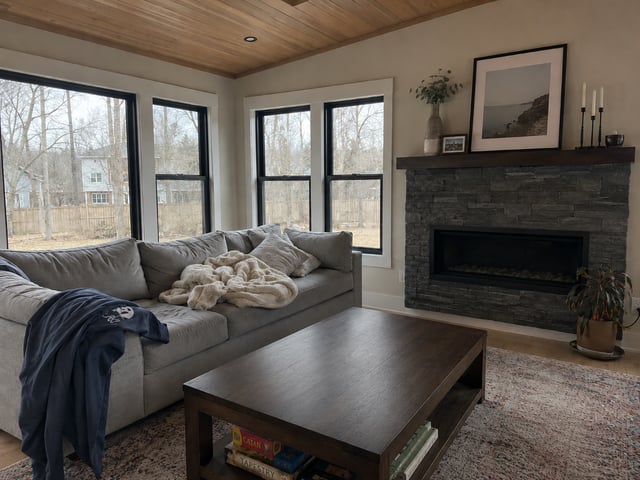
Refacing replaces the parts of the fireplace you see, meaning the surround around the opening, the hearth in front of it and the mantel above it. It leaves the firebox, chimney, flue and any insert in place, so the fireplace burns the same way after the work as it did before.
Anything that changes how the fireplace runs is a separate project with its own budget. Switching a wood-burning fireplace to gas is covered in what it costs to put in a gas fireplace, and building a new firebox and chimney is covered in the costs of putting in a wood-burning fireplace.
Transparent Pricing You Can Trust

Refacing a brick fireplace usually costs $1,000 to $5,000, and the price depends mostly on whether you cover the brick, coat it or remove it. Sound, unpainted brick also takes tile, stone and plaster well with little prep.
Covering the brick is the most popular route and typically runs $1,500 to $5,000 for a standard surround. Thin stone veneer and tile can usually go directly over clean brick with mortar or thinset, as long as the face is flat enough. Uneven or heavily textured brick needs a skim coat or cement board first, which adds $300 to $800.
Veneer and tile also add 1 to 2 inches of depth to the face. Before you order material, confirm that existing glass doors and the mantel will still fit around the new surface.
A plaster, limewash plaster or microcement finish gives brick a smooth, modern face for $1,000 to $3,000 on a typical surround. The material costs little, and most of the price is the skilled labor of troweling on several coats by hand. Heat can crack plaster along the brick joints underneath, so ask your contractor to confirm the product is rated for use around a firebox.
Expect to add $1,000 to $3,000 for demolition and disposal when you remove the brick facing, before any new material goes on. Tear-off is worth it when the brick projects too far into the room, when the design calls for a flat plane, or when the brick is damaged. It also opens the wall, so it is the right time to fix framing or reposition the mantel.
For $300 to $1,000, a painter can paint or limewash brick and change the look of the room in a day or two. Choose it when you like the texture of the brick and only want a new color.
Paint is a poor holding pattern if you plan to reface within a few years. Thinset and mortar do not bond reliably to painted brick, so the paint has to be ground off or covered with metal lath first, and that prep adds cost to the refacing later.
After scope, material sets the cost to reface a fireplace more than anything else, with installed prices running from about $10 to over $100 per square foot. A typical surround covers 20 to 40 square feet and a floor-to-ceiling wall covers 60 to 120, so multiply the rates below by your area.
Fireplace refacing materials by installed cost per square foot, 2026
|
Material |
Installed cost per sq ft |
Best fit |
|---|---|---|
|
Plaster or microcement |
$10 to $25 |
Smooth, modern surrounds over sound brick |
|
Wood paneling or shiplap |
$10 to $25 |
The upper wall, outside the clearance zone |
|
Ceramic or porcelain tile |
$15 to $50 |
Flexible looks at a moderate budget |
|
Thin brick veneer |
$15 to $30 |
Adding brick to a drywall surround |
|
Manufactured stone veneer |
$20 to $45 |
Stone texture without the weight |
|
Natural thin stone veneer |
$35 to $60 |
Real stone at a manageable weight |
|
Full-depth natural stone |
$50 to $100 |
Rustic builds with structural support |
|
Marble or quartzite slab |
$60 to $150 |
Clean, high-end surrounds with few seams |

Refacing quotes rise most when the job includes demolition, code fixes or new framing. Codes vary by state and city, so treat the clearances below as the common baseline and confirm them with your local building department.
Design a Home That’s Uniquely Yours
Block can help you achieve your renovation goals and bring your dream remodel to life with price assurance and expert support.
Get Started
You can reface a fireplace yourself for $200 to $1,500 in materials, and it is a reasonable DIY project when you are covering sound, unpainted brick with tile or thin veneer. Refacing kits and panel systems sit at the low end of that range, and natural stone and slab work belong with a professional.
Stone, slab and full-height walls are worth hiring out, as is any job that involves demolition or moving the mantel.
You get quotes you can compare by giving every contractor the same measurements, scope and material choice.
Remodel with confidence through Block

Connect to vetted local contractors
We only work with top-tier, thoroughly vetted contractors

Get expert guidance
Our project planners offer expert advice, scope review, and ongoing support as needed

Enjoy peace of mind throughout your renovation
Secure payment system puts you in control and protects your remodel

Renovate confidently with Block
Easily compare quotes from top quality contractors, and get peace of mind with warranty & price protections.
Living Space
Fireplace Refacing Cost: Prices by Material and Scope
11.04.2026

Living Space
Built-In Bookshelves Installation Cost: 2026 Guide
10.13.2026
Living Space
Bump Out Living Room: Cost, Feasibility & Options
09.06.2026

Cost
Living Room Remodel Cost: 2026 Pricing & Examples
06.29.2026

Living Space
Sunken Living Room – Modern Remodeling Ideas & Building Insights
12.03.2025