
07.21.2026


.webp?width=640&name=Attic_3%20(1).webp)
In This Article
If the top floor of your house turns into a sauna every July while the rooms below stay comfortable, your attic is usually the reason. Heat builds up in that space, presses down through the rooms below, and forces your cooling system to run far longer than it should. Insulating the attic fixes that, and it costs less than most people expect: a typical project runs $1,700 to $2,500, or about $1 to $3 per square foot installed. Complex jobs, high R-value targets, spray foam, contamination, or hard access can push the price well past that range.
What you actually pay depends on your attic's size, the material, the shape of the space, and whether old insulation has to come out first. The tables below break it down, and a few of the decisions along the way are where homeowners tend to overpay.
Attic insulation cost at a glance
|
Attic insulation cost |
Typical range |
|
Average project, typical home |
$1,700 to $2,500 |
|
Installed cost per square foot |
$1 to $3 |
|
Small attic, around 500 sq ft |
$800 to $1,500 |
|
Large attic, around 2,000 sq ft |
$3,000 to $7,000 |
|
Old insulation removal |
$1 to $2 per sq ft |
|
Air sealing |
$200 to $1,500 depending on scope |
|
Spray foam, premium option |
$1.50 to $5 per sq ft |
Attic insulation cost by type
The material you choose is one of the biggest levers on price. Here is roughly what each option runs installed.
|
Insulation type |
Installed cost per sq ft |
|
Fiberglass batts |
$0.80 to $2.50 |
|
Blown-in fiberglass |
$1 to $2.50 |
|
Blown-in cellulose |
$1.20 to $3 |
|
Mineral wool |
$1.50 to $3 |
|
Spray foam |
$1.50 to $5 |
Blown-in fiberglass or cellulose is the most common choice for an attic floor, because a machine can spread it evenly and fill the odd corners that rigid sheets miss. Fiberglass batts cost the least but leave gaps wherever the framing is irregular. Spray foam sits at the top of the range because it seals and insulates in one step and needs trained installers.
Spray foam also changes how air moves through the attic. It is not a simple premium swap for loose-fill insulation, and in a vented attic it calls for a contractor who understands ventilation and moisture control, since sealing the roofline the wrong way can trap damp air against the wood.
Attic insulation cost by attic size
If you know your attic's square footage, you can get closer to a real number. These figures assume a standard job with some air sealing included.
|
Attic size |
Typical installed cost |
|
500 sq ft |
$800 to $1,500 |
|
1,000 sq ft |
$1,500 to $3,000 |
|
1,500 sq ft |
$2,000 to $4,500 |
|
2,000 sq ft |
$3,000 to $7,000 |
Square footage is only half the story. The bigger cost driver is often how easy the attic is to move around in. A low space packed with ductwork, wiring, and roof angles takes far longer to insulate than one you can stand up in, and those extra hours land in the price.
The step that matters more than the insulation
Most homeowners picture attic insulation as the thick, fluffy material rolled across the floor. Insulation matters, but the step that moves your energy bill the most happens before any of it goes down: sealing the small gaps where air leaks in and out.
Warm air rises and escapes through cracks around light fixtures, plumbing pipes, wiring, and the hatch you climb through to reach the attic. Cold air gets pulled in to replace it. Add insulation on top of those leaks and you have buried the problem instead of solving it, a bit like wearing a heavy coat and leaving it unzipped.
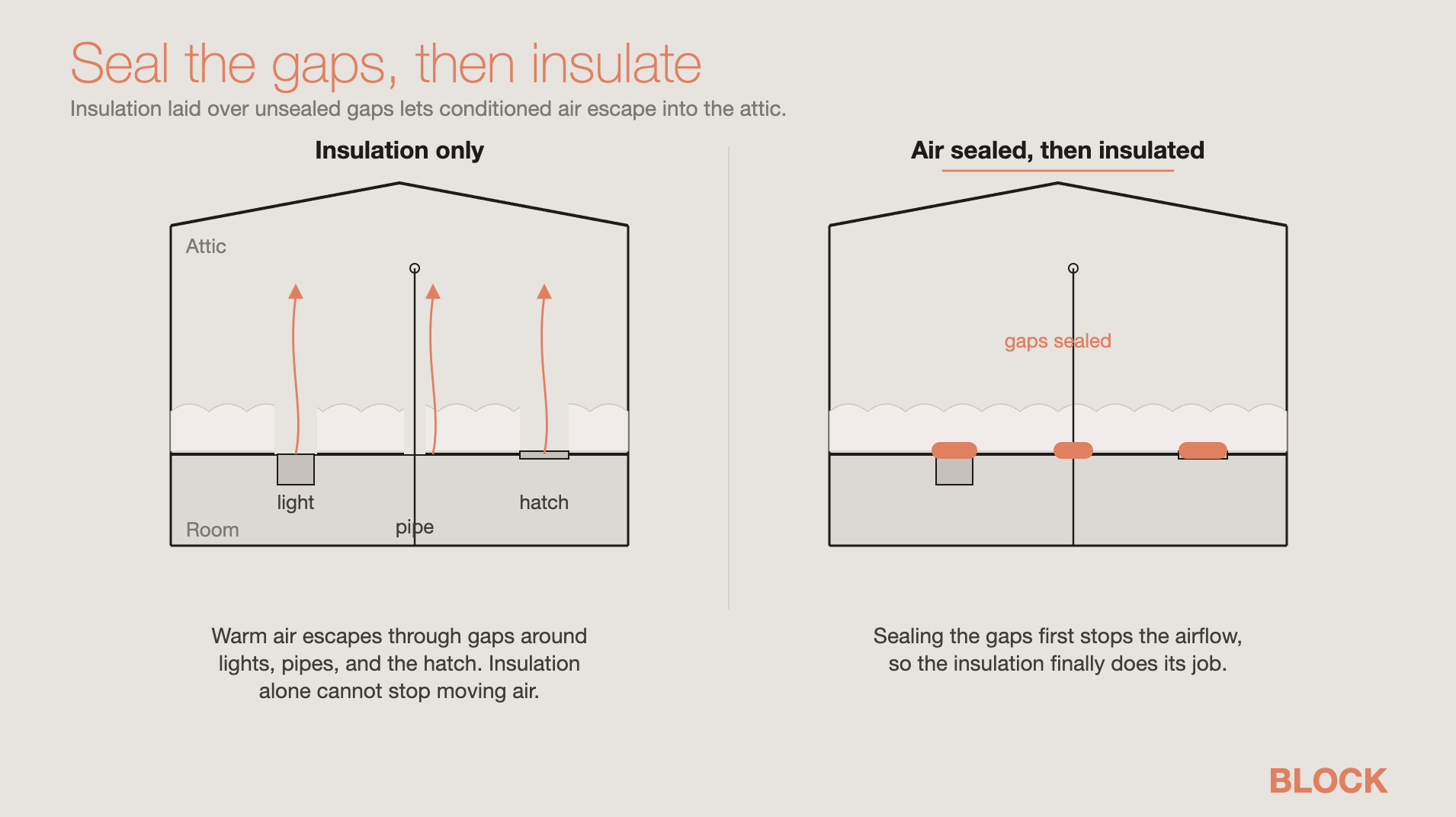
Air sealing on its own usually adds $200 to $1,500 to a job, depending on how many gaps there are and how hard they are to reach. This is where the lowest quote can fool you. Sealing gaps is slow, and it disappears the moment insulation goes over it. A crew can skip the whole step, and you would not find out for months, when the bill barely moves.
Attic insulation removal cost
Sometimes the old insulation has to come out before anything new goes in. Removal usually runs $1 to $2 per square foot, plus the cost of hauling it away, and it adds time and dust to the project. It is money well spent when the existing layer is wet, moldy, pest-damaged, or matted flat, because those problems only get worse once they are sealed under a fresh layer.
Should you add new insulation over the old?
Sometimes yes, sometimes no. If the existing insulation is dry, evenly spread, and in good shape, adding a fresh layer on top is a sound way to reach the depth your climate calls for, and you get to skip the removal cost above. Plenty of homes are fine to top off this way.
It gets more complicated when the old material is covering a problem. Insulation that is matted down, damp, moldy, or full of rodent droppings has lost most of its value, and a fresh layer on top just seals the mess in with it. The smell and the damp do not go anywhere. So before anyone quotes you a simple top-off, have them look at what is actually up there.
One thing to check before any work begins
Homes built before the 1990s sometimes have a grayish, pebbly insulation called vermiculite in the attic. If you see it, do not disturb it. The EPA's guidance is to assume it contains asbestos and leave it alone until a qualified professional has tested it, because disturbing it can release fibers that are dangerous to breathe.
Attic problems that can change the scope
A quote can climb once a contractor gets into the attic and finds one of these. None of them is rare, and each one is worth asking about up front.
- Blocked soffit vents. Insulation pushed into the eaves can cover the vents that keep air moving through the attic, which traps moisture and can rot the roof deck. A careful crew installs baffles to hold the airflow open.
- Recessed lights and bathroom fans. Older recessed lights can overheat when buried, and bathroom fans sometimes vent straight into the attic instead of outside, pumping moist air into the exact space you want to keep dry. Both need attention before insulation goes down.
- Knob-and-tube wiring. Homes wired before the 1950s may still have exposed knob-and-tube wiring in the attic, and covering it with insulation is a documented fire risk. It usually has to be replaced or cleared before the work continues.
- Pests, moisture, and mold. Droppings, damp spots, or mold mean cleanup or repairs come first, and skipping that step just seals the problem into your ceiling.
How much insulation your attic needs
Insulation is rated by R-value, a measure of how well it resists the flow of heat. The higher the number, the better it holds your indoor temperature. Colder regions need more, and the right target for your attic depends on where you live.
|
Where you live |
Recommended attic R-value |
|
Warm southern climates |
R-30 to R-49 |
|
Mixed, moderate climates |
R-38 to R-60 |
|
Cold northern climates |
R-49 to R-60 |
These are general targets from ENERGY STAR's recommended insulation levels, meant for adding to an uninsulated or lightly insulated attic. Local building codes can require more, so confirm the number with your contractor or building department before the work starts.
Rebates and tax credits
Programs that lower the cost are worth a look, though they change often and vary by location. Many states and local utilities run rebate programs for attic insulation and air sealing, and some require you to use an approved contractor or get sign-off before the job begins. Federal energy tax credits have applied to insulation and air sealing in recent years as well, so check what is currently available at the federal, state, and utility level before you commit.
Why insulation can be a smart move before a bigger remodel
Attic insulation costs less than most remodels, and it pays part of itself back through lower energy use for as long as you own the home.
The Environmental Protection Agency estimates that air sealing and adding insulation in spots like the attic, floors over crawl spaces, and basements saves the average household around 15% on heating and cooling costs. The savings are modest in any single month, yet they add up year after year, and the comfort payoff arrives the same week the work is done.
Insulate before you replace the heating and cooling system
If a new furnace or air conditioner is on your list, handle the attic first. A sealed, well-insulated home loses less air, so it needs a smaller system to stay comfortable. After the attic is done, ask your HVAC contractor to run a fresh Manual J load calculation rather than matching the size of your old equipment, so you do not pay for more system than the house now needs.
What to ask before you hire a contractor
Three questions separate a complete attic job from a quick patch. Ask them of every contractor before you sign anything.
- Ask what the price includes for air sealing. A complete quote spells out sealing the gaps, not just laying down insulation, so this question tells you fast whether a bid is the full job or only the easy half.
- Ask whether the old insulation is staying or going. If it is staying, find out why the contractor believes it is in good enough shape to build on. If it is going, confirm that removal and disposal are written into the price.
- Ask what R-value they are aiming for. This is the target depth for your climate, and a contractor who can name it and explain it has thought about your house rather than a generic job.
Find the right contractor with Block Renovation
The hardest part of an attic project is knowing whether a quote covers the whole job or only the easy half. With Block, your area's vetted contractors compete for your project, and every scope gets an expert review that catches missing line items and red flags early. You get clear, comparable quotes and a contractor who treats air sealing as part of the job rather than an upsell.
Remodel with confidence through Block

Connect to vetted local contractors
We only work with top-tier, thoroughly vetted contractors

Get expert guidance
Our project planners offer expert advice, scope review, and ongoing support as needed

Enjoy peace of mind throughout your renovation
Secure payment system puts you in control and protects your remodel


Renovate confidently with Block
Easily compare quotes from top quality contractors, and get peace of mind with warranty & price protections.



