




Garage
Cost to Build a 3-Car Detached Garage
10.04.2026
07.23.2026


In This Article
So, you've decided to build a garage. The value case is easy to make. A garage adds storage and vehicle protection you'll use every week, and a detached two-car build recouped roughly 65% of its cost at resale the last time Remodeling's Cost vs. Value Report measured garage additions. What the value case doesn't settle is the two questions every build starts with: whether your lot has the room, and what the project will cost. Block Renovation's guide to garage remodel costs covers the building and renovation process in full. The breakdowns below stick to the numbers, sorted by material (cinder block, wood frame, metal, and brick) and by design choices like size and attached versus detached.
One note before the numbers: every figure here is a planning range, not a quote. Local labor rates, soil conditions, and code requirements move real bids up or down, so treat these as the frame for your budget conversations with contractors.
Size drives cost more than any other single factor, since every added square foot pulls more foundation, framing, roofing, and labor with it.
|
Garage size |
Typical dimensions |
Cost range |
|
Single-car |
12 x 20 ft (240 sq ft) |
$10,000 to $25,000 |
|
Two-car |
20 x 20 to 24 x 24 ft (400 to 576 sq ft) |
$20,000 to $40,000 |
|
30 x 20 ft and up (600 to 900 sq ft) |
$35,000 to $70,000 or more |
A two-car build is the most common project, and it also delivers the best cost per square foot. The excavator, the concrete crew, and the roofer all charge to mobilize regardless of footprint, so doubling from 240 to 480 square feet typically adds 40 to 60% to the bill rather than doubling it. That math is why a single-car garage is rarely worth building unless the lot leaves no other option. The second bay costs comparatively little, and buyers in most suburban markets treat a one-car garage as a shortcoming rather than a feature.
If your existing garage is simply too small rather than missing entirely, an expansion can cost less than a full teardown and rebuild.
Renovate with confidence every step of the way
Step 1: Personalize Your Renovation Plan
Step 2: Receive Quotes from Trusted Contractors
Step 3: Let Us Handle the Project Details

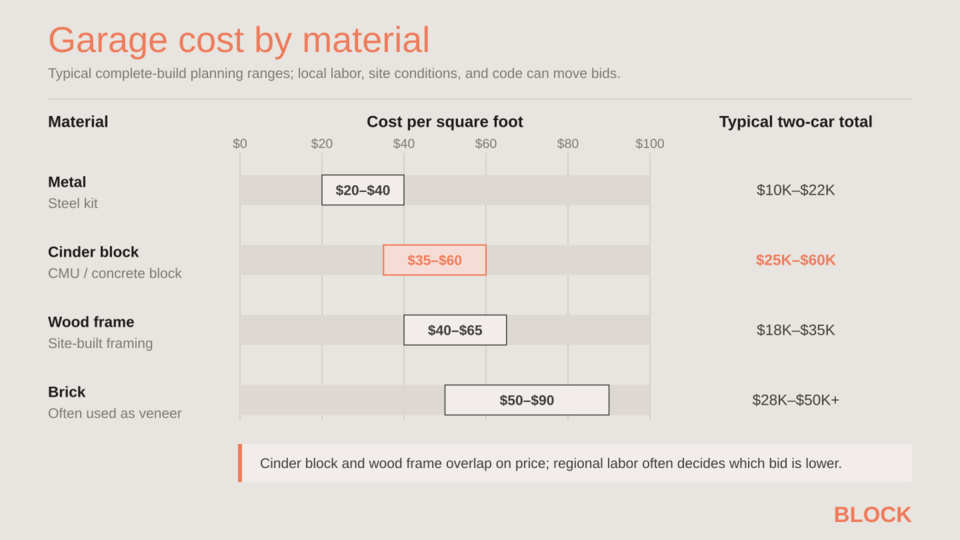
Most contractors will quote you somewhere between $35 and $70 per square foot for a complete build. The wall material is the biggest reason two quotes for the same footprint can land far apart.
|
Material |
Cost per square foot |
Two-car total |
|
Metal (steel kit) |
$20 to $40 |
$10,000 to $22,000 |
|
Wood frame |
$40 to $65 |
$18,000 to $35,000 |
|
Cinder block |
$35 to $60 |
$25,000 to $60,000 |
|
Brick |
$50 to $90 |
$28,000 to $50,000 or more |
Metal buildings come in cheapest because the structure arrives largely prefabricated, while brick sits at the top of the market and mostly appears as a veneer over another structure rather than a full structural build. The three materials most homeowners actually weigh (cinder block, wood frame, and metal) each get a full cost breakdown below, starting with the comparison that decides most projects.
The price gap between cinder block and wood frame is smaller than most homeowners assume. Your zip code actually moves the price more than the material does, since the local balance of masons and framing crews decides which bid comes in lower. With cost roughly neutral, the decision usually comes down to climate, longevity, and what your neighborhood expects a garage to look like.
|
Factor |
Cinder block |
Wood frame |
|
Cost per sq ft |
$35 to $60 |
$40 to $65 |
|
Lifespan |
75 to 100+ years with minimal upkeep |
40 to 60 years with regular maintenance |
|
Weather and pests |
Resists hurricanes, fire, termites, rot |
Vulnerable to moisture, termites, wind damage |
Cinder block wins on durability and weather resistance. Wood frame offers a bigger labor pool and an easier interior finish. Where you live usually tips the choice before aesthetics enter the conversation, and the sections below cover the full cost picture for each.
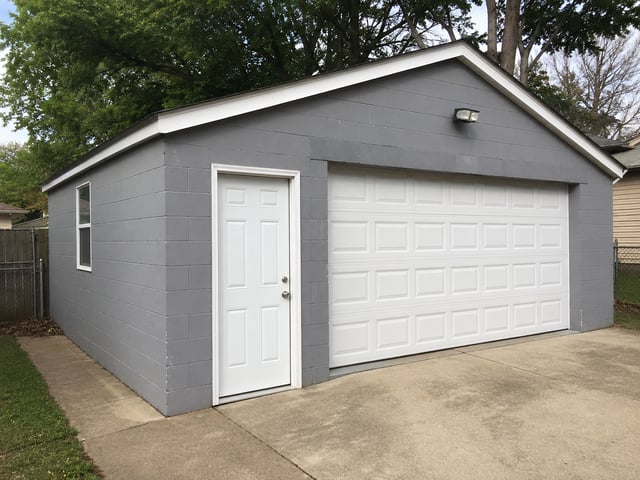
A cinder block garage costs $35 to $60 per square foot fully built, which puts a two-car structure at $25,000 to $60,000 depending on size, finish level, and local masonry rates. The cinder block walls themselves run $10 to $35 per square foot of wall area. The rest of the budget goes to the same line items as any garage: slab, roof, doors, and electrical.
Cinder block, concrete block, and CMU (concrete masonry unit) all describe the same modern product, so a concrete block garage cost estimate and a cinder block garage cost estimate are the same number. True cinder-aggregate blocks largely left the market decades ago.
Where your project lands inside that range depends less on the cinder blocks themselves, which are cheap, and more on the labor and site conditions around them:
Cinder block pays off fastest in hurricane zones, coastal markets, and termite country, where a reinforced masonry garage holds up while wood frame needs ongoing defense. Some Florida and Gulf Coast jurisdictions effectively require masonry construction through their wind-load codes, and fire resistance helps too, since cinder block walls do not feed a fire and insurers sometimes price that in.
Here is how the budget breaks down for a representative one-car and two-car build:
|
Line item |
One-car (12 x 20 ft) |
Two-car (24 x 24 ft) |
|
Slab and footings |
$2,500 to $5,000 |
$5,000 to $10,000 |
|
Cinder block walls (laid, grouted, reinforced) |
$6,000 to $12,000 |
$10,000 to $20,000 |
|
Roof (trusses, sheathing, shingles) |
$3,000 to $6,000 |
$5,000 to $9,000 |
|
Garage doors, installed |
$1,200 to $2,500 |
$2,500 to $5,000 |
|
Electrical |
$1,000 to $2,000 |
$1,500 to $3,000 |
|
Permits and site work |
$1,500 to $4,000 |
$2,000 to $5,000 |
|
Total |
$15,000 to $30,000 |
$26,000 to $50,000 |
Notice that the one-car total works out to well above the $35 to $60 per square foot planning range. That's the fixed-cost problem from the size table above: the mason, the concrete crew, and the roofer charge to mobilize either way, and a small footprint has less area to spread those charges across. The two-car build lands inside the range, with finish upgrades (insulation, drywall, a subpanel, an upgraded door) bringing the total closer to $60,000.
The cost to build a cinder block garage also depends on what you skip. A detached storage-only build with painted walls, a simple gable roof, and one overhead door can land near the bottom of the range. Add insulation, drywall, a subpanel, and an automatic door, and the same footprint climbs quickly.
A wood frame garage costs $40 to $65 per square foot, or $18,000 to $35,000 for a typical two-car build. Framing is the default construction method in most of the country, so carpentry crews are everywhere, bids stay competitive, and the structure takes any siding or trim that matches your house without a veneer.
Wiring and insulation also fit inside standard stud bays instead of requiring furring strips, which makes wood frame the cheaper path if you plan to finish the interior as a workshop or gym. Ownership costs run higher, though. Paint cycles, moisture management, and termite vigilance are all part of the deal, and skipping them shortens the 40 to 60 year lifespan considerably.
A steel garage costs $20 to $40 per square foot, or $10,000 to $22,000 for a two-car building, which makes it the cheapest path to enclosed parking. The savings come with conditions. Uninsulated steel sweats. Many HOAs restrict metal buildings outright, and appraisers tend to treat a steel structure as an outbuilding rather than part of the home, so expect less of the cost back at resale. Metal fits best on rural lots, as a second workshop structure, or anywhere budget outranks curb appeal.
An attached garage typically costs $7,500 to $27,000, while a comparable detached build runs $15,000 to $40,000 or more. Attaching to the house saves money because one wall already exists, the electrical panel is close, and the roofline can tie into existing structure.
Detached builds cost more but buy flexibility: placement anywhere on the lot, no shared wall with living space, and easier future conversion to a living space. The attached versus detached decision affects permits and setback rules too, so check your local zoning before settling on a site.
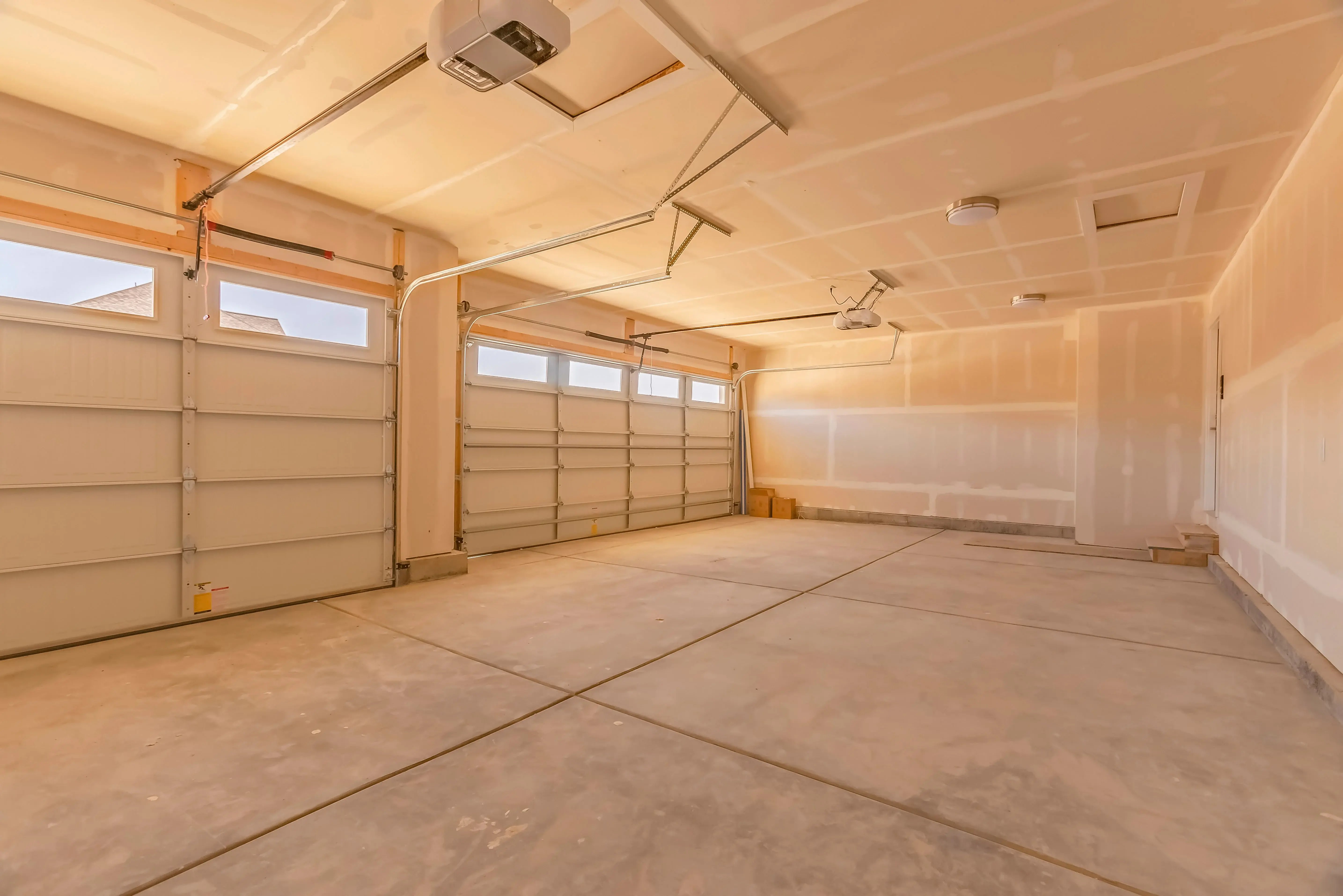
Everything outside the structure itself commonly adds $3,000 to $7,000, and none of it shows up in a per-square-foot materials quote. Permit fees for a garage generally run $500 to $2,000 depending on your municipality, and detached structures often trigger separate zoning review for setbacks and lot coverage. Inspections happen at set stages (footing, framing, final), and your contractor should build that schedule into the timeline rather than treating it as a surprise.
Site work is the other budget line homeowners forget. A new detached garage usually needs driveway extension or a connecting walkway, plus grading so water drains away from the slab. Plan on $1,000 to $5,000 for basic site and driveway work, more if the garage sits far from the existing drive.
Garage bids vary widely for identical scopes, which makes comparing more than one quote the single most effective way to control the cost. Block matches homeowners with vetted local contractors who compete for the project, with every scope reviewed up front to catch missing line items (footings, electrical, site work) before they surface as change orders. Payments run through Block's secure progress-based system, so funds release as the work gets done. Get your estimates to see what your garage would cost from contractors in your area.
Remodel with confidence through Block

Connect to vetted local contractors
We only work with top-tier, thoroughly vetted contractors

Get expert guidance
Our project planners offer expert advice, scope review, and ongoing support as needed

Enjoy peace of mind throughout your renovation
Secure payment system puts you in control and protects your remodel


Renovate confidently with Block
Easily compare quotes from top quality contractors, and get peace of mind with warranty & price protections.
Garage
Cost to Build a 3-Car Detached Garage
10.04.2026
Garage
Carport vs. Garage: Which One Should You Build?
09.27.2026
Garage
Converting a Room Into a Garage: Costs & Steps
09.25.2026

Garage
One-Car Garage Dimensions: Minimum & Standard Sizes
09.22.2026
New York
Gut Renovations in NYC: Costs, Timeline, Tips & Considerations
09.20.2026