






New York
Apartment Gut Renovation NYC: A Unit Owner's Guide
10.06.2026
.jpg?width=640&name=Block%20Renovation%20-%20Gerrit%20-%20May%2026%2c%2020231442%20(1).jpg)
08.28.2026


In This Article
Your condo may share a floor plan with a dozen neighboring units, yet the renovations inside them range from $25,000 to more than $400,000. That span of more than $375,000 narrows once you account for your city, your building's rules, and the amount of work happening behind the walls. With those three pieces in place, the cost to renovate a 1,000 sq ft condo becomes much easier to estimate.
The prices below assume a 1,000 sq ft unit with two bedrooms and one or two bathrooms, a common layout at this size.
How much should you set aside before requesting bids? In a mid-cost U.S. market, use $60,000 to $130,000 for a mid-range renovation with an updated kitchen and bathrooms. Cosmetic work starts around $25,000. A full gut with new plumbing and electrical costs as much as $400,000 before high-cost-city pricing.
Choose the tier that most closely resembles your scope before comparing per-square-foot prices. These national baselines reflect installed costs in mid-cost markets, including materials, labor, and general contractor overhead.
| Tier | Cost per sq ft | Total for 1,000 sq ft |
|---|---|---|
| Cosmetic refresh | $25 to $60 | $25,000 to $60,000 |
| Mid-range | $60 to $130 | $60,000 to $130,000 |
| High-end | $130 to $250 | $130,000 to $250,000 |
| Full gut | $200 to $400 | $200,000 to $400,000 |
Here is what each tier typically includes:
The biggest jump happens between a cosmetic refresh and a mid-range remodel. Once licensed plumbing and electrical trades come on site and permits become part of the job, you have absorbed many of the fixed costs of construction. Adding more work after that point still raises the total, but the increase is less dramatic on a proportional basis.
Identical mid-range drawings cost about $72,000 in Chicago and $250,000 in Manhattan. Local wages explain some of that distance, and building requirements explain much of the rest. Manhattan co-op requirements often include a licensed architect, a formal alteration agreement, an insurance package naming the building, and a staffed freight elevator before the first cabinet is delivered.
| Market | Multiplier on baseline | Mid-range total for 1,000 sq ft |
| New York and San Francisco | 1.8x to 2.5x | $108,000 to $325,000 |
| Boston, Los Angeles, Seattle, Washington D.C., and Chicago | 1.2x to 1.5x | $72,000 to $195,000 |
| Most other U.S. metros | Baseline | $60,000 to $130,000 |
Our condo remodeling guide for NYC and other major cities looks more closely at board approvals and building restrictions.
A room-by-room budget makes it easier to see where you have flexibility. Kitchens and bathrooms account for 55% to 70% of a condo renovation, so most homeowners find more room to save in the bedrooms, living areas, and hallways.
| Space | Typical size in a 1,000 sq ft unit | Mid-range cost |
| Kitchen | 100 to 150 sq ft | $22,000 to $55,000 |
| Primary bathroom | 40 to 60 sq ft | $15,000 to $30,000 |
| Second full bathroom | 35 to 45 sq ft | $12,000 to $24,000 |
| Half bath | 15 to 25 sq ft | $6,000 to $12,000 |
| Bedrooms, finishes only | 110 to 160 sq ft each | $4,000 to $12,000 total |
| Living and dining area | 250 to 350 sq ft | $5,000 to $16,000 |
| Entry, hallway, and closets | Varies | $3,000 to $12,000 |
| In-unit laundry, existing hookups | 10 to 25 sq ft | $2,000 to $6,000 |
| In-unit laundry, new hookups | 10 to 25 sq ft | $8,000 to $20,000 |
The top figure in every row adds up to more than the mid-range tier because a typical project does not max out every room. A realistic two bedroom, two bathroom condo falls between $65,000 and $130,000 after the finish level changes from one space to the next. The kitchen remodel cost guide and bathroom remodel cost guide break down the two largest pieces of that budget.
Premium finishes alone do not explain every project that exceeds the high-end tier. The largest totals usually combine several expensive conditions. Pay special attention to these four:
Renovation cost calculator
Start with a realistic budget
Get an initial estimate based on your space and project details.
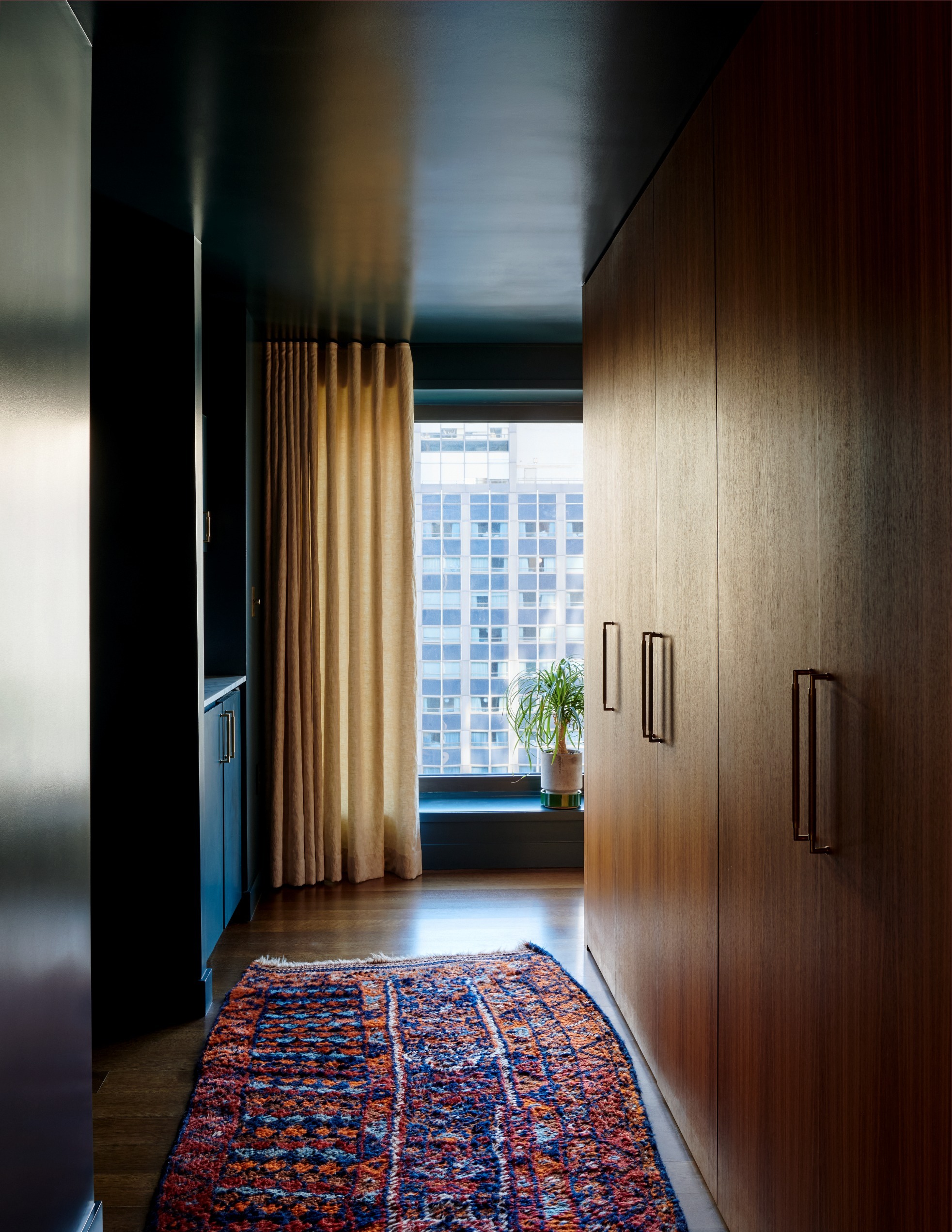
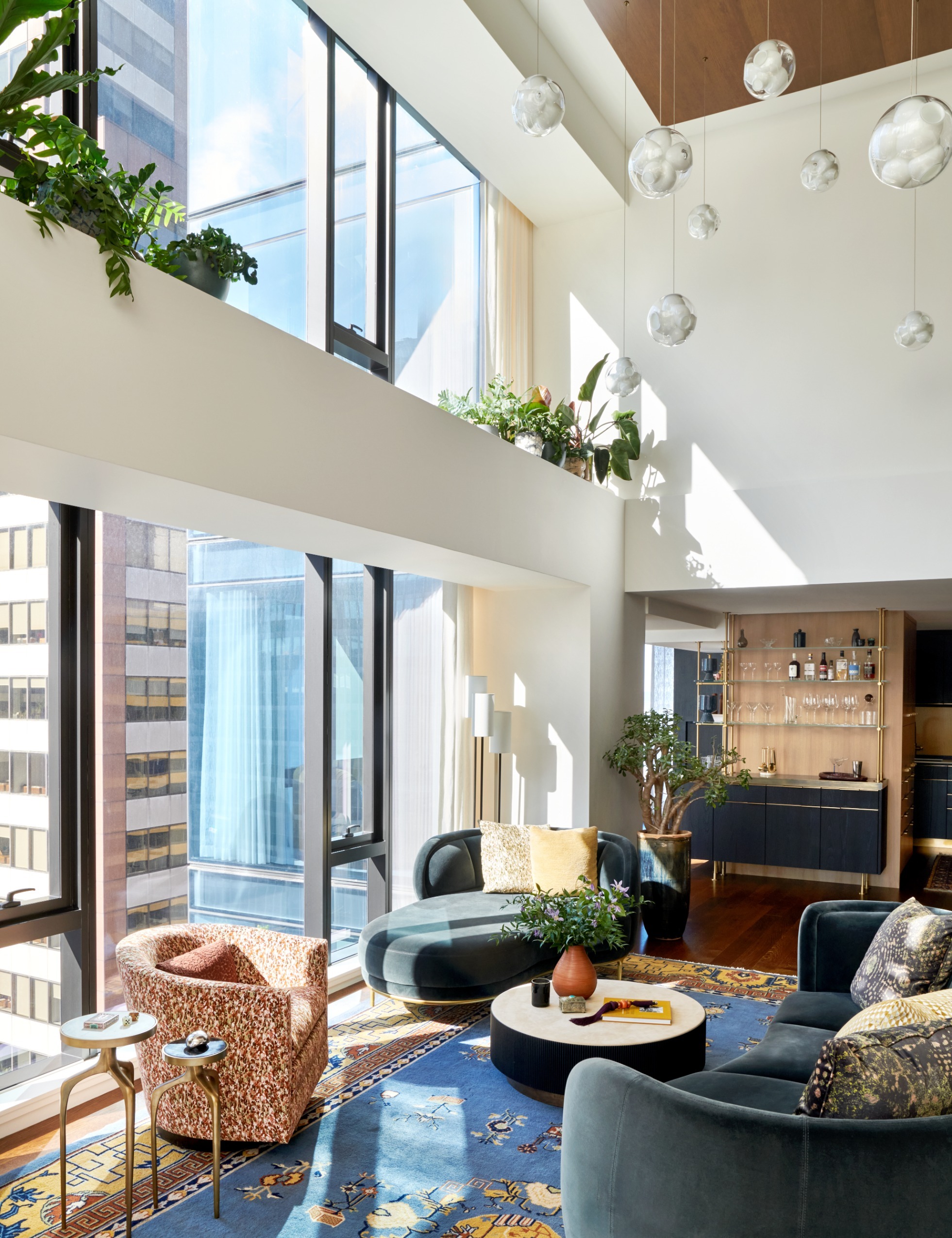
A Manhattan condo renovated by KS Renovation Group cost $750,000 and took 45 weeks, placing it several times above the national high-end tier. Its published scope includes custom wood paneling, sculptural shelving, cabinetry, and a lighting plan shaped around the furniture layout.
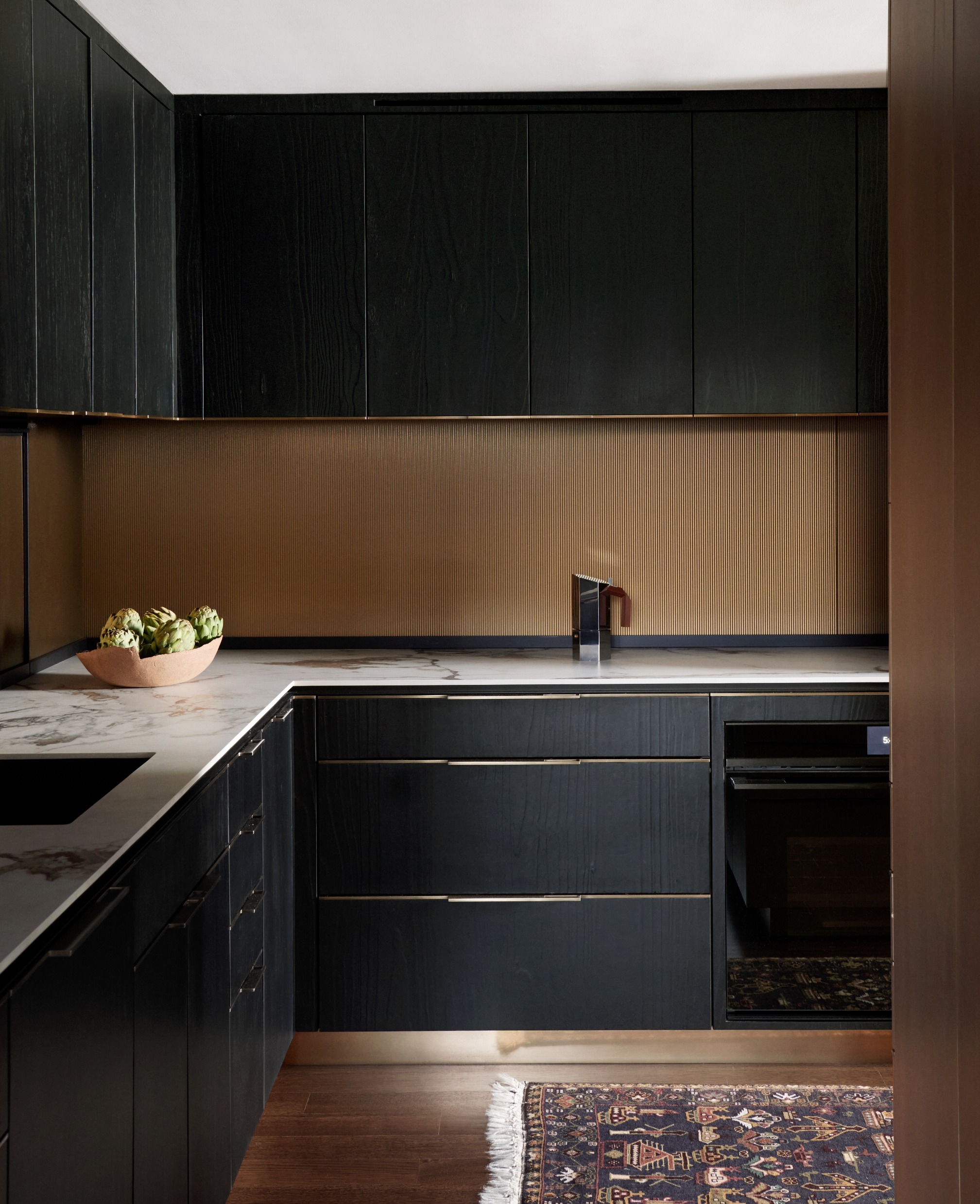
This finished project gives you a useful warning about broad benchmarks to figure out your own 1,000 foot condo remodel. Ultimately, each decision you make will swing the budget more than your square footage ever could.
In a single-family house, you do not have to pay a building before work begins. Condo and co-op owners face a separate set of fees that contractors often exclude from their proposals.
| Cost | Typical range |
| Alteration agreement or renovation application fee | $500 to $5,000 |
| Refundable damage deposit held by the building | $2,500 to $25,000 |
| Architect or engineer letter for board submission | $1,500 to $10,000 |
| Contractor insurance riders naming the building and board | $500 to $3,000 |
| Freight elevator reservation and operator time | $75 to $250 per hour |
| Common-area protection and building-required cleaning | $1,000 to $5,000 |
| Debris removal from an upper floor | 20% to 50% above the ground-level equivalent |
And that's before you get to the schedule. When a building limits construction to 9:00 a.m. to 4:00 p.m. on weekdays, the crew gets roughly 35 working hours per week, compared with 50 or more on many single-family projects. The contractor must supervise and manage the site across a longer calendar. For a full gut in a building with tight work hours, plan for labor to cost 15% to 30% more.
Board review also takes time before construction. Allow 4 to 16 weeks between submitting the alteration package and receiving permission to start demolition, and confirm that the board will accept a proposed layout change before paying an architect to develop it.
What belongs on top of the contractor's price? Add design, contingency, and temporary living expenses. The room and per-square-foot figures above already include general contractor overhead and profit, so another 20% for the same line item inflates your budget.
These expenses genuinely belong on top of the construction price:
Applied to a $100,000 mid-range condo renovation, those additions produce an all-in total of $121,000 to $152,000. Build your working budget around that fuller number so the money reserved for design or a temporary apartment does not get spent on finishes.
Design a Home That’s Uniquely Yours
Block can help you achieve your renovation goals and bring your dream remodel to life with price assurance and expert support.
Get Started
Even when crews spend 12 weeks on site, you will wait longer than 12 weeks from planning to completion.
| Scope | Construction time |
| Cosmetic refresh | 4 to 10 weeks |
| Mid-range with the layout intact | 12 to 20 weeks |
| High-end or partial layout changes | 20 to 32 weeks |
| Full gut with custom millwork | 30 to 50 weeks |
Board review and permitting add another 4 to 16 weeks before demolition begins. Custom cabinetry takes 10 to 20 weeks to produce, and imported stone or specialty appliances often need longer. Make your life easier by ordering early enough for that wait to overlap with demolition and rough construction.
Each of these renovations give notworthy comfort, storage, and usable floor area from your 1,000 condo, making them each worth "the splurge."
Here's the thing that surprises a lot of homeowners: buyers and appraisers lean heavily on comparable sales from the same address. When one unit is renovated far beyond its neighbors, the owner often recovers only part of that additional spending.
Plus, buyers are purchasing into the building as well as the apartment. They look at the lobby, hallways, elevators, exterior, shared amenities, and the condition of major systems. Dated common areas, deferred maintenance, or concerns about future assessments can limit what they will spend, even when the condo itself is beautifully renovated.
Review the recent sale prices of renovated units in your building before choosing a finish tier. Compare those sales with the value of your condo today to estimate how much room you have for improvements. Use Block's renovation value calculator to weigh the proposed scope against the likely return.
Use the planning ranges to decide whether the renovation fits your budget. For a dependable project price, ask contractors to quote one clear scope that accounts for your building's rules, existing conditions, and material selections.
Get matched with vetted local contractors and compare proposals for the same work. Block reviews each scope before you commit and releases payments as construction progresses, giving you more visibility into the work and the money attached to it.
Remodel with confidence through Block

Connect to vetted local contractors
We only work with top-tier, thoroughly vetted contractors

Get expert guidance
Our project planners offer expert advice, scope review, and ongoing support as needed
Enjoy peace of mind throughout your renovation
Secure payment system puts you in control and protects your remodel

Renovate confidently with Block
Easily compare quotes from top quality contractors, and get peace of mind with warranty & price protections.
New York
Apartment Gut Renovation NYC: A Unit Owner's Guide
10.06.2026
New York
Luxury Apartment Remodeling NYC: Costs & Project Examples
10.02.2026
New York
Renovating a Brooklyn Brownstone? Essential Tips & Costs
10.01.2026
New York
Combining Two Apartments in NYC and Other Cities: Costs & Practical Advice
09.28.2026
New York
Best New York Contractors for Apartment and Condo Remodels
09.20.2026