



Bathroom
Walk-In Tub vs. Walk-In Shower for Seniors
09.16.2026
08.11.2026


In This Article
Shower panels have numerous desirable qualities: no grout to scrub, a two-day install instead of a week, and a bill at the low end around a third of a tiled shower. So the decision to choose shower panels over tiles may come fairly easily. Not so easy? Choosing which specific type. There are nine of them, they run from printed PVC at about $1,000 installed to natural stone slab at $20,000, and they do not last, clean, or look alike.
A "shower panel" can also mean the tall fixture that combines a rainfall head, body jets, and a handheld on one body. The nine panel materials below are wall surfaces, not plumbing fixtures.
Nine materials cover most of the panel market, from big-box PVC to natural stone slab, and the choice comes down to four things: how convincing the surface looks up close, how long it holds up, how much cleaning it needs, and what it costs. Tile is the obvious alternative to all of them, and it gets a fuller treatment in the guide to the best materials to use on shower walls.
The cheapest waterproof shower wall on the market is rigid PVC. The sheets are either hollow inside or filled with rigid foam, and they cost less per square foot than almost any tile on the shelf. Finishes are printed rather than real, so the stone and tile effects hold up from across the room, then stop holding up at arm's length. Check the rating before buying anything, because plenty of decorative PVC paneling is sold for hallways and basements rather than showers.
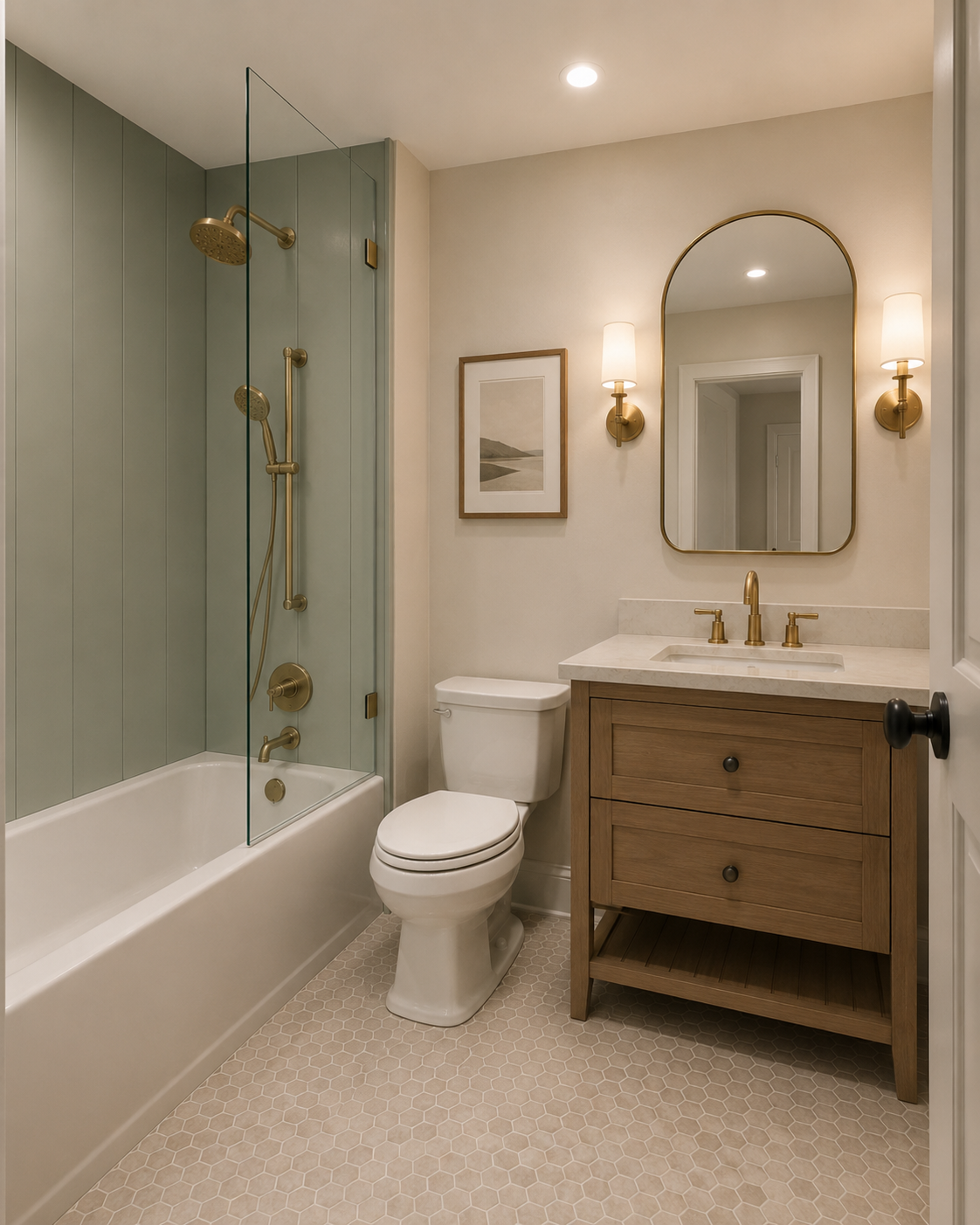
FRP will never be the reason someone compliments a bathroom. It is a thin, lightly textured sheet with a hard resin face, built for utility bathrooms, rentals, and basement showers. It does that job at the lowest installed cost of any panel material.
Acrylic is the volume seller in the American market, and most of what gets installed as a "panel shower" is an acrylic surround kit in three or five pieces. The sheet is a solid, non-porous plastic, thicker and glossier than FRP, sold in flat colors and in molded tile and subway patterns.
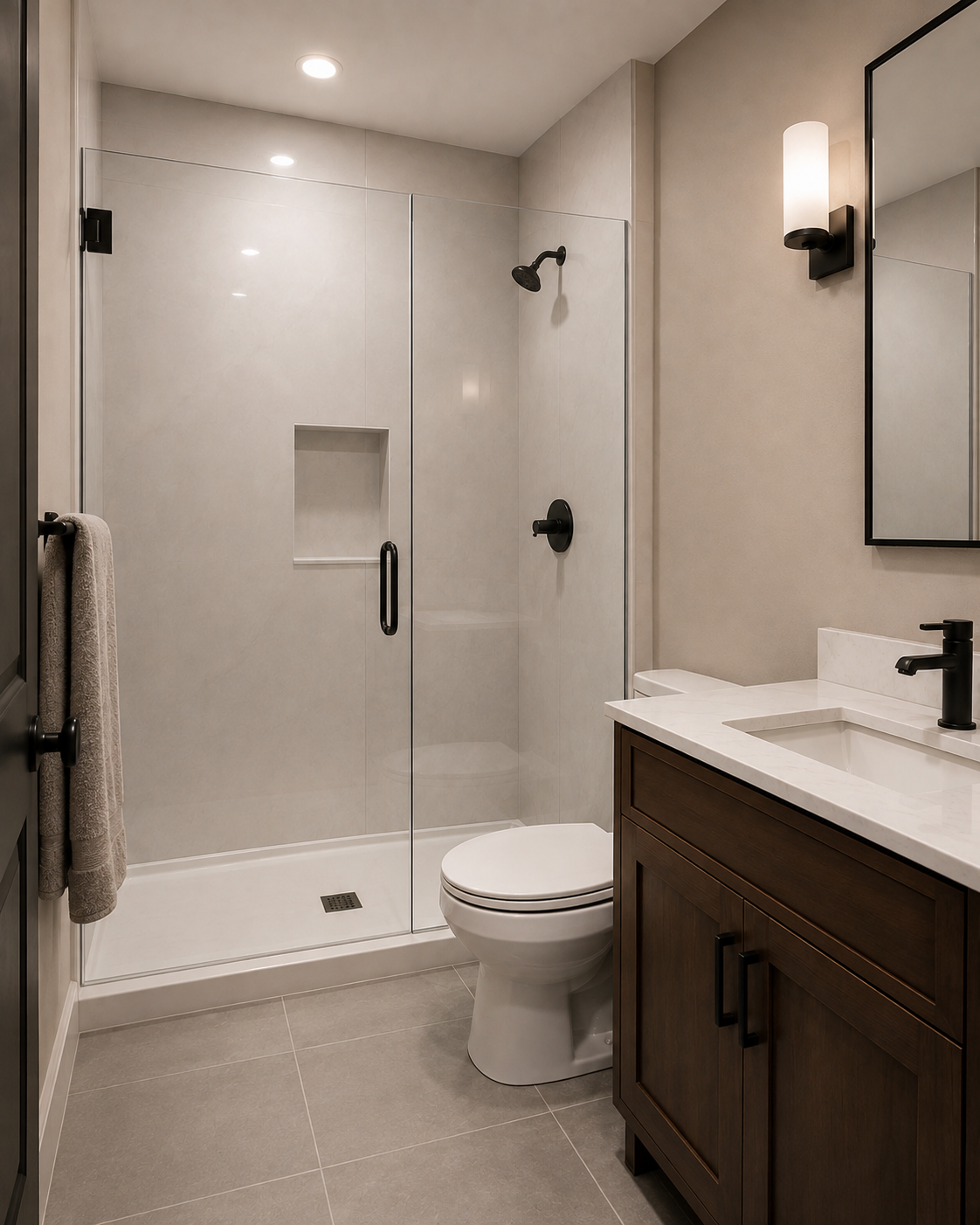
Acrylic surrounds are also the product behind most one-day bathroom remodel pitches, so this is the panel type most likely to show up with a salesperson attached. Those quotes usually do include the demolition, the pan, and the plumbing, so they are not comparing apples to a bare kit. What they also include is the cost of the sales operation: the advertising, the in-home appointment, the discount that expires when the rep leaves the kitchen table. Get a competing quote from a general contractor for the same scope before you sign.
Can a shower wall have wood in it? Some of them do. The wet wall category covers a decorative laminate face bonded to a core, and the core is the part that varies: a glass-fiber and polypropylene composite in Wilsonart's Wetwall system, marine-grade plywood in Fibo, moisture-resistant MDF in several imported lines.
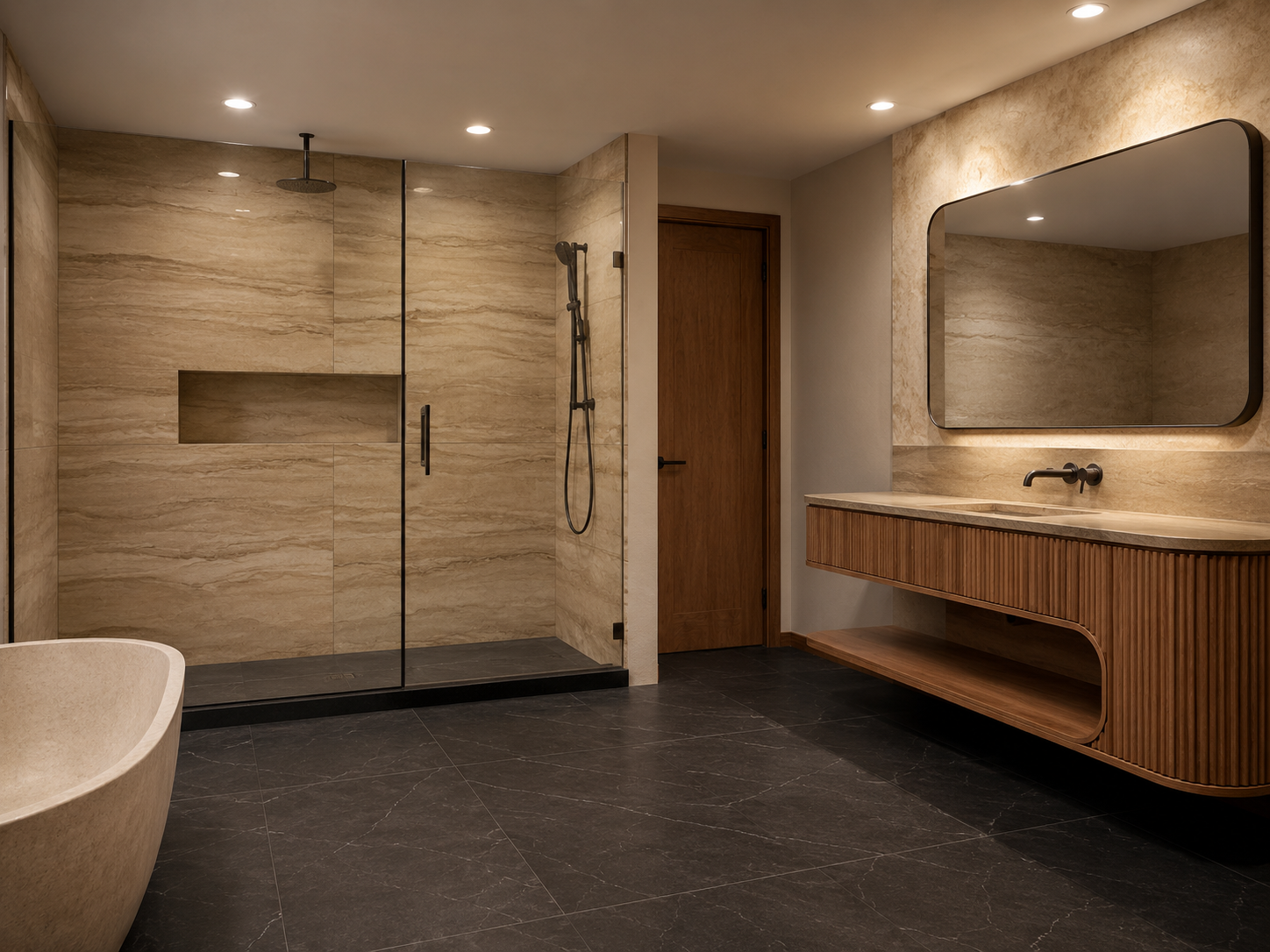
Find out which core is in the quote before you choose a design. Wood cores swell once moisture reaches a cut edge, and the laminate lifts off the face.
Corian in a shower is the version of this most people have already seen: a single acrylic-and-mineral material, roughly 1/4 inch to 1/2 inch thick, cut to the exact dimensions of the opening. Because the color runs all the way through, a scratch sands out instead of showing white.
Corners come out as a thin line instead of a caulk bead. Shelves, benches, and a matching pan can all come out of the same material in the same color, which is difficult to pull off in any other panel product.
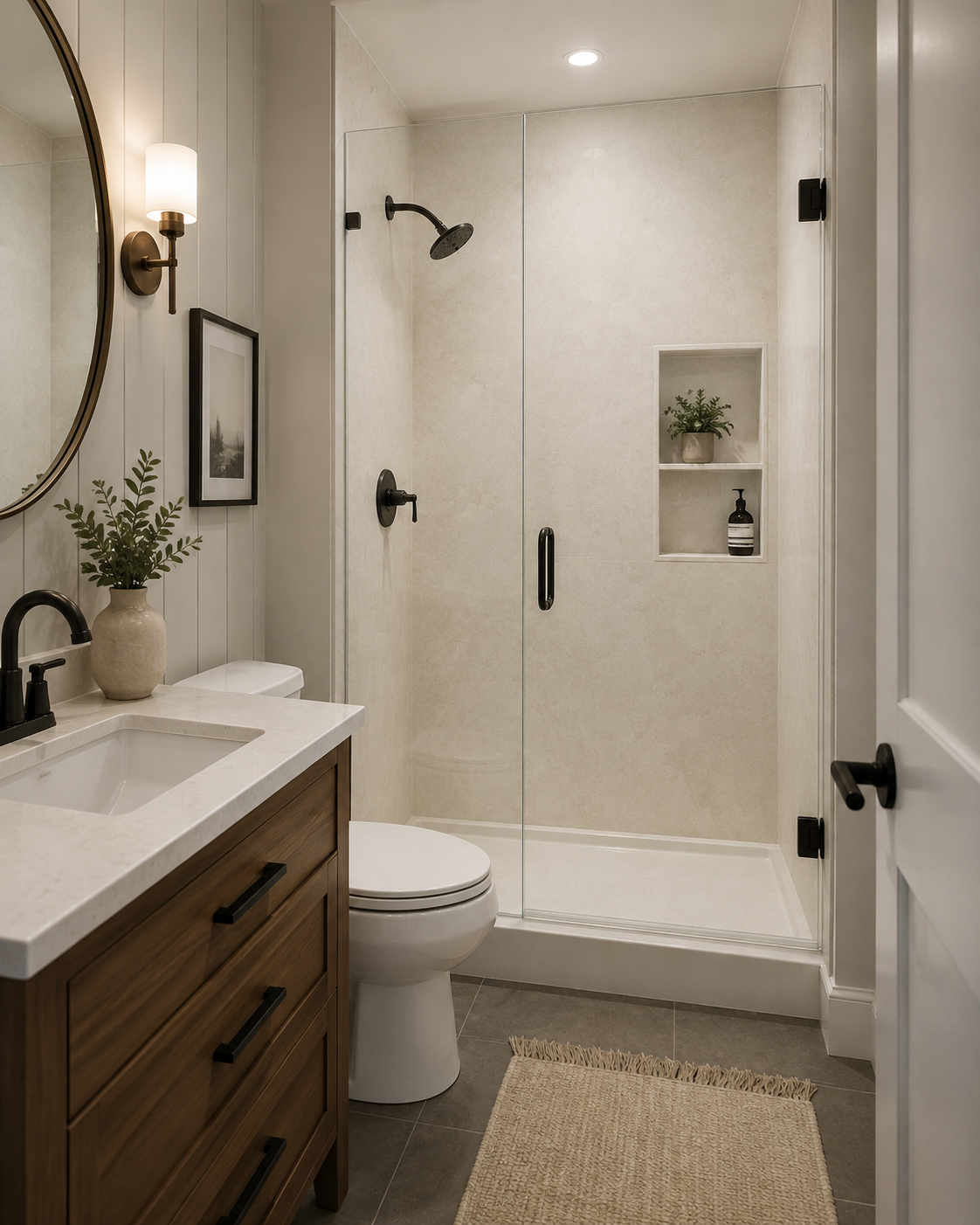
Cost comes in between the kit surrounds and the stone options, and the lead time is longer, because nothing gets made until someone measures the opening. For a grout-free shower that does not look like a kit, this is the first material worth pricing.
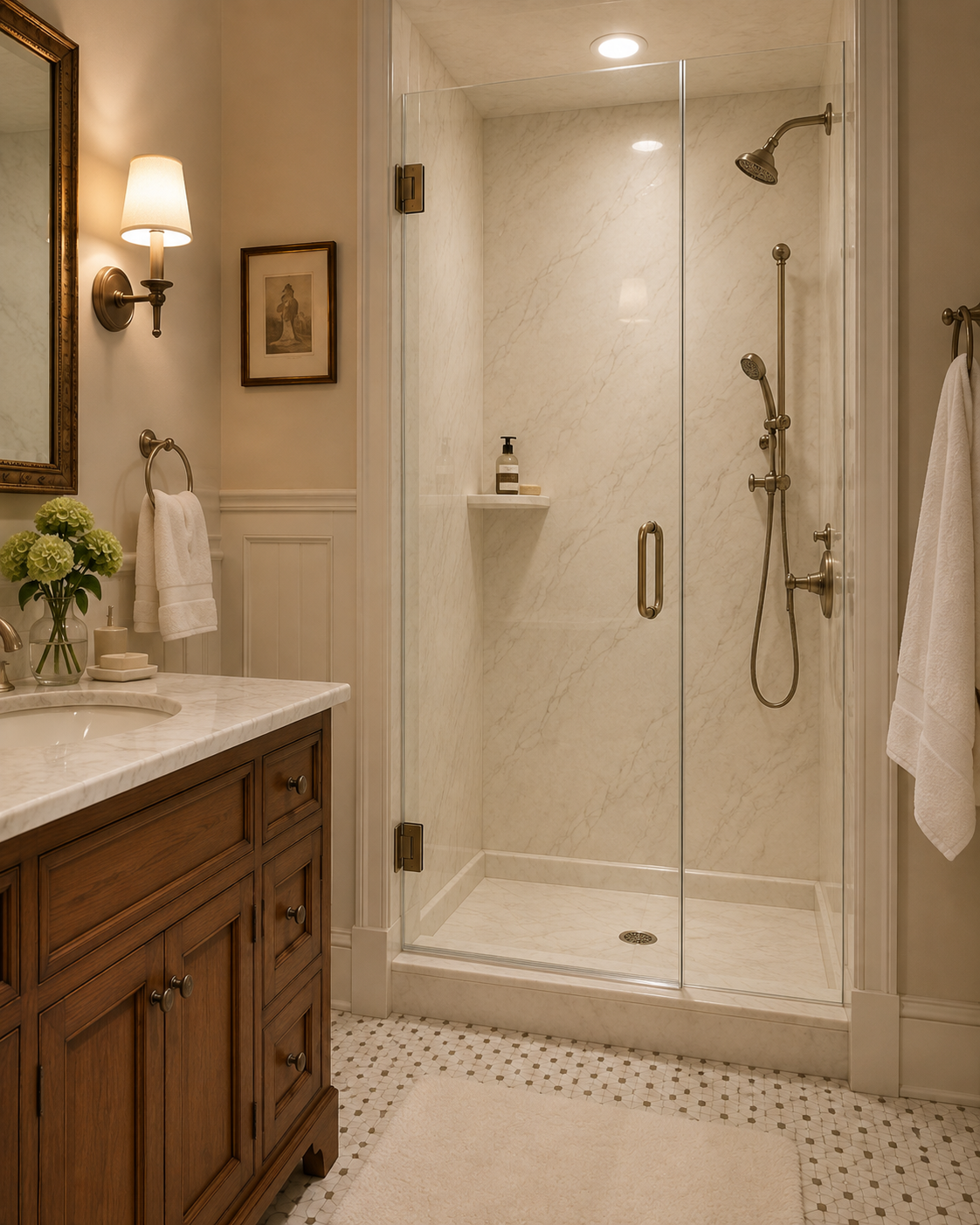
So the older grout-free option is still on the market, and worth a look on a tight budget. Cultured marble is crushed limestone bound in resin under a gelcoat surface, which is a thin sprayed-on finish rather than solid material. The gelcoat dulls and scratches somewhere around year 10, and unlike solid surface, it cannot be sanded back.
Nothing cleans faster than glass. Back-painted tempered glass panels give a single flat color with real depth, no joints across a wall, and a surface that squeegees dry in seconds. Paired with a frameless door, glass walls are the shortest path to an easy-to-clean bathroom. Cost is the catch, and so is the fact that nothing about the layout can change once the order goes in.
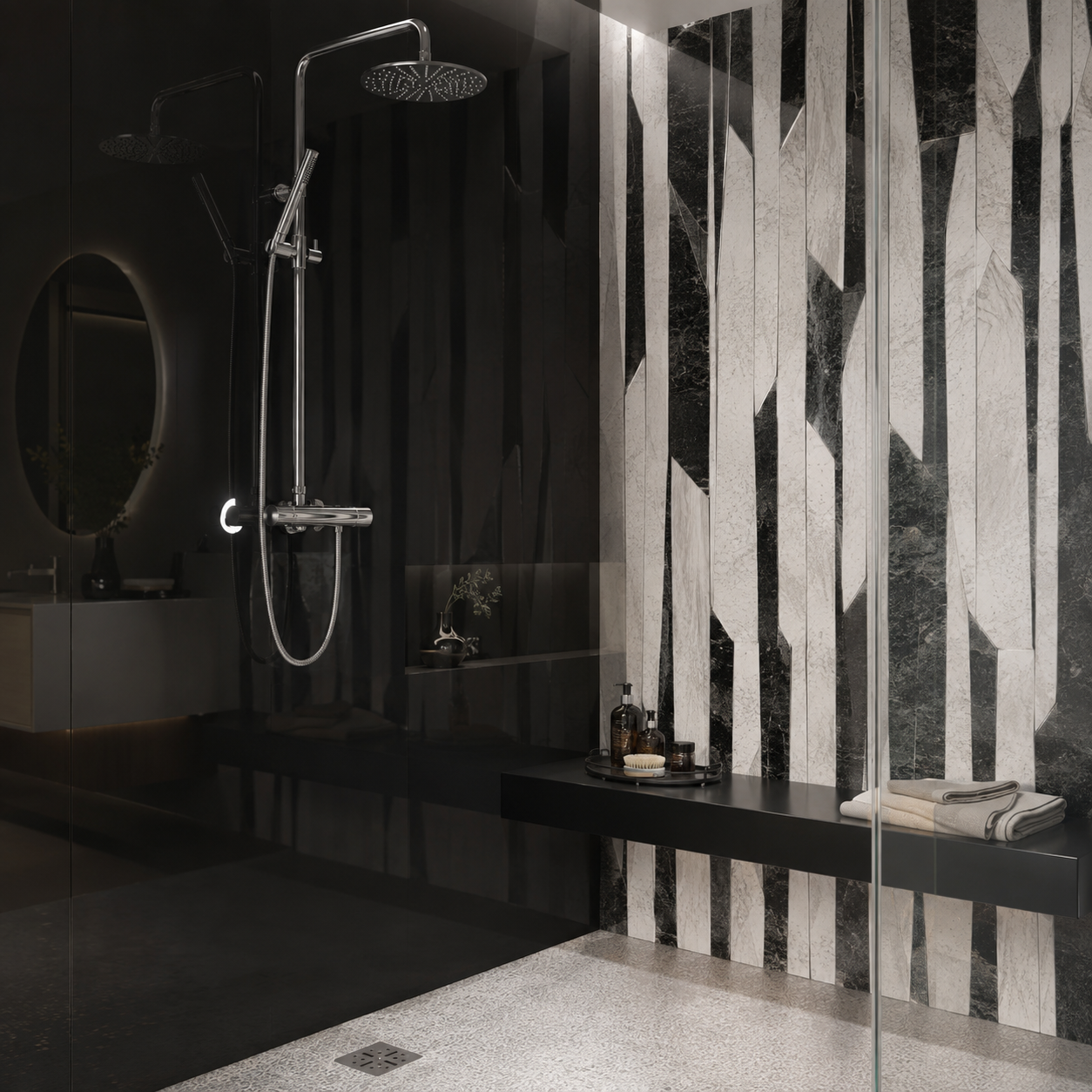
Get samples into your own bathroom before committing to porcelain slab. Large-format porcelain and sintered stone, a denser version of the same idea, come in sheets up to roughly 5 by 10 feet, and brands like Neolith now build whole bathroom programs around the material, wall to pan.
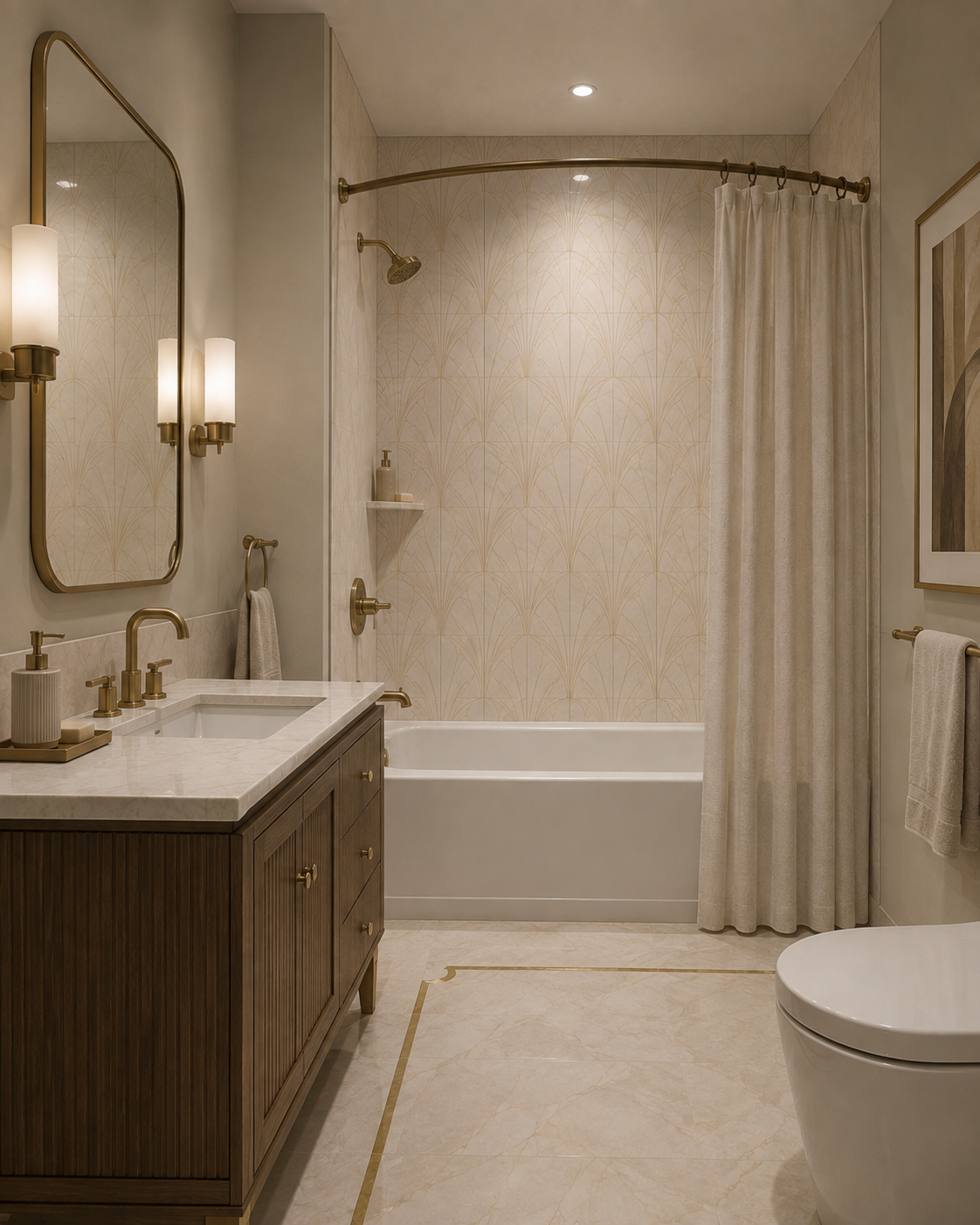
This shower panel type is non-porous, never needs sealing, and cleans with a brush and dish soap. What you pay for that is a material heavy and unforgiving enough that only a crew with the right equipment should touch it, so this is not a project to shop on price alone.
Losing the grid of grout lines across the wall is a genuine win, because that grid is where mildew takes hold. The corners and the joint where the walls meet the pan are sealant, though. They need recaulking every 3 to 5 years like any other shower, and a wall wider than a single slab needs one seam down the middle. Buy porcelain slab for the look and for never having to seal anything, and plan on the recaulking like you would in any other shower.
Marble in a shower is where a lot of expensive bathrooms go wrong. Stone slab panels have a depth and a veining that porcelain prints approximate without matching, and there is no substitute if that is what you want. Stone is also porous. It needs periodic sealing, tolerates no acidic cleaner, and etches visibly wherever a shampoo bottle gets left on a ledge.
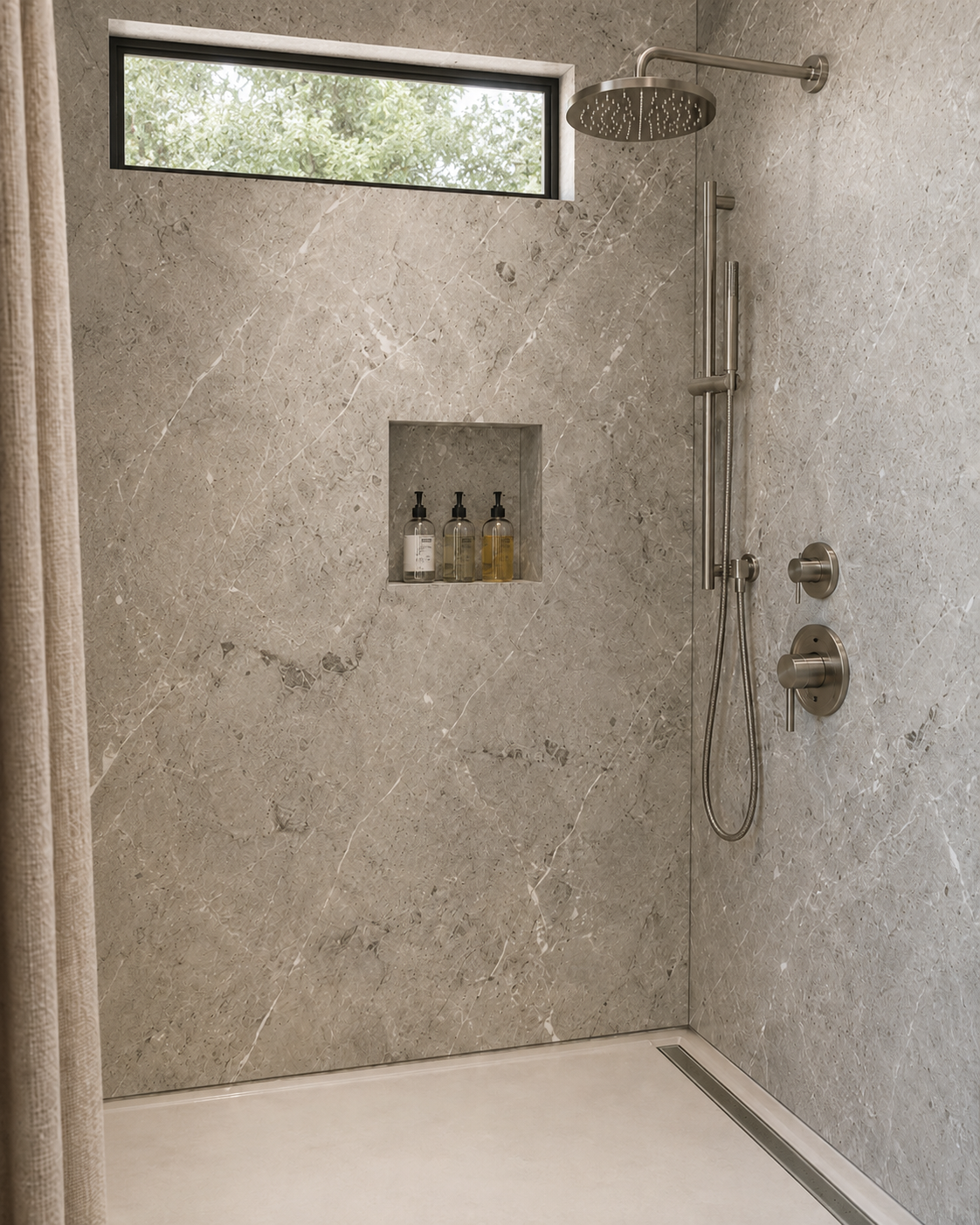
All of this is purposeful. Etching is what marble does, and buying it is an appearance decision, so the real question is whether you want the look enough to change how you clean. A pH-neutral cleaner and a sealing schedule come with the material, and anyone who would rather not think about either one is usually happier with porcelain.
Quartzite and honed granite hold up better in wet areas than marble, because neither one etches from ordinary bathroom products and both need sealing less often. Plan on a slab yard visit rather than a catalog order, and book the selection early, because inventory moves and a specific piece cannot be reordered.
These are planning ranges for the three walls of a standard alcove, roughly 70 to 100 square feet of wall surface, installed. A tiled alcove runs about $4,000 to $12,000 for the walls alone, and the full walk-in shower cost picture adds the pan, the glass, and the plumbing on top of that.
| Panel type | Installed range, 3 walls | Best fit |
|---|---|---|
| Fiberglass-reinforced plastic | $1,000 to $2,500 | Utility bathrooms and rentals |
| PVC | $1,000 to $3,000 | Basement showers, tight budgets |
| Acrylic surround kit | $2,500 to $6,500 | Fast alcove replacements |
| Laminated panels (wet wall) | $2,500 to $6,000 | Tile look without tile labor |
| Cultured marble | $3,000 to $7,000 | Budget grout-free with a matching pan |
| Solid surface | $4,500 to $10,000 | Custom sizes, integrated benches |
| Back-painted glass | $5,000 to $12,000 | Flat color, easiest cleaning |
| Porcelain slab | $6,000 to $15,000 | Stone look, low upkeep |
| Natural stone slab | $8,000 to $20,000 | High-end primary bathrooms |
Three things push a panel project toward the top of its range: demolition of an existing tiled shower, repairs to the wall once the old surround comes off, and any plumbing that has to move. All of them show up in the quote. And that's before you get to the pan, the door, and the fixtures.
| Panel type | Weekly upkeep | Expected life |
|---|---|---|
| Fiberglass-reinforced plastic | Wipe down, no abrasives | 10 to 15 years |
| PVC | Wipe down, no abrasives | 10 to 15 years |
| Cultured marble | Wipe down, no abrasives, gelcoat dulls | 10 to 15 years |
| Acrylic surround kit | Wipe down, no abrasives | 15 to 20 years |
| Laminated panels (wet wall) | Wipe down, keep edges sealed | 15 to 20 years |
| Solid surface | Wipe down, scratches sand out | 20 years or more |
| Back-painted glass | Squeegee, any glass cleaner | 20 years or more |
| Porcelain slab | Any cleaner, no sealing | Life of the bathroom |
| Natural stone slab | pH-neutral cleaner only, periodic sealing | Life of the bathroom |
Most adhesive panel systems can, and on a shower that is not leaking, covering the old tile saves demolition, dust, and a day or two of labor. In a house with one full bathroom, that shorter timeline often matters more than the material does.
Still, a shower that has leaked before is a different situation. Grout that has been failing for years, tile that sounds hollow when you tap it, or a stain on the ceiling below all point to a wall that needs to come open. Have someone look behind the tile before you agree to cover it.
Two quotes for the same acrylic surround can produce two very different showers.
Thousands of homeowners have renovated with Block. Tell Block your project details once and have vetted local contractors compete for the work, with every scope reviewed by Block experts to catch missing line items before you sign. Payments run through a secure system that releases funds as the work progresses, so you are not paying up front for a surround that has not gone up yet.
Remodel with confidence through Block
Connect to vetted local contractors
We only work with top-tier, thoroughly vetted contractors

Get expert guidance
Our project planners offer expert advice, scope review, and ongoing support as needed
Enjoy peace of mind throughout your renovation
Secure payment system puts you in control and protects your remodel

Renovate confidently with Block
Easily compare quotes from top quality contractors, and get peace of mind with warranty & price protections.
Bathroom
Walk-In Tub vs. Walk-In Shower for Seniors
09.16.2026
Shower
Best Shower Wall Panel Brands: Composite, Acrylic, and Solid Surface
08.12.2026
Design
Bathtub to Shower Conversion: Cost, Ideas, Examples & More
08.11.2026
Shower
Shower Panel Types: Costs, Materials & How to Choose
08.11.2026
Shower
Glass Shower Enclosure With a Half Wall: What to Know
07.28.2026