

Lighting
Chandelier Size for a Dining Room: What to Measure
08.23.2026
08.23.2026


In This Article
You can furnish a dining room beautifully and still have the whole space feel off because the chandelier is the wrong size. It sits directly over the table and in a prominent sightline, so its scale has an outsized effect on how finished the room feels. Chandelier size for a dining room gets easier to judge once you compare the fixture with the room, table, and ceiling instead of looking at it on its own.
Take the dining room's length and width in feet, your table's width in inches, and the ceiling height in feet. Measure the table at its widest point and the ceiling from the finished floor.
Say your dining room measures 12 by 14 feet. Add those numbers together and you get a target chandelier diameter of 26 inches. Apply the same formula to a 10 by 12-foot room and you get 22 inches.
Here's the thing that surprises a lot of homeowners: the room formula can disagree with the table calculation by 6 inches or more. When that happens, size to the table. Use the room number when you haven't bought the dining furniture yet, or when a small table sits in a large room and the fixture needs enough presence to hold its own in the space.
If your dining table shares one continuous space with the kitchen or living room, there may be no set of dining-room walls to plug into the formula. Measure the area that functions as the dining zone, using the table placement, rug, partial walls, ceiling changes, or furniture layout to set the boundaries. When those boundaries are fuzzy, check your number against the table-width formula before you buy.
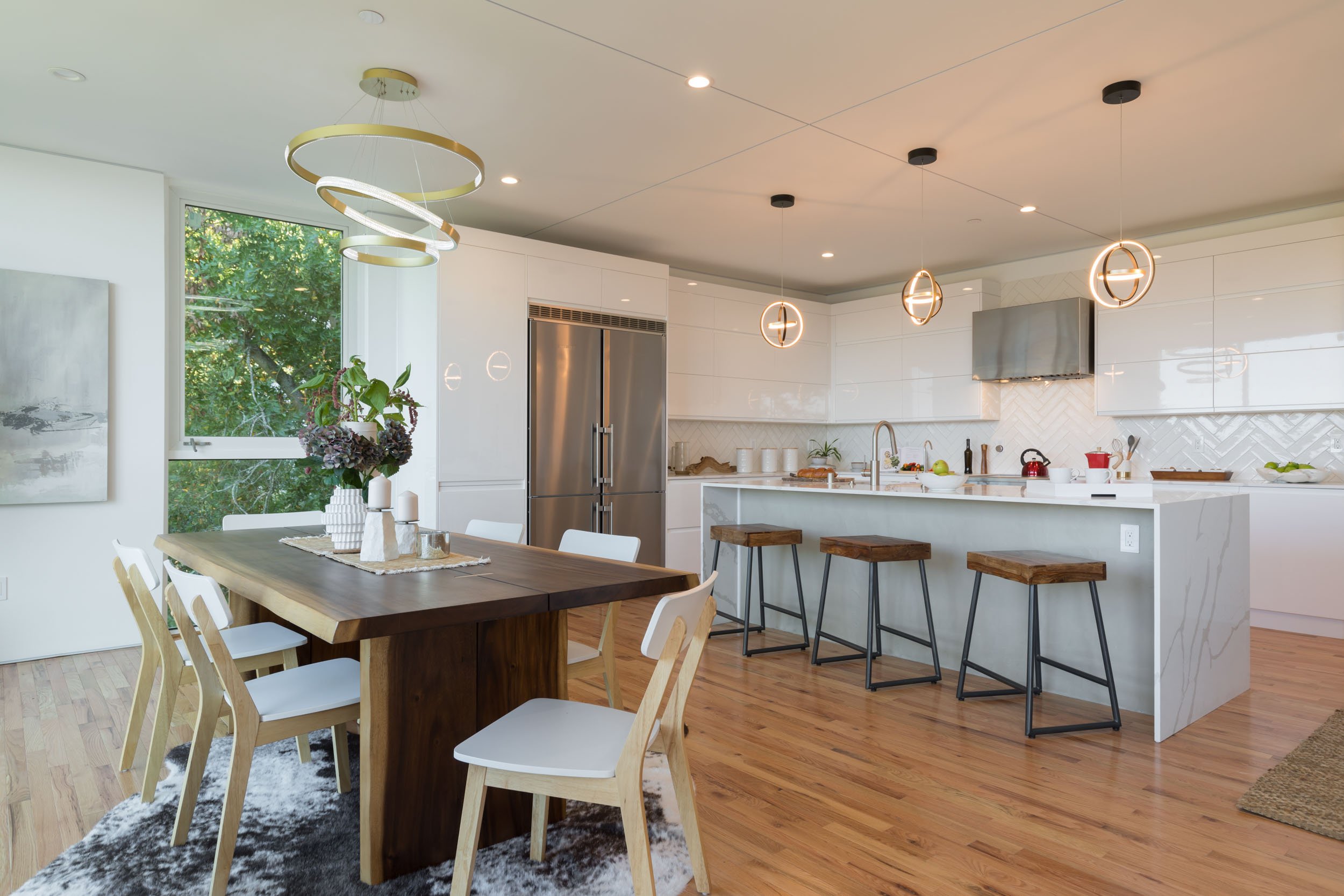
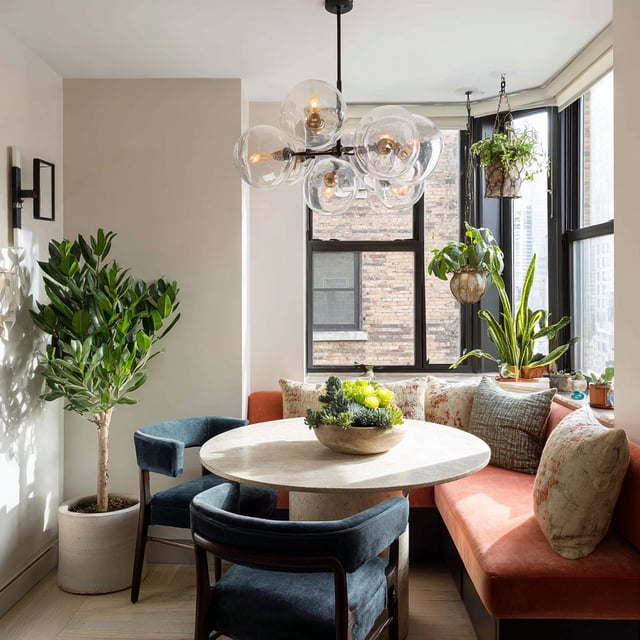
You can see that approach in this open-plan dining room from IY Development & Renovation Inc., where the chandelier takes its scale from the dining table instead of the much larger combined kitchen and dining space.
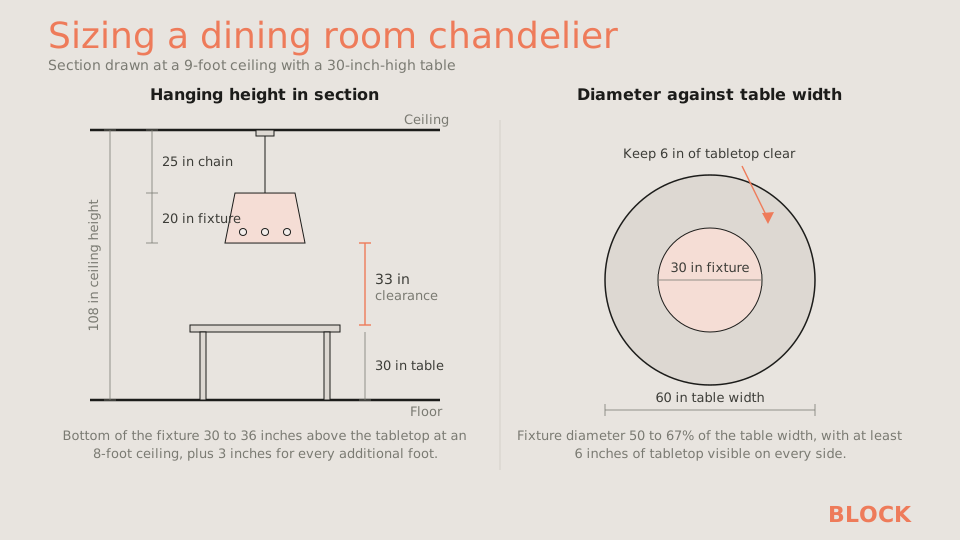
A 48-inch-wide dining table gives you a fixture range of 24 to 32 inches across. The same ratio works across table shapes: aim for a chandelier diameter equal to 50 to 67% of the table's width. Once you push past 75%, the fixture starts crowding the seats at the ends.
If your measurement falls between two available chandelier sizes, order the larger one.
The percentage stays the same, but your table shape affects which type of chandelier works best:
A 30-inch open-frame chandelier and a 30-inch crystal fixture won't carry the same visual weight over your table.
Renovate with confidence every step of the way
Step 1: Personalize Your Renovation Plan
Step 2: Receive Quotes from Trusted Contractors
Step 3: Let Us Handle the Project Details

How low is too low? With an 8-foot ceiling, put the bottom of the chandelier 30 to 36 inches above the tabletop. Add 3 inches for every additional foot of ceiling height.
| Ceiling height | Bottom of fixture above tabletop | Bottom of fixture above floor |
|---|---|---|
| 8 feet | 30 to 36 inches | 60 to 66 inches |
| 9 feet | 33 to 39 inches | 63 to 69 inches |
| 10 feet | 36 to 42 inches | 66 to 72 inches |
| 11 feet | 39 to 45 inches | 69 to 75 inches |
| 12 feet | 42 to 48 inches | 72 to 78 inches |
Those floor clearances assume a standard 30-inch table. In a small dining room, you can favor the lower end of the range to bring the light closer to the tabletop. Move toward the higher end if your fixture is wide, people regularly walk past it, or the lower position puts bulbs directly in your sightline.
Leave 34 to 40 inches above a 36-inch counter-height or 42-inch bar-height table. With a 42-inch table, that puts the chandelier 76 to 82 inches above the floor.
Plenty of chandeliers have the right diameter but not enough chain or rod to hang where you want them. Product listings usually separate the fixture body's height from its hanging hardware, so check both before ordering.
Work backward from the finished position. Subtract the table height, your desired clearance above the table, and the fixture body height from the ceiling height. With a 9-foot ceiling, 30-inch table, 33 inches of clearance, and a 20-inch fixture body, you have 25 inches left for chain or rod.
For the fixture body itself, allow 2.5 to 3 inches of height for every foot of ceiling. A 9-foot ceiling points you toward a chandelier about 22 to 27 inches tall.
Chain gives you room to adjust on installation day because your electrician can remove links. If you're between two lengths, order the longer chain. Rigid stems come in fixed increments, so you need to match your drop to a size the manufacturer actually sells. On a sloped ceiling, you'll also need a compatible swivel adapter.
Once your table passes about 8 feet, two smaller fixtures can spread light more evenly across the full surface. Size each one to about one-third of the table's width, then center one over each half of the table, roughly a quarter of the way in from either end.
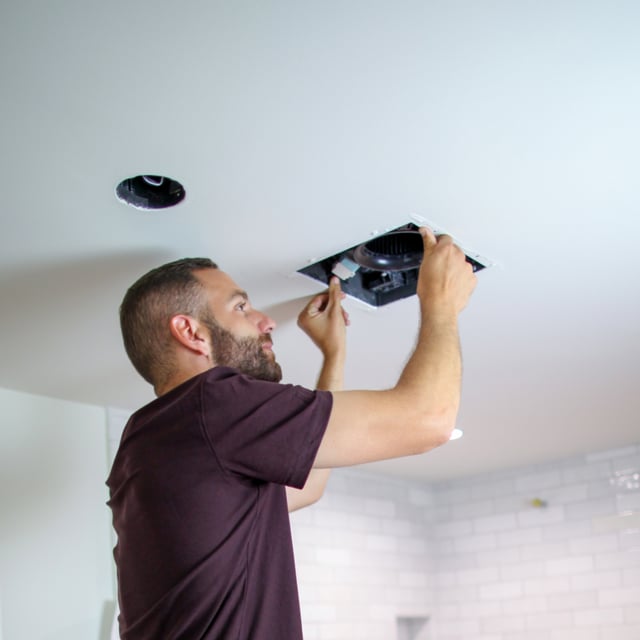
You pick the chandelier first. Then the old fixture comes down and you find out whether the box above it is actually where you need it and strong enough for what you bought.
Standard ceiling boxes are listed to support 50 pounds, and most 30-inch fixtures come in below that. Heavier chandeliers need a box and brace rated for the load or support fastened directly to the framing. If you have a sloped or cathedral ceiling, you'll also need a canopy or adapter made for that pitch.
And that's before you get to whether the existing box is in the right place. A fixture that's 8 inches off center will look 8 inches off center every time you walk into the room. If the box is misplaced, add the relocation to the electrical quote while the room is already under construction.
If the electrical quote forces you to prioritize, keep the dimmer. You'll use the ability to change the light level every day, regardless of how much you spent on the fixture itself.
Moving a ceiling box, adding support for a heavy chandelier, and installing a dimmer can all become part of a larger dining room renovation.
Block matches your project with vetted local contractors who compete for the work, and an expert reviews the scope before you sign. Your initial quote can then include the box relocation, structural support, dimmer, and other electrical work the chandelier requires.
Remodel with confidence through Block

Connect to vetted local contractors
We only work with top-tier, thoroughly vetted contractors

Get expert guidance
Our project planners offer expert advice, scope review, and ongoing support as needed
Enjoy peace of mind throughout your renovation
Secure payment system puts you in control and protects your remodel

Renovate confidently with Block
Easily compare quotes from top quality contractors, and get peace of mind with warranty & price protections.
.png?width=640&name=u5821215421_A_compact_hallway_with_pastel_glass_pendants_stre_a11c3a9a-e595-4c66-accf-90aef3c300df_1%20(1).png)